Premium Cannabis Through Permaculture: Growing in Harmony with Nature
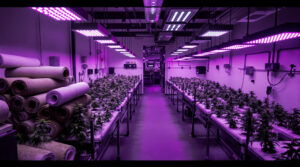
In an era where cannabis legalization has finally become reality across Europe, we face a new, decisive challenge: How do we produce high-quality cannabis without burdening the planet? Conventional indoor cultivation is a gigantic energy consumer, and industrial outdoor growing unfortunately relies far too often on monocultures and synthetic fertilizers.
📑 Inhaltsverzeichnis
- Premium Cannabis Through Permaculture: Growing in Harmony with Nature
- What is Permaculture? Far More Than Organic Gardening
- Cannabis Cultivation in Harmony with Nature: Applying the 12 Principles
- Soil Ecology: Living Soil for Maximum Terpene Profiles and Potency
- Companions in the Garden: Companion Plants for Healthy, Pest-Free Cannabis
- Water Management: Efficiency Instead of Waste in the Garden
- Natural Pest Control Through Maximum Biodiversity
- The Social Aspect: Permaculture is Community and Fair Share
- Sustainability You Can Taste and Feel
- 💬 Fragen? Frag den Hanf-Buddy!
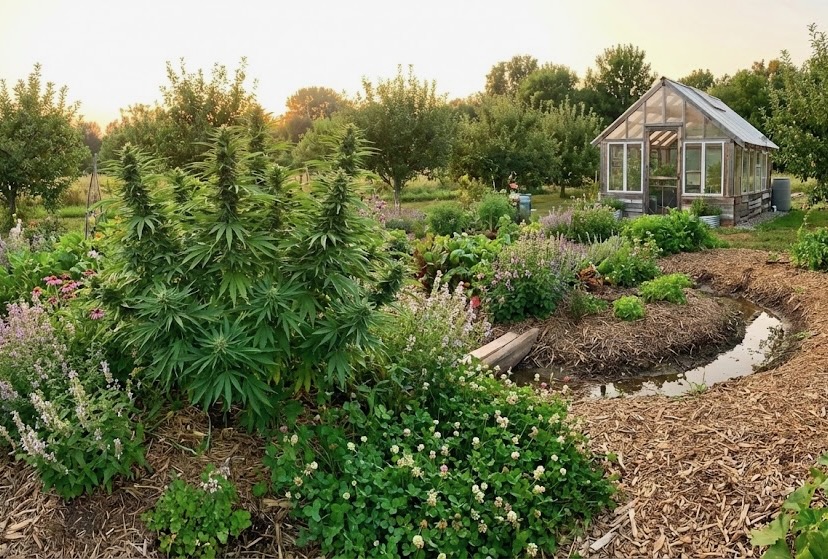
Yet there is a path that unites potency, aroma, and environmental protection: permaculture. This holistic approach promises not only ecological purity but also terpene profiles that you can only dream of in sterile grow tents.
What is Permaculture? Far More Than Organic Gardening
The term permaculture combines „permanent“ and „agriculture“ (permanent agriculture). It is far more than simply avoiding pesticides. It is a design system originally developed in the 1970s by Bill Mollison and David Holmgren. The goal is to design agricultural systems that replicate the self-regulating mechanisms of natural ecosystems.


In the cannabis world, this means: We view the hemp plant not as an isolated object in a plastic pot, but as part of a living network. The goal is a closed-loop system in which waste becomes valuable resources and chemistry is consistently replaced by biology. Those who understand permaculture don’t simply grow cannabis – they create a habitat.
Cannabis Cultivation in Harmony with Nature: Applying the 12 Principles
When cultivating cannabis according to permaculture principles, you work with nature rather than against it. Instead of reaching for a bottle of mineral liquid fertilizer at the first sign of nutrient deficiency, we design the system from the outset so that nutrients are already present in the soil and available to the plant.
Three of the twelve permaculture principles play a particularly central role:
Observe and Interact: Before the first seed goes into the earth, we analyze the location carefully. Where does the sun stand at the height of summer? How does rainwater flow? What wild herbs already grow there?
Catch and Store Energy: We maximize the use of sunlight and rainwater. A well-designed garden captures energy when it’s abundant and stores it for lean times.
Produce No Waste: In nature, there is no garbage. Every leaf that falls during defoliation or autumn pruning returns to the cycle – whether as a mulch layer directly on the bed or via the compost pile.
Soil Ecology: Living Soil for Maximum Terpene Profiles and Potency
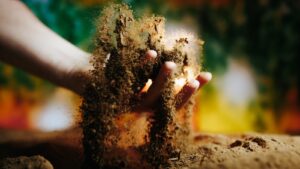
The biggest difference from conventional growing is the approach to soil. In permaculture, we speak passionately about „living soil.“ Our creed is: We don’t feed the plant, we feed the soil.
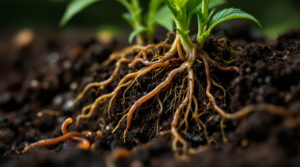
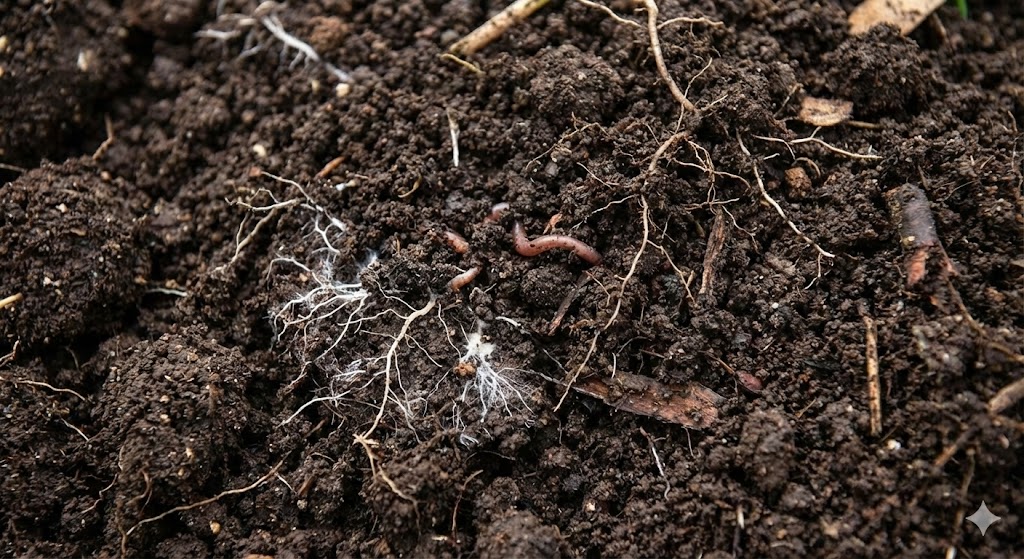
A healthy soil is its own universe, inhabited by billions of bacteria, fungi (especially mycorrhiza), nematodes, and earthworms. These organisms enter a fascinating symbiosis with cannabis roots. The plant supplies sugars (exudates) through its roots, and in return, microorganisms unlock phosphorus, nitrogen, and trace elements that would otherwise be unreachable for the plant.
The result of this collaboration is a terpene profile so complex and intense that it is barely achievable in lab-grown cannabis with mineral salts. „Soil is not dirt“ – soil is the foundation for premium-quality cannabis.
No-Till: Why Tilling the Soil is the Enemy of Your Harvest
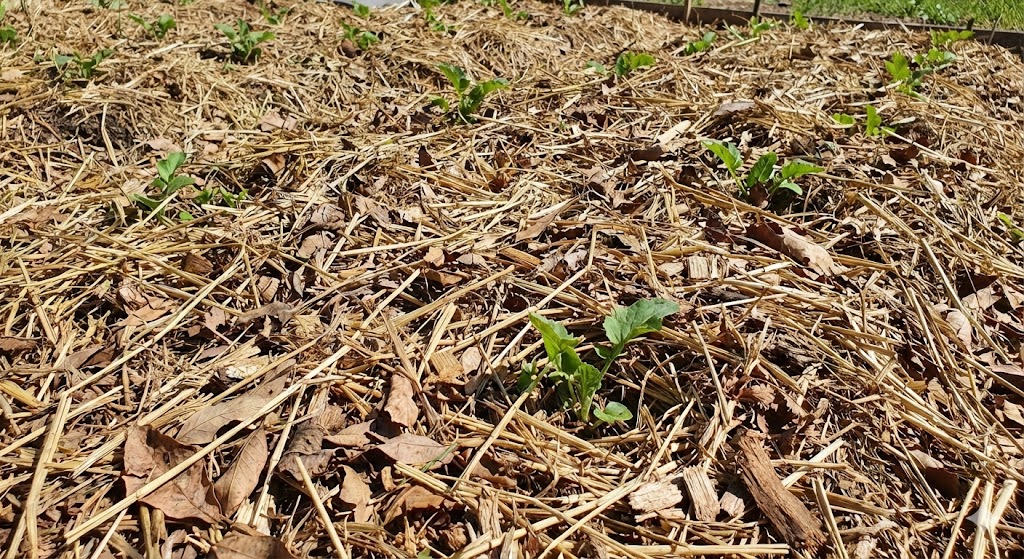
In permaculture, we consistently employ the „no-till“ method. Traditional soil tilling destroys the delicate fungal network (mycelium) and disturbs the laboriously built layers of soil organisms. Plus, it releases bound CO2. Instead of tearing up the soil, we simply layer organic material on top. Soil organisms slowly transform this mulch layer from bottom to top into valuable humus, while soil structure remains intact.
Companions in the Garden: Companion Plants for Healthy, Pest-Free Cannabis
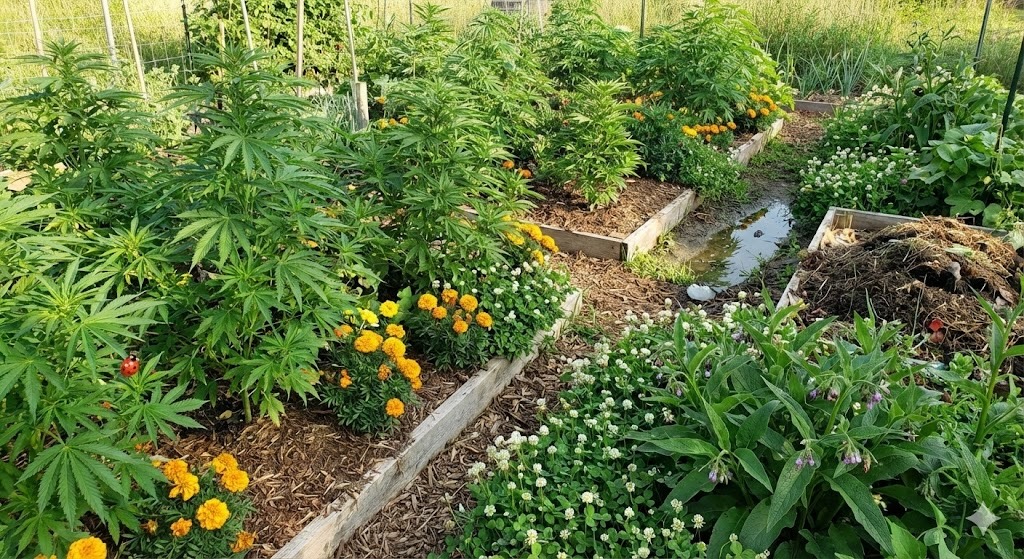
Monocultures are extremely susceptible to disease and pests. In a permaculture garden for cannabis, we therefore rely on polycultures and so-called „guilds.“ Certain plants actively support hemp growth or protect it from natural enemies:
White Clover: It functions as living mulch, protects soil from drying out, and fixes valuable nitrogen from the air – nitrogen that hemp particularly needs during the vegetative phase for vigorous growth.
Basil, Rosemary, and Mint: Their intense aroma confuses pests like spider mites or aphids and keeps them away from your valuable flowers.
Calendula (Marigold): They’re not only beautiful to look at but also attract beneficial insects like hover flies, whose larvae are true aphid killers.
Comfrey: With its extremely deep taproot, it brings minerals from depths unreachable by other plants to the surface. Its leaves, chopped up, are the perfect, cost-free fertilizer replacement.
Water Management: Efficiency Instead of Waste in the Garden
Water is becoming an increasingly precious resource worldwide. While professional indoor operations often consume vast amounts of water, the permaculture approach uses sophisticated techniques like swales or raised beds to keep natural rainwater on the land as long as possible.
A thick mulch layer of straw, leaves, or hemp hurd also dramatically prevents evaporation from the soil surface. This not only protects the environment but also saves growers considerable work: even during hot summer weeks, a well-mulched permaculture garden requires far less frequent watering than conventional gardens.
Natural Pest Control Through Maximum Biodiversity
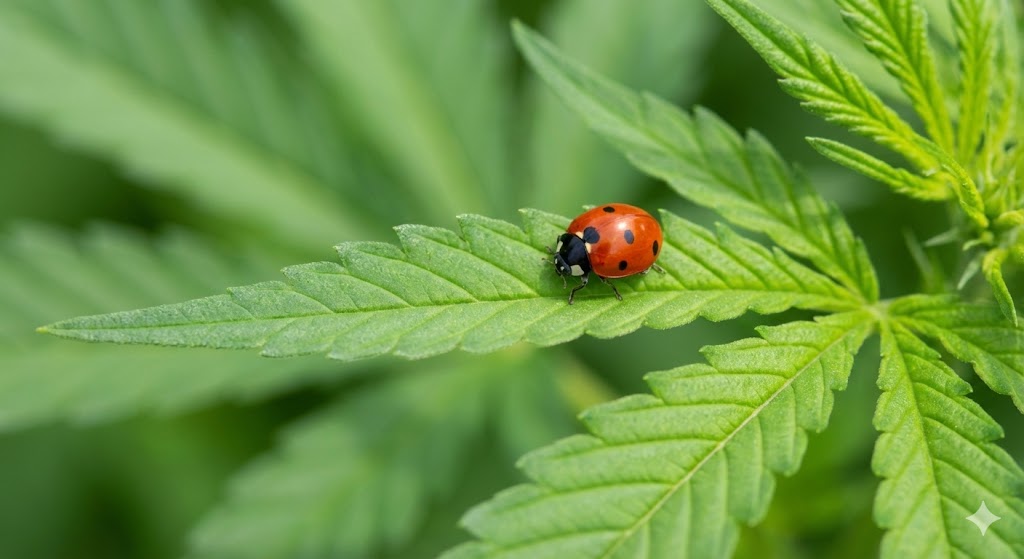
Forget chemical pesticides or expensive neem oil sprays. In a functioning ecosystem, there are no „pests“ in the true sense, only temporary imbalances. If you have an aphid problem, you simply lack ladybugs. If you notice fungus gnats in the soil, you’re missing predatory mites.
By creating habitats like deadwood piles, rock gardens, or insect hotels, these natural predators settle in on their own. Your cannabis benefits from this cost-free „security team,“ resulting in absolutely clean flowers – without sticky residue from spray treatments.
The Social Aspect: Permaculture is Community and Fair Share
Permaculture doesn’t end at your garden fence. The third ethical principle of permaculture, „Fair Share“ (fair sharing), translates perfectly to the new European club culture. Cannabis Social Clubs (CSCs) operating according to permaculture principles promote not only soil health but also social cohesion. The exchange of knowledge, seeds, and surplus harvest creates a community based on cooperation rather than profit maximization.
Sustainability You Can Taste and Feel
Growing cannabis in a permaculture system may require a bit more planning and sharpened observation skills at the outset than simply mixing a nutrient solution according to a feeding schedule. But the reward for this effort is immense:
- Massive Cost Savings: Significantly lower spending on fertilizer, soil, and pesticides.
- Outstanding Quality: Deeper aromas and purer cannabinoids through living soil biology.
- Ecological Footprint: A garden that stores CO2 and promotes biodiversity instead of destroying it.
Wie baust du dein Cannabis derzeit am liebsten an?
Cannabis and permaculture are the perfect match for a green, legal future. It’s time we stopped trying to control nature by force and instead began working intelligently with it. Your garden, your plants, and your next high will thank you.








Branchen-Update
News, Analysen und Reportagen — mehrmals im Monat direkt in dein Postfach.
Folge uns