How cannabis therapy progresses—from physician request through approval to dispensary pickup—is detailed by the manufacturer on their patient information page. Selection and prescription decisions rest entirely with the treating physician.
📑 Inhaltsverzeichnis
Sponsored · This article is produced in paid partnership with Sanity Group. Selection, classification, and assessment of the information remain with Hanf Magazin.
A strain data sheet is the technical specification for medical cannabis flower. It contains genetics, terpene values, and flower description—but it deliberately avoids answering one question: whether a particular strain is suitable for you. Using Lime Kush 2.0 as an example, we’ll decode what this document contains and how to interpret the numbers.
Anyone starting cannabis therapy quickly encounters strain names and number combinations that initially seem cryptic. Manufacturers publish a data sheet for each flower product, technically directed at pharmacies and physicians. These documents offer the most detailed publicly available look at a product, but they’re also prone to misinterpretation if you don’t understand the conventions behind them. Let’s walk through a real example: ZOIKS 33/1 LKV2, marketed as Lime Kush 2.0.
What the Numbers in the Name Mean
The designation follows an industry standard convention: the first number represents THC content as a percentage, the second represents CBD content. ZOIKS 33/1 LKV2 is therefore a flower with approximately 33 percent THC and about one percent CBD. The same genetics are offered in multiple potency levels, ranging from 19/1 to 36/1. The strain itself isn’t defined by potency—rather, the same plant is produced in batches of varying strength.
This is the first point where lay readers commonly get confused. A higher THC value isn’t a quality marker or an enhancement of the same product, but rather a different starting point. Which potency level is appropriate in any individual case is determined exclusively by the treating physician.
Genetics and Origins
According to the manufacturer, Lime Kush 2.0 is a cross between Limelight—itself a blend of Ultra Sour and Lemon Margy—and Britney’s Frozen Lemons from breeder Capulator. The strain is classified as a sativa-dominant hybrid.
Information about parentage is more than folklore. It’s the only reference point for whether two strains with similar names are actually related, and it provides rough guidance on what aromas and appearance to expect. However, it doesn’t permit any conclusions about effects, even though the sativa/indica classification might suggest otherwise.
The Terpene Profile, and How to Read the Percentages
This is where it gets interesting—and where misreading happens most often. The data sheet lists Lime Kush 2.0 with a total terpene content of 2.8 percent, which the manufacturer rates as very high on their own scale. The dominant terpenes are Terpinolene at 43 percent, Ocimene at 11 percent, and Myrcene at 11 percent.
The crucial detail is in the fine print below: these percentages are relative values. They describe each terpene’s share of the total measured terpene content, not its share of the flower itself. Terpinolene makes up 43 percent of the 2.8 percent, not 43 percent of the flower. Anyone reading these numbers as absolute values will overestimate them by orders of magnitude.
Additionally, the data is based on the specific grower’s analysis certificate and refers only to the terpenes tested in that batch. Terpene content varies between batches, between harvests, and over storage time. A strain data sheet describes a typical profile, not a guarantee for what’s in the bottle on the shelf.
Flavor-wise, the manufacturer characterizes the profile as a blend of sweet, citrus-lime, and slightly tart notes with an earthy diesel undertone. Terpinolene is described as woody-forest-like with hints of pine, rosemary, and caraway; Ocimene as herbal, citrus, and woody; Myrcene as earthy, spicy, and fruity.
How the Flower is Described
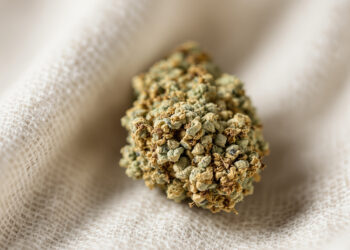
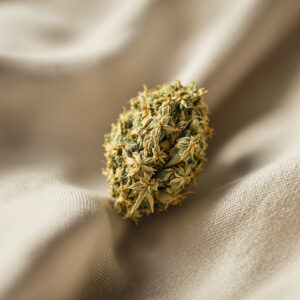
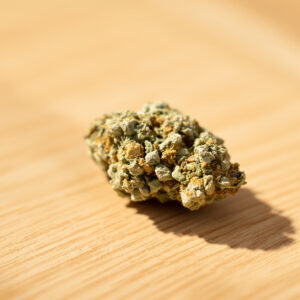
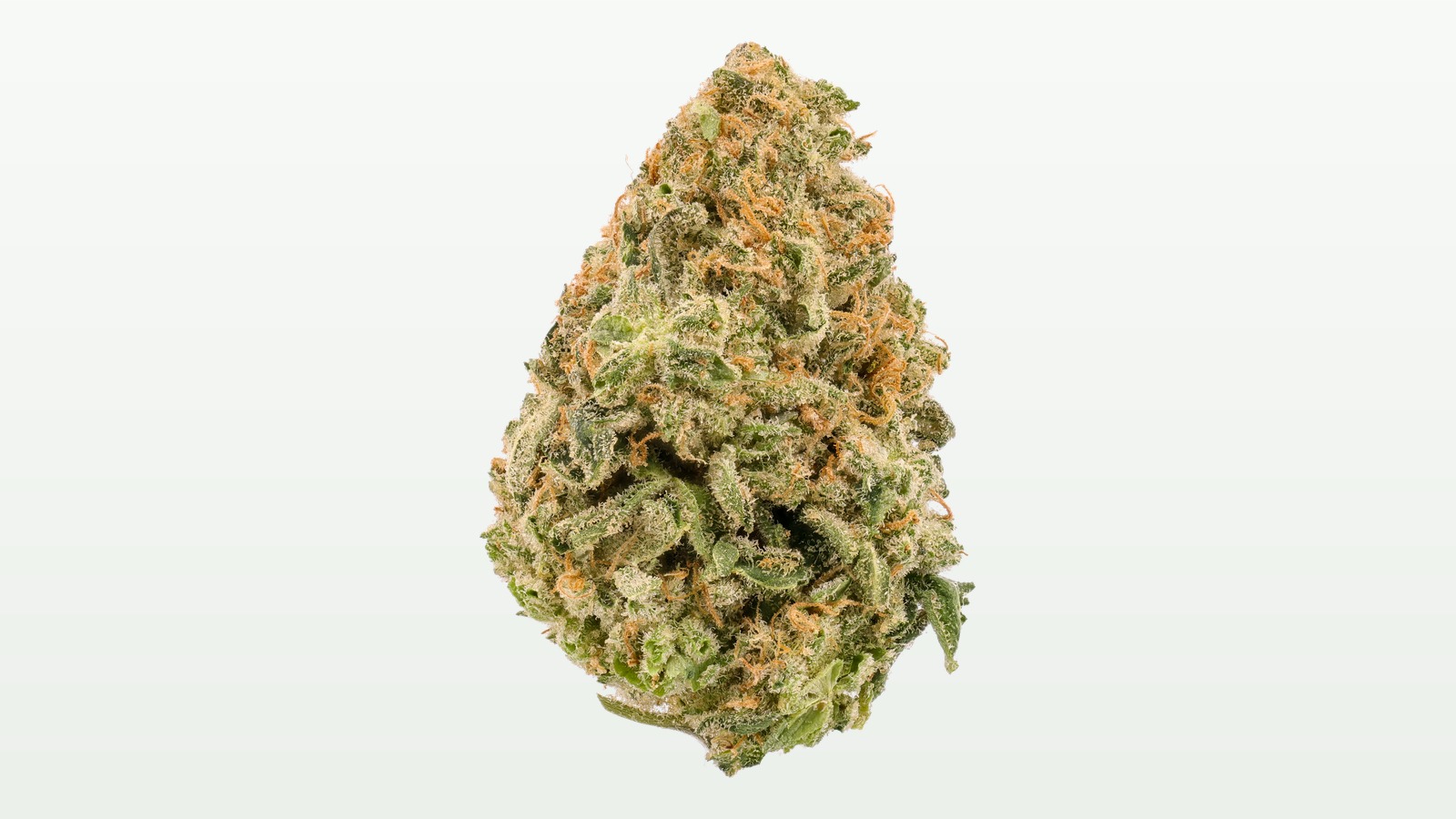
Regarding appearance, the data sheet notes light green coloring with bright orange pistils, medium to large flower size, high density, and medium to high trichome coverage. The product is listed as dried cannabis flower, non-irradiated.
The note about absence of irradiation is often the single most relevant detail in the entire document for patients. Irradiation serves to reduce microbial load and is permitted, but according to widespread understanding, it alters the terpene profile. Patients who care about this will find the information in the data sheet, on the packaging, or by asking at the pharmacy.
What the Document Doesn’t Tell You
The data sheet references the so-called entourage effect—the idea that cannabinoids and terpenes mutually influence each other’s effects. The frequently cited Ethan Russo paper from 2011 is influential, but it presents a hypothesis, not proof. The effect remains incompletely understood to this day, and you cannot derive effects from a terpene profile.
Similarly, a strain data sheet tells you nothing about whether a strain suits a particular person or condition. These documents are explicitly directed at professionals and intended as information for pharmacies and prescribing physicians. For patients, they’re primarily one thing: a way to understand what’s being discussed in the clinic.
What they do reliably provide is traceability. Genetics, origin, terpene analysis, and irradiation status are documented and can be compared across strains.
Note: Medical cannabis is a prescription medication and available only through pharmacies on physician order. This article describes information from a manufacturer’s document and contains no medical claims, efficacy statements, suitability assessments, dosage recommendations, or therapeutic advice. Selection, initiation, continuation, and modification of therapy are determined exclusively by the treating physician. The values mentioned are manufacturer specifications based on the grower’s analysis certificate and may vary between batches. Date: October 12, 2026.
Sources: ZOIKS LKV2 Strain Data Sheet, Vayamed GmbH, Berlin, provided by Sanity Group in October 2026; Russo, Ethan B., „Taming THC: potential cannabis synergy and phytocannabinoid-terpenoid entourage effects“, British Journal of Pharmacology 163.7 (2011), pp. 1344–1364; independent assessment.






Schaust du dir die Terpenprofile deiner Medizinalcannabis-Sorten an?
Branchen-Update
News, Analysen und Reportagen — mehrmals im Monat direkt in dein Postfach.
Folge uns