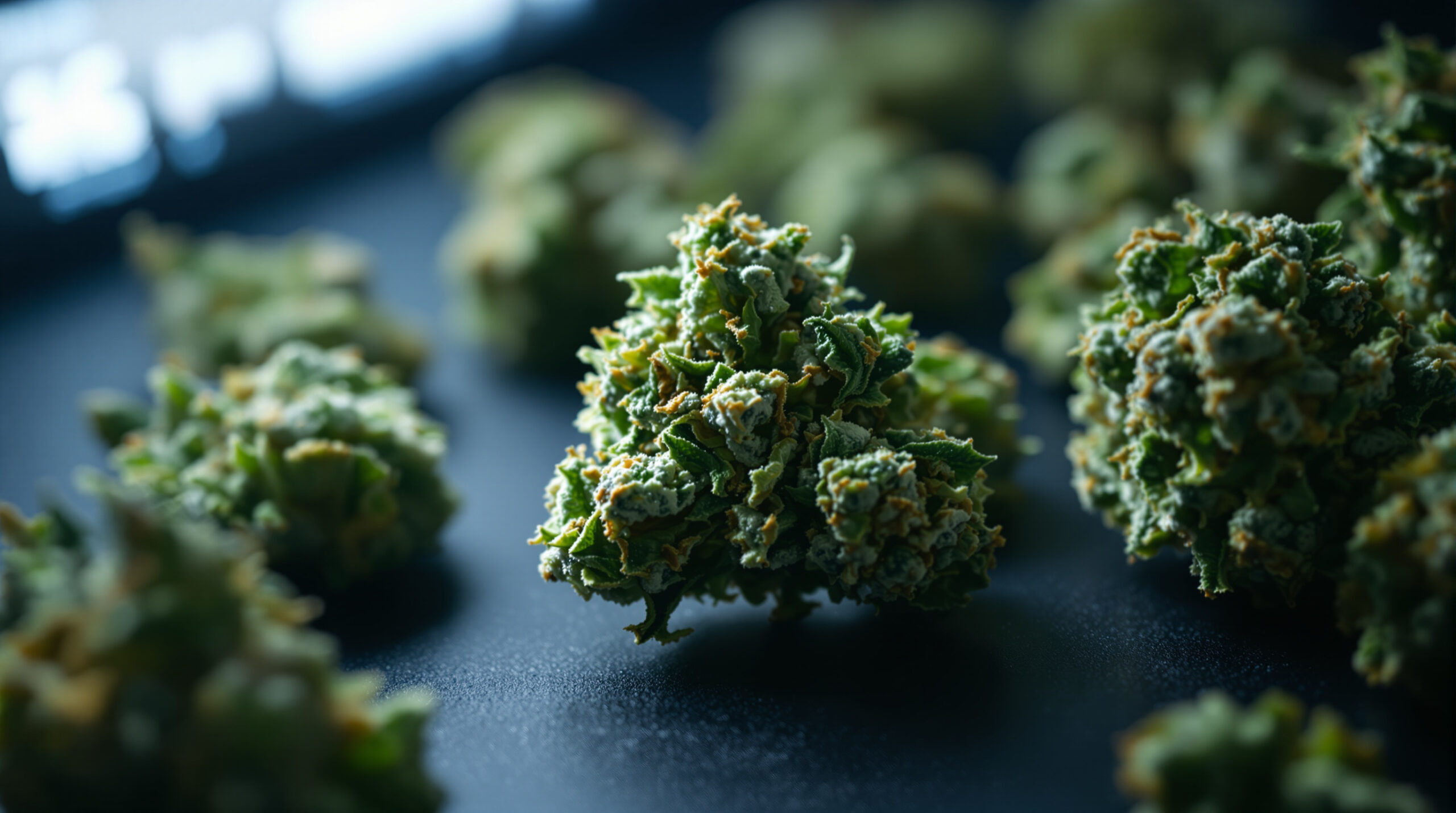
The average THC content of physician-prescribed cannabis flowers in Germany stands at 25 percent. That’s more than twice what science considers medically justified. This is the conclusion of the EKOCAN consortium’s second interim evaluation, released in early April. The findings raise fundamental questions about prescribing practices in Germany—and whether the medical cannabis supply system is still serving its original purpose.
📑 Inhaltsverzeichnis
What the Study Actually Reveals

Researchers led by Jakob Manthey from the Centre for Interdisciplinary Addiction Research systematically examined prescribing behavior for medical cannabis. The key finding: all clinical trials demonstrating therapeutic efficacy of cannabis flowers refer to products with THC content of ten percent or less. For higher concentrations, supporting evidence simply doesn’t exist. That physicians regularly prescribe flowers averaging 25 percent THC cannot be justified on medical grounds.
The findings become particularly concerning when linked to psychiatric conditions. Cannabis with THC content above 15 percent is demonstrably associated with increased risk of mental health disorders—as pharmacists have complained about for some time. Yet patients with anxiety disorders, depression, or sleep problems are repeatedly prescribed high-potency products despite this being contraindicated from a scientific perspective. Researchers therefore recommend unambiguously: high-potency flowers must not be prescribed for mental health conditions and sleep disorders.


A System Under Pressure

The EKOCAN evaluation’s findings aren’t an indictment of individual physicians. They describe a systemic problem that has become increasingly apparent since legalization in April 2024. Through questionable online platforms and improper advertising, a market has emerged that primarily targets recreational consumers rather than patients, who use prescriptions as a legal-gray alternative supply route. The pressure on telemedicine providers to issue high-potency products without thorough medical review is considerable in this environment.
Critical voices like virologist Hendrik Streeck, who spoke of „dealers in white coats,“ gain weight from these new data. EKOCAN researchers state it more clinically but no less clearly: significant abuse for consumption purposes is being observed. This damages not only the credibility of the medical cannabis program but also patients for whom cannabis represents a genuinely viable therapeutic option.
What This Means for Cannabis Policy
The consequences from the EKOCAN report are already becoming apparent. Health Minister Nina Warken (CDU) had already wanted to tighten access to medical cannabis—with this new data, the political foundation for doing so should now be even stronger. Specifically under discussion are restrictions on maximum potency levels in prescriptions and the already-planned telemedicine ban, under which medical cannabis could only be prescribed following personal doctor-patient contact.
EKOCAN researchers also recommend transitioning to standardized pharmaceutical products or flowers with lower THC content. The logic is straightforward: if science provides no evidence that 25 percent THC works therapeutically better than ten percent, there’s no medical reason to prescribe high-dose products. Anyone who does is effectively prescribing for recreational consumption—at the healthcare system’s expense.
The Danger for Patients Who Really Need Cannabis

Political debate over excessive THC values in prescriptions risks broadly discrediting medical cannabis. That would be wrong. For numerous conditions—from chronic pain to spasticity to treatment-resistant epilepsy—cannabis is an effective option that brings significant relief to many affected individuals. Experts have long called for targeted improvements rather than blanket restrictions.
The key lies not in limiting access to therapy, but in prescribing quality. A physician prescribing moderate-THC cannabis flowers with accompanying therapy to a pain patient does something fundamentally different from one issuing high-potency flowers via telemedicine without diagnosis. Regulations must be able to make this distinction. The EKOCAN evaluation provides reliable numbers for the first time.
Frequently Asked Questions
Why is the average THC content in prescribed medical cannabis so high?
The EKOCAN consortium attributes this to a systemic abuse problem. Through telemedicine platforms and targeted advertising, a market has developed that supplies recreational consumers with prescriptions focused on high-potency products. Scientific evidence cannot justify a medical need for 25 percent THC.
At what THC level does medical cannabis become dangerous?
EKOCAN researchers identify 15 percent as the critical threshold: cannabis with THC content above 15 percent is demonstrably associated with increased risk of psychiatric illness. Clinical trials for therapeutic efficacy typically show effects only up to ten percent potency.
What is the federal government planning to do about this?
Planned measures include a ban on telemedicine prescribing: medical cannabis could only be prescribed following personal doctor-patient contact in the future. Additionally, health policy makers are discussing restrictions on maximum potency levels for prescription cannabis flowers.
Does the prescribing problem apply to all cannabis patients?
No. The EKOCAN study makes a clear distinction between legitimate medical cannabis therapy and abuse-driven prescribing. Patients with documented medical indication—such as chronic pain, spasticity, or epilepsy—are not the primary target of proposed restrictions. On the contrary: stricter regulations are intended to secure long-term supply for legitimate patients.
What do these findings mean for the future of medical cannabis in Germany?
Sollten Ärzte nur noch Cannabis mit maximal 10 Prozent THC verschreiben dürfen?
The data significantly increase political pressure for prescribing rule reform. In the short term, a telemedicine ban and potency limits are the most likely measures. Medium-term, the entire system could shift toward standardized pharmaceuticals with documented dosing—which from a scientific perspective would actually be more medically sound than the current proliferation of high-potency flower offerings.







Branchen-Update
News, Analysen und Reportagen — mehrmals im Monat direkt in dein Postfach.