Question 8: Five-Year Vision
📑 Inhaltsverzeichnis
- Frequently Asked Questions About Founding a Cannabis Social Club
- Frequently Asked Questions About Founding a Cannabis Social Club
- Frequently Asked Questions About Founding a Cannabis Social Club
- Frequently Asked Questions About Founding a Cannabis Social Club
- Frequently Asked Questions About Founding a Cannabis Social Club
- Frequently Asked Questions About Founding a Cannabis Social Club
- Frequently Asked Questions About Founding a Cannabis Social Club
- Frequently Asked Questions About Founding a Cannabis Social Club
- Frequently Asked Questions About Founding a Cannabis Social Club
- Frequently Asked Questions About Founding a Cannabis Social Club
- 💬 Fragen? Frag den Hanf-Buddy!
Where do you see Lucas Green in five years, and what role do you play in Berlin’s and Germany’s CSC ecosystem?
David: In five years, we see Lucas Green as a grown, stable, and fully utilized association with the maximum possible membership. Our goal is to be a showcase for how a CSC can function professionally, transparently, and collectively.
We want to demonstrate that legal cannabis cultivation in an association isn’t just theoretically possible, but can practically create real added value: for members, for prevention, for quality, and for reducing the black market. We’re not out to be the biggest or loudest, but to work cleanly and share experiences.


In Berlin’s and Germany’s CSC ecosystem, we want to play a constructive role. We want to exchange, learn from each other, and show other associations which paths can work and which mistakes might be worth avoiding. Ultimately, everyone benefits when CSCs become more professional, more transparent, and better understood.
Note: This interview was conducted in writing. Responses have been lightly edited for readability and grammar without changing content. David Boldt and Madeleine Lengert will speak on Saturday, June 13, 2026, at 12:30 p.m. on the Masterclass Stage of the Mary Jane Berlin about their experience founding Lucas Green. Learn more at: lucasgreen.de.
Frequently Asked Questions About Founding a Cannabis Social Club
How do you found a Cannabis Social Club in Germany?
Founding works through a cultivation association under the KCanG: a registered association, administrative permission, plus a viable security and cultivation concept. Our step-by-step guide to CSC founding shows the full process. You’ll find what rules the CanG has set since 2026 in our comprehensive legalization overview.
How long is a CSC license valid for and how many members are permitted?
A cultivation association permit is initially granted for seven years, with renewal possible afterward. A club may accept no more than 500 members with residence or ordinary place of residence in Germany. Our overview of the status of CSCs in Germany shows how the club landscape has developed since the start.
What can a Cannabis Social Club grow and distribute to members?
Permitted are collective home cultivation and distribution of up to 25 grams per day or 50 grams per month to members. Strict requirements apply for quality, documentation, and youth protection—read more in our article on workplace safety and quality in the Cannabis Social Club.
Can you work or provide consulting at a Cannabis Social Club?
Yes—many clubs rely on volunteer or advisory members, for example in cultivation, administration, prevention, and youth protection. Learn what such advisory work concretely entails in our article Working as an advisor in a Cannabis Social Club.
Question 6: Strains
What specific cannabis strains does Lucas Green grow, and what criteria guide your selection?
David: In our first harvest, we had four different strains. In the second harvest, we’re already launching with eight strains, possibly even right before Mary Jane. Currently we’re working with Banana Conda, Blue Zushi, Cap Junkie, Cream Runtz, Fruitopia, Purple Octane, Permanent Marker, and La Bomba.
Several factors play a role in selection. Of course, we include strains that we ourselves find exciting and celebrate. At the same time, it’s not just about personal preferences, but about offering something balanced for different tastes and needs. Some members look for fruitier profiles, others prefer intense, gassy, or more classic directions. Some focus more on effects, others on aroma or texture.
Our goal is to better understand with each harvest what our members really value. The strain selection should therefore not be guided only by trends, but also by community feedback, growing experience, quality, and reliability.
Question 7: KCanG Wishlist
KCanG is a transitional law as of 2026. What regulatory change would make life easiest for you?
David: The biggest help would be clearer permission to inform people that we exist and what we do. We absolutely understand that cannabis consumption shouldn’t be advertised or promoted. That’s not our goal either. But currently the line between prohibited advertising and factual information is often unclear.
For us, it’s about being a legal, responsible, and high-quality contact point for people who consume cannabis anyway. But if these people can barely find us or we can barely explain how a CSC works, the goal of combating the black market becomes unnecessarily difficult.
More legal certainty in factual public relations would therefore be extremely helpful. Clear rules for what an association can communicate: opening hours, concept, membership, prevention, quality, transparency, and experience reports. Not as consumption incentive, but as information.
Question 8: Five-Year Vision
Where do you see Lucas Green in five years, and what role do you play in Berlin’s and Germany’s CSC ecosystem?
David: In five years, we see Lucas Green as a grown, stable, and fully utilized association with the maximum possible membership. Our goal is to be a showcase for how a CSC can function professionally, transparently, and collectively.
We want to demonstrate that legal cannabis cultivation in an association isn’t just theoretically possible, but can practically create real added value: for members, for prevention, for quality, and for reducing the black market. We’re not out to be the biggest or loudest, but to work cleanly and share experiences.
In Berlin’s and Germany’s CSC ecosystem, we want to play a constructive role. We want to exchange, learn from each other, and show other associations which paths can work and which mistakes might be worth avoiding. Ultimately, everyone benefits when CSCs become more professional, more transparent, and better understood.
Note: This interview was conducted in writing. Responses have been lightly edited for readability and grammar without changing content. David Boldt and Madeleine Lengert will speak on Saturday, June 13, 2026, at 12:30 p.m. on the Masterclass Stage of the Mary Jane Berlin about their experience founding Lucas Green. Learn more at: lucasgreen.de.
Frequently Asked Questions About Founding a Cannabis Social Club
How do you found a Cannabis Social Club in Germany?
Founding works through a cultivation association under the KCanG: a registered association, administrative permission, plus a viable security and cultivation concept. Our step-by-step guide to CSC founding shows the full process. You’ll find what rules the CanG has set since 2026 in our comprehensive legalization overview.
How long is a CSC license valid for and how many members are permitted?
A cultivation association permit is initially granted for seven years, with renewal possible afterward. A club may accept no more than 500 members with residence or ordinary place of residence in Germany. Our overview of the status of CSCs in Germany shows how the club landscape has developed since the start.
What can a Cannabis Social Club grow and distribute to members?
Permitted are collective home cultivation and distribution of up to 25 grams per day or 50 grams per month to members. Strict requirements apply for quality, documentation, and youth protection—read more in our article on workplace safety and quality in the Cannabis Social Club.
Can you work or provide consulting at a Cannabis Social Club?
Yes—many clubs rely on volunteer or advisory members, for example in cultivation, administration, prevention, and youth protection. Learn what such advisory work concretely entails in our article Working as an advisor in a Cannabis Social Club.
Question 5: Member Expectations
Member expectations vary widely between patients, adult-use consumers, and connoisseurs. How do you balance that in your cultivation planning?
David: We mainly try to solve this through transparency and participation. Lucas Green has a member participation concept, and we involve our members as much as possible. There are people who are deeply engaged in the subject, understand strains, like to think along, and want to contribute more actively. But there are also members who primarily seek a reliable, safe, and welcoming community and want to make their minimum contribution to be supplied legally and in a controlled way.
Both are completely legitimate for us. What’s important is that everyone understands that a CSC works collectively and not like a conventional shop. That’s why we try to explain expectations early and communicate honestly about what’s possible and what isn’t.
In our cultivation planning, we make sure to create a balanced portfolio. It shouldn’t just be about maximum potency, but also about flavor, effects, terpene profiles, everyday usability, and diversity. That way we can better meet different needs.

Question 6: Strains
What specific cannabis strains does Lucas Green grow, and what criteria guide your selection?
David: In our first harvest, we had four different strains. In the second harvest, we’re already launching with eight strains, possibly even right before Mary Jane. Currently we’re working with Banana Conda, Blue Zushi, Cap Junkie, Cream Runtz, Fruitopia, Purple Octane, Permanent Marker, and La Bomba.
Several factors play a role in selection. Of course, we include strains that we ourselves find exciting and celebrate. At the same time, it’s not just about personal preferences, but about offering something balanced for different tastes and needs. Some members look for fruitier profiles, others prefer intense, gassy, or more classic directions. Some focus more on effects, others on aroma or texture.
Our goal is to better understand with each harvest what our members really value. The strain selection should therefore not be guided only by trends, but also by community feedback, growing experience, quality, and reliability.
Question 7: KCanG Wishlist
KCanG is a transitional law as of 2026. What regulatory change would make life easiest for you?
David: The biggest help would be clearer permission to inform people that we exist and what we do. We absolutely understand that cannabis consumption shouldn’t be advertised or promoted. That’s not our goal either. But currently the line between prohibited advertising and factual information is often unclear.
For us, it’s about being a legal, responsible, and high-quality contact point for people who consume cannabis anyway. But if these people can barely find us or we can barely explain how a CSC works, the goal of combating the black market becomes unnecessarily difficult.
More legal certainty in factual public relations would therefore be extremely helpful. Clear rules for what an association can communicate: opening hours, concept, membership, prevention, quality, transparency, and experience reports. Not as consumption incentive, but as information.
Question 8: Five-Year Vision
Where do you see Lucas Green in five years, and what role do you play in Berlin’s and Germany’s CSC ecosystem?
David: In five years, we see Lucas Green as a grown, stable, and fully utilized association with the maximum possible membership. Our goal is to be a showcase for how a CSC can function professionally, transparently, and collectively.
We want to demonstrate that legal cannabis cultivation in an association isn’t just theoretically possible, but can practically create real added value: for members, for prevention, for quality, and for reducing the black market. We’re not out to be the biggest or loudest, but to work cleanly and share experiences.
In Berlin’s and Germany’s CSC ecosystem, we want to play a constructive role. We want to exchange, learn from each other, and show other associations which paths can work and which mistakes might be worth avoiding. Ultimately, everyone benefits when CSCs become more professional, more transparent, and better understood.
Note: This interview was conducted in writing. Responses have been lightly edited for readability and grammar without changing content. David Boldt and Madeleine Lengert will speak on Saturday, June 13, 2026, at 12:30 p.m. on the Masterclass Stage of the Mary Jane Berlin about their experience founding Lucas Green. Learn more at: lucasgreen.de.
Frequently Asked Questions About Founding a Cannabis Social Club
How do you found a Cannabis Social Club in Germany?
Founding works through a cultivation association under the KCanG: a registered association, administrative permission, plus a viable security and cultivation concept. Our step-by-step guide to CSC founding shows the full process. You’ll find what rules the CanG has set since 2026 in our comprehensive legalization overview.
How long is a CSC license valid for and how many members are permitted?
A cultivation association permit is initially granted for seven years, with renewal possible afterward. A club may accept no more than 500 members with residence or ordinary place of residence in Germany. Our overview of the status of CSCs in Germany shows how the club landscape has developed since the start.
What can a Cannabis Social Club grow and distribute to members?
Permitted are collective home cultivation and distribution of up to 25 grams per day or 50 grams per month to members. Strict requirements apply for quality, documentation, and youth protection—read more in our article on workplace safety and quality in the Cannabis Social Club.
Can you work or provide consulting at a Cannabis Social Club?
Yes—many clubs rely on volunteer or advisory members, for example in cultivation, administration, prevention, and youth protection. Learn what such advisory work concretely entails in our article Working as an advisor in a Cannabis Social Club.
Question 4: Lessons Learned
What three lessons learned would you give to the next generation of CSC founders—things you wish you’d known earlier?
David: First: No matter how simple it sounds at the start, it will almost certainly become significantly more complex than expected. A CSC isn’t just an association with plants. It’s a combination of association law, administrative law, prevention, quality management, security, documentation, communication, and a lot of operational work.
Second: Don’t try to do too much too quickly. Processes take time, authorities need time, concepts need to mature, and you also need to build structures internally. In the end, you make better progress by working through things step by step carefully rather than trying to force everything at once.
Third: Seek out exchanges early. With other CSCs, with other applicants, with people from administration, law, cultivation, and prevention. Many questions can’t be solved alone at a desk. Especially because implementation can vary by state, it helps enormously to compare experiences and speak openly about problems.
„A CSC isn’t just an association with plants. It’s a combination of association law, administrative law, prevention, quality management, security, documentation, and a lot of operational work.“
David Boldt and Madeleine Lengert · Lucas Green e.V.
Question 5: Member Expectations
Member expectations vary widely between patients, adult-use consumers, and connoisseurs. How do you balance that in your cultivation planning?
David: We mainly try to solve this through transparency and participation. Lucas Green has a member participation concept, and we involve our members as much as possible. There are people who are deeply engaged in the subject, understand strains, like to think along, and want to contribute more actively. But there are also members who primarily seek a reliable, safe, and welcoming community and want to make their minimum contribution to be supplied legally and in a controlled way.
Both are completely legitimate for us. What’s important is that everyone understands that a CSC works collectively and not like a conventional shop. That’s why we try to explain expectations early and communicate honestly about what’s possible and what isn’t.
In our cultivation planning, we make sure to create a balanced portfolio. It shouldn’t just be about maximum potency, but also about flavor, effects, terpene profiles, everyday usability, and diversity. That way we can better meet different needs.
Question 6: Strains
What specific cannabis strains does Lucas Green grow, and what criteria guide your selection?
David: In our first harvest, we had four different strains. In the second harvest, we’re already launching with eight strains, possibly even right before Mary Jane. Currently we’re working with Banana Conda, Blue Zushi, Cap Junkie, Cream Runtz, Fruitopia, Purple Octane, Permanent Marker, and La Bomba.
Several factors play a role in selection. Of course, we include strains that we ourselves find exciting and celebrate. At the same time, it’s not just about personal preferences, but about offering something balanced for different tastes and needs. Some members look for fruitier profiles, others prefer intense, gassy, or more classic directions. Some focus more on effects, others on aroma or texture.
Our goal is to better understand with each harvest what our members really value. The strain selection should therefore not be guided only by trends, but also by community feedback, growing experience, quality, and reliability.
Question 7: KCanG Wishlist
KCanG is a transitional law as of 2026. What regulatory change would make life easiest for you?
David: The biggest help would be clearer permission to inform people that we exist and what we do. We absolutely understand that cannabis consumption shouldn’t be advertised or promoted. That’s not our goal either. But currently the line between prohibited advertising and factual information is often unclear.
For us, it’s about being a legal, responsible, and high-quality contact point for people who consume cannabis anyway. But if these people can barely find us or we can barely explain how a CSC works, the goal of combating the black market becomes unnecessarily difficult.
More legal certainty in factual public relations would therefore be extremely helpful. Clear rules for what an association can communicate: opening hours, concept, membership, prevention, quality, transparency, and experience reports. Not as consumption incentive, but as information.
Question 8: Five-Year Vision
Where do you see Lucas Green in five years, and what role do you play in Berlin’s and Germany’s CSC ecosystem?
David: In five years, we see Lucas Green as a grown, stable, and fully utilized association with the maximum possible membership. Our goal is to be a showcase for how a CSC can function professionally, transparently, and collectively.
We want to demonstrate that legal cannabis cultivation in an association isn’t just theoretically possible, but can practically create real added value: for members, for prevention, for quality, and for reducing the black market. We’re not out to be the biggest or loudest, but to work cleanly and share experiences.
In Berlin’s and Germany’s CSC ecosystem, we want to play a constructive role. We want to exchange, learn from each other, and show other associations which paths can work and which mistakes might be worth avoiding. Ultimately, everyone benefits when CSCs become more professional, more transparent, and better understood.
Note: This interview was conducted in writing. Responses have been lightly edited for readability and grammar without changing content. David Boldt and Madeleine Lengert will speak on Saturday, June 13, 2026, at 12:30 p.m. on the Masterclass Stage of the Mary Jane Berlin about their experience founding Lucas Green. Learn more at: lucasgreen.de.
Frequently Asked Questions About Founding a Cannabis Social Club
How do you found a Cannabis Social Club in Germany?
Founding works through a cultivation association under the KCanG: a registered association, administrative permission, plus a viable security and cultivation concept. Our step-by-step guide to CSC founding shows the full process. You’ll find what rules the CanG has set since 2026 in our comprehensive legalization overview.
How long is a CSC license valid for and how many members are permitted?
A cultivation association permit is initially granted for seven years, with renewal possible afterward. A club may accept no more than 500 members with residence or ordinary place of residence in Germany. Our overview of the status of CSCs in Germany shows how the club landscape has developed since the start.
What can a Cannabis Social Club grow and distribute to members?
Permitted are collective home cultivation and distribution of up to 25 grams per day or 50 grams per month to members. Strict requirements apply for quality, documentation, and youth protection—read more in our article on workplace safety and quality in the Cannabis Social Club.
Can you work or provide consulting at a Cannabis Social Club?
Yes—many clubs rely on volunteer or advisory members, for example in cultivation, administration, prevention, and youth protection. Learn what such advisory work concretely entails in our article Working as an advisor in a Cannabis Social Club.
Question 3: No-Investor Policy
„No external investors“ is your explicit policy. How does that scale economically if the CSC wants to grow, and where do you draw a hard line against investor inquiries?
David: For us, it’s important that Lucas Green remains an association and doesn’t become an investment case. The CSC concept, in our view, lives on community, responsibility, and the goal of pushing back the black market. It shouldn’t be about extracting as much profit as possible from a new market.
Economically, of course, that’s challenging. As things stand now, we don’t pay ourselves salaries. We carry much of it ourselves with enormous amounts of time, energy, and personal commitment. We’ve invested personally and are trying to build the whole thing sustainably, step by step. Whether circumstances change someday to make honorariums or salaries more clearly possible remains to be seen.
We’ve already had inquiries from companies, including from abroad, that were fundamentally interested in equity stakes or collaboration. But our position is clear: we don’t want external investors who have influence over the association, cultivation, or direction. Collaborations can make sense, but control, values, and responsibility must remain with the association and its members.
„We don’t want external investors who have influence over the association, cultivation, or direction.“
David Boldt and Madeleine Lengert · Lucas Green e.V.
Question 4: Lessons Learned
What three lessons learned would you give to the next generation of CSC founders—things you wish you’d known earlier?
David: First: No matter how simple it sounds at the start, it will almost certainly become significantly more complex than expected. A CSC isn’t just an association with plants. It’s a combination of association law, administrative law, prevention, quality management, security, documentation, communication, and a lot of operational work.
Second: Don’t try to do too much too quickly. Processes take time, authorities need time, concepts need to mature, and you also need to build structures internally. In the end, you make better progress by working through things step by step carefully rather than trying to force everything at once.
Third: Seek out exchanges early. With other CSCs, with other applicants, with people from administration, law, cultivation, and prevention. Many questions can’t be solved alone at a desk. Especially because implementation can vary by state, it helps enormously to compare experiences and speak openly about problems.
„A CSC isn’t just an association with plants. It’s a combination of association law, administrative law, prevention, quality management, security, documentation, and a lot of operational work.“
David Boldt and Madeleine Lengert · Lucas Green e.V.
Question 5: Member Expectations
Member expectations vary widely between patients, adult-use consumers, and connoisseurs. How do you balance that in your cultivation planning?
David: We mainly try to solve this through transparency and participation. Lucas Green has a member participation concept, and we involve our members as much as possible. There are people who are deeply engaged in the subject, understand strains, like to think along, and want to contribute more actively. But there are also members who primarily seek a reliable, safe, and welcoming community and want to make their minimum contribution to be supplied legally and in a controlled way.
Both are completely legitimate for us. What’s important is that everyone understands that a CSC works collectively and not like a conventional shop. That’s why we try to explain expectations early and communicate honestly about what’s possible and what isn’t.
In our cultivation planning, we make sure to create a balanced portfolio. It shouldn’t just be about maximum potency, but also about flavor, effects, terpene profiles, everyday usability, and diversity. That way we can better meet different needs.
Question 6: Strains
What specific cannabis strains does Lucas Green grow, and what criteria guide your selection?
David: In our first harvest, we had four different strains. In the second harvest, we’re already launching with eight strains, possibly even right before Mary Jane. Currently we’re working with Banana Conda, Blue Zushi, Cap Junkie, Cream Runtz, Fruitopia, Purple Octane, Permanent Marker, and La Bomba.
Several factors play a role in selection. Of course, we include strains that we ourselves find exciting and celebrate. At the same time, it’s not just about personal preferences, but about offering something balanced for different tastes and needs. Some members look for fruitier profiles, others prefer intense, gassy, or more classic directions. Some focus more on effects, others on aroma or texture.
Our goal is to better understand with each harvest what our members really value. The strain selection should therefore not be guided only by trends, but also by community feedback, growing experience, quality, and reliability.
Question 7: KCanG Wishlist
KCanG is a transitional law as of 2026. What regulatory change would make life easiest for you?
David: The biggest help would be clearer permission to inform people that we exist and what we do. We absolutely understand that cannabis consumption shouldn’t be advertised or promoted. That’s not our goal either. But currently the line between prohibited advertising and factual information is often unclear.
For us, it’s about being a legal, responsible, and high-quality contact point for people who consume cannabis anyway. But if these people can barely find us or we can barely explain how a CSC works, the goal of combating the black market becomes unnecessarily difficult.
More legal certainty in factual public relations would therefore be extremely helpful. Clear rules for what an association can communicate: opening hours, concept, membership, prevention, quality, transparency, and experience reports. Not as consumption incentive, but as information.
Question 8: Five-Year Vision
Where do you see Lucas Green in five years, and what role do you play in Berlin’s and Germany’s CSC ecosystem?
David: In five years, we see Lucas Green as a grown, stable, and fully utilized association with the maximum possible membership. Our goal is to be a showcase for how a CSC can function professionally, transparently, and collectively.
We want to demonstrate that legal cannabis cultivation in an association isn’t just theoretically possible, but can practically create real added value: for members, for prevention, for quality, and for reducing the black market. We’re not out to be the biggest or loudest, but to work cleanly and share experiences.
In Berlin’s and Germany’s CSC ecosystem, we want to play a constructive role. We want to exchange, learn from each other, and show other associations which paths can work and which mistakes might be worth avoiding. Ultimately, everyone benefits when CSCs become more professional, more transparent, and better understood.
Note: This interview was conducted in writing. Responses have been lightly edited for readability and grammar without changing content. David Boldt and Madeleine Lengert will speak on Saturday, June 13, 2026, at 12:30 p.m. on the Masterclass Stage of the Mary Jane Berlin about their experience founding Lucas Green. Learn more at: lucasgreen.de.
Frequently Asked Questions About Founding a Cannabis Social Club
How do you found a Cannabis Social Club in Germany?
Founding works through a cultivation association under the KCanG: a registered association, administrative permission, plus a viable security and cultivation concept. Our step-by-step guide to CSC founding shows the full process. You’ll find what rules the CanG has set since 2026 in our comprehensive legalization overview.
How long is a CSC license valid for and how many members are permitted?
A cultivation association permit is initially granted for seven years, with renewal possible afterward. A club may accept no more than 500 members with residence or ordinary place of residence in Germany. Our overview of the status of CSCs in Germany shows how the club landscape has developed since the start.
What can a Cannabis Social Club grow and distribute to members?
Permitted are collective home cultivation and distribution of up to 25 grams per day or 50 grams per month to members. Strict requirements apply for quality, documentation, and youth protection—read more in our article on workplace safety and quality in the Cannabis Social Club.
Can you work or provide consulting at a Cannabis Social Club?
Yes—many clubs rely on volunteer or advisory members, for example in cultivation, administration, prevention, and youth protection. Learn what such advisory work concretely entails in our article Working as an advisor in a Cannabis Social Club.
Question 2: Hurdles
Lucas Green has held a seven-year license since 2025 and has 50 members. Which organizational and legal hurdles proved most challenging, and what have you solved better than other CSCs you know from the umbrella organization?
David: The biggest issue was clearly the bureaucratic burden. At times, you feel like you’d need to study everything from scratch, because you have to master so many topics simultaneously: legal requirements, prevention concepts, health and youth protection, security concepts, cultivation planning, documentation, disposal concepts, and many other points. In total, there are roughly nine concepts that must be carefully thought through and formulated.
It’s also difficult because there isn’t simply a perfect checklist you can work through. Much of it you have to figure out yourself, ask about, interpret, and then present in a way that makes sense to authorities. Additionally, how this topic is handled varies somewhat by state, making it even more complex for founders.
That’s why we’ve been in constant contact with other applicants from different states. At the same time, we were fortunate in Berlin to work with contacts at LaGeSo who were communicative, responsive, and constructive. We wouldn’t say we did anything fundamentally better than other CSCs—we lack complete insight for that. But one advantage was certainly that we had a concrete location early on. Many applications start without a reliable site, and that makes everything significantly harder.
Question 3: No-Investor Policy
„No external investors“ is your explicit policy. How does that scale economically if the CSC wants to grow, and where do you draw a hard line against investor inquiries?
David: For us, it’s important that Lucas Green remains an association and doesn’t become an investment case. The CSC concept, in our view, lives on community, responsibility, and the goal of pushing back the black market. It shouldn’t be about extracting as much profit as possible from a new market.
Economically, of course, that’s challenging. As things stand now, we don’t pay ourselves salaries. We carry much of it ourselves with enormous amounts of time, energy, and personal commitment. We’ve invested personally and are trying to build the whole thing sustainably, step by step. Whether circumstances change someday to make honorariums or salaries more clearly possible remains to be seen.
We’ve already had inquiries from companies, including from abroad, that were fundamentally interested in equity stakes or collaboration. But our position is clear: we don’t want external investors who have influence over the association, cultivation, or direction. Collaborations can make sense, but control, values, and responsibility must remain with the association and its members.
„We don’t want external investors who have influence over the association, cultivation, or direction.“
David Boldt and Madeleine Lengert · Lucas Green e.V.
Question 4: Lessons Learned
What three lessons learned would you give to the next generation of CSC founders—things you wish you’d known earlier?
David: First: No matter how simple it sounds at the start, it will almost certainly become significantly more complex than expected. A CSC isn’t just an association with plants. It’s a combination of association law, administrative law, prevention, quality management, security, documentation, communication, and a lot of operational work.
Second: Don’t try to do too much too quickly. Processes take time, authorities need time, concepts need to mature, and you also need to build structures internally. In the end, you make better progress by working through things step by step carefully rather than trying to force everything at once.
Third: Seek out exchanges early. With other CSCs, with other applicants, with people from administration, law, cultivation, and prevention. Many questions can’t be solved alone at a desk. Especially because implementation can vary by state, it helps enormously to compare experiences and speak openly about problems.
„A CSC isn’t just an association with plants. It’s a combination of association law, administrative law, prevention, quality management, security, documentation, and a lot of operational work.“
David Boldt and Madeleine Lengert · Lucas Green e.V.
Question 5: Member Expectations
Member expectations vary widely between patients, adult-use consumers, and connoisseurs. How do you balance that in your cultivation planning?
David: We mainly try to solve this through transparency and participation. Lucas Green has a member participation concept, and we involve our members as much as possible. There are people who are deeply engaged in the subject, understand strains, like to think along, and want to contribute more actively. But there are also members who primarily seek a reliable, safe, and welcoming community and want to make their minimum contribution to be supplied legally and in a controlled way.
Both are completely legitimate for us. What’s important is that everyone understands that a CSC works collectively and not like a conventional shop. That’s why we try to explain expectations early and communicate honestly about what’s possible and what isn’t.
In our cultivation planning, we make sure to create a balanced portfolio. It shouldn’t just be about maximum potency, but also about flavor, effects, terpene profiles, everyday usability, and diversity. That way we can better meet different needs.
Question 6: Strains
What specific cannabis strains does Lucas Green grow, and what criteria guide your selection?
David: In our first harvest, we had four different strains. In the second harvest, we’re already launching with eight strains, possibly even right before Mary Jane. Currently we’re working with Banana Conda, Blue Zushi, Cap Junkie, Cream Runtz, Fruitopia, Purple Octane, Permanent Marker, and La Bomba.
Several factors play a role in selection. Of course, we include strains that we ourselves find exciting and celebrate. At the same time, it’s not just about personal preferences, but about offering something balanced for different tastes and needs. Some members look for fruitier profiles, others prefer intense, gassy, or more classic directions. Some focus more on effects, others on aroma or texture.
Our goal is to better understand with each harvest what our members really value. The strain selection should therefore not be guided only by trends, but also by community feedback, growing experience, quality, and reliability.
Question 7: KCanG Wishlist
KCanG is a transitional law as of 2026. What regulatory change would make life easiest for you?
David: The biggest help would be clearer permission to inform people that we exist and what we do. We absolutely understand that cannabis consumption shouldn’t be advertised or promoted. That’s not our goal either. But currently the line between prohibited advertising and factual information is often unclear.
For us, it’s about being a legal, responsible, and high-quality contact point for people who consume cannabis anyway. But if these people can barely find us or we can barely explain how a CSC works, the goal of combating the black market becomes unnecessarily difficult.
More legal certainty in factual public relations would therefore be extremely helpful. Clear rules for what an association can communicate: opening hours, concept, membership, prevention, quality, transparency, and experience reports. Not as consumption incentive, but as information.
Question 8: Five-Year Vision
Where do you see Lucas Green in five years, and what role do you play in Berlin’s and Germany’s CSC ecosystem?
David: In five years, we see Lucas Green as a grown, stable, and fully utilized association with the maximum possible membership. Our goal is to be a showcase for how a CSC can function professionally, transparently, and collectively.
We want to demonstrate that legal cannabis cultivation in an association isn’t just theoretically possible, but can practically create real added value: for members, for prevention, for quality, and for reducing the black market. We’re not out to be the biggest or loudest, but to work cleanly and share experiences.
In Berlin’s and Germany’s CSC ecosystem, we want to play a constructive role. We want to exchange, learn from each other, and show other associations which paths can work and which mistakes might be worth avoiding. Ultimately, everyone benefits when CSCs become more professional, more transparent, and better understood.
Note: This interview was conducted in writing. Responses have been lightly edited for readability and grammar without changing content. David Boldt and Madeleine Lengert will speak on Saturday, June 13, 2026, at 12:30 p.m. on the Masterclass Stage of the Mary Jane Berlin about their experience founding Lucas Green. Learn more at: lucasgreen.de.
Frequently Asked Questions About Founding a Cannabis Social Club
How do you found a Cannabis Social Club in Germany?
Founding works through a cultivation association under the KCanG: a registered association, administrative permission, plus a viable security and cultivation concept. Our step-by-step guide to CSC founding shows the full process. You’ll find what rules the CanG has set since 2026 in our comprehensive legalization overview.
How long is a CSC license valid for and how many members are permitted?
A cultivation association permit is initially granted for seven years, with renewal possible afterward. A club may accept no more than 500 members with residence or ordinary place of residence in Germany. Our overview of the status of CSCs in Germany shows how the club landscape has developed since the start.
What can a Cannabis Social Club grow and distribute to members?
Permitted are collective home cultivation and distribution of up to 25 grams per day or 50 grams per month to members. Strict requirements apply for quality, documentation, and youth protection—read more in our article on workplace safety and quality in the Cannabis Social Club.
Can you work or provide consulting at a Cannabis Social Club?
Yes—many clubs rely on volunteer or advisory members, for example in cultivation, administration, prevention, and youth protection. Learn what such advisory work concretely entails in our article Working as an advisor in a Cannabis Social Club.
Question 1: The Stasi Site
You founded your CSC on a former Stasi ammunition depot in Berlin-Weißensee. How exactly did you land on this location, and what specific requirements come with such a historically significant site?
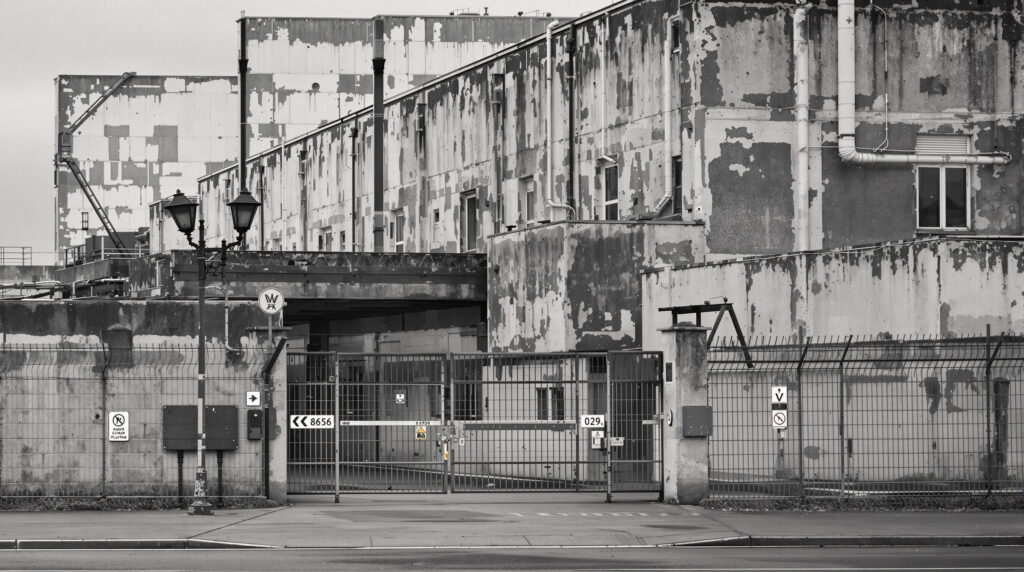
David: The location was actually a stroke of luck at the start. Leni had the connection to the property, and then it moved forward surprisingly smoothly and quickly. We were immediately fascinated by the place because it has a strong story, and at the same time it fits perfectly with what we’re trying to do: create a safe, closed, and professional space for collective cannabis cultivation.
Of course, a site like this comes with special requirements. For us, it was mainly about using the spaces in a way that ensures security, access control, documentation, and full compliance with legal requirements. The historical context makes the story interesting, but ultimately what matters for approval is not the mythology of the place, but whether you can actually meet all the KCanG requirements in practice. We’ve worked very consistently on that from the beginning.
Question 2: Hurdles
Lucas Green has held a seven-year license since 2025 and has 50 members. Which organizational and legal hurdles proved most challenging, and what have you solved better than other CSCs you know from the umbrella organization?
David: The biggest issue was clearly the bureaucratic burden. At times, you feel like you’d need to study everything from scratch, because you have to master so many topics simultaneously: legal requirements, prevention concepts, health and youth protection, security concepts, cultivation planning, documentation, disposal concepts, and many other points. In total, there are roughly nine concepts that must be carefully thought through and formulated.
It’s also difficult because there isn’t simply a perfect checklist you can work through. Much of it you have to figure out yourself, ask about, interpret, and then present in a way that makes sense to authorities. Additionally, how this topic is handled varies somewhat by state, making it even more complex for founders.
That’s why we’ve been in constant contact with other applicants from different states. At the same time, we were fortunate in Berlin to work with contacts at LaGeSo who were communicative, responsive, and constructive. We wouldn’t say we did anything fundamentally better than other CSCs—we lack complete insight for that. But one advantage was certainly that we had a concrete location early on. Many applications start without a reliable site, and that makes everything significantly harder.
Question 3: No-Investor Policy
„No external investors“ is your explicit policy. How does that scale economically if the CSC wants to grow, and where do you draw a hard line against investor inquiries?
David: For us, it’s important that Lucas Green remains an association and doesn’t become an investment case. The CSC concept, in our view, lives on community, responsibility, and the goal of pushing back the black market. It shouldn’t be about extracting as much profit as possible from a new market.
Economically, of course, that’s challenging. As things stand now, we don’t pay ourselves salaries. We carry much of it ourselves with enormous amounts of time, energy, and personal commitment. We’ve invested personally and are trying to build the whole thing sustainably, step by step. Whether circumstances change someday to make honorariums or salaries more clearly possible remains to be seen.
We’ve already had inquiries from companies, including from abroad, that were fundamentally interested in equity stakes or collaboration. But our position is clear: we don’t want external investors who have influence over the association, cultivation, or direction. Collaborations can make sense, but control, values, and responsibility must remain with the association and its members.
„We don’t want external investors who have influence over the association, cultivation, or direction.“
David Boldt and Madeleine Lengert · Lucas Green e.V.
Question 4: Lessons Learned
What three lessons learned would you give to the next generation of CSC founders—things you wish you’d known earlier?
David: First: No matter how simple it sounds at the start, it will almost certainly become significantly more complex than expected. A CSC isn’t just an association with plants. It’s a combination of association law, administrative law, prevention, quality management, security, documentation, communication, and a lot of operational work.
Second: Don’t try to do too much too quickly. Processes take time, authorities need time, concepts need to mature, and you also need to build structures internally. In the end, you make better progress by working through things step by step carefully rather than trying to force everything at once.
Third: Seek out exchanges early. With other CSCs, with other applicants, with people from administration, law, cultivation, and prevention. Many questions can’t be solved alone at a desk. Especially because implementation can vary by state, it helps enormously to compare experiences and speak openly about problems.
„A CSC isn’t just an association with plants. It’s a combination of association law, administrative law, prevention, quality management, security, documentation, and a lot of operational work.“
David Boldt and Madeleine Lengert · Lucas Green e.V.
Question 5: Member Expectations
Member expectations vary widely between patients, adult-use consumers, and connoisseurs. How do you balance that in your cultivation planning?
David: We mainly try to solve this through transparency and participation. Lucas Green has a member participation concept, and we involve our members as much as possible. There are people who are deeply engaged in the subject, understand strains, like to think along, and want to contribute more actively. But there are also members who primarily seek a reliable, safe, and welcoming community and want to make their minimum contribution to be supplied legally and in a controlled way.
Both are completely legitimate for us. What’s important is that everyone understands that a CSC works collectively and not like a conventional shop. That’s why we try to explain expectations early and communicate honestly about what’s possible and what isn’t.
In our cultivation planning, we make sure to create a balanced portfolio. It shouldn’t just be about maximum potency, but also about flavor, effects, terpene profiles, everyday usability, and diversity. That way we can better meet different needs.
Question 6: Strains
What specific cannabis strains does Lucas Green grow, and what criteria guide your selection?
David: In our first harvest, we had four different strains. In the second harvest, we’re already launching with eight strains, possibly even right before Mary Jane. Currently we’re working with Banana Conda, Blue Zushi, Cap Junkie, Cream Runtz, Fruitopia, Purple Octane, Permanent Marker, and La Bomba.
Several factors play a role in selection. Of course, we include strains that we ourselves find exciting and celebrate. At the same time, it’s not just about personal preferences, but about offering something balanced for different tastes and needs. Some members look for fruitier profiles, others prefer intense, gassy, or more classic directions. Some focus more on effects, others on aroma or texture.
Our goal is to better understand with each harvest what our members really value. The strain selection should therefore not be guided only by trends, but also by community feedback, growing experience, quality, and reliability.
Question 7: KCanG Wishlist
KCanG is a transitional law as of 2026. What regulatory change would make life easiest for you?
David: The biggest help would be clearer permission to inform people that we exist and what we do. We absolutely understand that cannabis consumption shouldn’t be advertised or promoted. That’s not our goal either. But currently the line between prohibited advertising and factual information is often unclear.
For us, it’s about being a legal, responsible, and high-quality contact point for people who consume cannabis anyway. But if these people can barely find us or we can barely explain how a CSC works, the goal of combating the black market becomes unnecessarily difficult.
More legal certainty in factual public relations would therefore be extremely helpful. Clear rules for what an association can communicate: opening hours, concept, membership, prevention, quality, transparency, and experience reports. Not as consumption incentive, but as information.
Question 8: Five-Year Vision
Where do you see Lucas Green in five years, and what role do you play in Berlin’s and Germany’s CSC ecosystem?
David: In five years, we see Lucas Green as a grown, stable, and fully utilized association with the maximum possible membership. Our goal is to be a showcase for how a CSC can function professionally, transparently, and collectively.
We want to demonstrate that legal cannabis cultivation in an association isn’t just theoretically possible, but can practically create real added value: for members, for prevention, for quality, and for reducing the black market. We’re not out to be the biggest or loudest, but to work cleanly and share experiences.
In Berlin’s and Germany’s CSC ecosystem, we want to play a constructive role. We want to exchange, learn from each other, and show other associations which paths can work and which mistakes might be worth avoiding. Ultimately, everyone benefits when CSCs become more professional, more transparent, and better understood.
Note: This interview was conducted in writing. Responses have been lightly edited for readability and grammar without changing content. David Boldt and Madeleine Lengert will speak on Saturday, June 13, 2026, at 12:30 p.m. on the Masterclass Stage of the Mary Jane Berlin about their experience founding Lucas Green. Learn more at: lucasgreen.de.
Frequently Asked Questions About Founding a Cannabis Social Club
How do you found a Cannabis Social Club in Germany?
Founding works through a cultivation association under the KCanG: a registered association, administrative permission, plus a viable security and cultivation concept. Our step-by-step guide to CSC founding shows the full process. You’ll find what rules the CanG has set since 2026 in our comprehensive legalization overview.
How long is a CSC license valid for and how many members are permitted?
A cultivation association permit is initially granted for seven years, with renewal possible afterward. A club may accept no more than 500 members with residence or ordinary place of residence in Germany. Our overview of the status of CSCs in Germany shows how the club landscape has developed since the start.
What can a Cannabis Social Club grow and distribute to members?
Permitted are collective home cultivation and distribution of up to 25 grams per day or 50 grams per month to members. Strict requirements apply for quality, documentation, and youth protection—read more in our article on workplace safety and quality in the Cannabis Social Club.
Can you work or provide consulting at a Cannabis Social Club?
Yes—many clubs rely on volunteer or advisory members, for example in cultivation, administration, prevention, and youth protection. Learn what such advisory work concretely entails in our article Working as an advisor in a Cannabis Social Club.
💬 In Conversation
David Boldt and Madeleine „Leni“ Lengert, Lucas Green e.V.
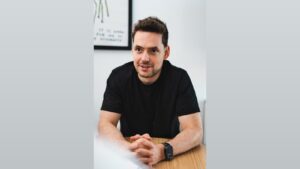
David Boldt and Madeleine „Leni“ Lengert are the founding board members of Lucas Green e.V., a Cannabis Social Club in Berlin-Weißensee. At the Mary Jane Berlin, they will speak on Saturday, June 13, 2026, at 12:30 p.m. on the Masterclass Stage about their experience report from twelve months of founding. We had them answer eight questions in writing beforehand.
Question 1: The Stasi Site
You founded your CSC on a former Stasi ammunition depot in Berlin-Weißensee. How exactly did you land on this location, and what specific requirements come with such a historically significant site?
David: The location was actually a stroke of luck at the start. Leni had the connection to the property, and then it moved forward surprisingly smoothly and quickly. We were immediately fascinated by the place because it has a strong story, and at the same time it fits perfectly with what we’re trying to do: create a safe, closed, and professional space for collective cannabis cultivation.
Of course, a site like this comes with special requirements. For us, it was mainly about using the spaces in a way that ensures security, access control, documentation, and full compliance with legal requirements. The historical context makes the story interesting, but ultimately what matters for approval is not the mythology of the place, but whether you can actually meet all the KCanG requirements in practice. We’ve worked very consistently on that from the beginning.
Question 2: Hurdles
Lucas Green has held a seven-year license since 2025 and has 50 members. Which organizational and legal hurdles proved most challenging, and what have you solved better than other CSCs you know from the umbrella organization?
David: The biggest issue was clearly the bureaucratic burden. At times, you feel like you’d need to study everything from scratch, because you have to master so many topics simultaneously: legal requirements, prevention concepts, health and youth protection, security concepts, cultivation planning, documentation, disposal concepts, and many other points. In total, there are roughly nine concepts that must be carefully thought through and formulated.
It’s also difficult because there isn’t simply a perfect checklist you can work through. Much of it you have to figure out yourself, ask about, interpret, and then present in a way that makes sense to authorities. Additionally, how this topic is handled varies somewhat by state, making it even more complex for founders.
That’s why we’ve been in constant contact with other applicants from different states. At the same time, we were fortunate in Berlin to work with contacts at LaGeSo who were communicative, responsive, and constructive. We wouldn’t say we did anything fundamentally better than other CSCs—we lack complete insight for that. But one advantage was certainly that we had a concrete location early on. Many applications start without a reliable site, and that makes everything significantly harder.
Question 3: No-Investor Policy
„No external investors“ is your explicit policy. How does that scale economically if the CSC wants to grow, and where do you draw a hard line against investor inquiries?
David: For us, it’s important that Lucas Green remains an association and doesn’t become an investment case. The CSC concept, in our view, lives on community, responsibility, and the goal of pushing back the black market. It shouldn’t be about extracting as much profit as possible from a new market.
Economically, of course, that’s challenging. As things stand now, we don’t pay ourselves salaries. We carry much of it ourselves with enormous amounts of time, energy, and personal commitment. We’ve invested personally and are trying to build the whole thing sustainably, step by step. Whether circumstances change someday to make honorariums or salaries more clearly possible remains to be seen.
We’ve already had inquiries from companies, including from abroad, that were fundamentally interested in equity stakes or collaboration. But our position is clear: we don’t want external investors who have influence over the association, cultivation, or direction. Collaborations can make sense, but control, values, and responsibility must remain with the association and its members.
„We don’t want external investors who have influence over the association, cultivation, or direction.“
David Boldt and Madeleine Lengert · Lucas Green e.V.
Question 4: Lessons Learned
What three lessons learned would you give to the next generation of CSC founders—things you wish you’d known earlier?
David: First: No matter how simple it sounds at the start, it will almost certainly become significantly more complex than expected. A CSC isn’t just an association with plants. It’s a combination of association law, administrative law, prevention, quality management, security, documentation, communication, and a lot of operational work.
Second: Don’t try to do too much too quickly. Processes take time, authorities need time, concepts need to mature, and you also need to build structures internally. In the end, you make better progress by working through things step by step carefully rather than trying to force everything at once.
Third: Seek out exchanges early. With other CSCs, with other applicants, with people from administration, law, cultivation, and prevention. Many questions can’t be solved alone at a desk. Especially because implementation can vary by state, it helps enormously to compare experiences and speak openly about problems.
„A CSC isn’t just an association with plants. It’s a combination of association law, administrative law, prevention, quality management, security, documentation, and a lot of operational work.“
David Boldt and Madeleine Lengert · Lucas Green e.V.
Question 5: Member Expectations
Member expectations vary widely between patients, adult-use consumers, and connoisseurs. How do you balance that in your cultivation planning?
David: We mainly try to solve this through transparency and participation. Lucas Green has a member participation concept, and we involve our members as much as possible. There are people who are deeply engaged in the subject, understand strains, like to think along, and want to contribute more actively. But there are also members who primarily seek a reliable, safe, and welcoming community and want to make their minimum contribution to be supplied legally and in a controlled way.
Both are completely legitimate for us. What’s important is that everyone understands that a CSC works collectively and not like a conventional shop. That’s why we try to explain expectations early and communicate honestly about what’s possible and what isn’t.
In our cultivation planning, we make sure to create a balanced portfolio. It shouldn’t just be about maximum potency, but also about flavor, effects, terpene profiles, everyday usability, and diversity. That way we can better meet different needs.
Question 6: Strains
What specific cannabis strains does Lucas Green grow, and what criteria guide your selection?
David: In our first harvest, we had four different strains. In the second harvest, we’re already launching with eight strains, possibly even right before Mary Jane. Currently we’re working with Banana Conda, Blue Zushi, Cap Junkie, Cream Runtz, Fruitopia, Purple Octane, Permanent Marker, and La Bomba.
Several factors play a role in selection. Of course, we include strains that we ourselves find exciting and celebrate. At the same time, it’s not just about personal preferences, but about offering something balanced for different tastes and needs. Some members look for fruitier profiles, others prefer intense, gassy, or more classic directions. Some focus more on effects, others on aroma or texture.
Our goal is to better understand with each harvest what our members really value. The strain selection should therefore not be guided only by trends, but also by community feedback, growing experience, quality, and reliability.
Question 7: KCanG Wishlist
KCanG is a transitional law as of 2026. What regulatory change would make life easiest for you?
David: The biggest help would be clearer permission to inform people that we exist and what we do. We absolutely understand that cannabis consumption shouldn’t be advertised or promoted. That’s not our goal either. But currently the line between prohibited advertising and factual information is often unclear.
For us, it’s about being a legal, responsible, and high-quality contact point for people who consume cannabis anyway. But if these people can barely find us or we can barely explain how a CSC works, the goal of combating the black market becomes unnecessarily difficult.
More legal certainty in factual public relations would therefore be extremely helpful. Clear rules for what an association can communicate: opening hours, concept, membership, prevention, quality, transparency, and experience reports. Not as consumption incentive, but as information.
Question 8: Five-Year Vision
Where do you see Lucas Green in five years, and what role do you play in Berlin’s and Germany’s CSC ecosystem?
David: In five years, we see Lucas Green as a grown, stable, and fully utilized association with the maximum possible membership. Our goal is to be a showcase for how a CSC can function professionally, transparently, and collectively.
We want to demonstrate that legal cannabis cultivation in an association isn’t just theoretically possible, but can practically create real added value: for members, for prevention, for quality, and for reducing the black market. We’re not out to be the biggest or loudest, but to work cleanly and share experiences.
In Berlin’s and Germany’s CSC ecosystem, we want to play a constructive role. We want to exchange, learn from each other, and show other associations which paths can work and which mistakes might be worth avoiding. Ultimately, everyone benefits when CSCs become more professional, more transparent, and better understood.
Note: This interview was conducted in writing. Responses have been lightly edited for readability and grammar without changing content. David Boldt and Madeleine Lengert will speak on Saturday, June 13, 2026, at 12:30 p.m. on the Masterclass Stage of the Mary Jane Berlin about their experience founding Lucas Green. Learn more at: lucasgreen.de.
Frequently Asked Questions About Founding a Cannabis Social Club
How do you found a Cannabis Social Club in Germany?
Founding works through a cultivation association under the KCanG: a registered association, administrative permission, plus a viable security and cultivation concept. Our step-by-step guide to CSC founding shows the full process. You’ll find what rules the CanG has set since 2026 in our comprehensive legalization overview.
How long is a CSC license valid for and how many members are permitted?
A cultivation association permit is initially granted for seven years, with renewal possible afterward. A club may accept no more than 500 members with residence or ordinary place of residence in Germany. Our overview of the status of CSCs in Germany shows how the club landscape has developed since the start.
What can a Cannabis Social Club grow and distribute to members?
Permitted are collective home cultivation and distribution of up to 25 grams per day or 50 grams per month to members. Strict requirements apply for quality, documentation, and youth protection—read more in our article on workplace safety and quality in the Cannabis Social Club.
Can you work or provide consulting at a Cannabis Social Club?
Yes—many clubs rely on volunteer or advisory members, for example in cultivation, administration, prevention, and youth protection. Learn what such advisory work concretely entails in our article Working as an advisor in a Cannabis Social Club.
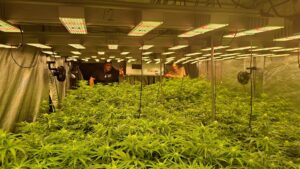
If you walk along Neumagener Straße in Berlin-Weißensee, it’s easy to overlook Lucas Green. The area looks like an unremarkable industrial zone, yet hidden in the background is one of the city’s most unusual cannabis startup stories: David Boldt and Madeleine „Leni“ Lengert have launched their Cannabis Social Club on a former Stasi ammunition depot. Since 2025, Lucas Green e.V. holds a seven-year license, has 50 members, one harvest completed, and a second one imminent.
For our readers, this story is relevant for several reasons. First, because as of 2026, the KCanG represents a transitional regime in which many cultivation associations are still wrestling with concepts that David and Leni have already worked through. Second, because Lucas Green pursues an explicitly programmatic approach: no external investors, no profit logic, but rather association, responsibility, and combating the black market. In a market where many now smell money, that’s a statement. And third, because the two will publicly share this experience report on the Mary Jane Berlin on Saturday, June 13, at 12:30 p.m. on the Masterclass Stage.
In the following interview, David and Leni speak honestly about the bureaucratic friction points of CSC administration (nine concepts must be carefully drafted), about how an association can grow without taking investor money, and about the strains going into the second harvest. They discuss how they connected with the Stasi site, why they currently don’t take salaries, and which regulatory change is most urgent: not advertising, but finally clear rules for factual information.
💬 In Conversation
David Boldt and Madeleine „Leni“ Lengert, Lucas Green e.V.
David Boldt and Madeleine „Leni“ Lengert are the founding board members of Lucas Green e.V., a Cannabis Social Club in Berlin-Weißensee. At the Mary Jane Berlin, they will speak on Saturday, June 13, 2026, at 12:30 p.m. on the Masterclass Stage about their experience report from twelve months of founding. We had them answer eight questions in writing beforehand.
Question 1: The Stasi Site
You founded your CSC on a former Stasi ammunition depot in Berlin-Weißensee. How exactly did you land on this location, and what specific requirements come with such a historically significant site?
David: The location was actually a stroke of luck at the start. Leni had the connection to the property, and then it moved forward surprisingly smoothly and quickly. We were immediately fascinated by the place because it has a strong story, and at the same time it fits perfectly with what we’re trying to do: create a safe, closed, and professional space for collective cannabis cultivation.
Of course, a site like this comes with special requirements. For us, it was mainly about using the spaces in a way that ensures security, access control, documentation, and full compliance with legal requirements. The historical context makes the story interesting, but ultimately what matters for approval is not the mythology of the place, but whether you can actually meet all the KCanG requirements in practice. We’ve worked very consistently on that from the beginning.
Question 2: Hurdles
Lucas Green has held a seven-year license since 2025 and has 50 members. Which organizational and legal hurdles proved most challenging, and what have you solved better than other CSCs you know from the umbrella organization?
David: The biggest issue was clearly the bureaucratic burden. At times, you feel like you’d need to study everything from scratch, because you have to master so many topics simultaneously: legal requirements, prevention concepts, health and youth protection, security concepts, cultivation planning, documentation, disposal concepts, and many other points. In total, there are roughly nine concepts that must be carefully thought through and formulated.
It’s also difficult because there isn’t simply a perfect checklist you can work through. Much of it you have to figure out yourself, ask about, interpret, and then present in a way that makes sense to authorities. Additionally, how this topic is handled varies somewhat by state, making it even more complex for founders.
That’s why we’ve been in constant contact with other applicants from different states. At the same time, we were fortunate in Berlin to work with contacts at LaGeSo who were communicative, responsive, and constructive. We wouldn’t say we did anything fundamentally better than other CSCs—we lack complete insight for that. But one advantage was certainly that we had a concrete location early on. Many applications start without a reliable site, and that makes everything significantly harder.
Question 3: No-Investor Policy
„No external investors“ is your explicit policy. How does that scale economically if the CSC wants to grow, and where do you draw a hard line against investor inquiries?
David: For us, it’s important that Lucas Green remains an association and doesn’t become an investment case. The CSC concept, in our view, lives on community, responsibility, and the goal of pushing back the black market. It shouldn’t be about extracting as much profit as possible from a new market.
Economically, of course, that’s challenging. As things stand now, we don’t pay ourselves salaries. We carry much of it ourselves with enormous amounts of time, energy, and personal commitment. We’ve invested personally and are trying to build the whole thing sustainably, step by step. Whether circumstances change someday to make honorariums or salaries more clearly possible remains to be seen.
We’ve already had inquiries from companies, including from abroad, that were fundamentally interested in equity stakes or collaboration. But our position is clear: we don’t want external investors who have influence over the association, cultivation, or direction. Collaborations can make sense, but control, values, and responsibility must remain with the association and its members.
„We don’t want external investors who have influence over the association, cultivation, or direction.“
David Boldt and Madeleine Lengert · Lucas Green e.V.
Question 4: Lessons Learned
What three lessons learned would you give to the next generation of CSC founders—things you wish you’d known earlier?
David: First: No matter how simple it sounds at the start, it will almost certainly become significantly more complex than expected. A CSC isn’t just an association with plants. It’s a combination of association law, administrative law, prevention, quality management, security, documentation, communication, and a lot of operational work.
Second: Don’t try to do too much too quickly. Processes take time, authorities need time, concepts need to mature, and you also need to build structures internally. In the end, you make better progress by working through things step by step carefully rather than trying to force everything at once.
Third: Seek out exchanges early. With other CSCs, with other applicants, with people from administration, law, cultivation, and prevention. Many questions can’t be solved alone at a desk. Especially because implementation can vary by state, it helps enormously to compare experiences and speak openly about problems.
„A CSC isn’t just an association with plants. It’s a combination of association law, administrative law, prevention, quality management, security, documentation, and a lot of operational work.“
David Boldt and Madeleine Lengert · Lucas Green e.V.
Question 5: Member Expectations
Member expectations vary widely between patients, adult-use consumers, and connoisseurs. How do you balance that in your cultivation planning?
David: We mainly try to solve this through transparency and participation. Lucas Green has a member participation concept, and we involve our members as much as possible. There are people who are deeply engaged in the subject, understand strains, like to think along, and want to contribute more actively. But there are also members who primarily seek a reliable, safe, and welcoming community and want to make their minimum contribution to be supplied legally and in a controlled way.
Both are completely legitimate for us. What’s important is that everyone understands that a CSC works collectively and not like a conventional shop. That’s why we try to explain expectations early and communicate honestly about what’s possible and what isn’t.
In our cultivation planning, we make sure to create a balanced portfolio. It shouldn’t just be about maximum potency, but also about flavor, effects, terpene profiles, everyday usability, and diversity. That way we can better meet different needs.
Question 6: Strains
What specific cannabis strains does Lucas Green grow, and what criteria guide your selection?
David: In our first harvest, we had four different strains. In the second harvest, we’re already launching with eight strains, possibly even right before Mary Jane. Currently we’re working with Banana Conda, Blue Zushi, Cap Junkie, Cream Runtz, Fruitopia, Purple Octane, Permanent Marker, and La Bomba.
Several factors play a role in selection. Of course, we include strains that we ourselves find exciting and celebrate. At the same time, it’s not just about personal preferences, but about offering something balanced for different tastes and needs. Some members look for fruitier profiles, others prefer intense, gassy, or more classic directions. Some focus more on effects, others on aroma or texture.
Our goal is to better understand with each harvest what our members really value. The strain selection should therefore not be guided only by trends, but also by community feedback, growing experience, quality, and reliability.
Question 7: KCanG Wishlist
KCanG is a transitional law as of 2026. What regulatory change would make life easiest for you?
David: The biggest help would be clearer permission to inform people that we exist and what we do. We absolutely understand that cannabis consumption shouldn’t be advertised or promoted. That’s not our goal either. But currently the line between prohibited advertising and factual information is often unclear.
For us, it’s about being a legal, responsible, and high-quality contact point for people who consume cannabis anyway. But if these people can barely find us or we can barely explain how a CSC works, the goal of combating the black market becomes unnecessarily difficult.
More legal certainty in factual public relations would therefore be extremely helpful. Clear rules for what an association can communicate: opening hours, concept, membership, prevention, quality, transparency, and experience reports. Not as consumption incentive, but as information.
Question 8: Five-Year Vision
Where do you see Lucas Green in five years, and what role do you play in Berlin’s and Germany’s CSC ecosystem?
David: In five years, we see Lucas Green as a grown, stable, and fully utilized association with the maximum possible membership. Our goal is to be a showcase for how a CSC can function professionally, transparently, and collectively.
We want to demonstrate that legal cannabis cultivation in an association isn’t just theoretically possible, but can practically create real added value: for members, for prevention, for quality, and for reducing the black market. We’re not out to be the biggest or loudest, but to work cleanly and share experiences.
In Berlin’s and Germany’s CSC ecosystem, we want to play a constructive role. We want to exchange, learn from each other, and show other associations which paths can work and which mistakes might be worth avoiding. Ultimately, everyone benefits when CSCs become more professional, more transparent, and better understood.
Note: This interview was conducted in writing. Responses have been lightly edited for readability and grammar without changing content. David Boldt and Madeleine Lengert will speak on Saturday, June 13, 2026, at 12:30 p.m. on the Masterclass Stage of the Mary Jane Berlin about their experience founding Lucas Green. Learn more at: lucasgreen.de.
Frequently Asked Questions About Founding a Cannabis Social Club
How do you found a Cannabis Social Club in Germany?
Founding works through a cultivation association under the KCanG: a registered association, administrative permission, plus a viable security and cultivation concept. Our step-by-step guide to CSC founding shows the full process. You’ll find what rules the CanG has set since 2026 in our comprehensive legalization overview.
How long is a CSC license valid for and how many members are permitted?
A cultivation association permit is initially granted for seven years, with renewal possible afterward. A club may accept no more than 500 members with residence or ordinary place of residence in Germany. Our overview of the status of CSCs in Germany shows how the club landscape has developed since the start.
What can a Cannabis Social Club grow and distribute to members?
Permitted are collective home cultivation and distribution of up to 25 grams per day or 50 grams per month to members. Strict requirements apply for quality, documentation, and youth protection—read more in our article on workplace safety and quality in the Cannabis Social Club.
Can you work or provide consulting at a Cannabis Social Club?
Yes—many clubs rely on volunteer or advisory members, for example in cultivation, administration, prevention, and youth protection. Learn what such advisory work concretely entails in our article Working as an advisor in a Cannabis Social Club.
If you walk along Neumagener Straße in Berlin-Weißensee, it’s easy to overlook Lucas Green. The area looks like an unremarkable industrial zone, yet hidden in the background is one of the city’s most unusual cannabis startup stories: David Boldt and Madeleine „Leni“ Lengert have launched their Cannabis Social Club on a former Stasi ammunition depot. Since 2025, Lucas Green e.V. holds a seven-year license, has 50 members, one harvest completed, and a second one imminent.
For our readers, this story is relevant for several reasons. First, because as of 2026, the KCanG represents a transitional regime in which many cultivation associations are still wrestling with concepts that David and Leni have already worked through. Second, because Lucas Green pursues an explicitly programmatic approach: no external investors, no profit logic, but rather association, responsibility, and combating the black market. In a market where many now smell money, that’s a statement. And third, because the two will publicly share this experience report on the Mary Jane Berlin on Saturday, June 13, at 12:30 p.m. on the Masterclass Stage.
In the following interview, David and Leni speak honestly about the bureaucratic friction points of CSC administration (nine concepts must be carefully drafted), about how an association can grow without taking investor money, and about the strains going into the second harvest. They discuss how they connected with the Stasi site, why they currently don’t take salaries, and which regulatory change is most urgent: not advertising, but finally clear rules for factual information.
💬 In Conversation
David Boldt and Madeleine „Leni“ Lengert, Lucas Green e.V.
David Boldt and Madeleine „Leni“ Lengert are the founding board members of Lucas Green e.V., a Cannabis Social Club in Berlin-Weißensee. At the Mary Jane Berlin, they will speak on Saturday, June 13, 2026, at 12:30 p.m. on the Masterclass Stage about their experience report from twelve months of founding. We had them answer eight questions in writing beforehand.
Question 1: The Stasi Site
You founded your CSC on a former Stasi ammunition depot in Berlin-Weißensee. How exactly did you land on this location, and what specific requirements come with such a historically significant site?
David: The location was actually a stroke of luck at the start. Leni had the connection to the property, and then it moved forward surprisingly smoothly and quickly. We were immediately fascinated by the place because it has a strong story, and at the same time it fits perfectly with what we’re trying to do: create a safe, closed, and professional space for collective cannabis cultivation.
Of course, a site like this comes with special requirements. For us, it was mainly about using the spaces in a way that ensures security, access control, documentation, and full compliance with legal requirements. The historical context makes the story interesting, but ultimately what matters for approval is not the mythology of the place, but whether you can actually meet all the KCanG requirements in practice. We’ve worked very consistently on that from the beginning.
Question 2: Hurdles
Lucas Green has held a seven-year license since 2025 and has 50 members. Which organizational and legal hurdles proved most challenging, and what have you solved better than other CSCs you know from the umbrella organization?
David: The biggest issue was clearly the bureaucratic burden. At times, you feel like you’d need to study everything from scratch, because you have to master so many topics simultaneously: legal requirements, prevention concepts, health and youth protection, security concepts, cultivation planning, documentation, disposal concepts, and many other points. In total, there are roughly nine concepts that must be carefully thought through and formulated.
It’s also difficult because there isn’t simply a perfect checklist you can work through. Much of it you have to figure out yourself, ask about, interpret, and then present in a way that makes sense to authorities. Additionally, how this topic is handled varies somewhat by state, making it even more complex for founders.
That’s why we’ve been in constant contact with other applicants from different states. At the same time, we were fortunate in Berlin to work with contacts at LaGeSo who were communicative, responsive, and constructive. We wouldn’t say we did anything fundamentally better than other CSCs—we lack complete insight for that. But one advantage was certainly that we had a concrete location early on. Many applications start without a reliable site, and that makes everything significantly harder.
Question 3: No-Investor Policy
„No external investors“ is your explicit policy. How does that scale economically if the CSC wants to grow, and where do you draw a hard line against investor inquiries?
David: For us, it’s important that Lucas Green remains an association and doesn’t become an investment case. The CSC concept, in our view, lives on community, responsibility, and the goal of pushing back the black market. It shouldn’t be about extracting as much profit as possible from a new market.
Economically, of course, that’s challenging. As things stand now, we don’t pay ourselves salaries. We carry much of it ourselves with enormous amounts of time, energy, and personal commitment. We’ve invested personally and are trying to build the whole thing sustainably, step by step. Whether circumstances change someday to make honorariums or salaries more clearly possible remains to be seen.
We’ve already had inquiries from companies, including from abroad, that were fundamentally interested in equity stakes or collaboration. But our position is clear: we don’t want external investors who have influence over the association, cultivation, or direction. Collaborations can make sense, but control, values, and responsibility must remain with the association and its members.
„We don’t want external investors who have influence over the association, cultivation, or direction.“
David Boldt and Madeleine Lengert · Lucas Green e.V.
Question 4: Lessons Learned
What three lessons learned would you give to the next generation of CSC founders—things you wish you’d known earlier?
David: First: No matter how simple it sounds at the start, it will almost certainly become significantly more complex than expected. A CSC isn’t just an association with plants. It’s a combination of association law, administrative law, prevention, quality management, security, documentation, communication, and a lot of operational work.
Second: Don’t try to do too much too quickly. Processes take time, authorities need time, concepts need to mature, and you also need to build structures internally. In the end, you make better progress by working through things step by step carefully rather than trying to force everything at once.
Third: Seek out exchanges early. With other CSCs, with other applicants, with people from administration, law, cultivation, and prevention. Many questions can’t be solved alone at a desk. Especially because implementation can vary by state, it helps enormously to compare experiences and speak openly about problems.
„A CSC isn’t just an association with plants. It’s a combination of association law, administrative law, prevention, quality management, security, documentation, and a lot of operational work.“
David Boldt and Madeleine Lengert · Lucas Green e.V.
Question 5: Member Expectations
Member expectations vary widely between patients, adult-use consumers, and connoisseurs. How do you balance that in your cultivation planning?
David: We mainly try to solve this through transparency and participation. Lucas Green has a member participation concept, and we involve our members as much as possible. There are people who are deeply engaged in the subject, understand strains, like to think along, and want to contribute more actively. But there are also members who primarily seek a reliable, safe, and welcoming community and want to make their minimum contribution to be supplied legally and in a controlled way.
Both are completely legitimate for us. What’s important is that everyone understands that a CSC works collectively and not like a conventional shop. That’s why we try to explain expectations early and communicate honestly about what’s possible and what isn’t.
In our cultivation planning, we make sure to create a balanced portfolio. It shouldn’t just be about maximum potency, but also about flavor, effects, terpene profiles, everyday usability, and diversity. That way we can better meet different needs.
Question 6: Strains
What specific cannabis strains does Lucas Green grow, and what criteria guide your selection?
David: In our first harvest, we had four different strains. In the second harvest, we’re already launching with eight strains, possibly even right before Mary Jane. Currently we’re working with Banana Conda, Blue Zushi, Cap Junkie, Cream Runtz, Fruitopia, Purple Octane, Permanent Marker, and La Bomba.
Several factors play a role in selection. Of course, we include strains that we ourselves find exciting and celebrate. At the same time, it’s not just about personal preferences, but about offering something balanced for different tastes and needs. Some members look for fruitier profiles, others prefer intense, gassy, or more classic directions. Some focus more on effects, others on aroma or texture.
Our goal is to better understand with each harvest what our members really value. The strain selection should therefore not be guided only by trends, but also by community feedback, growing experience, quality, and reliability.
Question 7: KCanG Wishlist
KCanG is a transitional law as of 2026. What regulatory change would make life easiest for you?
David: The biggest help would be clearer permission to inform people that we exist and what we do. We absolutely understand that cannabis consumption shouldn’t be advertised or promoted. That’s not our goal either. But currently the line between prohibited advertising and factual information is often unclear.
For us, it’s about being a legal, responsible, and high-quality contact point for people who consume cannabis anyway. But if these people can barely find us or we can barely explain how a CSC works, the goal of combating the black market becomes unnecessarily difficult.
More legal certainty in factual public relations would therefore be extremely helpful. Clear rules for what an association can communicate: opening hours, concept, membership, prevention, quality, transparency, and experience reports. Not as consumption incentive, but as information.
Question 8: Five-Year Vision
Where do you see Lucas Green in five years, and what role do you play in Berlin’s and Germany’s CSC ecosystem?
David: In five years, we see Lucas Green as a grown, stable, and fully utilized association with the maximum possible membership. Our goal is to be a showcase for how a CSC can function professionally, transparently, and collectively.
We want to demonstrate that legal cannabis cultivation in an association isn’t just theoretically possible, but can practically create real added value: for members, for prevention, for quality, and for reducing the black market. We’re not out to be the biggest or loudest, but to work cleanly and share experiences.
In Berlin’s and Germany’s CSC ecosystem, we want to play a constructive role. We want to exchange, learn from each other, and show other associations which paths can work and which mistakes might be worth avoiding. Ultimately, everyone benefits when CSCs become more professional, more transparent, and better understood.
Note: This interview was conducted in writing. Responses have been lightly edited for readability and grammar without changing content. David Boldt and Madeleine Lengert will speak on Saturday, June 13, 2026, at 12:30 p.m. on the Masterclass Stage of the Mary Jane Berlin about their experience founding Lucas Green. Learn more at: lucasgreen.de.
Frequently Asked Questions About Founding a Cannabis Social Club
How do you found a Cannabis Social Club in Germany?
Founding works through a cultivation association under the KCanG: a registered association, administrative permission, plus a viable security and cultivation concept. Our step-by-step guide to CSC founding shows the full process. You’ll find what rules the CanG has set since 2026 in our comprehensive legalization overview.
How long is a CSC license valid for and how many members are permitted?
A cultivation association permit is initially granted for seven years, with renewal possible afterward. A club may accept no more than 500 members with residence or ordinary place of residence in Germany. Our overview of the status of CSCs in Germany shows how the club landscape has developed since the start.
What can a Cannabis Social Club grow and distribute to members?
Permitted are collective home cultivation and distribution of up to 25 grams per day or 50 grams per month to members. Strict requirements apply for quality, documentation, and youth protection—read more in our article on workplace safety and quality in the Cannabis Social Club.
Can you work or provide consulting at a Cannabis Social Club?
Würdest du selbst einen Cannabis Social Club gründen wollen?
Yes—many clubs rely on volunteer or advisory members, for example in cultivation, administration, prevention, and youth protection. Learn what such advisory work concretely entails in our article Working as an advisor in a Cannabis Social Club.







Branchen-Update
News, Analysen und Reportagen — mehrmals im Monat direkt in dein Postfach.