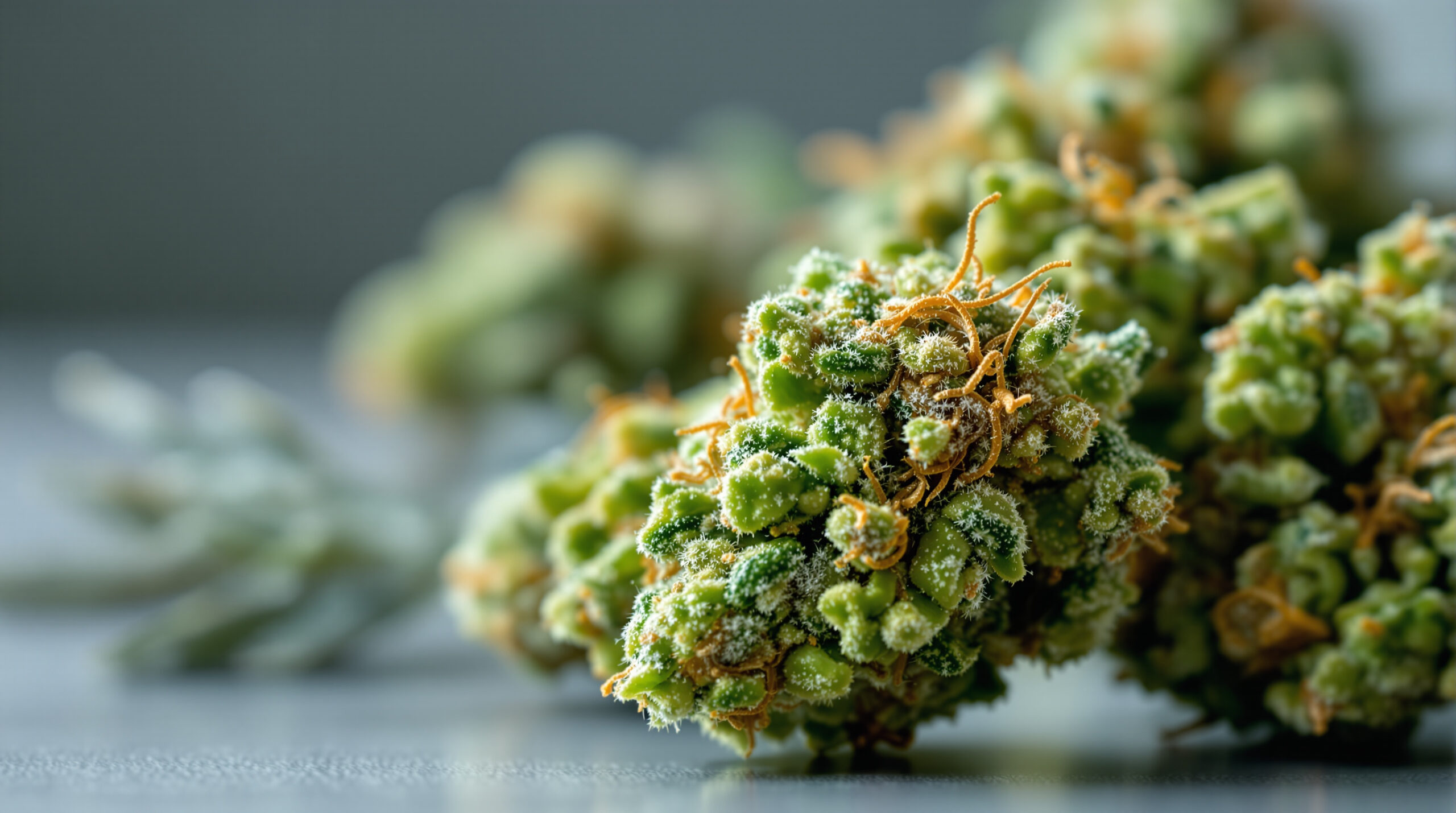
Germany’s medical cannabis market is transforming at breakneck speed. New research published in the International Journal of Drug Policy reveals where the market is heading. Patients are increasingly opting for high-potency flowers, while prices per gram are dropping significantly. The numbers paint a picture of a market coming of age since the Cannabis Act took effect.
📑 Inhaltsverzeichnis
What the Study Examined
The analysis is based on sales data from a single German mail-order pharmacy between December 2024 and November 2025. During this period, researchers analyzed approximately 1,000 different cannabis flower products with cumulative demand of roughly 1.58 tons.
The study’s authors themselves emphasize the key limitation: the data comes from only one pharmacy and doesn’t necessarily represent the entire market. However, the results align with the broader trend the industry has observed since the Cannabis Act came into effect in April 2024.


High-Potency Flowers Dominate Demand
The most striking finding concerns THC content. Products with 20 to 30 percent THC accounted for more than two-thirds of total demand. The shift toward potent varieties is clearly documented and matches what pharmacies and telemedicine providers report from their operations.
There are several reasons for this trend. Patients undergoing regular therapy need fewer grams when the active ingredient concentration is higher. At the same time, many consumers orient themselves by experiences from the recreational market, where high THC values have long been considered a quality marker.
Prices in Free Fall
Prices have moved in tandem with demand—downward. The median price per gram fell from €8.64 to €5.95 during the study period, a decline of roughly 31 percent. When adjusted for actual active compound content, the effect becomes even more pronounced. The cost per 10 milligrams of THC dropped by approximately 36 percent.
Other market data support this trend. The telemedicine provider Bloomwell evaluated 3,528 patient profiles and reported an average price of €4.52 per gram for March 2026. Meanwhile, the number of prescriptions increased by more than 4,500 percent compared to March 2024.
What These Numbers Mean for Patients
At first glance, falling prices are good news for patients. The self-pay market becomes more affordable and access broadens. However, the political landscape points in the opposite direction. The German Bundestag has decided to exclude cannabis flowers from statutory health insurance reimbursement, as detailed in our report on the priority given to finished pharmaceutical products. Patients hoping for cost coverage in the future will often need to try approved medications first, as our analysis of who benefits from this privilege demonstrates.
How cannabis medicine prices are determined hinges on complex mechanisms like the AMNOG process. For those starting therapy, it’s worth consulting the complete patient guide. That cannabis is increasingly viewed as an alternative to conventional painkillers is also shown by analyses involving several thousand patients.
Frequently Asked Questions
What THC content do German cannabis patients prefer?
According to the study, more than two-thirds of demand was for flowers with 20 to 30 percent THC. High-potency varieties clearly dominate the market.
How much have medical cannabis prices fallen?
The median price per gram at the surveyed pharmacy dropped from €8.64 to €5.95 over one year—a decline of roughly 31 percent.
Is this study representative of the entire German market?
Only to a limited extent. The analysis is based on data from a single mail-order pharmacy. The researchers themselves note that results don’t fully represent the overall market.
Why has demand for medical cannabis increased so dramatically?
Since the 2024 Cannabis Act, access through doctors and telemedicine has become easier. Providers report prescription numbers that have multiplied compared to 2024.
Will health insurance still cover cannabis flowers?
Only in limited cases going forward. The Bundestag decided to exclude flowers from standard statutory health insurance coverage and prioritize finished pharmaceutical products.
Sources: International Journal of Drug Policy, Bloomwell, Krautinvest (July 2026).








Welchen THC-Gehalt bevorzugst du bei medizinischen Cannabisblüten?
Branchen-Update
News, Analysen und Reportagen — mehrmals im Monat direkt in dein Postfach.