Hardly any decision in home growing is underestimated as much as the choice of pot. Many beginners place the seedling in a container that’s too large or keep the plant in a tiny seed tray until harvest. Both slow down growth. The right pot size for cannabis controls how much root mass develops, how often you need to water, and how high your final yield will be. This guide explains which volume makes sense in which growth phase, which pot material keeps roots healthy, and how to recognize a pot that’s too small in time.
📑 Inhaltsverzeichnis
- Why pot size determines yield and root health
- Pot size by growth phase: from seedling to final pot
- Fabric pot, plastic pot, or air-pot: the right material
- Autoflowers and pot size: why repotting becomes a problem here
- How to recognize a pot that’s too small
- Frequently asked questions
- 💬 Fragen? Frag den Hanf-Buddy!
Why pot size determines yield and root health
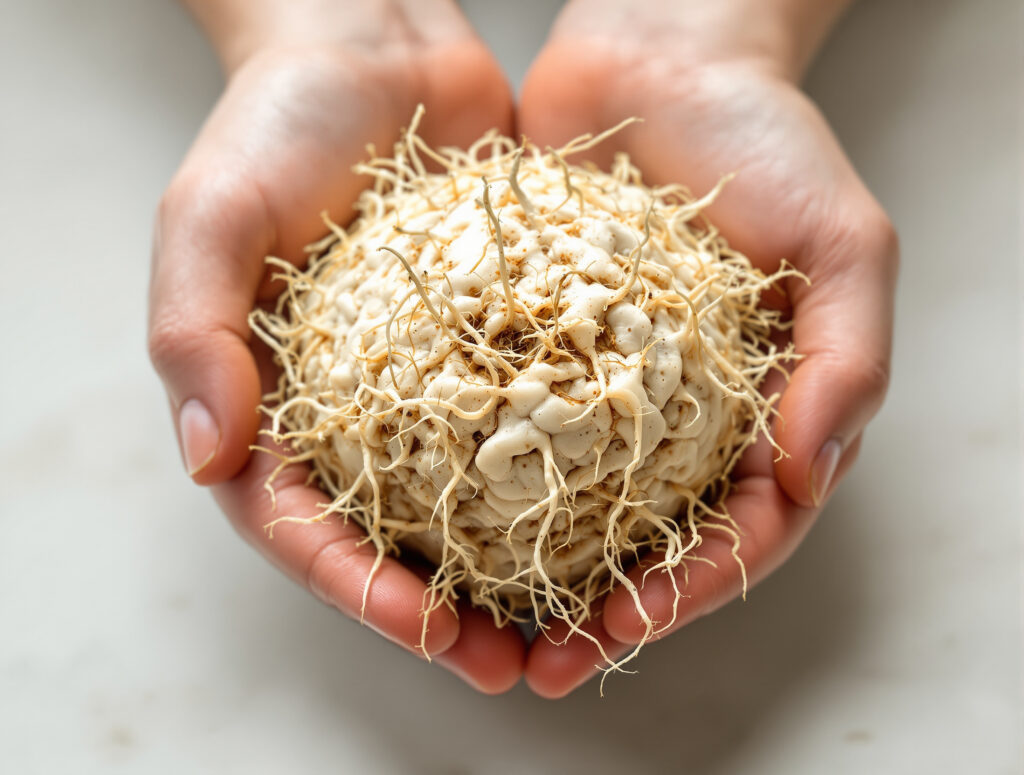
Cannabis only develops as much above-ground mass as the roots can supply below ground. A pot that’s too small limits root volume and thus water and nutrient uptake. The plant stays small, flowers early, and delivers poor yields. A container that’s too large is equally problematic. The large amount of moist substrate dries slowly, the few young roots stay constantly wet, and waterlogging promotes root rot and fungus gnats.
As a rough rule of thumb, around 7.5 to 10 liters of pot volume per 30 centimeters of expected plant height makes sense. A compact indoor plant of 80 centimeters therefore gets by with about 11 liters, while a large outdoor plant quickly needs 30 liters or more. How much space you actually have depends heavily on your setup. You can find more details in our overview of grow boxes and grow tents.


Pot size by growth phase: from seedling to final pot
Most growers repot their plants two to three times because the root system should grow with the plant. For germination and the first few days, a small seed tray or cup with 0.25 to 1 liter is sufficient. At this low volume, the substrate dries quickly, which encourages delicate roots to grow and prevents waterlogging.
During the vegetative phase, the plant moves into a medium-sized container of about 3 to 7 liters. Here it builds the majority of its leaf mass and root system. The final pot for flowering then holds 11 to 20 liters for a typical indoor variety. A proven rule is to roughly double the pot volume with each step. This way, roots always find fresh substrate without large amounts of unused soil standing wet. We explain in detail when exactly the right time has come in our article on why you should repot hemp as it grows larger.
| Growth Phase | Recommended Pot Volume |
|---|---|
| Germination and seedling | 0.25 to 1 liter |
| Vegetative phase | 3 to 7 liters |
| Flowering (indoor final pot) | 11 to 20 liters |
| Large outdoor plant | 30 to 50 liters and more |
These values are guidelines, not rigid specifications. Those working with limited space or growing many plants densely in a sea of green deliberately use smaller final pots of 6 to 10 liters. Those aiming for fewer but larger plants reach for the upper end of the recommendation.
In outdoor cultivation, these numbers shift upward because plants grow significantly larger over an entire season. Here 30 to 50 liters is the rule, and many growers plant their cannabis directly in garden beds where roots find practically unlimited space. What matters with every pot is good drainage. Without sufficient drainage holes at the bottom, irrigation water builds up regardless of how perfectly the volume is chosen. A proven trick is a thin layer of clay pellets at the pot bottom, which keeps excess water away from the root ball.
Fabric pot, plastic pot, or air-pot: the right material
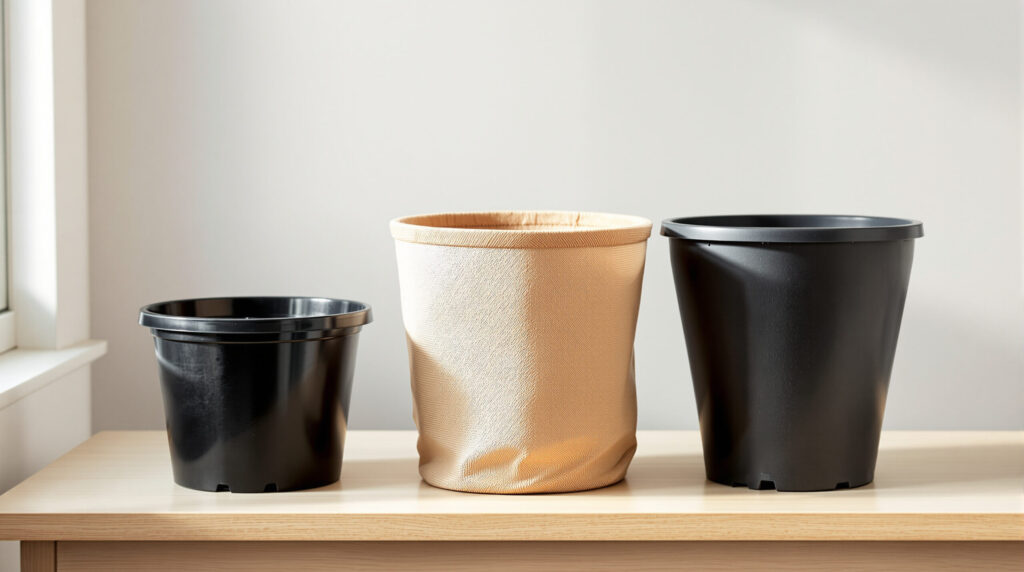
Beyond volume, material determines root health. Classic plastic pots are cheap and hold their shape, but have a drawback. Roots grow to the smooth wall, continue circling there, and become matted into a dense tangle over time. This condition is called root-bound. It noticeably slows nutrient uptake.
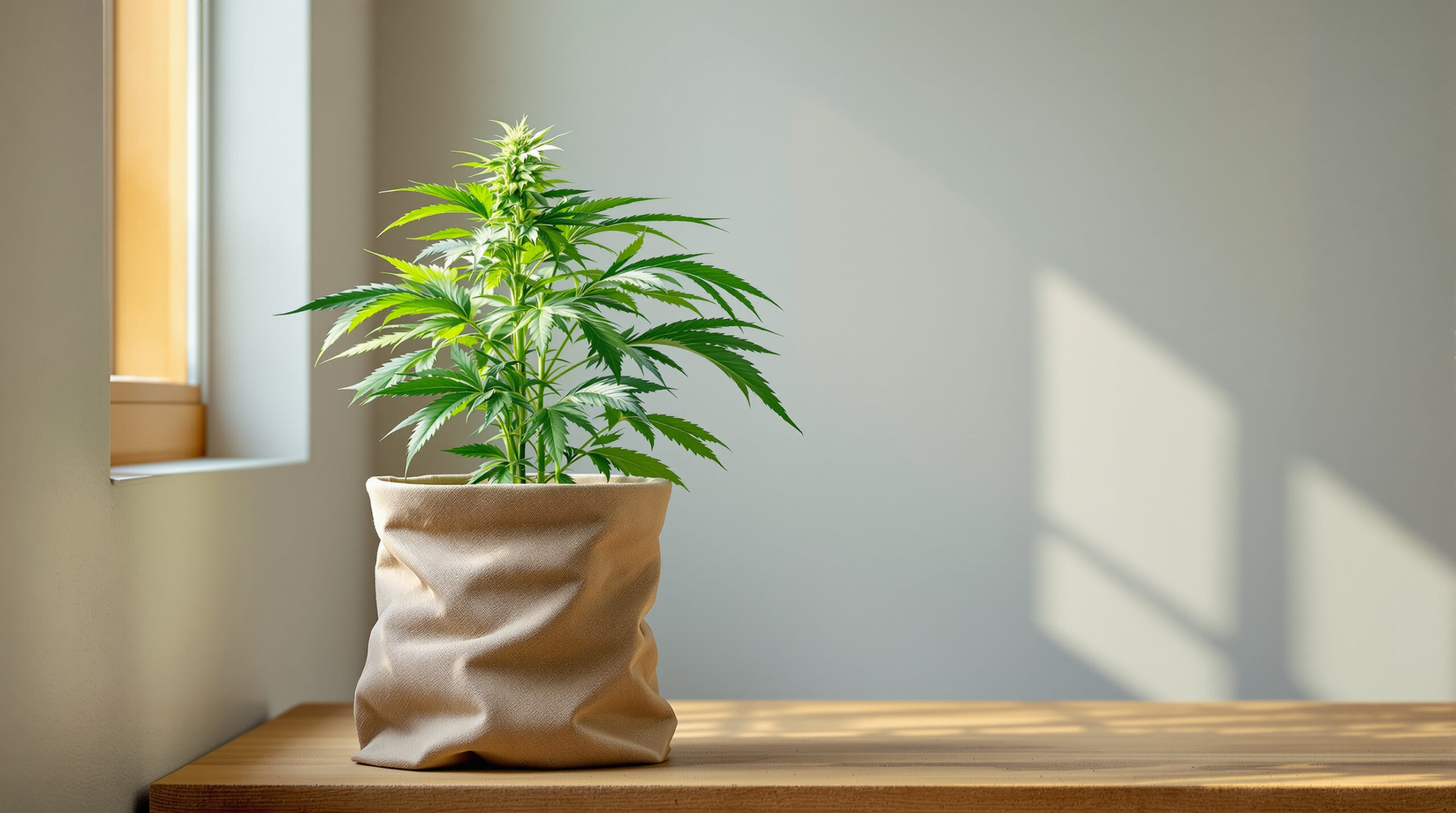
Fabric pots solve this problem through so-called air pruning. When a root reaches the air-permeable wall, its tip dries out and the plant develops many fine lateral roots behind it. The result is a dense, well-branched root ball instead of a circling tangle. Additionally, fabric pots improve oxygen supply and forgive overwatering more readily because excess water evaporates through the sides. The price is higher water demand, since fabric dries faster than plastic. Air-pots made of perforated plastic achieve the same air-pruning effect and are more durable, but more expensive. Which substrate you fill the pot with is a topic of its own. Our living soil guide offers a deep dive.
Autoflowers and pot size: why repotting becomes a problem here
Autoflowering varieties follow their own rules. Autoflowers switch to flowering on a fixed schedule, regardless of light. Each growth stop from repotting stress therefore costs irreplaceable yield because the plant cannot compensate for this time with a longer growth phase. That’s why autoflowers should ideally go directly into the final pot and not be repotted.
A volume of 10 to 15 liters has proven effective for most autoflowers. The container is large enough for a proper root ball and small enough that the freshly sprouted plant doesn’t keep the substrate constantly wet. To prevent the large amount of soil from becoming a problem in the initial phase, water only targeted around the seedling at first and expand the watering radius as roots spread. For a deeper dive into this topic, find details in our article on growing autoflower varieties.
How to recognize a pot that’s too small
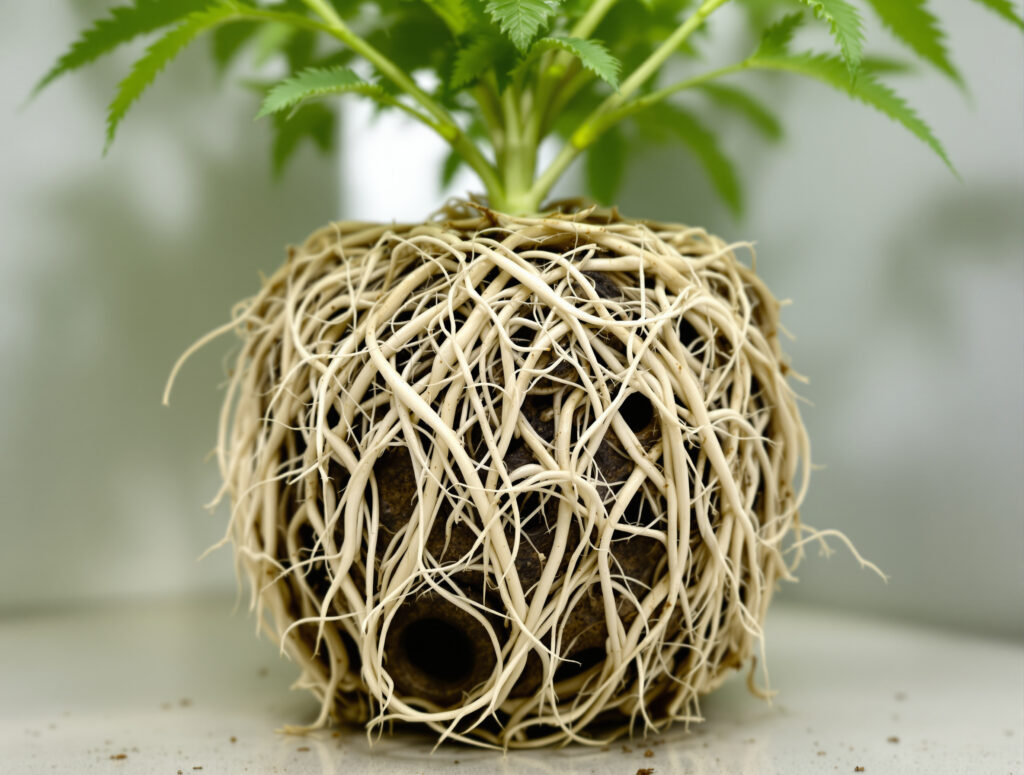
A plant in a pot that’s too small sends clear signals. The substrate dries noticeably quickly, so you need to water almost daily. Leaves hang limp despite regular watering, and growth stagnates even though light and nutrients are adequate. Deficiency symptoms often appear because the limited root space cannot take up enough.
A sure sign appears when carefully lifting the plant from the pot. If the root ball is enclosed by a dense, white root network and the soil barely holds together anymore, the plant is root-bound. Then only rapid repotting into the next larger container helps. Conversely, a ball that still consists mostly of loose soil after weeks indicates a pot that’s too large. So the right pot size for cannabis is always a balance between enough root space and substrate that dries sufficiently between waterings. Our complete indoor growing guide shows how this all fits into a complete workflow.
Frequently asked questions
What pot size does a cannabis plant need during flowering?
For a typical indoor plant, a final pot of 11 to 20 liters is sufficient. In a dense sea of green, 6 to 10 liters per plant often suffice, while large outdoor specimens need 30 liters and more. As a rule of thumb, calculate around 7.5 to 10 liters per 30 centimeters of expected final height.
Can I put cannabis in the large final pot from the start?
With photoperiodic varieties, gradual repotting is usually better because small seedlings in much wet substrate easily suffer from waterlogging. With autoflowers, the opposite is true. They go directly into the final pot because they cannot compensate for repotting shock with a longer growth phase.
Are fabric pots really better than plastic pots?
Fabric pots promote a finer, healthier root system through air pruning and prevent roots from circling. However, they dry faster and demand more frequent watering. For beginners with a good watering rhythm, they’re clearly recommended, though plastic pots remain a cheap and functional alternative.
What happens with a pot that’s too small?
Roots become matted into a dense tangle, the plant becomes root-bound and can no longer properly absorb water and nutrients. Consequences are stagnated growth, limp leaves, frequent deficiency symptoms, and ultimately significantly lower yields.
How often should I repot my cannabis plant?
Wie oft topfst du deine Cannabispflanzen während des Grows um?
With photoperiodic varieties, two to three repotting steps are common, from the seed tray through a medium container to the final pot. Roughly double the volume with each step. Autoflowers you don’t repot at all, but start directly in the final pot.



Branchen-Update
News, Analysen und Reportagen — mehrmals im Monat direkt in dein Postfach.
Folge uns