Growing cannabis for the first time means making a fundamental choice: feminized or autoflowering seeds? For most beginners, the answer is clear. Autoflowering strains – or autoflowers for short – are the most straightforward way to cultivate cannabis.
📑 Inhaltsverzeichnis
- What Sets Autoflowers Apart from Regular Strains
- The Advantages Are Obvious: Speed and Compactness
- What You Should Know: The Limits of Autoflowers
- Cultivation Step by Step: From Germination to Final Pot
- Recognizing the Right Harvest Time and Processing
- Frequently Asked Questions About Autoflower Cultivation
- 💬 Fragen? Frag den Hanf-Buddy!
They flower on their own, forgive many mistakes, and deliver harvestable plant material in just eight to ten weeks. This guide explains why that’s the case and what to pay attention to anyway.
What Sets Autoflowers Apart from Regular Strains
Conventional cannabis plants – so-called photoperiodic strains – only begin flowering when days grow shorter. Indoors, growers must actively switch the light period from 18 to 12 hours to initiate flowering. With autoflowers, this step is completely eliminated. The reason lies in genetics: autoflowering strains carry genes from Cannabis ruderalis, a subspecies that evolved in the short summers of Siberia and Central Asia, where flowering couldn’t depend on light – but rather on plant age.


This sounds like a minor botanical footnote, but it has far-reaching consequences for cultivation. Autoflowers bloom automatically after about three to four weeks, regardless of how many hours of light they receive. You can easily illuminate them 20 hours a day – from germination to harvest. No switching, no darkening, no light leaks that could disrupt the flowering rhythm.
The Advantages Are Obvious: Speed and Compactness
The most obvious advantage is speed. While feminized photoperiodic strains typically require four weeks of vegetative growth plus eight to twelve weeks of flowering, many autoflowers complete their entire cycle in eight to ten weeks – from germination to dried flower. Sow in April, harvest in June.
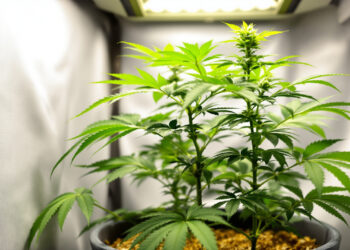
There’s also the compact size. Most autoflowers reach between 60 and 100 centimeters in height, some even smaller. This makes them ideal for limited spaces: a small grow tent, a cabinet, or a balcony. Where a mature Sativa easily reaches two meters and fills half the room, an autoflower stays modestly in the background.
An often underestimated advantage: autoflowers are robust. The ruderalis genes bring a certain resilience against temperature fluctuations, nutrient deficiencies, and suboptimal conditions. Where a sensitive Haze strain will struggle for three days after a feeding error, an autoflower barely blinks and keeps growing. For beginners who haven’t yet developed a feel for proper dosing, this is worth its weight in gold.
What You Should Know: The Limits of Autoflowers
To be fair, we must also mention the downside. Yield per plant is lower with autoflowers than with well-maintained photoperiodic strains. Where a well-trained feminized strain can deliver 300 grams per plant, an average autoflower yields 50 to 120 grams. For personal use with three plants, that’s typically sufficient – 150 to 350 grams per cycle is absolutely realistic.
Another point: autoflowers cannot be cloned. Since the plant controls its flowering program by age rather than light, a cutting would continue the mother plant’s aging program and immediately enter flowering. Those wanting to make cuttings need photoperiodic genetics.
Training is also limited. Aggressive techniques like topping (cutting off the main tip) cost the plant recovery time – and an autoflower with its short lifespan doesn’t have that to spare. Low Stress Training (LST), which involves gently bending branches, works extremely well and is the recommended method for autoflowers to increase yield.
Cultivation Step by Step: From Germination to Final Pot
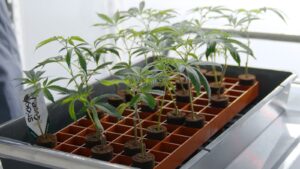
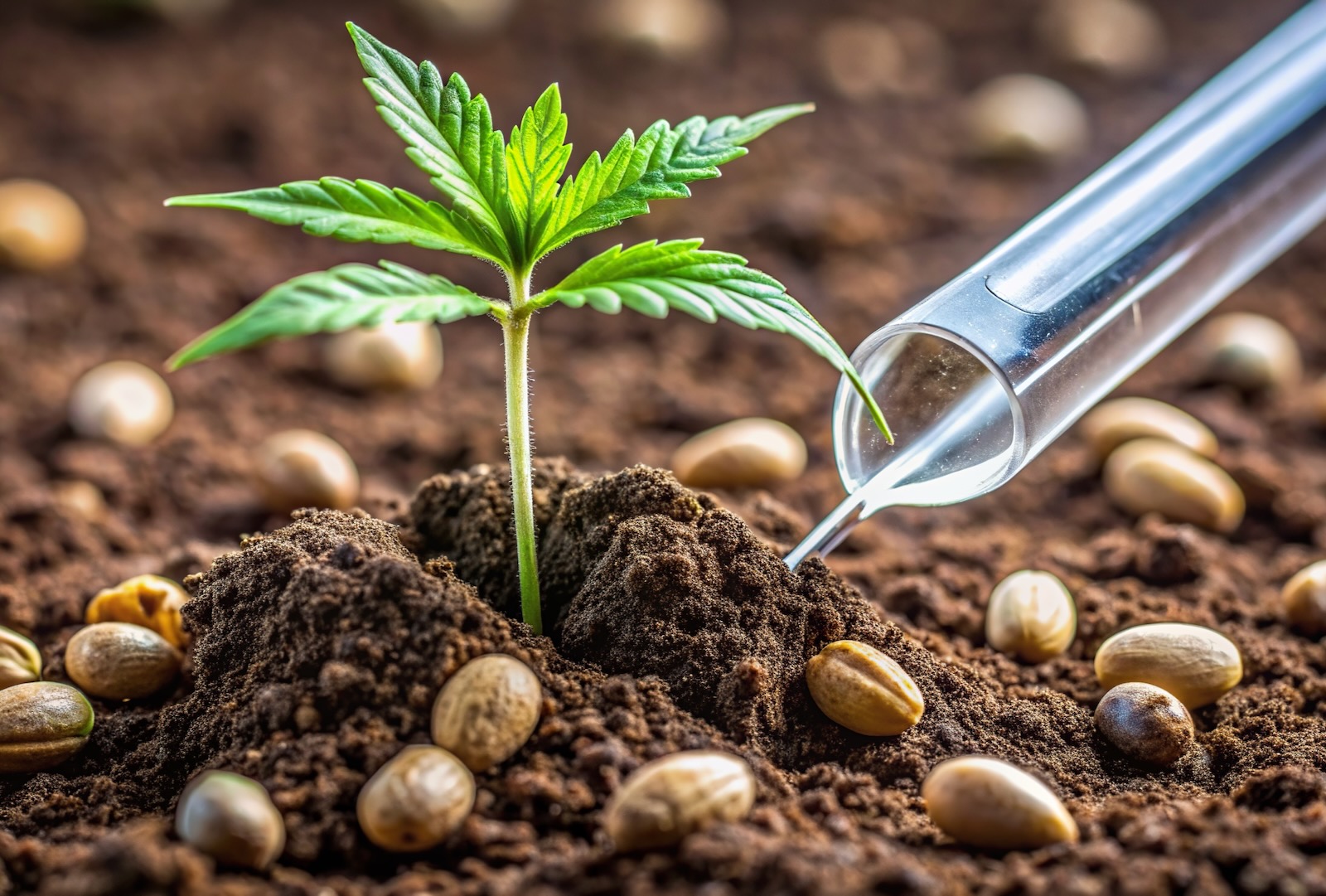
Germination works like with any other cannabis strain: soak seeds in water for 12 hours, then place between two damp paper towels in a sealed container. After one to three days, the taproot appears. The most important tip for autoflowers: plant directly into the final pot. Transplanting causes stress, and stress costs an autoflower valuable days.
Pot sizes of 11 to 15 liters are recommended – large enough for solid root development but still manageable. Fabric pots are ideal since they allow roots to air prune, which promotes denser root systems.
For lighting: more is better. Many growers run lights 20 hours a day and give plants four hours of darkness. An 18/6 cycle also works and saves some electricity. The plant doesn’t differentiate – it will flower after about three weeks regardless. When fertilizing, the motto is: less is more. Autoflowers respond more sensitively to overfeeding than their photoperiodic cousins. With good pre-fertilized organic soil, you can often get by without supplemental fertilizer for the first three to four weeks. Only during the flowering phase can a gentle flowering fertilizer improve results.
Recognizing the Right Harvest Time and Processing
Harvesting with autoflowers is particularly exciting because everything happens so quickly. Trichomes on the flowers reveal the ripeness level: when they’re milky-cloudy, the active compound content is highest. For those aiming for a more relaxed, physical effect, wait until the first trichomes turn amber-colored. A 30x magnifying loupe is sufficient to assess the tiny resin glands.
After harvest comes drying and curing – a step beginners often underestimate. Seven to fourteen days of drying at 20°C and 50 percent humidity, followed by four weeks of curing in airtight jars. Only then do the flowers reveal their full aroma.
Frequently Asked Questions About Autoflower Cultivation
How much yield does an autoflower plant produce?
Depending on the strain, experience, and conditions, between 30 and 150 grams per plant. Modern hybrids of the latest generation achieve over 200 grams under optimal conditions – the days when these strains were considered low-yielding are long gone.
Can you grow autoflowers on a balcony?
Absolutely – their compact size and short cultivation time make them the perfect balcony plant. They don’t need special darkening and manage well with less than optimal sunlight. In Central Europe, you can easily run two cycles on a balcony between May and September.
Why shouldn’t you transplant autoflowers?
Hast du schon einmal Autoflower-Cannabis selbst angebaut?
You can – but you shouldn’t. Every transplant causes stress, and in a plant with a fixed schedule, stress means lost growing days. The plant has no time to recover because its internal program continues. Hence the recommendation: plant directly from seedling into the final pot.






Branchen-Update
News, Analysen und Reportagen — mehrmals im Monat direkt in dein Postfach.
Folge uns