
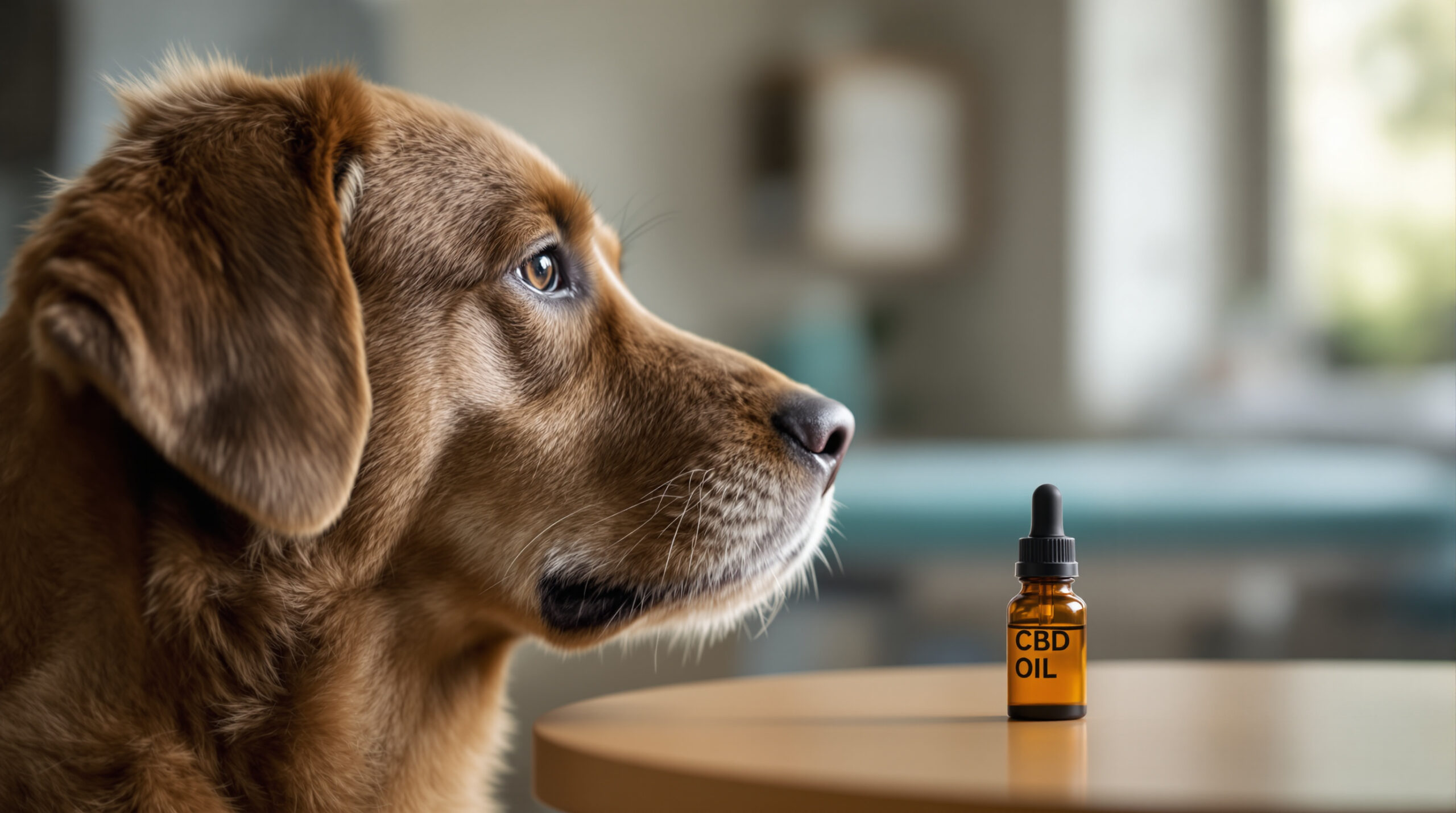
CBD products for dogs have evolved from a niche offering in veterinary medicine to a permanent fixture on shelves in pet stores and online shops over the past few years. Drops, treats, capsules, and pastes promise relief from pain, anxiety, seizures, and age-related ailments. Yet a noticeable gap exists between marketing and science, and dog owners must decide whom to follow. This overview summarizes what peer-reviewed studies currently show, what reasonable dosing looks like, and which pitfalls pet owners should know about before dripping a bottle of cannabidiol into their dog’s food bowl.
📑 Inhaltsverzeichnis
How CBD Works in the Dog’s Body
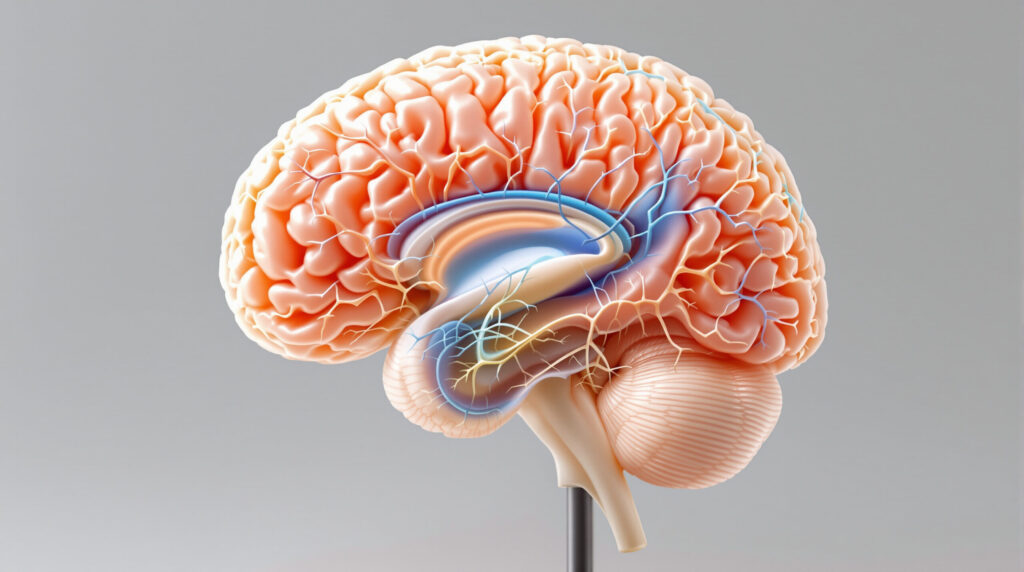
The mechanism of action of cannabidiol in dogs is similar to that in humans because both species have a comparable endocannabinoid system. This body’s own network consists of CB1 and CB2 receptors as well as messenger substances like anandamide and 2-arachidonoylglycerol. CB1 receptors are found mainly in the central nervous system, while CB2 receptors are located in the immune system and peripheral tissues. CBD binds only weakly to these receptors, but indirectly influences the concentration of the body’s own cannabinoids and also modulates serotonin, vanilloid, and adenosine receptors.
In practice, this means a broad range of possible effects: anti-inflammatory, pain-modulating, anxiolytic, and anticonvulsant. Unlike the psychoactive THC, CBD does not produce a high in dogs. The distinction from THC is important, as it is toxic to dogs in higher doses and has more severe effects than in humans due to elevated receptor density in the cerebellum. For those who want to understand the entire system more deeply, you’ll find a detailed explanation in our article on CBD effects and applications in humans, which provides the foundation for translating this knowledge to animals.


What Research Shows About Use in Dogs
Veterinary research on CBD in dogs has caught up significantly over the past five years, but remains fragmented compared to human medicine. The strongest evidence exists for two indications: osteoarthritis and idiopathic epilepsy. Both areas now have support from placebo-controlled studies with adequate sample sizes.
A key study from Cornell University in 2018 administered 2 mg of cannabidiol per kilogram of body weight twice daily to dogs with chronic arthritis. The animals showed a significant reduction in pain scores and increased activity, measured both through validated pain scales and observations by dog owners. A 2020 study at Baylor College of Medicine confirmed this effect. Over four weeks, nine of ten treated dogs showed measurable improvements in mobility. A systematic review in veterinary oncology, which we summarized in our report on six types of cancer in dogs, also suggests supplementary potential in supportive tumor therapy.
For epilepsy, a placebo-controlled study from Colorado State University published in 2019 in the Journal of the American Veterinary Medical Association provides the strongest signal. At 2.5 mg of cannabidiol per kilogram twice daily, seizure frequency dropped significantly compared to the placebo group. About one-third of dogs showed clinically relevant response. A follow-up study published in 2023 found an average reduction in seizure frequency of approximately 37 percent. For anxiety disorders and behavioral problems, evidence remains limited, with many effects based on anecdotes or small open studies without control groups. We compiled an overview of early research in our 2021 article on studies on CBD for dogs.
Dosing CBD in Dogs
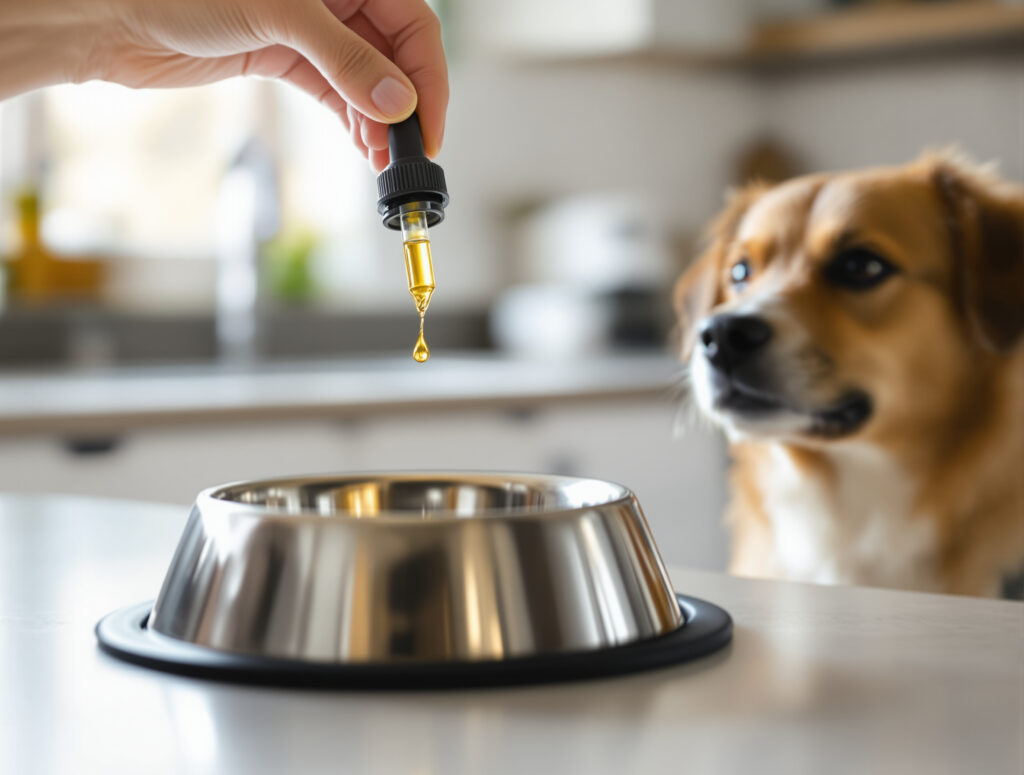
Finding the right dose is the most common question in veterinary practice, and it has no simple answer. The standard recommendation from study protocols is 1 to 2 mg of cannabidiol per kilogram of body weight twice daily. In practice, veterinarians often start lower and increase gradually to assess individual tolerance and identify unwanted effects early.
Concretely, this means: A ten-kilogram dog receives two to four drops of a five-percent full-spectrum oil per dose during the initial phase. If the remedy is well tolerated, the dose can be increased in small steps after five to seven days until a clinical effect becomes visible. For chronic pain or epilepsy, higher doses are common; some studies used up to 4.5 mg per kilogram twice daily. However, these amounts should be managed by a veterinarian because interactions with anticonvulsants can occur, and the risk of unwanted effects increases with dose.
Regular administration is crucial. CBD develops its effects through modulation of chronic processes, not as an acute pain reliever in the sense of a classical analgesic. Those who want to see reliable effects should administer it consistently for at least two to four weeks, keep a pain or behavior diary in parallel, and then discuss the results with their veterinarian. This protects against misinterpretations and shows whether the effect actually stems from the cannabidiol or if other factors play a role.
Which Products Are Suitable for Dogs

Not every CBD product from a drugstore is suitable for dogs, and some are even dangerous. Full-spectrum oils based on hemp or MCT oil are considered standard. In addition to CBD, they contain other cannabinoids and terpenes, which together are supposed to create the so-called entourage effect—a synergy of multiple active compounds rather than the isolated effect of a single molecule.
Three points are decisive when purchasing a product. First is THC content: oils suitable for dogs remain well below the legal 0.2 percent threshold, ideally under 0.02 percent. Second are additives: CBD oils for humans occasionally contain essential oils, flavorings, sweeteners, or xylitol, which is fatal for dogs. Such products have no place in a dog’s mouth. Third is the lab certificate: reputable providers publish analyses from an independent laboratory documenting cannabinoid content, THC limits, and pesticide and heavy metal residues. Dog owners who buy a product without reviewing this certificate are flying blind.
CBD treats are practical for administration but usually have lower bioavailability than sublingually administered oils. Pastes make sense for large dogs that need high doses and won’t easily take half a pipette into their mouth. Self-experimentation with cannabis flowers or homemade extracts is inadvisable because neither dosing nor THC content can be reliably controlled. The risk of unintended THC poisoning is out of proportion to the supposed cost savings.
Side Effects and Drug Interactions
According to current research, CBD is considered well tolerated, though not completely free of side effects. The most common are drowsiness, mild sedation, increased thirst, and occasionally soft stool or vomiting. These effects are typically mild, dose-dependent, and disappear when the dose is adjusted. Very high doses can temporarily cause trembling, coordination problems, or pronounced sleepiness, requiring immediate dose reduction.
More clinically relevant is a change in liver values. In several studies, alkaline phosphatase increased in dogs receiving CBD. With short-term use, this effect appears reversible, but with chronic high-dose administration, liver values should be monitored by a veterinarian, especially in older animals or dogs with existing conditions. A blood test every six months is a reasonable minimum for animals undergoing long-term treatment.
Interactions occur primarily through the liver’s cytochrome P450 system. CBD inhibits several enzymes in this system, which also metabolizes many veterinary medications. Practically speaking, this means: blood thinners, anticonvulsants such as phenobarbital, and some pain relievers can have their effects strengthened or prolonged. Anyone wanting to give CBD to a dog on long-term medication should discuss this with their veterinarian first. Pregnancy in bitches and very young puppies are also off-limits for CBD because reliable data is lacking and the risk of affecting development cannot be assessed.
Legal Framework in Germany
The legal classification of CBD products for animals in Germany remains unclear. CBD oils without medicinal claims are marketed as supplementary feed or articles of commerce and are freely available. However, as soon as a manufacturer makes healing claims or declares the product a medication, the Animal Medicines Act applies with its licensing requirements. An approved CBD veterinary medicine does not exist in Germany as of 2026.
In practice, this means for dog owners: they purchase a supplementary feed product, not a medication. The product promises on the label must accordingly be restrained, which does not mean there is no effect, but rather that the burden of proof rests with the owner. Those who want their animal to receive veterinary treatment can speak with a veterinarian, who can also use CBD off-label within the scope of veterinary treatment freedom. This approach is cleaner with regard to documentation, insurance coverage, and controlled dosing.
Frequently Asked Questions
At what age can a dog receive CBD?
Reliable data on very young puppies is lacking, so CBD is usually only used in adult dogs. For medium-sized breeds, this means an age of approximately twelve months or older. In puppies, pregnant or nursing bitches, CBD should be avoided as long as valid studies on safety are unavailable. In very old dogs with liver or kidney problems, consulting a veterinarian before self-administration is mandatory.
How long does it take for CBD to work in dogs?
Acute effects such as mild calming can occur within 30 to 60 minutes. For chronic conditions such as arthritis or anxiety disorders, effects develop over a period of two to four weeks of regular administration. Anyone who sees no change after three days should not give up immediately but adjust the dosage in consultation with their veterinarian.
Can my dog get high from CBD?
No. CBD is not psychoactive, which applies to humans as well as to dogs. A high is caused by THC, which in serious animal CBD oils is present only in trace amounts below the effectiveness threshold. If a dog accidentally ingests THC-containing cannabis, that is a veterinary emergency and requires immediate attention at an animal clinic.
Which CBD concentration makes sense for my dog?
For small to medium-sized dogs up to fifteen kilograms, oils with three to five percent CBD content are suitable. Larger dogs benefit from higher concentrations between five and ten percent because fewer drops are needed per dose. This makes dosing easier in daily life and reduces the oily burden on the stomach, which is an argument especially for sensitive animals.
Does pet health insurance cover the costs?
CBD is not an approved veterinary medicine in Germany. Most pet health insurance policies do not therefore reimburse the costs. An exception is treatment plans prescribed by a veterinarian within the scope of overall therapy and documented accordingly. In case of doubt, dog owners should inquire in writing with their insurer beforehand rather than relying on verbal information.
Can I just try CBD on my dog?
Hast du bereits CBD für deinen Hund ausprobiert?
In healthy dogs without ongoing medication, a cautious self-experiment with low doses is reasonable. However, in dogs with pre-existing conditions, ongoing medication, advanced age, or unclear symptoms, CBD should be in the hands of a veterinarian. This applies particularly to epilepsy, tumor diseases, and liver problems. For more information about use specifically in arthritis, see our detailed explanation on how CBD can be used for dogs with arthritis.







Branchen-Update
News, Analysen und Reportagen — mehrmals im Monat direkt in dein Postfach.
Folge uns