
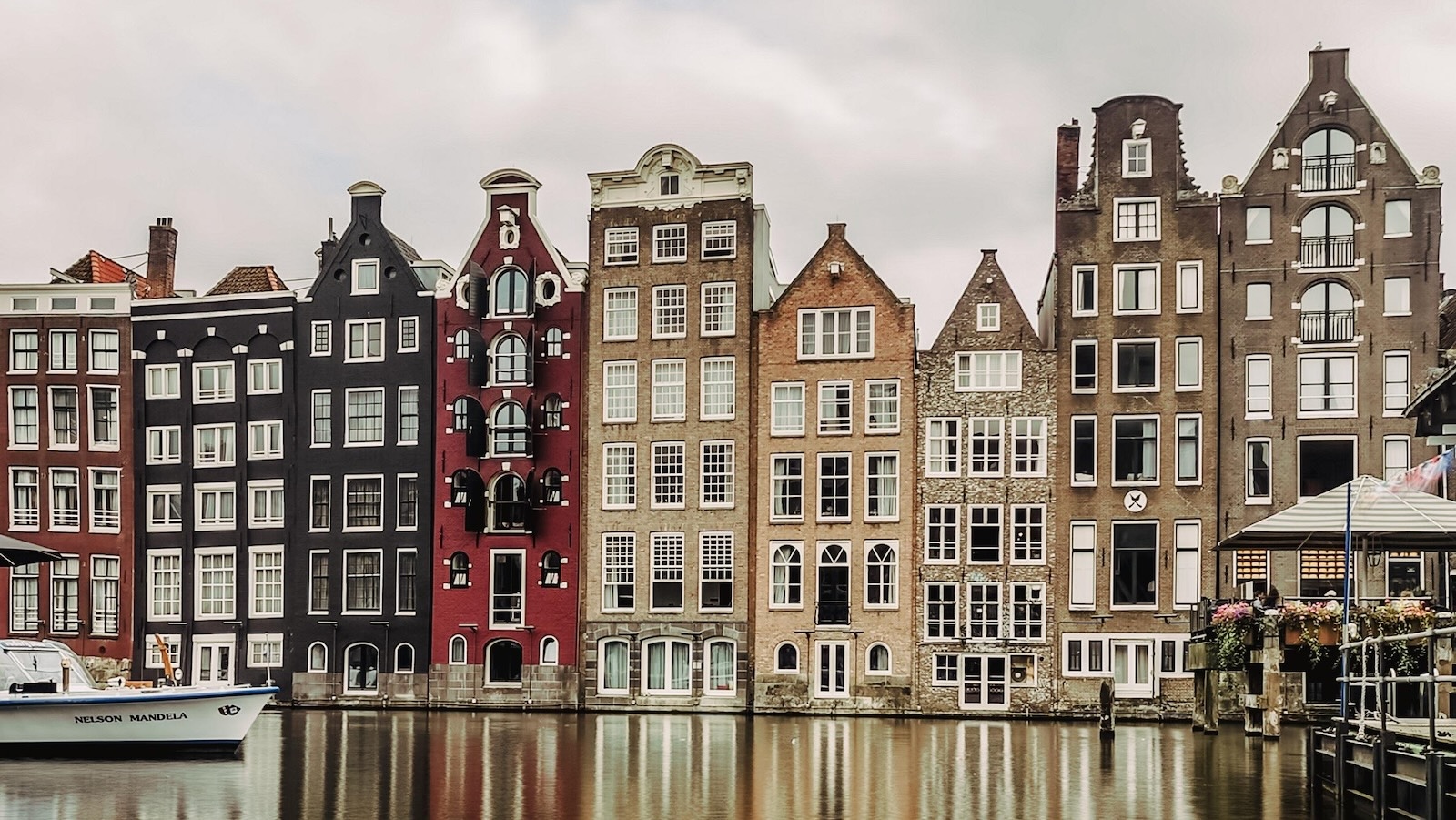
For decades, Amsterdam was the mecca of cannabis tourism. Visitors from Germany, Switzerland, and Austria knew the ritual: stroll through the canals, find a coffeeshop, and legally purchase what remained illegal back home. But in recent years, this image has begun to crack. And in spring 2026, another major turning point is on the horizon.
📑 Inhaltsverzeichnis
Following Amsterdam’s municipal elections on March 18, 2026, a new political majority is taking shape in the city council—one that questions the decades-long open-door principle for international guests. The plan: foreign tourists would be barred from accessing coffeeshops in the city center altogether. What sounds abstract would represent a tectonic shift for a city that made cannabis liberalism its trademark like few others.
50 Years Open—Yet Always Under Fire
Since the early 1970s, the Dutch state has tolerated the sale of small quantities of cannabis in licensed coffeeshops. Amsterdam became Europe’s epicenter of this policy—with over 700 shops at its peak in the capital alone. The so-called Gedoogbeleid, the official tolerance policy, created a functioning gray market that attracted millions of tourists while maintaining public order.


But with the nationwide introduction of the so-called residency criterion in 2012, the rollback began. Most Dutch cities restricted access to registered residents—Amsterdam remained as a prominent exception, on the condition of closing coffeeshops near schools. This exception now faces scrutiny once again.
New City Council Majority, New Attempt
The PvdA made its first formal push in October 2025: tourists should be banned from buying cannabis in the city center to curb party tourism. The plan found no majority at the time. But the municipal elections in March 2026 could change that. GroenLinks, previously a strong opponent of the ban, will merge with the PvdA after the election and is likely to follow its partner party’s line.
Mayor Femke Halsema has already signaled her willingness to implement the ban independently—but prefers a city council majority. Should this materialize after the elections, Amsterdam would finally join the mainstream of Dutch cannabis policy after decades of exceptional status: cannabis for residents only.
Business Owners Warn: More Dealers, Less Transparency
Reactions from the Red Light District and tourism industry are unambiguously negative. A coalition of coffeeshop operators and business owners warns of a domino effect: if international guests lose legal access, they’ll turn to street dealers—with all the consequences for quality, safety, and public order.
None other than Dirk Korf, emeritus criminologist and longtime researcher of the coffeeshop scene, shares this assessment. A study found that roughly one-quarter of foreign tourists said they would turn to the black market if a ban were implemented. A pattern familiar from other European regulatory debates—such as in Switzerland, where legal distribution models systematically push back the illegal market once availability and quality meet standards.
The Dutch Pilot Project as Alternative
There is political will in the Netherlands for new regulations—it’s just moving in a different direction. Since April 2025, the national pilot project for regulated cannabis cultivation and sales has been running in ten model municipalities. There, coffeeshops source their cannabis from state-controlled producers—a paradigm shift away from tolerated gray markets toward genuine regulation.
This is the real contradiction in the current debate: on one hand, the Dutch state is experimenting with what may be Europe’s most progressive cannabis regulation model. On the other, Amsterdam is considering barring precisely those tourists who’ve co-financed the system for decades. Whether that’s politically consistent remains an open question.
What This Means for German-Speaking Countries
For cannabis consumers in Germany, Austria, and Switzerland, Amsterdam has long ceased to be a must-visit destination. Since Germany’s partial legalization in April 2024, adults can legally consume cannabis and access regulated cannabis through social clubs. Switzerland also has pilot projects enabling controlled distribution. And even Austria has largely avoided the specter of cannabis tourism—contrary to earlier fears.
An Amsterdam tourist ban would merely accelerate this trend: those who once traveled to the Netherlands to buy legally will simply stay home. But the symbolic loss would be another matter—a piece of European cannabis history quietly coming to an end.
Frequently Asked Questions
What exactly is Amsterdam planning with the coffeeshop tourist ban?
Amsterdam is considering banning international tourists from purchasing cannabis in downtown coffeeshops. Following the model of other Dutch cities, cannabis would only be available to officially registered residents. After the municipal elections on March 18, 2026, there could be a city council majority supporting this step for the first time.
Is it still legal for Germans to visit a coffeeshop in Amsterdam?
Currently, yes—tourists are still allowed to visit Amsterdam coffeeshops and purchase cannabis. This could change if the city council passes the planned residency requirement for Amsterdam. Until then, existing tolerance regulations apply.
Why do critics warn of more black market activity?
Research shows that roughly one-quarter of foreign tourists would turn to street dealers if a ban were enacted. Criminologists and coffeeshop operators fear a ban would achieve the opposite of its intent: more illegal trade, less control over quality and quantities, and higher risk for consumers.
How does the Dutch pilot project differ from the current system?
In the national pilot project, coffeeshops in ten municipalities source their cannabis from state-approved producers—rather than from the tolerated gray market as before. This creates the first complete, regulated supply chain from cultivation to retail and is considered a blueprint for possible full legalization in the Netherlands.
What would a possible ban mean for travelers from Germany, Austria, and Switzerland?
Practically very little—the legal situation in the DACH region has improved significantly in recent years. Germany permits home cultivation and cannabis clubs, Switzerland is testing regulated distribution, and Austria sees negligible cannabis tourism. Amsterdam as a destination for cannabis consumption has lost importance—a ban would simply formalize that.






Sollten Touristen weiterhin Zugang zu Amsterdamer Coffeeshops haben?
Branchen-Update
News, Analysen und Reportagen — mehrmals im Monat direkt in dein Postfach.
Folge uns