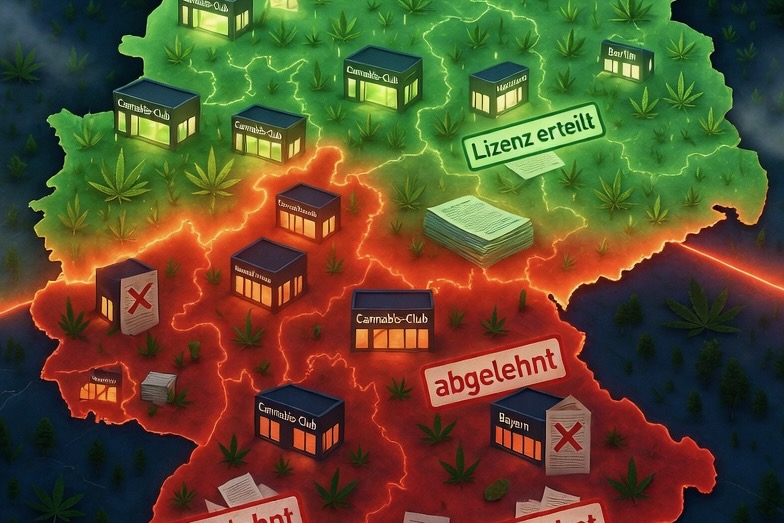
Germany’s federal structure leads to a paradoxical and frustrating situation in spring 2026 for those seeking to organize community cannabis cultivation associations. Comprehensive data collected on March 24, 2026, clearly shows that location is currently the decisive factor.
📑 Inhaltsverzeichnis
It’s no longer about well-developed concepts or spotless background checks, but simply about geography. The result of this latest analysis is a massive north-south divide that deeply splits the young industry and raises fundamental questions about equal treatment under the law.
Lower Saxony as Pioneer of Legalization Practice
At the absolute forefront of the approval movement stands Lower Saxony. With an impressive rate of approximately 0.28 licensed cannabis clubs per 100,000 residents, the state has established itself as a pragmatic pioneer. The approval authorities there seem to have designed their internal administrative processes extremely efficiently and purposefully, leading to remarkably swift processing of complex applications. Legal experts and industry insiders attribute this to an objective and less politically charged interpretation of the Cannabis Act’s legal requirements.


For dedicated founding teams in cities like Hannover, Braunschweig, Oldenburg, or Osnabrück, this administrative practice means one thing above all: enormous planning security. The clubs can sign lease agreements, order expensive equipment, and achieve a quick, secure start to the first major growing season of the year without fearing months-long delays.
Bureaucratic Standstill in the South
A completely different, far more dismal picture emerges in the southern half of the country. Bavaria forms the absolute bottom of the nationwide comparison with a vanishingly small rate of only 0.07 clubs per 100,000 residents. This alarming figure is far more than just a dry statistical footnote; it’s the tangible expression of an apparently targeted administrative brake strategy. Founders in Munich, Nuremberg, or Augsburg report what amounts to a bureaucratic gauntlet.
The review processes there are extremely detailed and go far beyond what other states consider sufficient. Whether it concerns microscopically precise security concepts, youth protection officer qualifications, meticulously measured distance regulations, or agricultural building codes – in Bavaria, apparently every tiny comma in the regulations is used as a potential hurdle and reason for revisions.
Economic Consequences and Discontent in the Scene
This extreme discrepancy causes massive discontent and growing desperation in the scene. While the north is already preparing the first community cannabis harvests in modern club facilities, southern German clubs often remain stuck in the exhausting bureaucratic waiting loop, while ongoing costs for already-rented properties consume their financial reserves.
Critics openly accuse the Bavarian state government of deliberately using restrictive interpretation of administrative regulations to shift political resistance against cannabis legalization to the lower level of approval authorities. Equipment suppliers for lighting, climate control, and security technology also feel this divide extremely, as the southern German market for professional equipment lies virtually dormant.
The Danger to Consumer Protection
For the future of German cannabis culture, this means a dangerous imbalance. When access to legal cultivation associations varies so dramatically by region, the actual goal of the law is undermined: containing illegal trade. The black market will persist much more stubbornly in restrictive areas, as consumers there must continue relying on unregulated sources due to lack of legal alternatives.
Harmonization of approval practices at the federal level currently seems completely out of sight, as administrative authority and law enforcement remain firmly in state hands. For ambitious founders in the south, only one path currently remains: extremely precise, nearly legally perfect preparation of every single document to give authorities as little grounds for objection as possible.







Sollten alle Bundesländer Cannabis-Clubs gleich schnell genehmigen müssen?
Branchen-Update
News, Analysen und Reportagen — mehrmals im Monat direkt in dein Postfach.
Folge uns