The Energy Equation: Why Photons Don’t Have to Cost the Earth
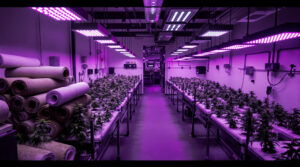
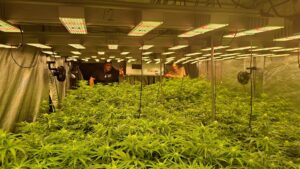
Indoor cultivation means simulating the sun. For years, this was an extremely energy-intensive undertaking, dominated by hot, power-hungry sodium vapor lamps (HPS). The first and most important step toward a sustainable setup inevitably leads through lighting. Modern LED systems have fundamentally changed the game. They convert electricity far more efficiently into plant-available light (PAR), rather than wasting most energy as unused heat.
📑 Inhaltsverzeichnis
- The Energy Equation: Why Photons Don’t Have to Cost the Earth
- The Wonder Beneath Our Feet: Living Soil Instead of Chemical Cocktails
- Water: Keeping Precious Resources in Circulation
- Natural Protection: Biology Instead of Chemical Pesticides
- Circular Economy at Home: There Is No Waste
- 💬 Fragen? Frag den Hanf-Buddy!
But energy efficiency means more than simply swapping out a light fixture. It’s about intelligently managing your entire climate. An optimized grow room uses highly efficient EC fans that precisely adjust their performance to current temperature and humidity levels. Instead of running a system at full capacity constantly, smart controllers ensure that only as much energy is consumed as your plants actually need at their current growth stage. Investing here protects the climate and delivers immediate results on your electricity bill.
The Wonder Beneath Our Feet: Living Soil Instead of Chemical Cocktails
In conventional agriculture—and unfortunately in many grow tents—soil is often viewed merely as mechanical support for roots, while nutrients are „pumped in“ as synthetic salts. Sustainable cultivation takes the opposite approach: we feed the soil, not the plant.


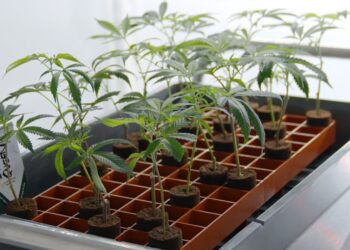
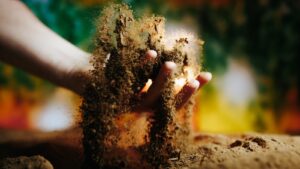
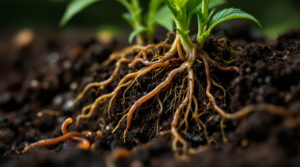
The „Living Soil“ concept harnesses a symbiosis between plants and microorganisms that has evolved over millions of years. Instead of purchasing expensive, energy-intensive bottled nutrients, the ecological grower creates an autonomous ecosystem in the pot. By adding high-quality worm castings, mycorrhizal fungi, and beneficial bacteria, you develop a soil that breaks down nutrients independently and makes them available to the plant exactly when needed. The result is often a significantly more complex terpene profile, as the plant grows at its natural pace rather than being „force-fed“ with mineral salts. Plus, the problematic flushing at the end of flowering becomes unnecessary, since excess salts don’t accumulate in the plant tissue.
Water: Keeping Precious Resources in Circulation
An often-overlooked factor is the enormous water consumption. While outdoor gardens are typically watered generously, the controlled home environment allows absolute precision. Sustainability here means keeping „drain“—the excess water running from the pot—as minimal as possible. This is achieved through organic substrates like coco fiber or high-quality soil mixes that store water excellently without compacting.
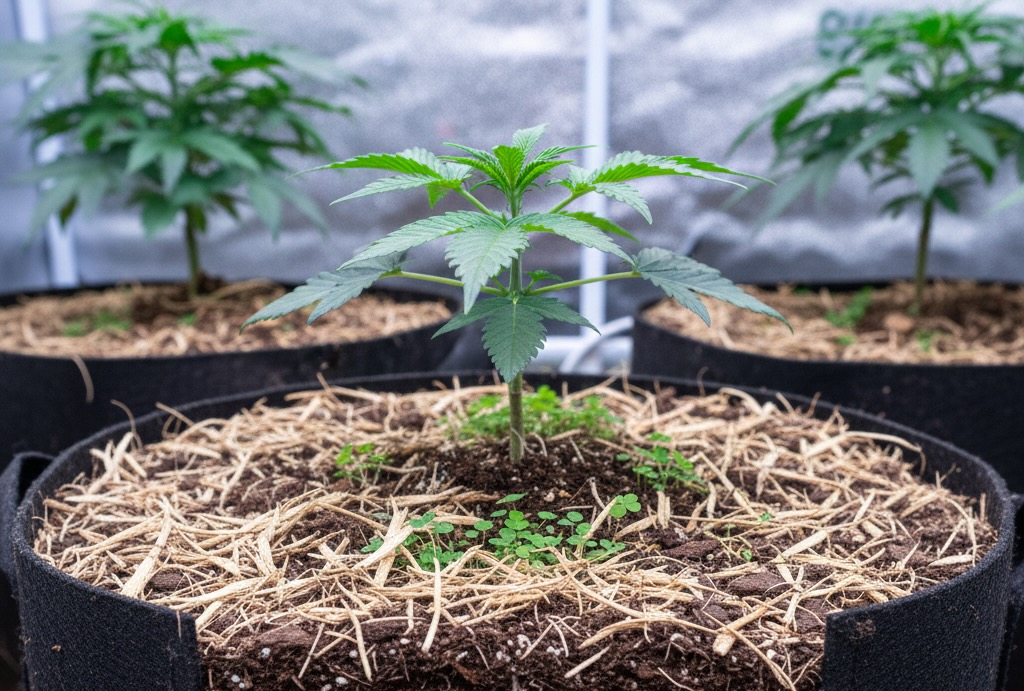
A real insider tip for sustainable growers is using mulch. A simple layer of straw or hemp shavings on the soil surface prevents rapid drying. This not only protects the sensitive microbial life in the top soil layer but also noticeably reduces watering intervals. Those wanting to go further can collect rainwater. It’s not only free but often has an ideal pH and is chlorine and lime-free, which further benefits the sensitive microbiology in living soil.
Natural Protection: Biology Instead of Chemical Pesticides
Nothing is more frustrating than pest infestation shortly before harvest. Yet reaching for chemical sprayers is absolutely taboo in sustainable homegrow. Toxins have no place in a consumption product. The ecological solution is called „Integrated Pest Management“ (IPM). The goal is creating an environment where pests don’t thrive in the first place—through optimal air circulation and proper humidity levels.
Should fungus gnats or spider mites slip in anyway, the sustainable grower relies on beneficial insects. Predatory mites or nematodes are the „police“ in your grow tent; they solve the problem biologically, residue-free, and effectively. Plant strengtheners from nature, like horsetail extract or neem oil, also help fortify plant cell walls so pests and fungi have a much harder time.
Circular Economy at Home: There Is No Waste
The final pillar of the sustainable concept is handling leftovers. An ecologically-minded grower doesn’t simply discard soil after a cycle. Through „re-amending“—reprocessing used soil with fresh compost and organic pellets—the same substrate can be used for many years. It actually improves with each cycle as the microbial network becomes more established.
Even trim and stems aren’t waste. They belong on a compost heap or in a worm farm, where they transform into valuable fertilizer for the next year. By closing this loop, you minimize your ecological footprint and become part of a movement proving that high-end cultivation and deep respect for nature go hand in hand.
Wie baust du zu Hause Cannabis an?
The path to sustainable homegrow is a journey that begins with small steps. Whether switching to LED, eliminating mineral fertilizers, or harvesting rainwater—every decision counts. In the end, nature rewards you with a product that is absolutely pure not only in its effects but also in its origin story.







Branchen-Update
News, Analysen und Reportagen — mehrmals im Monat direkt in dein Postfach.
Folge uns