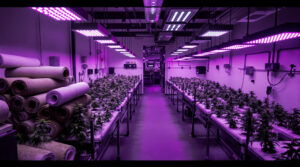
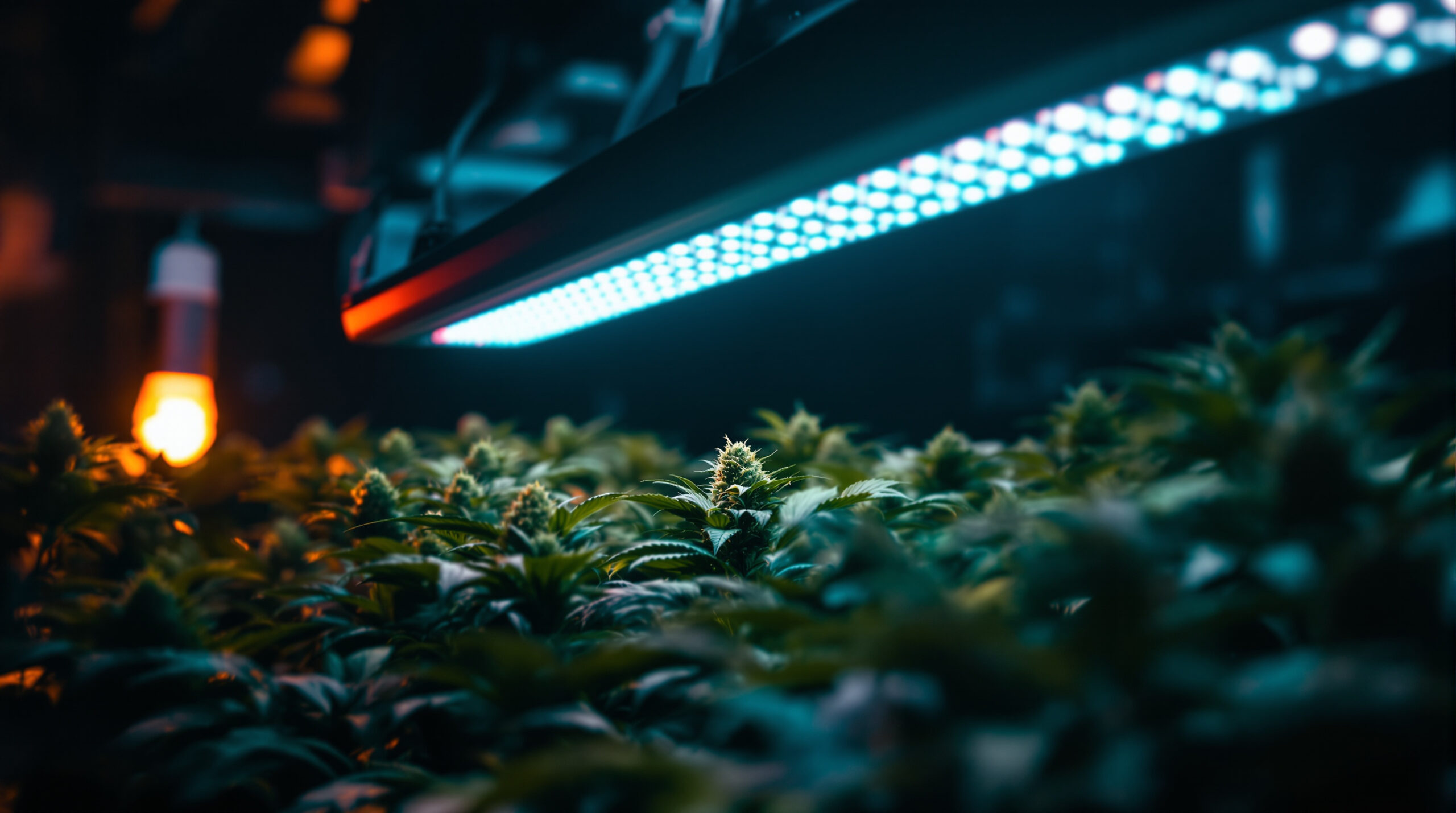
Anyone planning a cannabis homegrow in 2026 will eventually face the age-old question when it comes to lighting: LED or HPS? For over two decades, the high-pressure sodium lamp, or HPS for short, was the undisputed gold standard among cannabis growers. Since around 2018, however, modern LED systems have been overtaking the old sodium vapor burners, and the gap keeps widening.
📑 Inhaltsverzeichnis
- LED vs HPS: Why the Comparison Looks Different in 2026 Than in 2018
- Efficiency in Micromoles Per Joule: The Key Metric
- Acquisition Costs: HPS Cheap to Start, LED Catches Up on Upgrades
- Electricity Costs in a Practical Example: Three-Plant Setup in Germany
- Heat Output and Climate Management: The Hidden Cost Factor
- Yield Per Watt and Light Spectrum: What the Plant Actually Needs
- Which Grower Type Suits Which Lamp?
- MH, CMH, and LEC: The Often-Overlooked Alternatives
- Proper Sizing: Watts Per Square Meter
- Conclusion 2026: LED Is the Better Choice for 90 Percent of Homegrowers
- Frequently Asked Questions
- 💬 Fragen? Frag den Hanf-Buddy!
In this guide, we compare the two technologies across all the dimensions that truly matter for growers: efficiency in micromoles per joule, acquisition costs, lifespan, heat output, electricity costs, yield per watt, and light spectrum. By the end, you’ll know exactly which lamp fits your setup, your budget, and your grow room.
LED vs HPS: Why the Comparison Looks Different in 2026 Than in 2018
The LED vs HPS debate is as old as indoor growing itself. What has fundamentally changed in recent years, however, is the maturity of LED technology. As recently as 2015, so-called UFO LEDs with small-capacity blue-point diodes and poor build quality were synonymous with failures, hotspots, and disappointing yields. Today, modern quantum boards and LED bars equipped with Samsung LM301H EVO or LM301B diodes deliver an efficiency that puts every classic sodium vapor lamp in the shade.


At the same time, electricity prices in Germany have become a decisive factor. With household electricity rates fluctuating between 32 and 45 cents per kilowatt-hour depending on the tariff, the energy efficiency of a light source is no longer just a technical detail but the most important economic lever in homegrowing. Anyone running a 600-watt HPS in a grow box today is literally burning money during the twelve-hour flowering cycle. We address this aspect in detail in our article on homegrow costs in 2026.
There’s also the climate impact to consider. Indoor cultivation is regarded as extremely energy-intensive, as an analysis of cannabis and climate balance makes clear. Every kilowatt-hour saved reduces not only the electricity bill but also the carbon footprint of the end product. Against this backdrop, the choice between LED and HPS in 2026 is far from a matter of taste anymore—it’s an economic and ecological decision with real consequences.
Efficiency in Micromoles Per Joule: The Key Metric
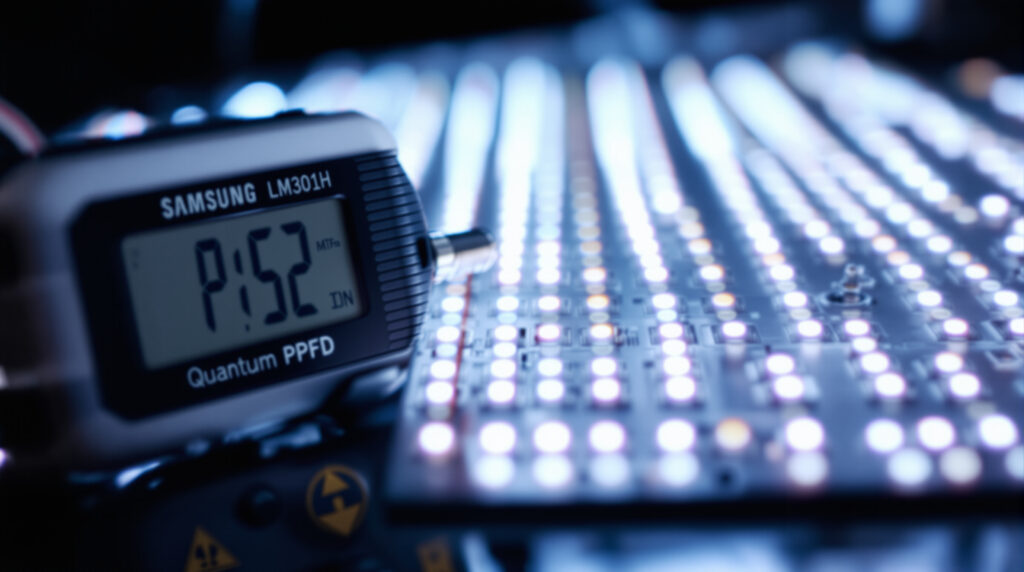
When growers talk about lamp efficiency, they’re really talking about a single metric: micromoles per joule, abbreviated μmol/J. This value describes how many photosynthetically useful photons a lamp produces per unit of electrical energy consumed. The higher the value, the more light the plant can actually use per watt of input.
A classic 600-watt HPS with a magnetic ballast achieves approximately 1.2 to 1.4 μmol/J. High-quality double-ended HPS systems used in professional indoor facilities reach around 1.7 μmol/J with an electronic ballast and good reflector. That was the technological maximum that could be chemically extracted from a sodium vapor lamp for many years.
Modern LED bars with Samsung LM301H EVO diodes and Meanwell drivers, by contrast, achieve 2.7 to 3.1 μmol/J. Top models from Lumatek, Gavita Pro 1700e LED, or Fluence Spydr even reach values between 2.9 and 3.2 μmol/J. In plain terms, this means: A modern 400-watt LED delivers more usable light than a classic 600-watt HPS. You save a third of electricity while getting the same or even higher yields.
Even budget quantum boards in the hundred-euro segment now achieve 2.4 to 2.6 μmol/J. These boards are particularly interesting for beginners because they offer the benefits of LED technology at a price comparable to a complete HPS setup with ballast, reflector, and bulb. Full-spectrum COB modules—chip-on-board LEDs with phosphor mixed light—land at 2.0 to 2.5 μmol/J depending on the manufacturer, also beating any HPS in efficiency.
Acquisition Costs: HPS Cheap to Start, LED Catches Up on Upgrades
On pure acquisition costs alone, HPS appears to lead at first glance. A complete 600-watt HPS kit, consisting of electronic ballast, reflector, and bulb, can be had new for approximately 120 to 180 euros. Used, the price drops to 60 to 90 euros. For aspiring homegrowers with tight budgets, that’s a tempting entry offer.
A comparably powerful LED solution that illuminates the same grow area of about 80 by 80 centimeters starts at around 180 euros for a solid 240-watt quantum board and goes up to 450 euros for an LED bar solution in the brand quality segment. Brands like Lumatek ZEUS, Greenception, or Sanlight Evo compete in the upper price bracket between 500 and 800 euros. So the initial surcharge versus HPS is 60 to 300 euros, depending on the model chosen.
This surcharge quickly pays for itself when you factor in lifespan. HPS bulbs already lose around 30 percent of their light output after approximately 5,000 operating hours and should be replaced by 8,000 hours at the latest. With two grows per year at ten weeks of flowering each with 12 hours of light, the bulb is due for replacement after two to three years. A replacement burner costs around 30 to 50 euros. The ballast lasts much longer, about 8 to 12 years.
A high-quality LED fixture easily survives 50,000 to 60,000 operating hours, which equals approximately 15 to 20 years under typical homegrow usage. Defective individual diodes can usually be repaired in modular systems like quantum boards. Over a five-year timeframe, LED is almost always cheaper than HPS because the electricity savings more than compensate for the higher initial cost.
Electricity Costs in a Practical Example: Three-Plant Setup in Germany
Since the Cannabis Act of April 2024, adults in Germany are allowed to grow up to three cannabis plants for personal use. A typical three-plant setup in a 100-by-100-centimeter grow box requires around 300 to 400 watts of light output. With a modern LED bar, approximately 320 watts suffice to professionally illuminate this area. An HPS solution for the same area requires 400 to 600 watts.
Let’s calculate concretely. A grow cycle consisting of four weeks of growth at 18 hours of light plus eight weeks of flowering at 12 hours of light lasts twelve weeks. The LED at 320 watts consumes 320 watts times 18 hours times 28 days during the growth phase, which is approximately 161 kilowatt-hours. During the flowering phase, 320 watts times 12 hours times 56 days adds 215 kilowatt-hours. In total, that’s approximately 376 kilowatt-hours per grow. At 40 cents per kilowatt-hour, that equals 150 euros in electricity costs for the lamp alone.
The 600-watt HPS variant in the same period amounts to 302 plus 403 kilowatt-hours, or approximately 705 kilowatt-hours. At 40 cents, that’s 282 euros in electricity costs. The difference of 132 euros per grow cycle occurs twice yearly, making that 264 euros savings per year. With a high-quality LED costing 450 euros, the surcharge versus a 150-euro HPS kit thus amortizes in just over a year. From year two onward, the LED is pure profit, aside from lower cooling costs, which we’ll address next.
Those running multiple grows per year or illuminating a larger area save even faster. With a 2-square-meter tent with a 1000-watt HPS versus a 650-watt LED, the annual savings easily add up to 500 to 700 euros, depending on electricity prices. A broader overview of total costs is available in our article on the indoor cannabis cultivation guide.
Heat Output and Climate Management: The Hidden Cost Factor
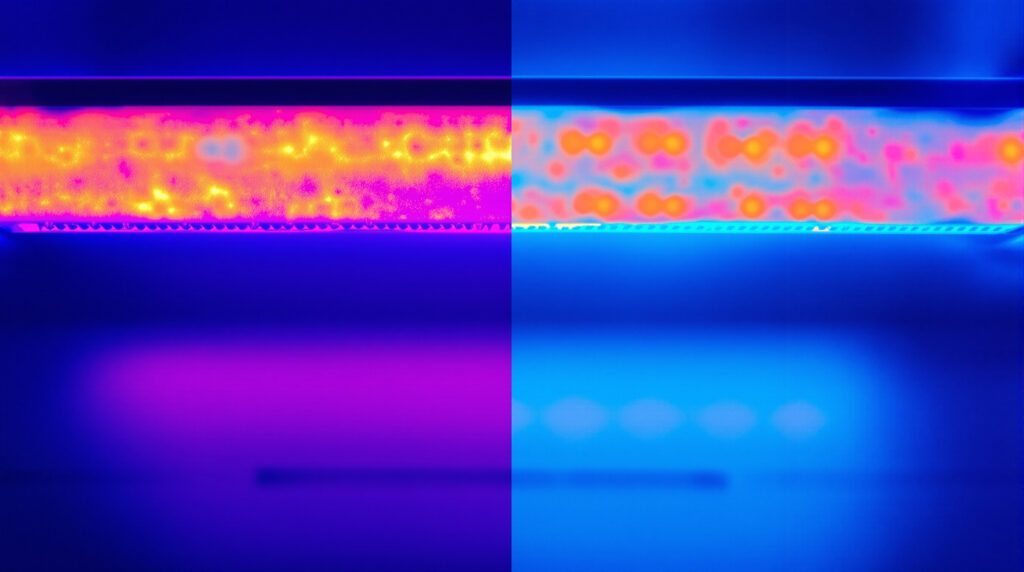
An HPS lamp converts approximately 70 percent of its consumed energy into heat. A 600-watt HPS thus produces around 420 watts of heat, which can lead to temperatures of 32 to 38 degrees Celsius in a closed grow box. For cannabis, that’s borderline to harmful. Optimal flowering temperatures range from 24 to 27 degrees. Anyone operating HPS must either cool the lamp through an active carbon cooltube or significantly boost exhaust ventilation, often with an AC fan of 300 cubic meters per hour or more.
LEDs, with 40 to 50 percent heat loss, emit significantly less waste heat, and this heat distributes evenly across the entire light surface rather than concentrated like in an HPS. A 320-watt LED produces approximately 130 to 160 watts of heat, one third of what a comparable HPS generates. In a well-ventilated grow tent, often just a smaller 125mm inline fan suffices to maintain stable climate. Temperature differences between lamp and canopy height are also smaller with LED, reducing plant stress.
This has consequences for power consumption and acquisition of peripheral equipment. A powerful AC fan costs 80 to 150 euros and consumes an additional 40 to 100 watts per hour. Noise increases, vibration sometimes requires isolators. With LEDs, these peripheral costs are significantly lower, and in small grow boxes, passive cooling with occasional clip fans for air circulation sometimes suffices. To keep the setup discreet nonetheless, it’s worth checking out the topic of odor filters during cannabis cultivation, which last longer with the lower exhaust volume from LED.
Also not to be underestimated is the issue of humidity. The strong heat output of an HPS often lowers relative humidity in the box so much that a humidifier becomes necessary to stay above 60 percent during the growth phase. With LED, humidity remains more natural because less water evaporates from the substrate. This not only saves the cost of acquiring a humidifier but also reduces the risk of transpiration stress and mold with improper control.
Yield Per Watt and Light Spectrum: What the Plant Actually Needs
Yield per watt is the ultimate argument in the LED vs HPS debate. Experienced growers achieve approximately 1.0 to 1.2 grams of dried flowers per watt with a 600-watt HPS, meaning between 600 and 720 grams per grow. Peak values of 1.4 grams per watt are possible with very experienced growers using ideal strains and perfect climate, but are rare. The 600-watt HPS consumes approximately 700 kilowatt-hours in a cycle, as shown above.
Modern LEDs in the 320 to 400-watt range deliver 1.5 to 1.8 grams per watt, with top models reaching 2.0 grams per watt under ideal conditions. A 320-watt LED thus regularly delivers 500 to 640 grams per grow using less than half the power consumption of a 600-watt HPS. Calculated for the electricity used in kilowatt-hours, this gives LED approximately 1.4 to 1.7 grams per kilowatt-hour, while HPS stagnates at 0.8 to 1.0 grams per kilowatt-hour.
With spectrum, historically clear strengths and weaknesses appear. HPS illuminates predominantly in the yellow-orange range between 570 and 620 nanometers, ideal for the flowering phase. For the growth phase, experienced growers have traditionally used a metal halide lamp (MH) that radiates in the bluish range. Those working classically with HPS thus need two bulbs or must compromise in one phase.
Modern full-spectrum LEDs replicate the solar spectrum almost completely, from 380 to 780 nanometers, often with additional UV and far-red diodes for the Emerson effect. The plant receives a biologically sound spectrum throughout the grow cycle without the grower needing to switch between growth and flowering lamps. The spectrum on many brand models can even be precisely controlled via dimmer controller, ideal for growing enthusiasts wanting to experiment. This pairs nicely with advanced setups like hydroponics versus soil in homegrowing.
Which Grower Type Suits Which Lamp?
Beginners with Small Budgets
Anyone growing three plants in an 80-by-80-centimeter box for the first time and can spend under 250 euros for lighting is best served with a quantum board in the 150-to-240-watt range. Brands like Mars Hydro, Spider Farmer, or Greenception offer solid beginner models. Alternatively, a used 250-watt HPS kit for 60 to 80 euros is conceivable if budget is really tight, provided sufficient space exists for lamp distance.
Yield Optimizers with Medium Budget
Growers running two to four grows annually with a budget of 400 to 600 euros for lighting should uncompromisingly choose an LED bar. Lumatek ZEUS Compact, Sanlight Q-Series, or Greenception GCx are durable, efficient, and pay for themselves within 18 to 24 months versus any HPS solution. Lower waste heat reduces climate control costs and makes the setup quieter.
Classic Enthusiasts and Traditionalists
Some growers still swear by the yellow-orange light color of HPS and believe certain terpene profiles develop optimally only under sodium vapor. The scientific literature on this is thin and largely anecdotal. But those who love the look and feel of a classic grow setup, appreciate the sunset tone in flowering, and accept the electricity cost premium will find high-quality, long-lasting technology in double-ended HPS systems from Lumatek or Gavita Pro.
Sustainability-Focused Growers
Those valuing the smallest possible ecological footprint can’t overlook LED. The combination of lower power consumption, double the lifespan, and less electronic waste per kilogram of yield makes LED the clear choice. It becomes optimal when the electricity contract carries genuine renewable energy certification or a balcony solar panel covers part of the grow box output.
MH, CMH, and LEC: The Often-Overlooked Alternatives
Beyond classic HPS and modern LED, other gas-discharge lamps exist that ambitious hobbyists should know about. Metal halide lamps (MH) deliver a bluish spectrum and were formerly used alongside HPS for the growth phase. CMH, or Ceramic Metal Halide, and LEC (Light Emitting Ceramic) combine some advantages of both worlds: they have a broader, more sun-like spectrum than HPS and achieve efficiency of 1.9 to 2.1 μmol/J.
CMH was celebrated as a middle-ground solution in the late 2010s but is technologically outdated by 2026. A modern full-spectrum LED beats CMH in every relevant dimension at comparable or lower acquisition cost. Anyone already running a CMH lamp needn’t switch immediately, but for new purchases, the technology is no longer recommended.
Proper Sizing: Watts Per Square Meter
Regardless of LED or HPS, sizing is crucial to success. As a rule of thumb, roughly 400 watts per square meter applies to HPS during flowering; with LED, thanks to higher efficiency, around 300 watts per square meter suffices. For a 120-by-120-centimeter box, you’d land at a 400-watt LED or 600-watt HPS.
Importantly, power must be dimmable. Modern LEDs are usually infinitely variable from 40 to 100 percent. Seedling phases need just 25 percent, early growth 50 percent, late flowering 100 percent. HPS also has dimmable ballasts switching between 50, 75, and 100 percent, but with larger jumps and noticeable efficiency loss outside rated operation.
The correct distance to the plant canopy differs significantly. HPS typically requires 40 to 50 centimeters to avoid burn. LED bars can go down to 25 centimeters when dimmed, quantum boards even to 20 centimeters. This spatial flexibility is especially valuable in low grow boxes when ceiling height is under 160 centimeters.
Conclusion 2026: LED Is the Better Choice for 90 Percent of Homegrowers
The numbers are clear. Modern LED systems outperform HPS in efficiency, yield per watt, lifespan, heat management, and spectrum. The only area where HPS still holds its own is pure acquisition price, and even there the advantage shrinks year after year since 2022. For a homegrower wanting to cultivate the three legally allowed plants efficiently, quietly, and with good climate impact, there’s barely an alternative to an LED bar or high-quality quantum board in 2026.
HPS remains an option for tradition, for growers with very tight budgets, or for specialized terpene experiments. For the vast majority, however: The 100 to 300 euros extra investment for a modern LED pays off by the second grow at latest, cuts electricity consumption by up to 50 percent, and delivers higher yields simultaneously. An investment that pays dividends both ecologically and economically.
Frequently Asked Questions
Is an LED Lamp Really Better Than HPS for Cannabis?
In most dimensions, yes. Modern LEDs achieve 2.7 to 3.2 μmol/J, while HPS stagnates at 1.4 to 1.7 μmol/J. That means roughly 50 percent less electricity use for equal yields. Lifespan, heat output, and spectrum flexibility also favor LED. Only in pure acquisition price does HPS still have an advantage.
How Many Watts of LED Do I Need for Three Cannabis Plants?
For three plants in an 80-by-80-centimeter box, 240 to 320 watts of LED power suffices. In a 100-by-100-centimeter box, 300 to 400 watts should be used to evenly illuminate the corners. The rule is roughly 300 watts per square meter with LED, versus 400 watts per square meter with HPS.
What Are Electricity Costs Per Cannabis Grow in Germany?
With a typical three-plant setup using 320-watt LED and 12-week grow duration, approximately 376 kilowatt-hours accrue, translating to 150 euros at 40 cents per kilowatt-hour for lamp electricity alone. With a 600-watt HPS, electricity costs roughly double to about 282 euros per grow. Peripherals like exhaust, circulation, and odor filters add further costs.
When Does Switching from HPS to LED Make Sense?
If the old HPS bulb has surpassed 5,000 operating hours or if bulb replacement and ballast failure coincide, switching to LED is almost always economically justified. With two grows yearly, the 200 to 300-euro LED surcharge amortizes through electricity savings within 12 to 18 months.
Do I Need an Odor Filter or Exhaust Fan with LED?
Yes, an odor filter remains equally important with LED as with HPS because cannabis smell develops independent of the light source. The exhaust fan can, however, be smaller because LED’s thermal load on the box is about one third lower. A 125-millimeter inline fan usually suffices with modern LED where HPS would require 150 or 200mm.
Which LED Brands Are Recommendable in 2026?
In the entry segment, Mars Hydro, Spider Farmer, and Greenception Basic impress. In the mid-range, Lumatek ZEUS, Sanlight Q-Series, and Greenception GCx are solid options. In the premium segment, Gavita Pro 1700e LED, Fluence Spydr, and Sanlight EVO are among the top players. When buying, look for Samsung LM301H EVO diodes, Meanwell drivers, and manufacturer warranty of at least five years.
Further Reading on This Topic
Welche Beleuchtung nutzt du aktuell für deinen Cannabis-Anbau?





Branchen-Update
News, Analysen und Reportagen — mehrmals im Monat direkt in dein Postfach.
Folge uns