
Can Dogs Really Get High From Secondhand Smoke?
In principle, what reaches humans through secondhand smoke also reaches dogs in the same room. Human studies show a clear pattern. Anyone spending time in a small, poorly ventilated room where cannabis is being smoked will show measurable THC levels in their blood. In one study conducted in a closed vehicle, secondhand smokers showed blood levels between 1.3 and 6.3 nanograms per milliliter after just thirty minutes. However, once the room was ventilated or a fan was running, barely any effect was detectable.
📑 Inhaltsverzeichnis
- Can Dogs Really Get High From Secondhand Smoke?
- Why Dogs Are More Sensitive to THC Than Humans
- These Symptoms Indicate THC Exposure in Your Dog
- When Secondhand Smoke Becomes Really Dangerous for Dogs
- What Dog Owners Should Actually Do
- How Long Does It Take for a Dog to Recover?
- Frequently Asked Questions
- 💬 Fragen? Frag den Hanf-Buddy!
The same principle applies to dogs, except the consequences often hit harder. A dog cannot consciously avoid smoke—it stays in the room, and it doesn’t just inhale THC. Smoke particles settle in the fur, and when the dog grooms itself, it ingests some of this residue orally. This combines inhalation with oral intake. While true intoxication from pure secondhand smoke is rare, it is possible in an unventilated apartment.
Why Dogs Are More Sensitive to THC Than Humans
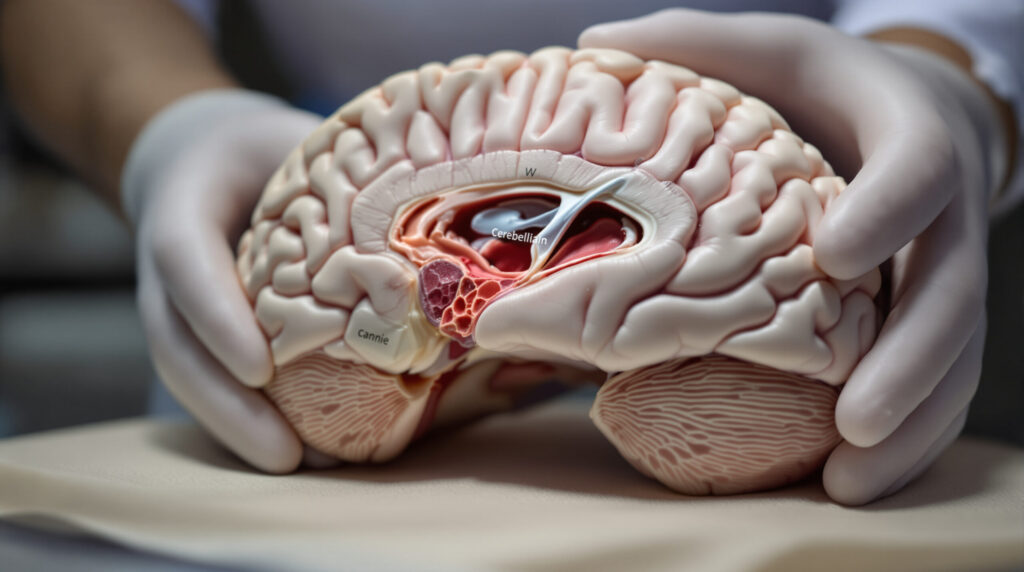
The crucial difference lies in the brain. Dogs possess a significantly higher density of CB1 receptors than humans, especially in the cerebellum, which controls movement and coordination. THC binds precisely to these receptors. The more receptors present, the more pronounced the central nervous system effects become. This explains why even small amounts in a dog trigger symptoms that an adult human would barely notice.


This body’s own control network functions similarly in animals as it does in humans. We have described in detail elsewhere how the endocannabinoid system works in animals. For pet owners, the key takeaway is the consequence: a small five-kilogram dog reacts far more dramatically to the same amount of smoke than a large dog, and both react more strongly than their human counterparts. Learn more about the mechanisms in our article on how THC affects our pets.
These Symptoms Indicate THC Exposure in Your Dog
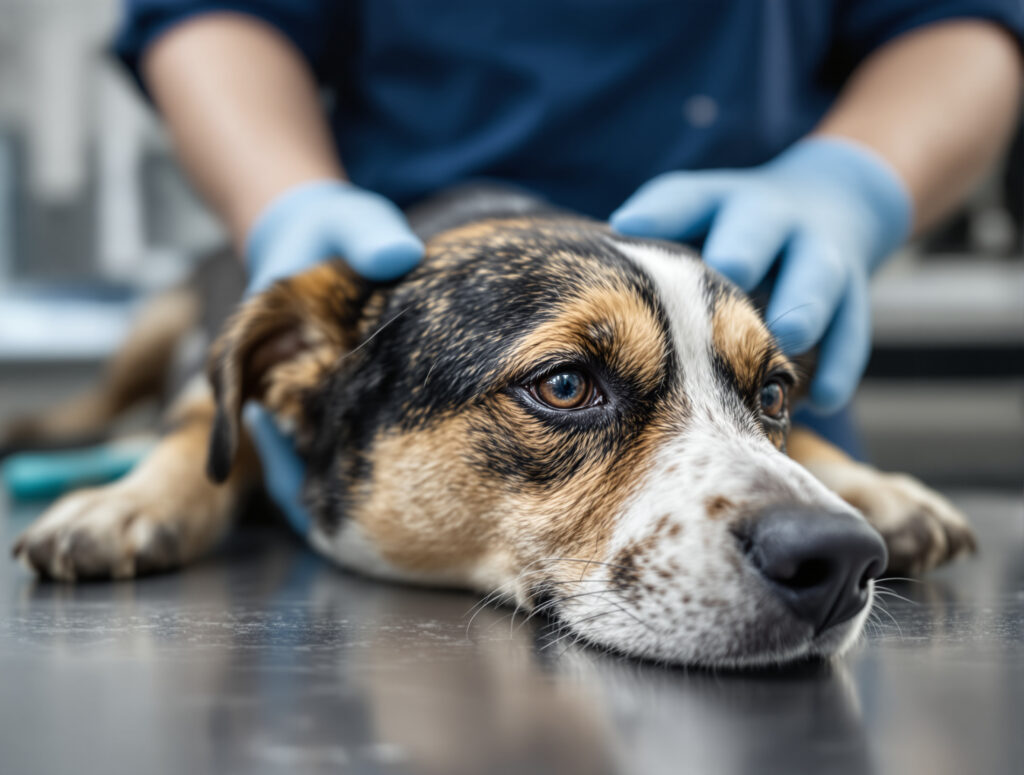
The typical signs of cannabis exposure are well documented and usually recognizable to attentive owners. Often, the dog displays a wobbly, intoxicated-looking gait, called ataxia in veterinary medicine. This is accompanied by lethargy, dilated pupils, and heightened sensitivity to sounds or touch. Many dogs drool excessively and lose bladder control, manifesting as involuntary urine leakage.
With greater exposure, vomiting, trembling, a slowed heart rate, and dropping body temperature may occur. In severe cases, seizures or significant confusion can develop. After inhalation, the first signs often appear within minutes. With oral intake, such as from grooming residue, it typically takes one to three hours. Symptoms usually last about a day, sometimes longer.
When Secondhand Smoke Becomes Really Dangerous for Dogs
The most important factor is ventilation. Outdoors or in a well-ventilated room, smoke disperses so quickly that the amount absorbed usually remains minimal. It becomes critical in a closed room, in a car, or under a blanket—anywhere smoke accumulates and the dog cannot escape it. This exact scenario produces the measurable levels we see in humans as well.
Add to this the size of the animal. Small dogs and puppies are particularly at risk due to their low body weight. Far riskier than any secondhand smoke, however, is direct cannabis consumption—when a dog eats a joint remnant, flower, or a baked good containing THC. The dose is then many times higher. For details on which products and quantities are particularly dangerous, see our guide on the dangers of THC for dogs and cats.
What Dog Owners Should Actually Do

Prevention is straightforward. Veterinarians advise never blowing smoke toward your dog, into its face, or in its ears, and ideally not smoking cannabis in closed rooms where your dog is present. If you wish to consume, do so outdoors or in a room without your dog, followed by thorough ventilation. Keep all cannabis products, flowers, baked goods, and remnants out of reach, since the greatest harm comes from ingestion, not inhalation.
If your dog shows clear symptoms like persistent vomiting, seizures, or unconsciousness, it’s an emergency. Seek veterinary help immediately and openly mention the suspicion of cannabis exposure. This information is crucial for proper treatment and carries no legal consequences. Treatment is usually supportive, such as medication for nausea, warmth, and monitoring. The vast majority of dogs recover completely within one to three days. It’s important to clarify that cannabidiol (CBD) is non-psychoactive—read our overview on what pet owners should know about CBD for dogs.
How Long Does It Take for a Dog to Recover?
For most owners, this is the most pressing question, and the answer is reassuring. Pure secondhand smoke exposure is typically not life-threatening. Symptoms usually peak within the first few hours and then gradually subside. The vast majority of dogs are completely back to normal within one to three days, with no lasting damage. During this time, it’s important to provide the animal with rest, a safe place to lie down, and plenty of water.
Things look different if additional risk factors are present. If a dog eats a baked good containing THC, it often also contains chocolate or the sweetener xylitol, both toxic on their own. In such cases, multiple poisonings overlap, and the outcome can be more severe. Very old, very young, or chronically ill dogs also need closer observation. When in doubt, always follow the simple rule: it’s better to consult a veterinarian once too often than once too seldom.
Frequently Asked Questions
Can dogs really get high from secondhand cannabis smoke?
Yes, it’s possible, especially in closed, unventilated rooms. There, the dog inhales enough THC through the lungs and by licking residue from its fur to develop symptoms. Outdoors or with good ventilation, the amount usually remains too low for a real effect.
Why do dogs react more strongly to THC than humans?
Dogs have a significantly higher density of CB1 receptors in the brain, particularly in the cerebellum. THC binds to these receptors. That’s why even small amounts trigger pronounced symptoms like coordination problems and lethargy, which a human exposed to the same amount would barely notice.
What symptoms appear in dogs?
Typical signs include a wobbly gait, lethargy, dilated pupils, excessive drooling, and involuntary urine leakage. At higher doses, vomiting, trembling, a slowed heart rate, and in the worst case, seizures may occur. Symptoms typically last about a day.
When should I take my dog to the vet?
Seek veterinary help immediately if your dog shows persistent vomiting, seizures, severe drowsiness, or unconsciousness. Openly mention the suspicion of cannabis exposure, as this is important for proper treatment. This information has no legal consequences for you as the owner.
Is ingested cannabis more dangerous than smoke?
Achtest du beim Cannabiskonsum darauf, dass dein Hund geschützt ist?
Yes, significantly. If a dog eats flower, a joint remnant, or a baked good containing THC, the dose ingested is many times higher than from secondhand smoke. Keep all cannabis products securely locked and out of reach of your dog.







Branchen-Update
News, Analysen und Reportagen — mehrmals im Monat direkt in dein Postfach.
Folge uns