What French investigators documented
According to files cited by Le Monde, French customs officials and Île-de-France police identified a total of 21 shipments bringing premium cannabis from California to Paris. Four of these were intercepted at Paris-Charles-de-Gaulle Airport. The remaining 17 shipments reached their recipients and were apparently distributed to end consumers in several major French cities. Authorities estimate that approximately one ton of cannabis actually reached mainland Europe during the observation period.
📑 Inhaltsverzeichnis
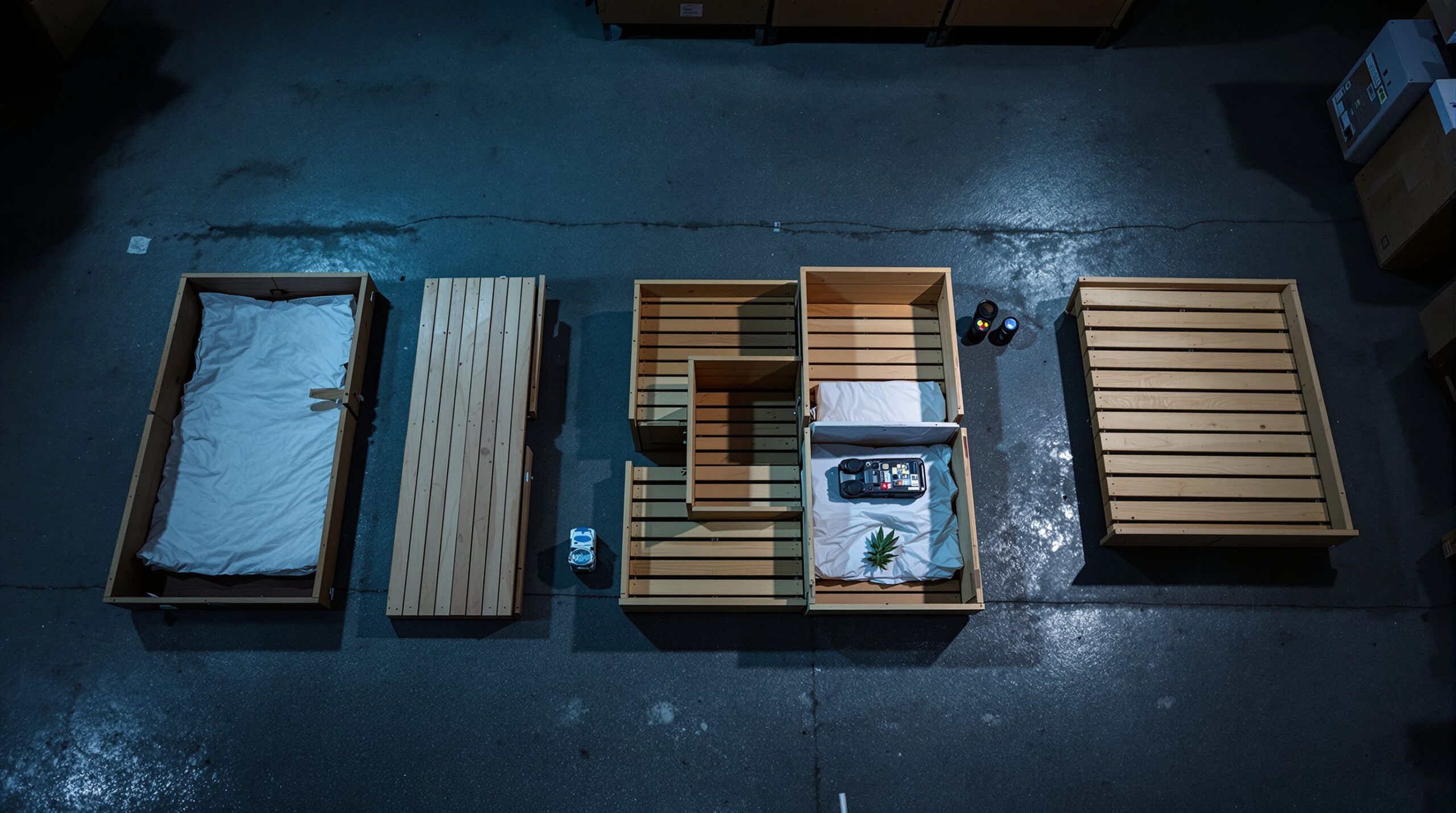
The concealment followed a pattern long known to international drug enforcement. The product was packaged in furniture, sports equipment, fitness gear, and arcade machines, which contained hollow spaces that could be filled with dried plant material without raising suspicion from standard scanners. The five people arrested in France reportedly served as logistics hubs. The masterminds on the US side remain the focus of ongoing investigations.
Why premium US cannabis finds demand in Europe
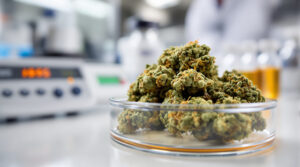
California cannabis has a premium reputation in European consumer circles. The THC content typical in the US market—ranging between 25 and 32 percent—combined with mature strain diversity and branded packaging makes US cannabis appear to enthusiasts as a superior product compared to the often generic imports from Morocco or Albania. In France, private cannabis consumption is criminalized, and the legal pharmacy market only permits CBD flowers and a strictly limited medicinal cannabis program. This leaves a significant supply gap between demand and legal availability.


The premium trend is also noticeable in Germany. The US rescheduling decision of April 2026 has further increased attention to North American genetics. In Germany’s legal medicinal market, California brands remain available only through workarounds. Those seeking premium cannabis without access to one of the few US-certified importers quickly find themselves back on the black market.
The BKA picture of the DACH black market: Structural parallels
The French operation fits a larger pattern that German authorities have described since the Cannabis Consumption Act took effect. In April, the Federal Criminal Police Office acknowledged that the cannabis black market in Germany continues largely unbroken despite partial legalization. The 2025 police crime statistics reported a decline, but this is primarily explained by the elimination of criminal penalties for small quantities. Organized large-scale structures continue to benefit from the demand gap. With the latest figures from the 2025 PKS, cannabis offenses drop by nearly 30 percent, though this is mainly a reclassification effect.
An international comparison reveals a consistent thread. Swiss pilot projects have demonstrated that legal distribution systems can measurably displace the black market. The Lausanne Cann-L model project withdrew over two million euros in illegal revenue from the market. In France, where no comparable model yet exists, smuggling remains economically attractive. The furniture shipment pipeline case also shows that suppliers now operate globally rather than only through classical Mediterranean routes.
Implications for German patients and consumers
For German medicinal cannabis patients, this news is an indirect indication of how crucial stable legal supply chains are. The latest figures for German cannabis imports in the first quarter of 2026 show the first decline in two years, dropping to 50.5 tons. Fluctuations in US supply chains could reinforce this trend. For consumers, the lesson from the French operation is that black market cannabis is traded without quality and contamination testing. Pesticide contamination like that recently documented by Australia’s TGA at several major distributors can never be ruled out along the route from a California backyard to a Paris apartment.
The structural lesson is unlikely to surprise those in political debates. As long as premium demand meets restrictive supply regulations, logistics networks will emerge to fill the need. The question is only who controls the market and under what quality standards. This structural question will be a central topic at the Charite Berlin negotiations in late May for the 7th Medicinal Cannabis Congress.
Frequently asked questions
How does California cannabis reach Europe when it’s illegal everywhere?
The route reconstructed in France used furniture and sports equipment shipments as cover. The product was packaged in prepared hollow spaces and transported via regular cargo flights to Paris-Charles-de-Gaulle Airport. In the US itself, shipping across state borders is prohibited, and export is clearly illegal. Suppliers operate in a legal gray zone created by state-level legalization.
What quantities are we talking about?
French authorities identified 21 shipments, with four seized containing a total of 430 kilograms. Authorities estimate that approximately one ton of cannabis reached Europe over a period of roughly one year. The market value is estimated at around four million euros, likely significantly higher when distributed at consumer prices.
Is Germany also affected by such routes?
Currently, no comparably documented US-France routes for Germany are publicly known. However, the BKA has repeatedly noted that the German black market is internationally networked, with Morocco, Albania, the Netherlands, Spain, and North America all playing roles as source countries. According to observer reports, premium US cannabis regularly appears in the upper segment of the German black market in major cities.
What does this mean for the German legalization debate?
The case supports the economic argument of advocates for a regulated retail model. As long as legal distribution channels are absent or limited to strictly controlled cultivation associations, demand for premium quality can only be met through the black market. Swiss pilot projects show that legal distribution systems cannot replace the black market, but can noticeably displace it.
How dangerous is black market cannabis from the US?
In the US legal market, products are subject to pesticide and contamination testing. Once product leaves the legal distribution channel, that chain is broken. Storage, repackaging, and transport by third parties can contaminate material, expose it to mold, or adulterate it with foreign substances. The black market offers no guarantees whatsoever. Sources: Le Monde, May 2026; Federal Criminal Police Office Berlin, April 2026; Hanfjournal, 25.05.2026.







Sollte Frankreich Cannabis legalisieren, um den Schwarzmarkt auszutrocknen?
Branchen-Update
News, Analysen und Reportagen — mehrmals im Monat direkt in dein Postfach.
Folge uns