Wer Cannabis ohne Erde anbauen möchte, stößt schnell auf eine entscheidende Frage. Welche Pflanze passt überhaupt zur Hydrokultur, und wo bekommt man sie? Hydrokultur-Pflanzen zu kaufen ist weniger trivial, als es klingt. Nicht jeder Steckling und nicht jede Genetik fühlt sich in einem wasserbasierten System wohl. Dieser Ratgeber zeigt, worauf es bei der Auswahl ankommt, welche Bezugsquellen seriös sind und wie du das passende System gleich mitdenkst.
📑 Inhaltsverzeichnis
- What does it mean to buy hydroponic plants?
- Cuttings or seeds: What works for hydroponics
- What to look for when buying a hydroponics-suitable plant
- Where can you buy hydroponic plants?
- Think about the right system from the start
- Legal situation in Germany for plant purchases
- Frequently asked questions
- 💬 Fragen? Frag den Hanf-Buddy!
What does it mean to buy hydroponic plants?
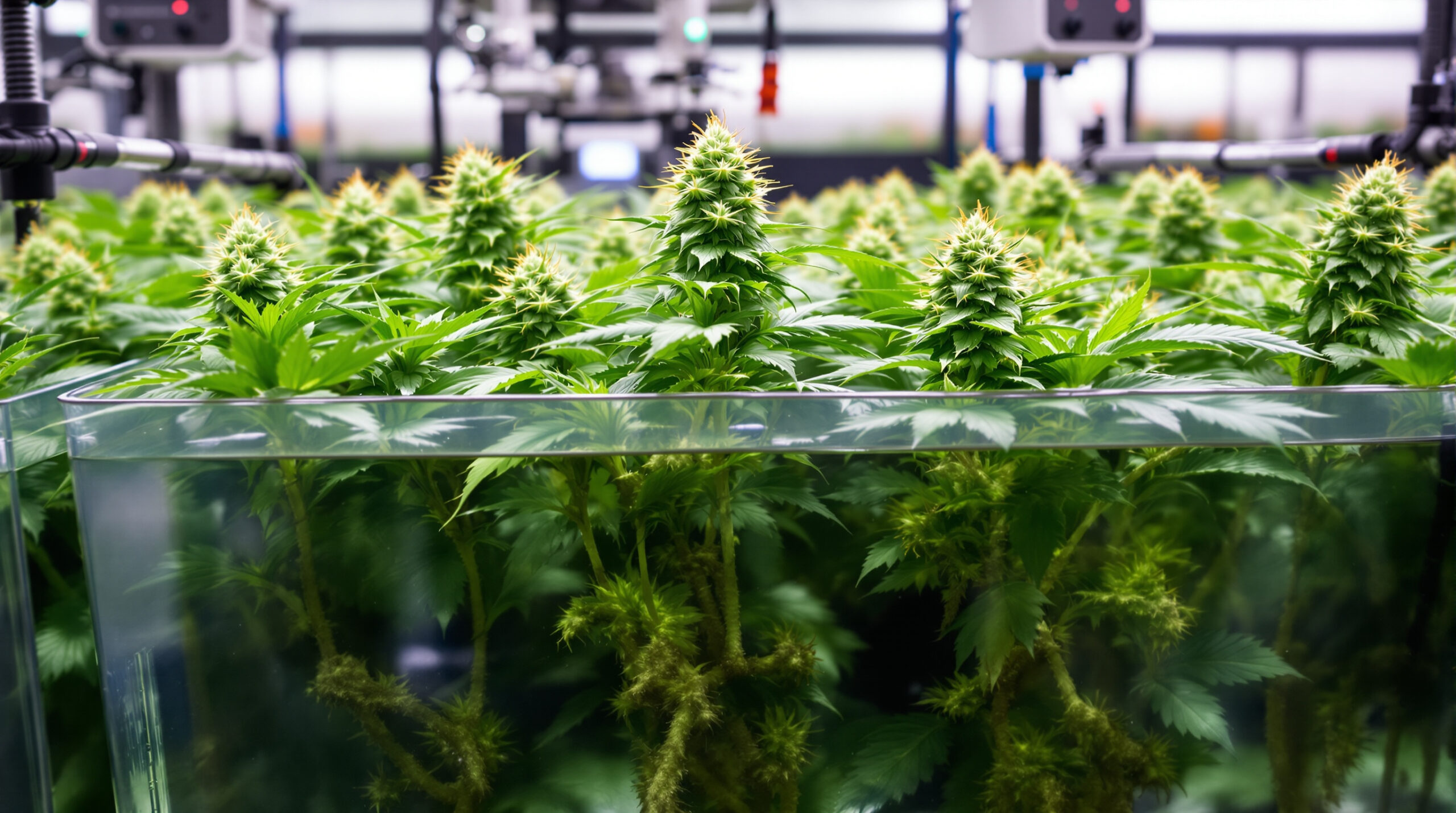
In hydroponics, roots don’t grow in soil but in an inert substrate like expanded clay or rockwool. A nutrient solution supplies the plants and reaches the roots directly. There’s no such thing as a special „hydroponic plant“ in the cannabis space, strictly speaking. Usually, it means a cutting or young plant that you’ll switch to a hydroponic system. What matters most, then, isn’t a particular variety but rather the quality and condition of the seedling at the time of purchase.
The great advantage of the method lies in control. You can precisely manage pH, EC, and nutrient delivery. This typically results in faster growth and higher yields compared to traditional soil cultivation. If you want to leverage this control, you need healthy plant material from the start. A weakened plant will transfer its problems directly into the system.


Cuttings or seeds: What works for hydroponics
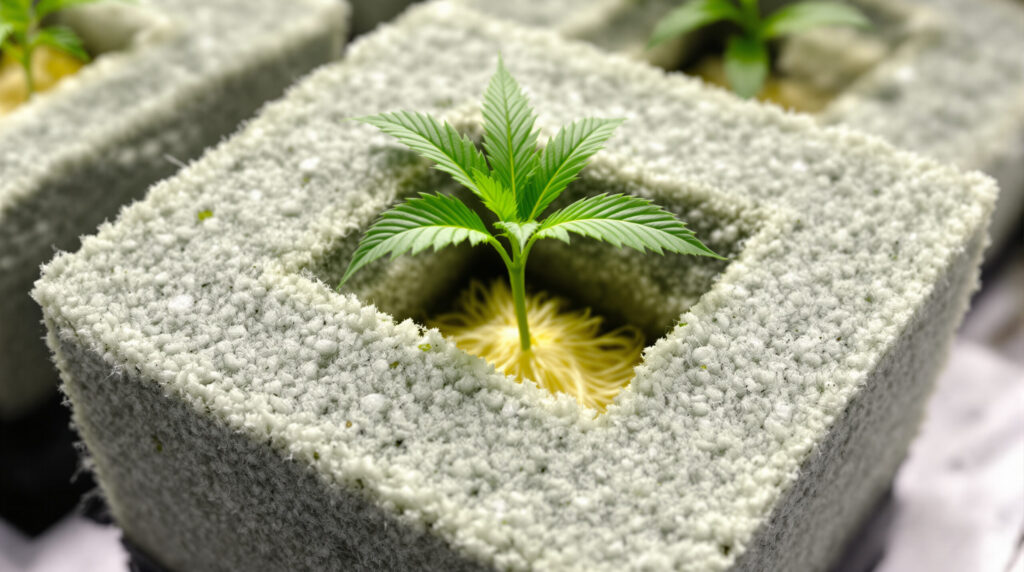
When starting out, you’ll face a fundamental decision: begin with seeds or cuttings? Cuttings are genetic clones of a mother plant. They grow uniformly, have known properties, and skip the uncertain germination phase. This predictability is valuable in hydroponics because the system is designed for uniform growth. If you run multiple plants in parallel, you’ll benefit from identical clones. You can find more on this trade-off in our article on whether cuttings or seeds work better for beginners.
Seeds, on the other hand, offer greater variety and don’t involve the stress of moving a finished plant. You can germinate them directly in a starter cube and transfer them to the hydroponic substrate from the beginning. The downside is a longer lead time. If you care about specific traits, it’s worth looking into what to avoid when buying cannabis seeds. For hydroponics, both methods work as long as the young plant enters the system clean and vigorous.
What to look for when buying a hydroponics-suitable plant
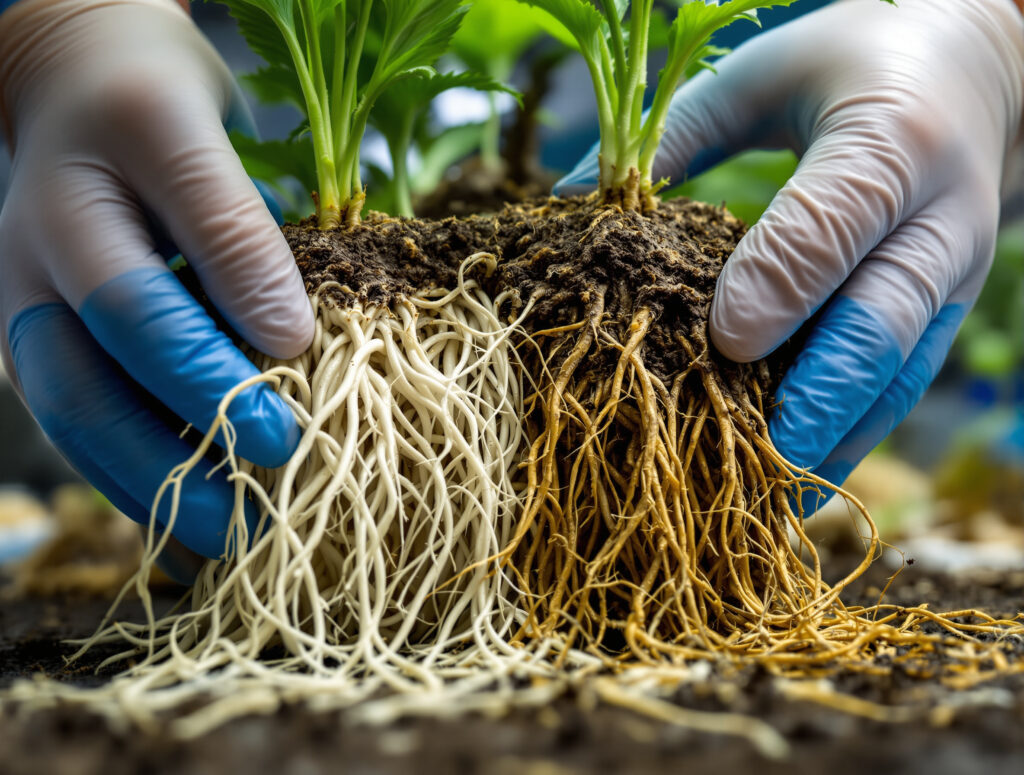
Whether a plant can handle the transition often decides itself before purchase. Check the roots first. A healthy cutting shows light, firm roots without brown or slimy patches. Brownish, mushy roots indicate root rot, which spreads particularly fast in a water system. Also pay attention to the leaves. They should be vibrant green and free of spots, spider mites, or sticky residue.
The substrate the plant is delivered in matters too. Cuttings in rockwool or a neutral starter cube are easier to transfer to hydroponics than those from heavily fertilized soil. Soil residue can contaminate the nutrient solution and throw the system off balance. Ask the seller how the plant was previously cultivated. Reputable providers give information about variety, age, and previous fertilization. A brief quarantine after purchase protects your system from introduced pests.
Where can you buy hydroponic plants?
Cannabis cuttings have not entirely emerged from the shadows since partial legalization, but sourcing remains legally delicate. Growing associations may distribute cuttings to members under certain conditions. Beyond that, there are specialty shops and online retailers for young hemp plants, whose offerings vary by region and legal interpretation. Our article on where to buy cannabis cuttings provides a detailed overview of reputable sources.
Transparency counts when choosing a supplier. A good seller states the genetic origin, documents care, and ships plants carefully. Be cautious of extremely cheap offers, because poorly rooted or sick cuttings end up costing more than healthy stock. If you have the choice, pick up young plants in person so you can inspect them before buying. This lets you check root and leaf condition directly instead of relying on product photos.
Think about the right system from the start
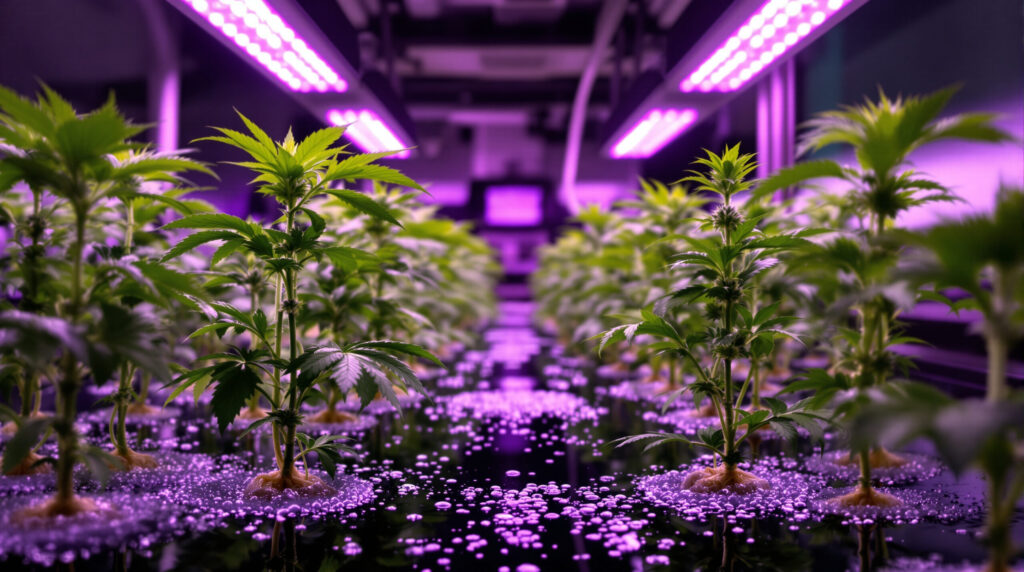
A single plant doesn’t make a hydroponic system. Think about which system it will go into before you buy. For beginners, Deep Water Culture (DWC) often suits the bill. The roots hang directly in an oxygen-enriched nutrient solution. The system is technically simple and promotes rapid growth thanks to high oxygen availability. One drawback is low buffering capacity—if aeration fails, roots quickly become stressed.
Alternatives include flood-and-drain systems, where nutrient solution floods and drains at intervals. They’re considered low-maintenance and temperature-friendly but need more space and water. If you want to start small and cheap, you can try a DIY approach like Hempy Buckets, the cheapest DIY hydroponics system in the world. What matters is that the system fits the number of plants you have. Our comparison on whether hydroponics or soil is better for home growing provides a general overview of the methods.
After planting, proper nutrient supply determines success. Hydroponic plants are sensitive to over- and under-fertilization because soil doesn’t provide a buffer. Our guide on how to properly fertilize cannabis hydroculture explains how to dose nutrient solution sensibly. A stable pH between 5.5 and 6.5 creates the foundation for healthy development.
Legal situation in Germany for plant purchases
Since April 1, 2024, the Cannabis Consumption Act allows adults to privately cultivate up to three plants at their residence. This limit applies regardless of whether you grow in soil or hydroponics. However, when buying cuttings or seedlings, the legal situation isn’t clear everywhere, since distribution to private individuals is strictly regulated. If you want to be on the safe side, source material through an authorized growing association and document the origin. This keeps you within the legal framework and lets you focus on cultivation instead of taking legal risks.
Frequently asked questions
Can you buy finished cannabis plants directly for hydroponics?
You typically don’t buy a finished hydroponic plant but rather a cutting or seedling that you transfer to the system. Plants from a neutral starter cube or rockwool work best because they enter the nutrient solution without soil residue. A brief acclimation period helps the plant adjust to its new environment.
How do I recognize a healthy plant at purchase?
Healthy cuttings have light, firm roots and vibrant green leaves free of spots. Brown or slimy roots indicate rot, and sticky residue suggests pests. Inspect the plant in person before buying if possible, and quarantine it briefly after transport before it enters the system.
Are cuttings or seeds better for hydroponics?
Both work. Cuttings grow very uniformly as clones, which is an advantage in a hydroponic system designed for even growth. Seeds offer more variety and come without the moving stress of an established plant. For beginners, rooted cuttings are often the easier start.
Which hydroponic system suits a new plant?
Deep Water Culture is popular for beginners because it’s technically simple and promotes rapid growth. Those wanting low-maintenance operation can choose a flood-and-drain system. With a tight budget, DIY solutions like Hempy Buckets are an option. The key is that the system matches your plant count.
Is buying cannabis cuttings legal in Germany?
Hast du schon einmal Cannabis in Hydrokultur angebaut?
Private cultivation of up to three plants has been legal since April 2024. However, distribution of cuttings to private individuals is strictly regulated and not clear everywhere. You’re safest obtaining plant material through an authorized growing association and documenting its origin.







Branchen-Update
News, Analysen und Reportagen — mehrmals im Monat direkt in dein Postfach.
Folge uns