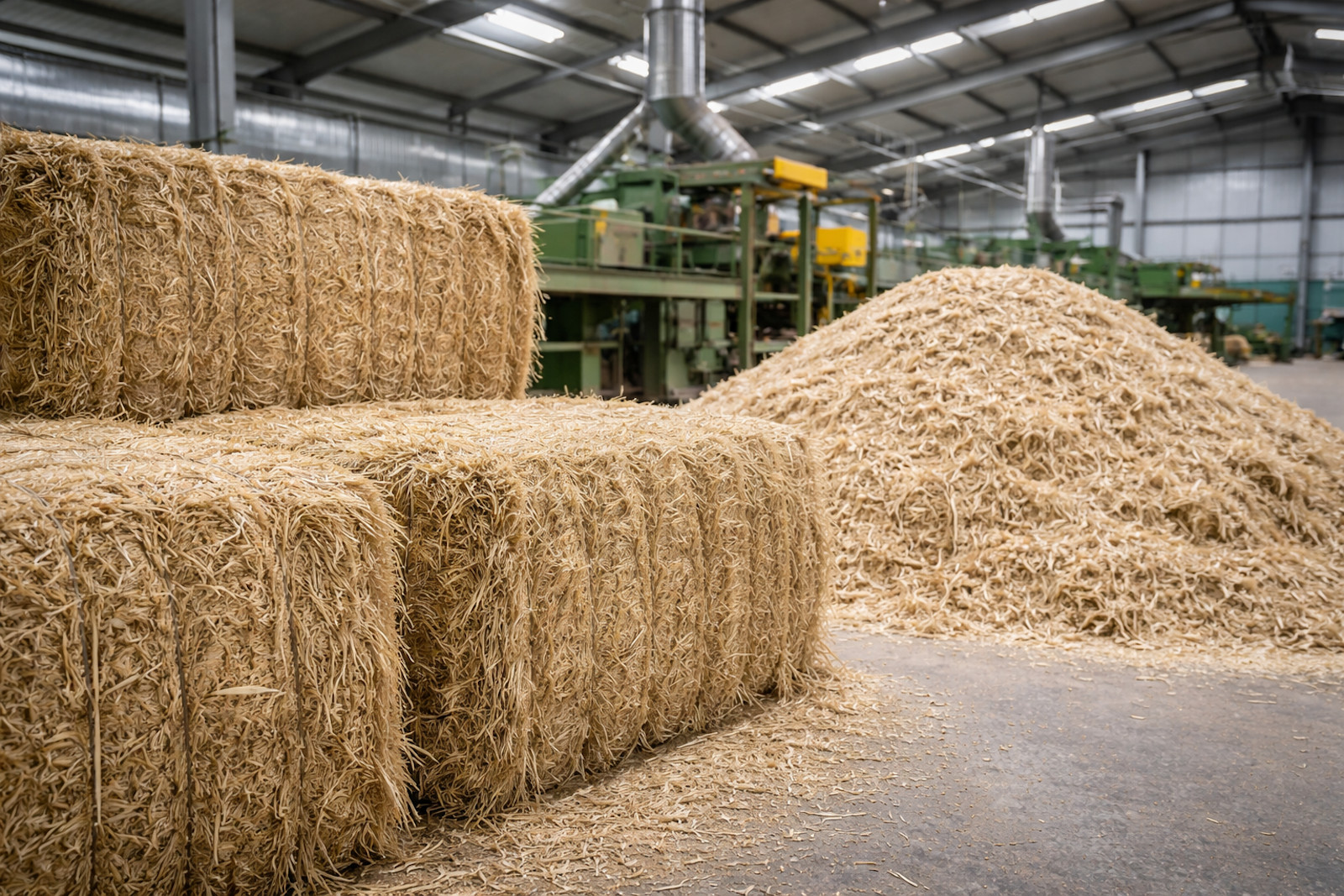
For decades, hemp straw was considered an overlooked byproduct of hemp cultivation. After harvesting flowers or seeds, a fiber-rich stalk remained that was often plowed back into the field or burned. What was long regarded as agricultural residue is now increasingly attracting the attention of industry, research, and policymakers. Because hemp straw is far more than waste – it is a versatile raw material with enormous economic and ecological potential.
📑 Inhaltsverzeichnis
- What Exactly Is Hemp Straw?
- Historical Use and Long Neglect
- Hemp Straw as Key to Profitability
- Applications in Construction and Insulation
- Use in Animal Husbandry and Agriculture
- Technical Applications and New Materials
- Ecological Advantages Over Other Raw Materials
- Infrastructure as the Critical Bottleneck
- From Byproduct to Strategic Raw Material
- The Underestimated Potential
- 💬 Fragen? Frag den Hanf-Buddy!
What Exactly Is Hemp Straw?
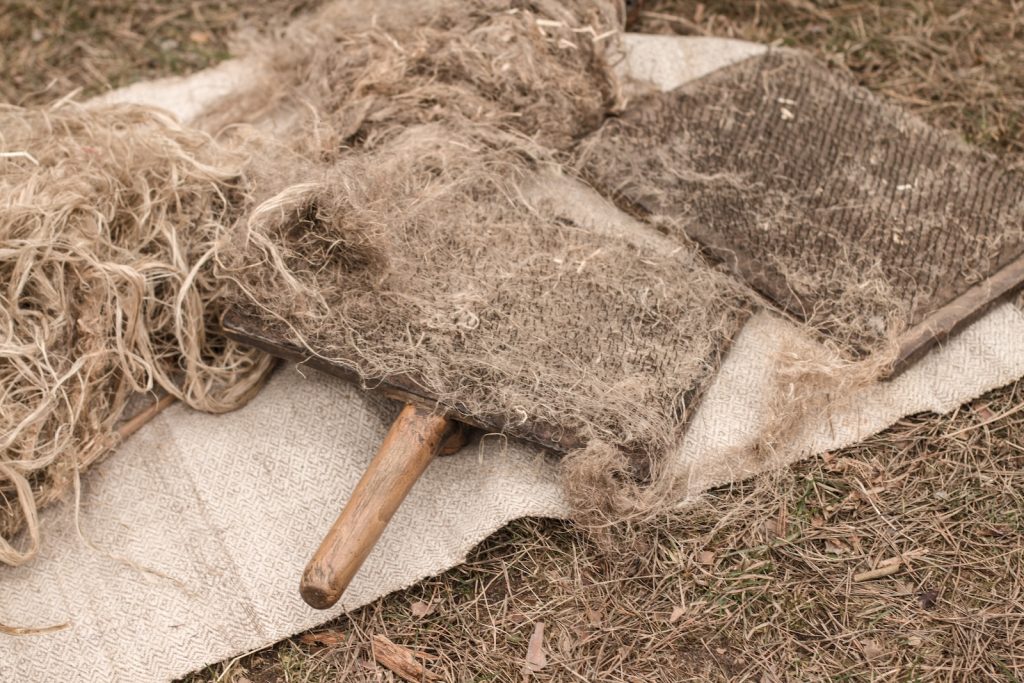
Hemp straw refers to the woody stalks of the hemp plant that remain after harvest. These consist essentially of two main components: the bast fibers on the outside and the woody shives on the inside. While the fibers have been used for centuries for textiles, ropes, and technical applications, the shives were long considered inferior. Yet this is precisely where a reassessment is beginning.
In modern utilization concepts, hemp straw is no longer regarded as waste but as a complex raw material whose components can be selectively separated and used industrially. This requires a functioning processing chain – from harvest through retting to mechanical processing.


Historical Use and Long Neglect
Historically, hemp straw played a minor role. In pre-industrial times, the focus was clearly on fibers for textiles and the use of seeds and oil. The woody components were hardly utilized, as technical means for efficient processing were lacking. With the decline of hemp cultivation in the 19th and 20th centuries, knowledge of possible uses almost completely disappeared.
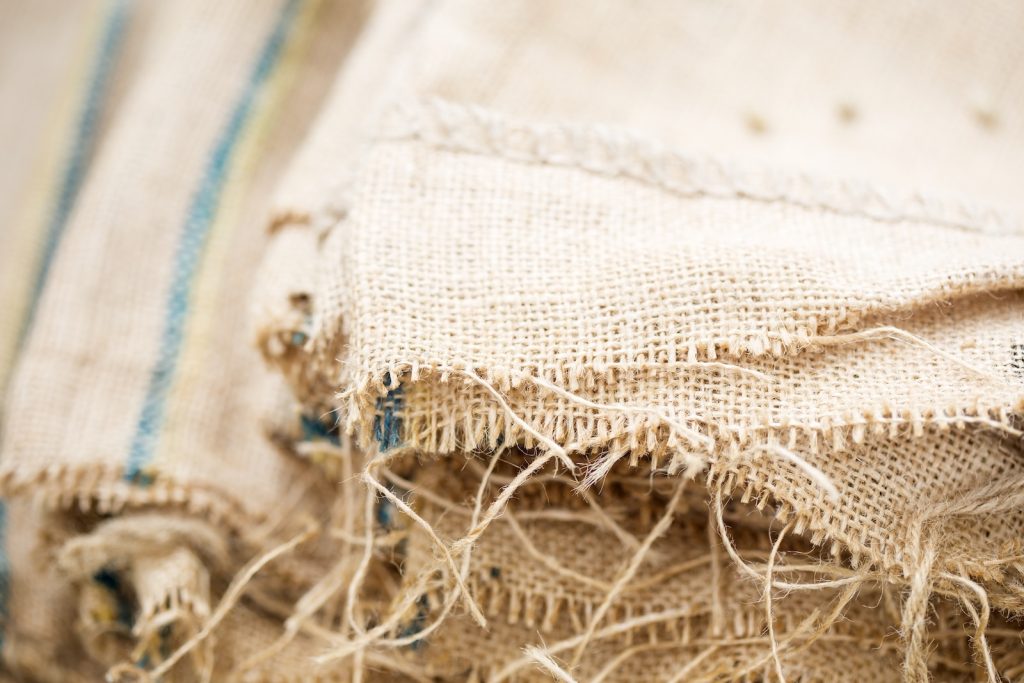
Only with the revival of industrial hemp cultivation since the 1990s did the question of how to handle large quantities of straw arise again. While the early phase often saw only part of the plant being used, it became increasingly clear that economically viable concepts could only emerge if the entire biomass was utilized.
Hemp Straw as Key to Profitability
From an economic perspective, hemp straw is crucial for the profitability of hemp cultivation. If only the flower or seed is used, much of the plant remains unutilized. This leads to high costs per hectare and limits scalability. Industrial use of the straw fundamentally changes this calculation.
Through material use of the shives and residual fibers, additional revenue streams can be developed. Simultaneously, disposal and transport costs decrease. In regions with functioning processing infrastructure, hemp straw can become a central pillar of regional value chains.
Applications in Construction and Insulation
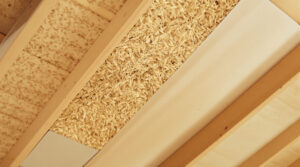
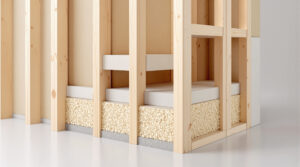
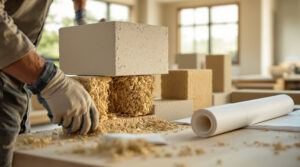
One of the most significant applications of hemp straw lies in construction. The shives produce insulation materials, lightweight building blocks, and so-called hemp-lime composite materials. These building materials are characterized by good thermal insulation, high vapor permeability, and an excellent carbon footprint. While conventional building materials consume large amounts of energy in manufacturing, hemp binds carbon during its growth.
Hemp straw-based building materials are also mold-resistant, regulate moisture, and contribute to a healthy indoor climate. In France and the United Kingdom, such materials have been established for years. In Germany, however, widespread use has so far often failed due to lack of production capacity and regulatory hurdles.
Use in Animal Husbandry and Agriculture
Hemp straw has also found its place in animal husbandry. As bedding for horses, small animals, or poultry, it impresses with high absorbency, low dust development, and rapid compostability. Compared to cereal straw or wood shavings, hemp straw has a significantly better environmental footprint.
Furthermore, it finds application as a soil improver. Shredded hemp straw can introduce organic matter into soil, increase water-holding capacity, and improve soil structure long-term. This closes an agricultural cycle that is both ecologically and economically sound.
Technical Applications and New Materials
In recent years, hemp straw has increasingly attracted the attention of materials research. The woody shives are suitable as fillers in bioplastics, press boards, and composite materials. In the automotive industry, hemp-based materials are already being used for interior trim, as they are lightweight, stable, and sustainable.
Hemp straw is also gaining significance in the packaging sector. Cellulose from hemp can replace or supplement paper and cardboard while requiring fewer chemicals than wood. Moreover, hemp grows considerably faster than trees, making it an attractive alternative for the paper industry.
Ecological Advantages Over Other Raw Materials
The ecological footprint of hemp straw is remarkably small. Hemp grows rapidly, requires little water, and needs no intensive pesticides. Unlike wood, there is no need to wait for decades-long growth cycles. Additionally, hemp can be integrated into crop rotations, which improves soil quality and counters monocultures.
The use of straw reinforces these positive effects. Instead of disposing of biomass or using it energetically, it is used materially and remains bound in the material cycle for years or decades. This makes hemp straw an important building block of a bio-based economy.
Infrastructure as the Critical Bottleneck
Despite all these advantages, hemp straw remains an underutilized raw material in many regions of Europe. The main reason lies in the lack of infrastructure. Modern retting, drying, and decortication facilities are expensive and require continuous raw material supply. In countries like France or the Netherlands, government support programs and cooperative structures have enabled the establishment of such facilities.
In Germany, however, only a few industrial processing sites currently exist. Many farmers therefore face the problem that while they produce hemp straw, they cannot economically utilize it. Without regional buyers, the potential remains untapped.
From Byproduct to Strategic Raw Material
The reassessment of hemp straw marks a fundamental shift in how hemp cultivation is understood. Rather than specialized use of individual plant parts, complete utilization comes to the fore. Hemp straw transforms from a troublesome residue into a strategic raw material that can link entire industries together.
For agriculture, construction, industry, and climate policy, hemp straw offers a common interface. Its use reduces dependence on fossil raw materials, strengthens regional economic cycles, and creates new jobs in rural areas.
The Underestimated Potential
Whether hemp straw truly makes the leap from niche material to industrial standard depends on political decisions, investments, and technological progress. What is clear, however, is that the days when hemp straw was considered waste are over. In an economy seeking sustainable, renewable raw materials, it is a treasure that has long been overlooked.
If infrastructure, research, and market can be brought together, hemp straw could play a key role in the bio-based industry in the coming years – quietly, inconspicuously, but with enormous impact.
Related Articles
Hast du schon von Hanfstroh als Baustoff gehört?



Branchen-Update
News, Analysen und Reportagen — mehrmals im Monat direkt in dein Postfach.
Folge uns