
An essay on genetic archaeology, the hubris of modern breeding, and why a molecule from ancient times could correct our understanding of healing.
📑 Inhaltsverzeichnis
We tend to read the history of cannabis cultivation as a success story. Over recent decades, we’ve optimized the plant in our grow rooms and greenhouses, drilling it into a high-performance machine that spits out THC values beyond the 30-percent mark or delivers pure CBD. But anyone who has engaged with this plant’s essence—as I have for over a decade—not just its effects but its soul, has long sensed that something has been lost in this technocratic pursuit of potency. We specialized the plant, yes, but we also impoverished it.
Now comes news from the Netherlands, specifically from Wageningen University, that feels like a confirmation of this unease: To unlock the full medical potential of cannabis, we must not breed into the future, but travel millions of years into the past.


Genome Archaeology
What the researchers there accomplished is no simple botanical parlor trick. It is genetic archaeology. They didn’t find seeds preserved in amber—that would be too easy. They mathematically rewound time. Using so-called Ancestral Sequence Reconstruction (ASR), they deconstructed the evolutionary family tree of the Cannabis sativa lineage to calculate the DNA sequences of those ancestors that grew long before the first humans walked this planet [1].
These reconstructed gene sequences were implanted and brought to life. What they found is a humiliation for every modern breeder: An enzyme that isn’t like today’s variants—a stubborn specialist—but rather a virtuoso generalist.
The Loss of Promiscuity

To understand the magnitude, one must examine the plant’s biosynthesis. In the modern poly-hybrids that dominate today’s markets, enzymes work with high specificity. They take the mother substance CBGA and stubbornly convert it into THC or CBD. Over the course of evolution, the plant had to decide: Specialization in defense (through intoxicating THC) meant survival.
The prehistoric enzymes, however, were, as the Wageningen researchers call them, „promiscuous.“ They possessed a biochemical openness that allowed them to simultaneously synthesize THCA, CBDA, and—and this is the crucial point—Cannabichromenic Acid (CBCA), the precursor to CBC, in significant quantities from the same base [1]. The plant sacrificed this chemical diversity on its journey to modernity. We bred this breadth out of it because we wanted intoxication or, later, pure relaxation. CBC, actually one of the great cannabinoids, became a homeopathic footnote in the lab analyses of my recent harvests.
CBC: The Underestimated Architect
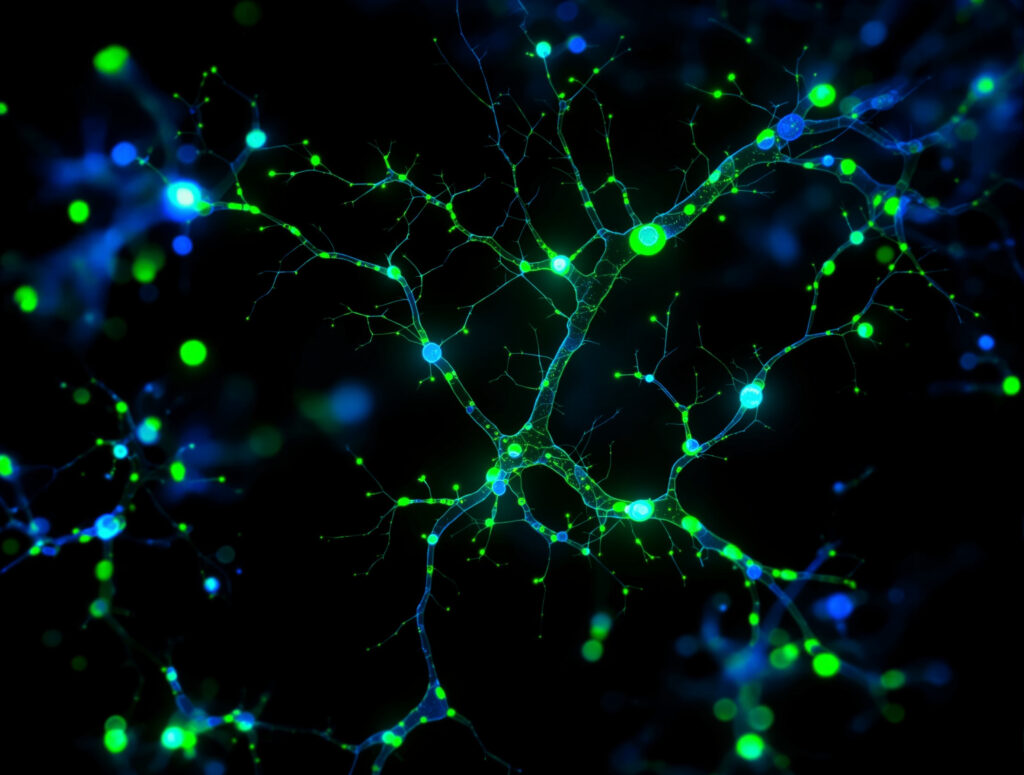
Why is this tragic? Because we increasingly understand that CBC is not simply another cannabinoid. Anyone who engages with the endocannabinoid system beyond the simple CB1/CB2 receptor dogmas knows the role of TRP channels. It is particularly at the TRPA1 channel that CBC unfolds its effect [2]. It doesn’t produce intoxication; it doesn’t push itself into the foreground like THC. It works in the background.
The research landscape here is no longer sparse but increasingly robust. CBC demonstrates potent anti-inflammatory properties in studies, making it an interesting alternative to the ubiquitous CBD [3]. It appears to intervene deeply in the biochemical cascades of pain and inflammation, without the sedating heaviness often accompanying high CBD doses.
Even more fascinating is the aspect of neurogenesis. While we long believed the adult brain to be a static mass capable only of decline, research suggests that CBC can positively influence the viability of neural stem cells [4]. In a society heading toward a wave of neurodegenerative diseases, a substance that doesn’t stupefy the mind but potentially rejuvenates its structure would be the actual „Holy Grail.“
The Revival of Complexity
The Dutch discovery now makes it possible to harness this „primal enzyme“ biotechnologically. You can introduce it into microorganisms such as yeast and produce CBC as pure and scalable as insulin [1]. But for those versed in the subject, the true revolution lies elsewhere.
It concerns the return of the entourage effect. This concept, often misused as a marketing buzzword, describes the biochemical symphony of the plant, in which the whole is greater than the sum of its parts [5]. Isolates are like individual notes—loud, but without harmony. Nature never conceived of CBC in isolation. The contradiction, the „hubris“ of criticizing modern technology and then proposing CRISPR use, dissolves when we change the goal. It’s not about further „improving“ nature, but about using modern tools to correct a mistake. When we reintegrate this ancestral gene into today’s varieties through modern breeding methods, we don’t create monsters—we heal the plant from its man-made one-sidedness. We give it back a piece of its soul.
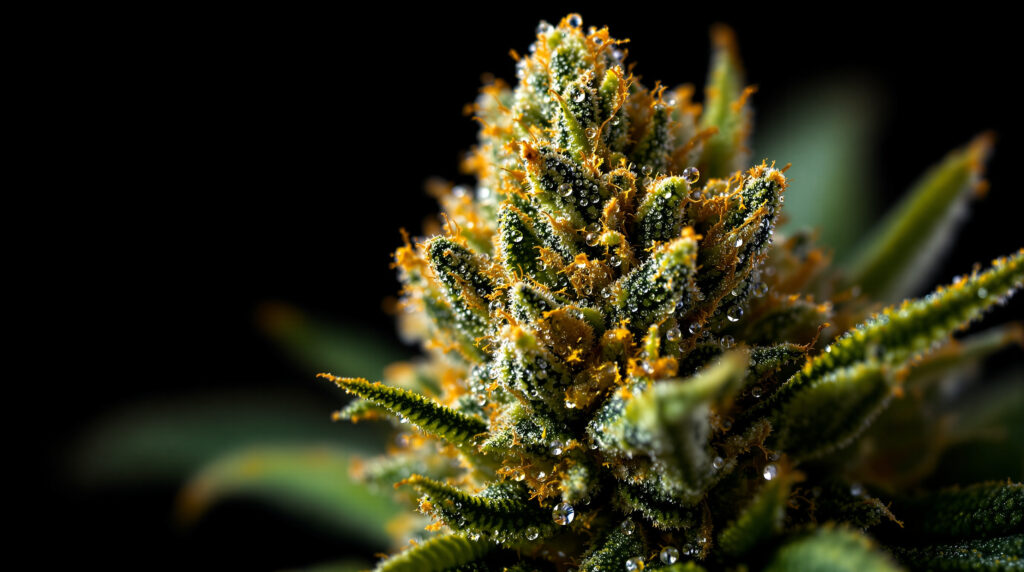
Imagine a flower that has the resin density of a modern Kush but the chemical profile of a plant from the Miocene. A strain that fights inflammation with the force of millions of years of evolution.
Wie wichtig ist dir die Cannabinoid-Vielfalt in deinem Cannabis?
That is the irony of our time: We need high-tech laboratories and gene sequencing to recognize that nature already had the solution ready. The rediscovery of CBC through prehistoric enzymes is more than medical progress. It is a lesson in humility.
Sources
[1] Villard, C., Baser, I., van de Peppel, A.C., Cankar, K., Schranz, M.E. and van Velzen, R. (2026), Resurrected Ancestral Cannabis Enzymes Unveil the Origin and Functional Evolution of Cannabinoid Synthases. Plant Biotechnology Journal, 24: 2685-2697. [2] Romano, B., Borrelli, F., Fasolino, I., et al. (2013). The cannabinoid TRPA1 agonist cannabichromene inhibits nitric oxide production in macrophages and ameliorates murine colitis. British Journal of Pharmacology, 170(7), 1151-1169. [3] Izzo, A. A., Capasso, R., Aviello, G., Borrelli, F., Romano, B., & Piscitelli, F. (2012). Inhibitory effect of cannabichromene, a major non-psychotropic cannabinoid extracted from Cannabis sativa, on inflammation-induced hypermotility in rats. British Journal of Pharmacology, 166(4), 1444-1460. [4] Shinjyo, N., & Di Marzo, V. (2013). The effect of cannabichromene on adult neural stem/progenitor cells. Neurochemistry International, 63(5), 432-437. [5] Russo, E. B. (2011). Taming THC: potential cannabis synergy and phytocannabinoid-terpenoid entourage effects. British Journal of Pharmacology, 163(7), 1344-1364.





Branchen-Update
News, Analysen und Reportagen — mehrmals im Monat direkt in dein Postfach.
Folge uns