A Phase II study using pharmaceutical cannabidiol (CBD) in patients with recurrent pericarditis—chronic inflammation of the heart’s protective lining—has demonstrated notably reduced pain scores. The numbers look impressive on the surface, yet the study design imposes significant constraints on their interpretation. Here’s what you need to know.
📑 Inhaltsverzeichnis
Recurrent pericarditis is a grueling condition for those affected: severe chest pain, repeated hospitalizations, often persisting for years. A study published in the Journal of the American Heart Association has now examined how pharmaceutical-grade cannabidiol (CBD) performs in this setting. The research involved investigators from the Mayo Clinic, Cleveland Clinic, Northwestern University, and Harvard Medical School, among others.
What the Study Examined
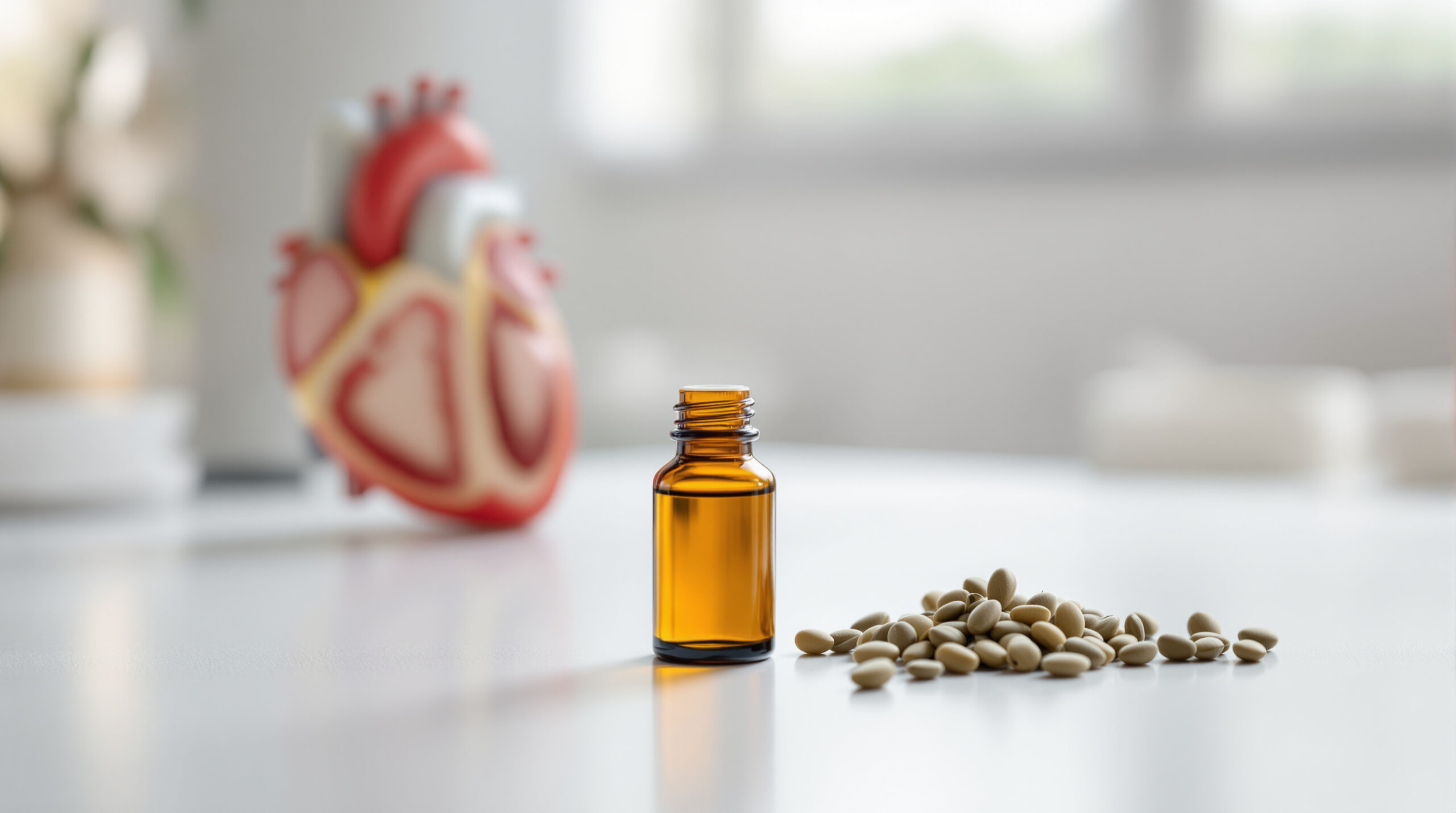
In the Phase II trial designated MAvERIC-Pilot, 27 adults with active, recurrent pericarditis received an oral CBD solution. The pharmaceutical preparation used was standardized cannabidiol with negligible THC content—not an over-the-counter product. Participants were titrated over eight weeks to a dose of 10 milligrams per kilogram of body weight, twice daily.


The Results
After eight weeks, participants‘ pain scores declined by an average of 3.7 points; across the full 26-week observation period, they dropped an average of 4.3 points. Simultaneously, the inflammatory marker C-reactive protein decreased. Among those who completed the study in full, 71 percent experienced no recurrent pericarditis flare during the observation period. Tolerability was generally reported as good; one serious adverse event was reported.
Why These Numbers Require Caution
As compelling as the figures appear, examining the study design is essential. This was an open-label pilot study: all 27 participants received CBD, with no control group, and neither participants nor researchers were blinded. This means the data cannot establish that CBD caused the observed improvements. In a condition that naturally fluctuates in episodes and where expectancy effects play a role, this is a substantial limitation. Additionally, the small participant sample and the fact that the study was funded and conducted by the manufacturer of the tested drug further constrain the conclusions.
However, that is precisely what a Phase II study is designed to do: it evaluates dosing, safety, and initial signals of efficacy—not proof of effectiveness. That burden falls to a Phase III trial already underway, which is randomized, double-blind, and placebo-controlled. Only those results will reveal whether this approach can become established in treating recurrent pericarditis.
What This Means
The cardiovascular system remains a relatively emerging field in cannabinoid research; we’ve previously reported on CBD investigations in myocarditis. For patients, this primarily means: the study concerns a prescription-only, pharmaceutically standardized preparation at high doses under medical supervision. Its findings cannot be extrapolated to over-the-counter CBD products, and it does not replace medical treatment. Anyone with heart disease should discuss treatment options exclusively with their physician.
Note: This article reports on scientific research and makes no health claims, efficacy statements, treatment recommendations, or calls to action. It is not a substitute for medical consultation.







Hast du schon einmal CBD bei Entzündungen ausprobiert?
Branchen-Update
News, Analysen und Reportagen — mehrmals im Monat direkt in dein Postfach.
Folge uns