
• Kolumnen
    • Interviews
  • Hanf Allgemein
    • Gesellschaft & Soziales
  • Drogenkunde
    • Safer Use
    • Pflanzliche Drogen
  • Produkte
  • Strain Reviews
  • Print Magazin
  • Tools
Sonntag, Juni 28, 2026
Hanf Magazin
  • News
  • Medizin
    • Cannabinoide
    • Erkrankungen
    • Cannabis bei Tieren
    • Erfahrungsberichte
  • Recht & Politik
    • Deutschland
    • Österreich
    • Schweiz
    • International
    • Rechtslage DE
    • Rechtslage International
  • Wissenschaft
    • Studien
    • Forschung
  • Growing
    • Indoor-Growing
    • Outdoor-Growing
    • Strains & Reviews
    • Equipment
  • Nutzhanf
    • Baustoffe
    • Rohstoffe
    • Lebensmittel
    • Kleidung
    • Kosmetika
  • Wirtschaft
  • Konsum & Lifestyle
    • Rauchen
    • Vaporisieren
    • Essen & Rezepte
    • Kultur & Szene
    • Termine & Events
No Result
View All Result
  • News
  • Medizin
    • Cannabinoide
    • Erkrankungen
    • Cannabis bei Tieren
    • Erfahrungsberichte
  • Recht & Politik
    • Deutschland
    • Österreich
    • Schweiz
    • International
    • Rechtslage DE
    • Rechtslage International
  • Wissenschaft
    • Studien
    • Forschung
  • Growing
    • Indoor-Growing
    • Outdoor-Growing
    • Strains & Reviews
    • Equipment
  • Nutzhanf
    • Baustoffe
    • Rohstoffe
    • Lebensmittel
    • Kleidung
    • Kosmetika
  • Wirtschaft
  • Konsum & Lifestyle
    • Rauchen
    • Vaporisieren
    • Essen & Rezepte
    • Kultur & Szene
    • Termine & Events
No Result
View All Result
Hanf Magazin
No Result
View All Result
Home Cannabis in der Medizin nutzen Allgemeines zur Cannabismedizin

Cannabis and Psychosis: Myths, Facts, and At-Risk Groups

von Mara König
05.06.2026
in Allgemeines zur Cannabismedizin
Lesezeit: 7 Minuten
Gehirnscan auf Monitor in psychiatrischer Forschungsumgebung
⏱ 9 Min. Lesezeit·1.799 Wörter
Teilen:WhatsAppFacebookXLinkedInE-Mail
🌐 This article was automatically translated from German. Browse all English articles

Hardly any topic divides the cannabis debate as much as the question of psychosis risk. On one side, psychiatrists warn of an impending wave of psychotic disorders caused by high-potency flower and open market access. On the other side, consumers and activists point to millions of people who have smoked cannabis for years without psychiatric consequences. The truth lies, as so often, somewhere in between. Recent studies from 2024 and 2025 paint a much more precise picture than the heated headlines suggest.

📑 Inhaltsverzeichnis

  1. What research really shows in 2025
  2. Five myths fact-checked
  3. Risk groups: who should be especially careful
  4. High-potency flower and the dosing problem
  5. When psychosis breaks out: symptoms and treatment
  6. Frequently asked questions
  7. 💬 Fragen? Frag den Hanf-Buddy!

Cannabis and psychosis are linked by statistically documented association. However, this connection is not linear, not universal, and above all not monocausal. Consuming cannabis does not automatically make someone psychotic. But those with certain risk factors who simultaneously consume high doses do face a measurably increased risk. This article sorts through the data, dispels half-truths, and identifies the groups for whom special caution applies.

What research really shows in 2025

Scientific publications on desk in research environment

The most important finding of recent years comes from the EU-GEI study and its follow-up publications. This Europe-wide investigation compared thousands of patients with a first psychotic episode to a control group. The result was clear. Those who consumed daily had a threefold increased risk of psychotic disorder. Those who daily used high-potency cannabis with more than ten percent THC had an odds ratio of 4.8. In the subgroup of regular consumers of high-potency strains, the value was even 5.1.


GanjaFarmerGanjaFarmer

A systematic meta-analysis in the Cambridge journal Psychological Medicine confirmed this dose-response relationship. With increasing consumption frequency, relative risk increases. At yearly consumption it is 1.25, at monthly consumption 1.32, and at weekly consumption already 1.51. It is important to contextualize these figures. They describe the relationship between consumers and non-consumers in a population, not the individual risk of each person.

Researchers from Charité and the Maudsley Institute also showed in 2024 that heavy cannabis use increases psychosis risk independent of genetic predisposition. The previous hypothesis held that cannabis revealed existing predisposition. The new data suggest that heavy consumption is an additional independent risk factor even without genetic vulnerability. The mechanism behind this is the pharmacology of the endocannabinoid system, which is closely linked to dopamine metabolism in the brain. Our background article on the endocannabinoid system provides a comprehensive introduction to these relationships.

Five myths fact-checked

The debate is characterized by oversimplified statements. The most important of these do not withstand scientific scrutiny.

Myth 1: Cannabis directly causes schizophrenia

This statement is too broad. Cannabis is a risk factor, not the sole trigger. Schizophrenia develops through the interplay of genetics, early childhood experiences, environmental stress, and substance use. Without this combination, even regular consumption does not lead to illness in most people. The epidemiological number, put simply, is roughly as follows. Of a thousand daily-consuming individuals, a single-digit percentage will later develop a psychotic disorder. Among non-consumers in the same age group, the rate is roughly one-third lower.

Myth 2: CBD reliably protects against cannabis-induced psychosis

CBD has shown antipsychotic effects in individual clinical studies. Charité and King’s College London have been investigating for years whether CBD could be a treatment option for schizophrenia. Results so far are promising but insufficient for approval. In everyday terms, this means that a high CBD content in a cannabis strain does not neutralize THC. CBD admixtures or CBD pretreatment do not reliably prevent THC-induced psychotic episodes. Those with a known risk should not attempt to justify consumption through CBD.

Myth 3: Legalization has led to more psychoses

In Germany, it is too early for reliable epidemiological statements since partial legalization in 2024. Data from the United States and Canada show a differentiated picture. In some states, the number of emergency admissions for cannabis-induced psychosis rose, in others it remained stable. A frequently cited study concluded that no direct relationship between legalization model and psychosis rate is evident. The decisive factor appears to be the THC content of available products. Our article No connection between psychoses and legalization contextualizes international data.

Myth 4: Medical cannabis is always safe

Prescription flower can also trigger psychotic symptoms, especially with inappropriate indication and overly high starting doses. Strains with twenty to twenty-five percent THC have become standard in Germany. Medical societies criticize this. More on this in our article Medical cannabis and 25 percent THC. A physician’s prescription does not replace individual risk assessment.

Myth 5: Cannabis-induced psychosis always disappears on its own

Cannabis-induced psychosis is not harmless. Recent course studies show that roughly half of those affected receive a diagnosis from the schizophrenic spectrum or bipolar disorder within eight years. Even if acute symptoms subside within days to weeks, the risk of later chronic illness remains elevated. This is especially true if consumption continues after the acute episode.

Risk groups: who should be especially careful

Silhouette of a young person at window in consultation environment

Recent research has identified several groups for whom psychosis risk from cannabis consumption is significantly above average. Anyone belonging to one of these groups should discuss consumption openly with a medical professional.

Adolescents and young adults under 25 years old are the most important risk group. The brain is undergoing maturation until the mid-twenties, especially the prefrontal cortex and dopaminergic circuits. A meta-analysis estimates psychosis risk in regularly consuming adolescents at an odds ratio of 2.47 compared to non-consuming peers of the same age. The threshold derived by researchers is around 30 milligrams of THC per week, which corresponds to approximately one joint with six percent THC. With current market flower containing twenty to thirty percent THC, this threshold is reached in a single cigarette.

The second group consists of people with schizophrenia in their family history. Siblings or parents with psychotic illness significantly increase one’s own baseline risk. Cannabis acts as an additional trigger in this situation. Studies show that carriers of certain variants in the AKT1 gene, which is linked to dopamine metabolism, are particularly sensitive to THC. Genetic testing is rarely available in practice, but family history is an easily accessible indicator.

The third group includes individuals with early psychotic symptoms, clinically termed at clinical high-risk for psychosis. Those who have already experienced attenuated perceptual disturbances, ideas of reference, or brief paranoid episodes have a significantly elevated conversion risk into fully developed psychosis. Cannabis accelerates this conversion. Probability in this group is nearly five times higher compared to abstinent risk individuals.

💬 Hanf-Buddy — dein Cannabis-Experte
🌿 Fragen zu diesem Thema? Schreib einfach los — ich helfe dir!

Bitte verifiziere deine E-Mail. Wir haben dir einen 6-stelligen Code geschickt.

Danke für den Chat! 😊 Abonniere unseren Newsletter für mehr:

Zum Newsletter

A fourth and often underestimated group is polysubstance users. The combination of cannabis with tobacco, alcohol, or other substances increases risk further. A 2026 study published by Vanderbilt University shows that the combination of cannabis and tobacco triples psychosis risk in high-risk individuals. Details and methodology are explored in our article on the Vanderbilt study.

High-potency flower and the dosing problem
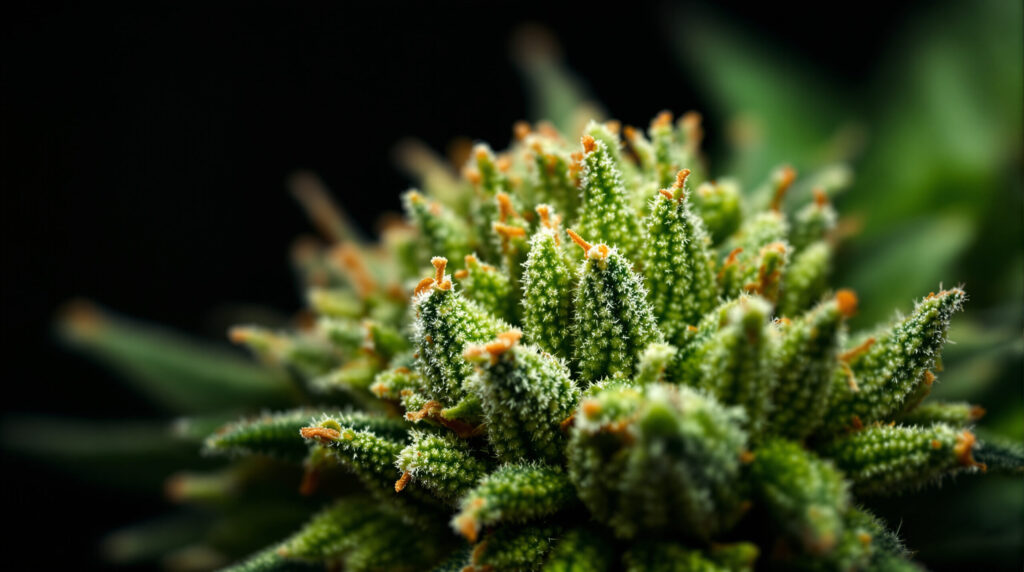
Macro photograph of high-potency cannabis flower with trichomes

The THC content of street cannabis has increased massively over the past two decades. In the early nineties, the average value was around six percent. Today, typical strains range between seventeen and twenty-eight percent. Concentrates like wax, shatter, or live rosin reach values over ninety percent. The typical consumption unit has not adapted accordingly. A joint, a bong bowl, or a vape hit today often contains five to ten times the psychoactive dose from thirty years ago.

This shift is central to psychosis risk assessment. Most epidemiological studies on cannabis and schizophrenia come from a time when average potency was half what it is today. Current data show a clear dose-response relationship. Higher THC concentrations increase risk not linearly but disproportionately. This is especially true with frequent consumption. For those wishing to dose in a controlled manner, our microdosing guide offers an introduction to a considerably lower-risk consumption method.

A practical consequence for everyday use is to dose lower and titrate more slowly. This applies to recreational consumers and to patients with physician prescription. Manufacturers disclose THC content because this value is the single most important variable for acute and long-term risk. A conscious look at the laboratory analysis datasheet does not replace a risk discussion with a professional, but it is a sensible first step.

When psychosis breaks out: symptoms and treatment

Cannabis-induced psychosis manifests through acute symptoms that are usually clearly recognizable to outsiders. These include hallucinations, often visual and auditory in nature, delusions frequently with paranoid content, ego disturbances, panic attacks, and severe cognitive slowing. Symptoms can last a few hours or persist for weeks. Immediate psychiatric evaluation is necessary, ideally in a clinic with experience in drug psychiatry.

Treatment typically follows three pillars. First is complete consumption cessation, if necessary under inpatient conditions. Second is reduction of stimuli and stress, because the nervous system is particularly sensitive at this stage. Third, if necessary, pharmacological treatment with antipsychotics. This is not mandatory but is rapidly employed when symptoms are pronounced. After acute symptoms subside, ambulatory follow-up care follows. This is crucial because resumed consumption significantly increases the risk of chronic courses.

Those wishing to learn more about how cannabis and other mental illnesses interact can find contextualization of relevant cannabinoid effects on the limbic system in our background article Anxiety disorders and cannabis.

Frequently asked questions

Does cannabis cause psychosis in everyone?

No. For most consumers, no psychotic episode occurs, even with long-term consumption. The statistically elevated relationship applies to population groups, not to individual cases. Individual risk depends on age, genetics, consumption pattern, quantities, and concomitant substances. Those belonging to none of the known risk groups and consuming moderately have comparatively low risk.

At what quantity does cannabis become critical for mental health?

Researchers have derived thresholds beyond which risk for dependence and psychiatric consequences measurably increases. For adolescents, this value is around 30 milligrams of THC per week; for adults around 41 milligrams. These figures are statistical orientations, not free passes. With familial predisposition or known prior psychotic experiences, individual tolerance often lies considerably below these values.

Does CBD help against THC’s psychosis risk?

CBD shows its own antipsychotic effects in individual studies and is being researched as a possible treatment option for schizophrenia. In everyday life, however, CBD should not be understood as a protective factor against THC. CBD admixture in a strain does not reliably mitigate acute risk, especially when THC dose remains high. Those with a known risk should not rely on CBD as a corrective.

How does cannabis-induced psychosis differ from schizophrenia?

An acute cannabis-induced psychosis occurs in temporal relationship to consumption and typically resolves within days to a few weeks. Schizophrenia is a chronic illness with longer course and independent dynamics. However, course studies show that a relevant proportion of cannabis-induced psychoses later progress to schizophrenic or bipolar diagnosis. The boundary between acute and chronic is therefore not always sharp.

Should cannabis patients refuse consumption with prior mental illness?

📊 Deine Meinung zählt

Wie informiert fühlst du dich über das Psychose-Risiko bei Cannabis?

✓
Danke für deine Stimme!

Blanket rejection is not appropriate; critical medical history-taking certainly is. With schizophrenia in personal or family history, THC-containing medical cannabis is generally inadvisable. For other mental illnesses such as depression or post-traumatic stress disorder, more differentiated indications apply. The decision belongs in the hands of experienced practitioners, not in those of an online prescription service.


HE Abverkauf
Kannabia
Dr. Mang
MedCanOneStop
Khalifa Genetics
Royal Queen Seeds #1

Das könnte dich auch interessieren

  • → Über den Zusammenhang zwischen Depersonalisation/Derealisation und Cannabiskonsum
  • → Cannabis für Senioren: Chancen und Risiken im Alter
  • → Rick Simpson – Wie im Film

Branchen-Update

News, Analysen und Reportagen — mehrmals im Monat direkt in dein Postfach.

Folge uns

Was dich auch interessieren könnte...

Sanity Group und Astrasana: avaay-Medizinalcannabis für den Schweizer Markt

23. Juni 2026
Arzneimittelflasche mit Cannabis-Extrakt auf klinischer Oberfläche

Exilby zugelassen: Europas erstes Cannabis-Arzneimittel gegen chronische Rückenschmerzen

16. Juni 2026
InstagramYouTubeFacebookLinkedIn
Tags: CannabispatientenEndocannabinoid-SystemHanfforschungJugendschutzPräventionPsychosen

Related Posts

Verhandlungstisch mit Dokumentenstapeln zur Arzneimittelpreisbildung
Rechtslage in Deutschland

Cannabis-Arzneimittel: Wie sich der Preis über AMNOG und Krankenkassen entscheidet

von Mara König
27. Juni 2026
Hund in verrauchtem Wohnraum bei gedämpftem Licht
Cannabis bei Tieren nutzen

Können Hunde passiv high werden? Risiken von Cannabisrauch für Hunde

von Mara König
26. Juni 2026
🛠️ Tool-Tipp
💡DLI-Rechner
Tägliche Lichtmenge in mol/m²/Tag
→ Alle 10 Tools im Werkzeugkasten

Folge uns bei:

  • 38.8k Fans
  • 52.8k Followers
  • 3.5k Followers
  • 573 Followers
📰

Seit 2015

📝

4658+ Artikel

👥

180.000+ Leser/Monat

🏆

DACH #1 Cannabis-Magazin

Über uns

Hanf Magazin ist das führende deutschsprachige Fachmagazin für Cannabis — von der Pflanze bis zur Politik, von der Medizin bis zum Genuss.

Instagram Facebook LinkedIn

Themen

Cannabis News Medizin & Forschung Growing & Anbau Strain Reviews Nutzhanf & Rohstoffe Konsum & Rezepte Recht & Politik Wissenschaft & Studien

Beliebte Artikel

Cannabis-Überdosis: Wie lange dauert ein Greenout und was hilft?Wie vaporisiere ich richtig?Warum Vaporisieren gesünder istWas ist Cannabidiol?Kiffen in der Schwangerschaft?

Branchen-Update

Cannabis-News direkt in dein Postfach.

Für Unternehmen

Werben auf Hanf Magazin Mediadaten HM Ventures Jobs & Karriere Tools & Rechner

Weitere Themen

  • Kolumnen
  • Hanf Allgemein
  • Drogenkunde
  • Produkte
  • Strain Reviews
  • Print Magazin
  • Tools

© 2026 Hanf Magazin

Impressum Datenschutz AGB Kontakt Presse
WhatsAppFacebookXE-Mail
No Result
View All Result
  • News
  • Medizin
    • Cannabinoide
    • Erkrankungen
    • Cannabis bei Tieren
    • Erfahrungsberichte
  • Recht & Politik
    • Deutschland
    • Österreich
    • Schweiz
    • International
    • Rechtslage DE
    • Rechtslage International
  • Wissenschaft
    • Studien
    • Forschung
  • Growing
    • Indoor-Growing
    • Outdoor-Growing
    • Strains & Reviews
    • Equipment
  • Nutzhanf
    • Baustoffe
    • Rohstoffe
    • Lebensmittel
    • Kleidung
    • Kosmetika
  • Wirtschaft
  • Konsum & Lifestyle
    • Rauchen
    • Vaporisieren
    • Essen & Rezepte
    • Kultur & Szene
    • Termine & Events
  • Kolumnen
  • Interviews
  • Hanf Allgemein
  • Gesellschaft & Soziales
  • Drogenkunde
  • Safer Use
  • Pflanzliche Drogen
  • Produkte
  • Strain Reviews
  • Print Magazin
  • Tools

©2026 Hanf Magazin

Datenschutz-Einstellung

Wir nutzen Cookies auf hanf-magazin.com. Einige von ihnen sind essenziell notwendig, andere helfen unsere Website und deine Nutzer-Erfahrungen zu verbessern. Wenn Sie unter 16 Jahre alt sind und Ihre Zustimmung zu freiwilligen Diensten geben möchten, müssen Sie Ihre Erziehungsberechtigten um Erlaubnis bitten. Wir verwenden Cookies und andere Technologien auf unserer Website. Einige von ihnen sind essenziell, während andere uns helfen, diese Website und Ihre Erfahrung zu verbessern. Personenbezogene Daten können verarbeitet werden (z. B. IP-Adressen), z. B. für personalisierte Anzeigen und Inhalte oder Anzeigen- und Inhaltsmessung. Weitere Informationen über die Verwendung Ihrer Daten finden Sie in unserer Datenschutzerklärung. Sie können Ihre Auswahl jederzeit unter Einstellungen widerrufen oder anpassen.

  • Essenziell
  • Marketing
  • Externe Medien

Alle akzeptieren

Nur essenzielle Cookies akzeptieren

Individuelle Datenschutzeinstellungen

Cookie-Details Datenschutzerklärung Impressum

Datenschutzeinstellungen Datenschutzeinstellungen

Wenn Sie unter 16 Jahre alt sind und Ihre Zustimmung zu freiwilligen Diensten geben möchten, müssen Sie Ihre Erziehungsberechtigten um Erlaubnis bitten. Wir verwenden Cookies und andere Technologien auf unserer Website. Einige von ihnen sind essenziell, während andere uns helfen, diese Website und Ihre Erfahrung zu verbessern. Personenbezogene Daten können verarbeitet werden (z. B. IP-Adressen), z. B. für personalisierte Anzeigen und Inhalte oder Anzeigen- und Inhaltsmessung. Weitere Informationen über die Verwendung Ihrer Daten finden Sie in unserer Datenschutzerklärung. Hier finden Sie eine Übersicht über alle verwendeten Cookies. Sie können Ihre Einwilligung zu ganzen Kategorien geben oder sich weitere Informationen anzeigen lassen und so nur bestimmte Cookies auswählen.

Alle akzeptieren Speichern Nur essenzielle Cookies akzeptieren

Zurück

Datenschutzeinstellungen

Essenzielle Cookies ermöglichen grundlegende Funktionen und sind für die einwandfreie Funktion der Website erforderlich.

Cookie-Informationen anzeigen Cookie-Informationen ausblenden

Name
AnbieterEigentümer dieser Website, Impressum
ZweckSpeichert die Einstellungen der Besucher, die in der Cookie Box von Borlabs Cookie ausgewählt wurden.
Cookie Nameborlabs-cookie
Cookie Laufzeit1 Jahr

Marketing-Cookies werden von Drittanbietern oder Publishern verwendet, um personalisierte Werbung anzuzeigen. Sie tun dies, indem sie Besucher über Websites hinweg verfolgen.

Cookie-Informationen anzeigen Cookie-Informationen ausblenden

Akzeptieren
Name
AnbieterGoogle Ireland Limited, Gordon House, Barrow Street, Dublin 4, Ireland
ZweckCookie von Google für Website-Analysen. Erzeugt statistische Daten darüber, wie der Besucher die Website nutzt.
Datenschutzerklärung https://policies.google.com/privacy?hl=de
Cookie Name_ga,_gat,_gid
Cookie Laufzeit2 Jahre

Inhalte von Videoplattformen und Social-Media-Plattformen werden standardmäßig blockiert. Wenn Cookies von externen Medien akzeptiert werden, bedarf der Zugriff auf diese Inhalte keiner manuellen Einwilligung mehr.

Cookie-Informationen anzeigen Cookie-Informationen ausblenden

Akzeptieren
Name
AnbieterMeta Platforms Ireland Limited, 4 Grand Canal Square, Dublin 2, Ireland
ZweckWird verwendet, um Facebook-Inhalte zu entsperren.
Datenschutzerklärung https://www.facebook.com/privacy/explanation
Host(s).facebook.com
Akzeptieren
Name
AnbieterSoundcloud
ZweckWird verwendet, um Soundcloud Inhalte zu entsperren.
Datenschutzerklärung https://soundcloud.com/pages/privacy
Host(s)soundcloud.com
Akzeptieren
Name
AnbieterMeta Platforms Ireland Limited, 4 Grand Canal Square, Dublin 2, Ireland
ZweckWird verwendet, um Instagram-Inhalte zu entsperren.
Datenschutzerklärung https://help.instagram.com/519522125107875/?maybe_redirect_pol=0
Host(s).instagram.com
Cookie Namepigeon_state
Cookie LaufzeitSitzung

Datenschutzerklärung Impressum

HE Abverkauf
Kannabia
Dr. Mang
MedCanOneStop
Khalifa Genetics
Royal Queen Seeds #1

Mehr aus Allgemeines zur Cannabismedizin

  • Sanity Group und Astrasana: avaay-Medizinalcannabis für den Schweizer Markt

    Sanity Group und Astrasana: avaay-Medizinalcannabis für den Schweizer Markt

    23.06.2026 — Christian Schäfer
  • Exilby zugelassen: Europas erstes Cannabis-Arzneimittel gegen chronische Rückenschmerzen

    Exilby zugelassen: Europas erstes Cannabis-Arzneimittel gegen chronische Rückenschmerzen

    16.06.2026 — Mara König
  • Cannabis für Senioren: Chancen und Risiken im Alter

    Cannabis für Senioren: Chancen und Risiken im Alter

    01.06.2026 — Mara König
  • Cannabis Mikrodosierung: Der Guide für Einsteiger und Patienten

    Cannabis Mikrodosierung: Der Guide für Einsteiger und Patienten

    25.05.2026 — Mara König
  • Terpene im Cannabis: Der komplette Guide zu allen Profilen

    Terpene im Cannabis: Der komplette Guide zu allen Profilen

    17.05.2026 — Leo Hartmann

Beliebte Artikel

  • Cannabis-Überdosis: Wie lange dauert ein Greenout und was hilft?

    Cannabis-Überdosis: Wie lange dauert ein Greenout und was hilft?

    28.06.2026 — Christian Schäfer
  • VG Köln: Wann ein Cannabis-Steckling rechtlich zur Jungpflanze wird

    VG Köln: Wann ein Cannabis-Steckling rechtlich zur Jungpflanze wird

    25.06.2026 — Leo Hartmann
  • Können Hunde passiv high werden? Risiken von Cannabisrauch für Hunde

    Können Hunde passiv high werden? Risiken von Cannabisrauch für Hunde

    26.06.2026 — Mara König
  • Cannabis-Arzneimittel: Wie sich der Preis über AMNOG und Krankenkassen entscheidet

    Cannabis-Arzneimittel: Wie sich der Preis über AMNOG und Krankenkassen entscheidet

    27.06.2026 — Mara König
  • Stecklinge oder Samen? Der Praxis-Guide für Eigenanbau-Einsteiger

    Stecklinge oder Samen? Der Praxis-Guide für Eigenanbau-Einsteiger

    16.06.2026 — Leo Hartmann

Aktuelle News

  • Bayern blockiert Cannabis-Anbau: Hanfverband und CSC Inntal klagen

    Bayern blockiert Cannabis-Anbau: Hanfverband und CSC Inntal klagen

    13.06.2026 — Christian Schäfer
  • VER-01 von Vertanical: FDA-Breakthrough-Status für Cannabis-Schmerzmittel aus München

    VER-01 von Vertanical: FDA-Breakthrough-Status für Cannabis-Schmerzmittel aus München

    05.06.2026 — Leo Hartmann
  • Alsdorfer Lunte: Unter 2 Euro pro Gramm, MwSt-Klage, KI im Backend

    Alsdorfer Lunte: Unter 2 Euro pro Gramm, MwSt-Klage, KI im Backend

    03.06.2026 — Christian Schäfer
  • Schweizer Cannabis-Regulierung: IG Hanf fordert Tempo statt Verzögerung

    Schweizer Cannabis-Regulierung: IG Hanf fordert Tempo statt Verzögerung

    13.05.2026 — Christian Schäfer
  • DIW-Studie: Cannabis bleibt stabil – Kokain ist auf das Vierfache gestiegen

    DIW-Studie: Cannabis bleibt stabil – Kokain ist auf das Vierfache gestiegen

    12.05.2026 — Christian Schäfer
  • 9 Jahre CBD VITAL: Erkenntnisse aus über 1 Million Kundenstimmen

    9 Jahre CBD VITAL: Erkenntnisse aus über 1 Million Kundenstimmen

    05.05.2026 — Lucas Nestler
  • Cannabis-Medizin 2026: Bilanz vom dritten Circle of Experts in Paderborn

    Cannabis-Medizin 2026: Bilanz vom dritten Circle of Experts in Paderborn

    03.05.2026 — Mara König
  • Wie viele Cannabis-Clubs gibt es in Deutschland? Warum die Zahlen weit auseinandergehen

    Wie viele Cannabis-Clubs gibt es in Deutschland? Warum die Zahlen weit auseinandergehen

    30.04.2026 — Christian Schäfer

Produktvorstellungen

  • Wenn Aktivkohle auf Tip-Gefühl trifft

    Wenn Aktivkohle auf Tip-Gefühl trifft

    03.02.2026 — Christian Schäfer
  • „Warum wir wieder Boxen machen“ – der Hanf Magazin Shop

    „Warum wir wieder Boxen machen“ – der Hanf Magazin Shop

    15.01.2026 — Leo Hartmann
  • AirVape Legacy Pro 2 – Der Klassiker neu definiert

    AirVape Legacy Pro 2 – Der Klassiker neu definiert

    29.10.2025 — Dieter Klaus Glasmann
  • Der Begleiter für dein Wohlbefinden - Hanfosan CBD-Öl 10 %

    Der Begleiter für dein Wohlbefinden - Hanfosan CBD-Öl 10 %

    09.07.2025 — Dieter Klaus Glasmann
  • Kontrolle über Körper und Geist - Renact REST und RELIEF

    Kontrolle über Körper und Geist - Renact REST und RELIEF

    06.06.2025 — Dieter Klaus Glasmann
🇩🇪 Deutsch 🇬🇧 English ✓ 🇪🇸 Español 🇫🇷 Français 🇧🇷 Português 🇮🇹 Italiano 🇵🇱 Polski 🇹🇷 Türkçe 🇳🇱 Nederlands 🇨🇿 Čeština 🇯🇵 日本語 🇰🇷 한국어 🇷🇺 Русский 🇸🇦 العربية 🇹🇭 ไทย 🇮🇳 हिन्दी