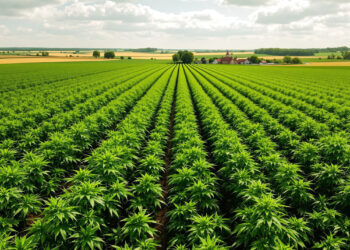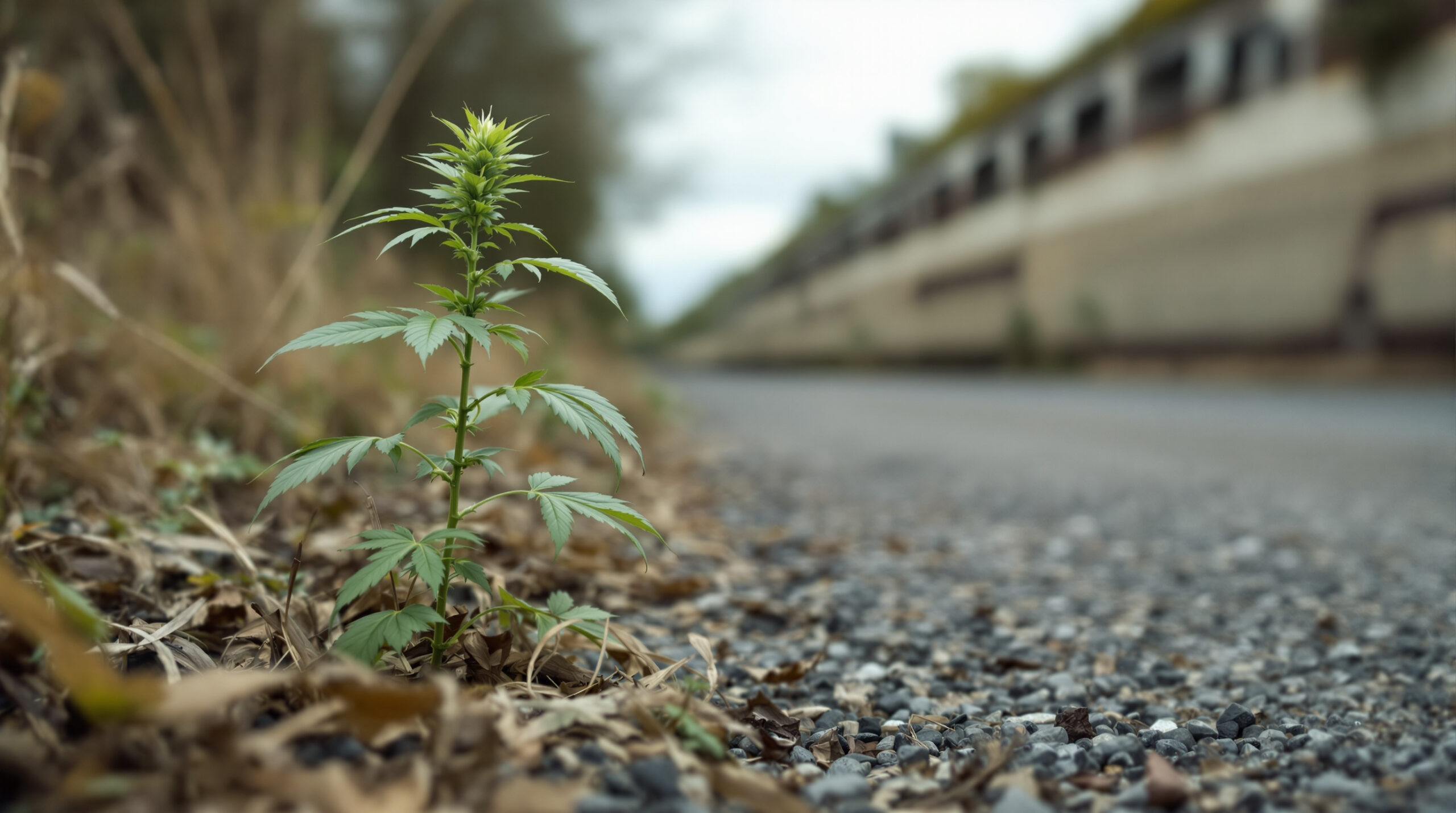
The image of endless hemp fields sprouting spontaneously along roadsides has a certain romantic appeal. In reality, the question of where hemp grows wild is anything but trivial. Cannabis is one of humanity’s oldest cultivated plants, and that’s precisely what makes tracing its origins difficult: genuine wild populations are rare, while feral stands are widespread. Travel through Brandenburg, the Kazakh steppe, or the cornbelt of the American Midwest, and with a bit of luck you might encounter hemp that has been left to its own devices. Yet whether this represents an original wild form or the descendants of former cultivated plants is often difficult to determine.
📑 Inhaltsverzeichnis
This article puts the botanical, geographic, and historical facts into perspective. It explains why we almost always speak of feral rather than truly wild cannabis stands, where such populations occur in Europe and beyond, and what role the mysterious subspecies Cannabis ruderalis plays in this story.
Wild or feral? An important distinction
In botany, wild describes a plant that was never domesticated and thrives in a natural habitat independent of human influence. Feral, by contrast, is a former cultivated plant that has escaped from cultivation and now reproduces itself. This is precisely the problem with hemp. The plant has accompanied humanity for millennia, which is why hardly any population can be considered genuinely original with certainty. Many experts believe that a pure, never-utilized wild form of hemp barely exists today.


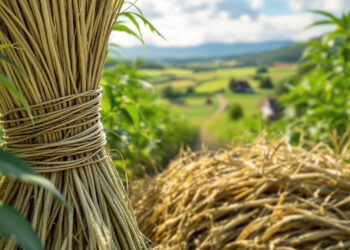
Most of what pedestrians take for wild hemp are feral descendants of fiber hemp. These plants were cultivated for centuries to produce rope, sails, and textiles. When fields were abandoned or seeds were lost along roadsides, hemp established itself independently. Such stands are ecologically fascinating, but they tell more about cultivation history than about pristine nature. For more information about cultivation history and the diversity of this useful plant, our comprehensive guide to hemp and industry provides the necessary background.
Cannabis ruderalis: the wild hemp from the tundra
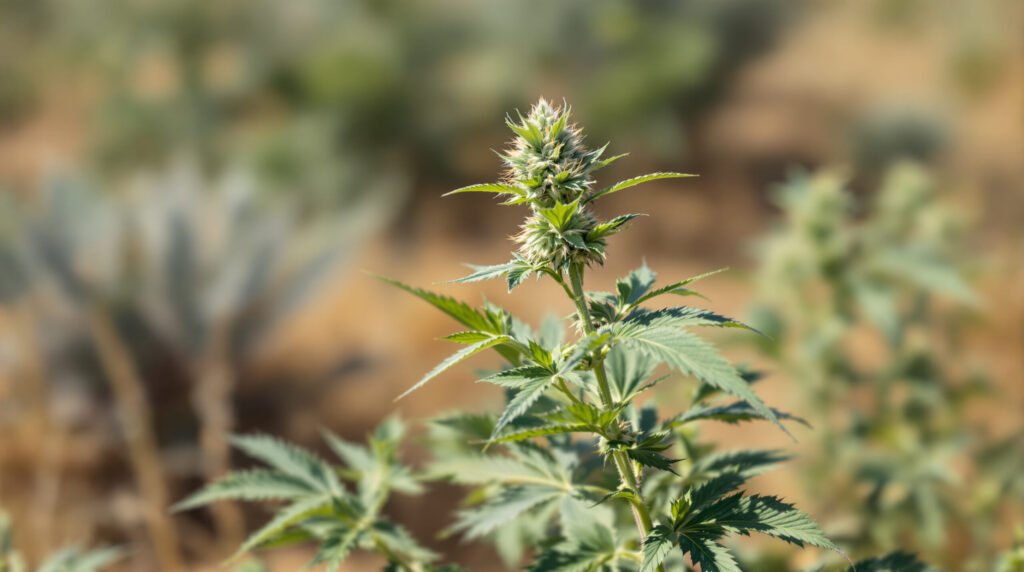
When truly wild hemp is discussed, the name Cannabis ruderalis almost always comes up. This subspecies was described in 1924 by Russian botanist Dmitrij Janischewski, who studied it in southern Siberia and the Volga region. Its original distribution area lies in Central Asia and Eastern Europe, in regions between the Altai Mountains and the Caspian Sea. Genetic and morphological data suggest that the plant is native to areas like Kazakhstan, southern Russia, and Azerbaijan.
Ruderalis has adapted to a harsh climate. In regions with short summers and long, bright days, the usual control of flowering through day length doesn’t work reliably. Instead of waiting for days to shorten, ruderalis begins flowering automatically after about 21 to 30 days, controlled solely by plant age. This so-called autoflowering trait makes it extremely hardy and weather-resistant. It usually remains small, develops little branching, and naturally contains minimal THC.
This very robustness made ruderalis so valuable for modern breeding. Through crosses with classic strains, today’s popular autoflowering varieties were created, which allow harvesting regardless of light cycle. Our background article Cannabis ruderalis, wild hemp from the tundra describes how deeply ruderalis is rooted in cannabis culture in greater detail.
Where does hemp grow wild in Europe?
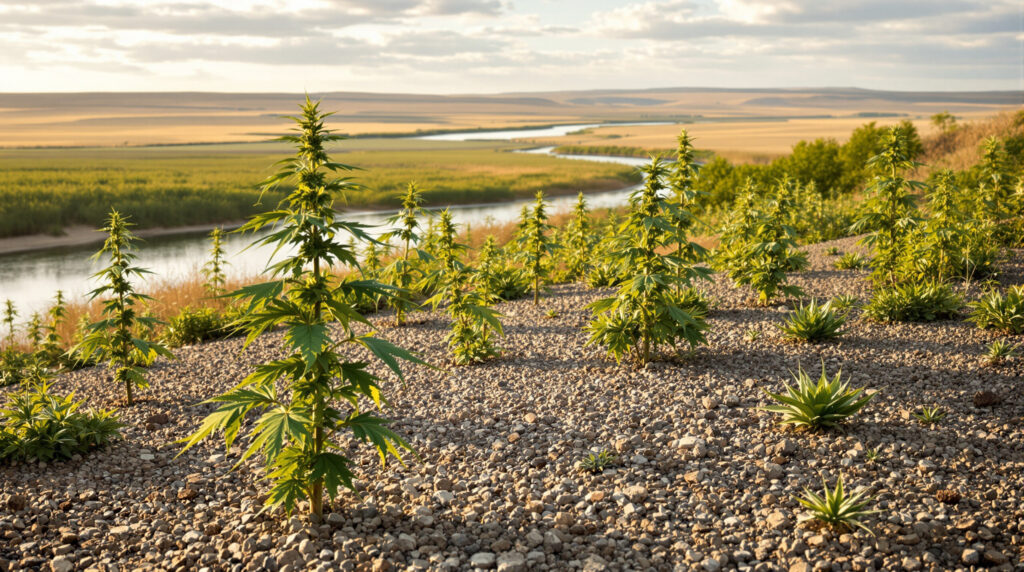
In Eastern Europe and the Central Asian steppe, you’re most likely to encounter stands that approach a true wild form. In Kazakhstan, Kyrgyzstan, and parts of southern Russia, hemp grows across vast areas, often as a pioneer plant on disturbed soils, along railway embankments, riverbanks, and fallow land. The term ruderal refers to precisely this: sites altered by human activity where undemanding species establish themselves first.
The situation is different in Central Europe. In Germany, fiber hemp cultivation was banned from 1982 to 1996 before low-THC varieties were permitted again under strict conditions. At the European level, a regulation allowed the cultivation of hemp varieties with an active ingredient content below 0.3 percent; Germany implemented this regulation in 1996. Wild-growing stands were deliberately combated for a long time, which is why they have become rare today. Those who do encounter hemp along roadsides are almost always dealing with feral agricultural hemp, whose ancestors were cultivated in fields and which contains negligible THC levels.
South and Southeast Europe, such as parts of the Balkans and Italy, also have feral populations that trace back to a long tradition of fiber hemp cultivation. Italy was one of the world’s largest hemp producers in the early 20th century, and traces of that past can still be found in the landscape today.
Feral hemp worldwide: the North American example
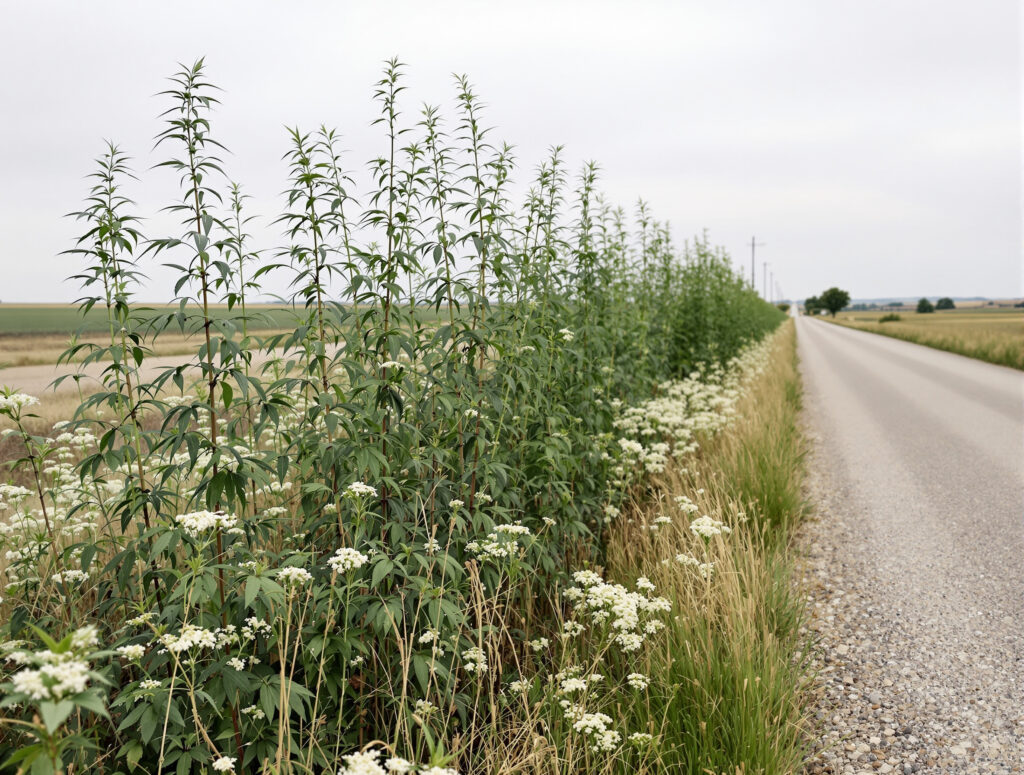
North America provides the most striking example of feral hemp. There, the plants are known by the nickname ditchweed. This is wild-growing fiber hemp with negligible THC content, descended from once-cultivated plants. The U.S. Drug Enforcement Administration (DEA) defines ditchweed as wild-scattered cannabis plants with no signs of deliberate seeding, fertilization, or care.
The historical origin lies in the „Hemp for Victory“ campaign during World War II. At that time, American farmers were encouraged to grow hemp for rope and cordage to replace imports. After the war ended, many fields were abandoned, and plants seeded themselves again. To this day, this feral hemp grows in states like Indiana, Missouri, Nebraska, Iowa, and Minnesota, with Indiana reporting the largest stands.
What makes these plants so successful is their hardiness. Feral hemp disperses its seeds widely, and these seeds can remain dormant in the soil for years before germinating. Over the decades, ditchweed has adapted to its environment and developed more robust characteristics, such as stronger stalks and greater resistance to wind, rain, and pests. Thus, the North American example shows exemplarily how a cultivated plant can become a stubborn weed within just a few generations.
Is it okay to simply harvest wild hemp?
The temptation is understandable, but caution is warranted. If you encounter a feral hemp stand in Germany, you are legally dealing with cannabis, regardless of the plant’s actual THC content. Feral agricultural hemp contains virtually no psychoactive substance and is therefore unsuitable as an intoxicant anyway. Nevertheless, harvesting unknown stands puts you in a legal gray area, and field-testing for the variety is not possible.
Those who want to grow hemp legally and deliberately are far better served by home cultivation than by searching for wild stands. Our yearly guide to outdoor growing explains what rules apply outdoors and how legal cultivation works throughout the year. Wild hemp thus remains primarily a fascinating chapter in cultural and natural history, not a practical harvesting tip.
Frequently asked questions
Does truly wild hemp still exist?
A completely untouched wild form is considered practically non-existent today because humans have used hemp for millennia. The subspecies Cannabis ruderalis in the Central Asian steppe comes closest to the original wild form. Almost all other wild-appearing stands are feral descendants of cultivated plants.
Does hemp grow along German roadsides?
You occasionally find feral agricultural hemp along roadsides, railway embankments, or fallow land. Such stands were deliberately combated for a long time, which is why they have become rare. These are almost always low-THC fiber hemp descended from former cultivation areas.
What is the difference between wild and feral hemp?
Wild hemp would be a plant never domesticated in its natural habitat. Feral hemp, by contrast, is a former cultivated plant that has escaped from cultivation and reproduces itself independently. In cannabis, the second variant dominates because pure wild stands barely occur anymore.
Does wild-growing hemp contain THC?
As a rule, not in any significant amount. Feral agricultural hemp and Cannabis ruderalis naturally contain minimal THC and are unsuitable as intoxicants. Psychoactive hemp only emerged through deliberate breeding over many generations.
Is it legal to pick wild hemp?
Bist du schon mal auf wilden Hanf gestoßen?
Legally, every hemp stand counts as cannabis, regardless of THC content, which is why harvesting unknown plants exists in a gray area. Since feral hemp produces no high anyway, the risk isn’t worth it. Those who want to use hemp should opt for legal home cultivation.






Branchen-Update
News, Analysen und Reportagen — mehrmals im Monat direkt in dein Postfach.
Folge uns