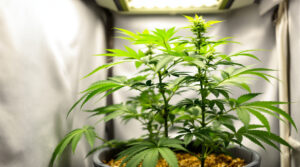
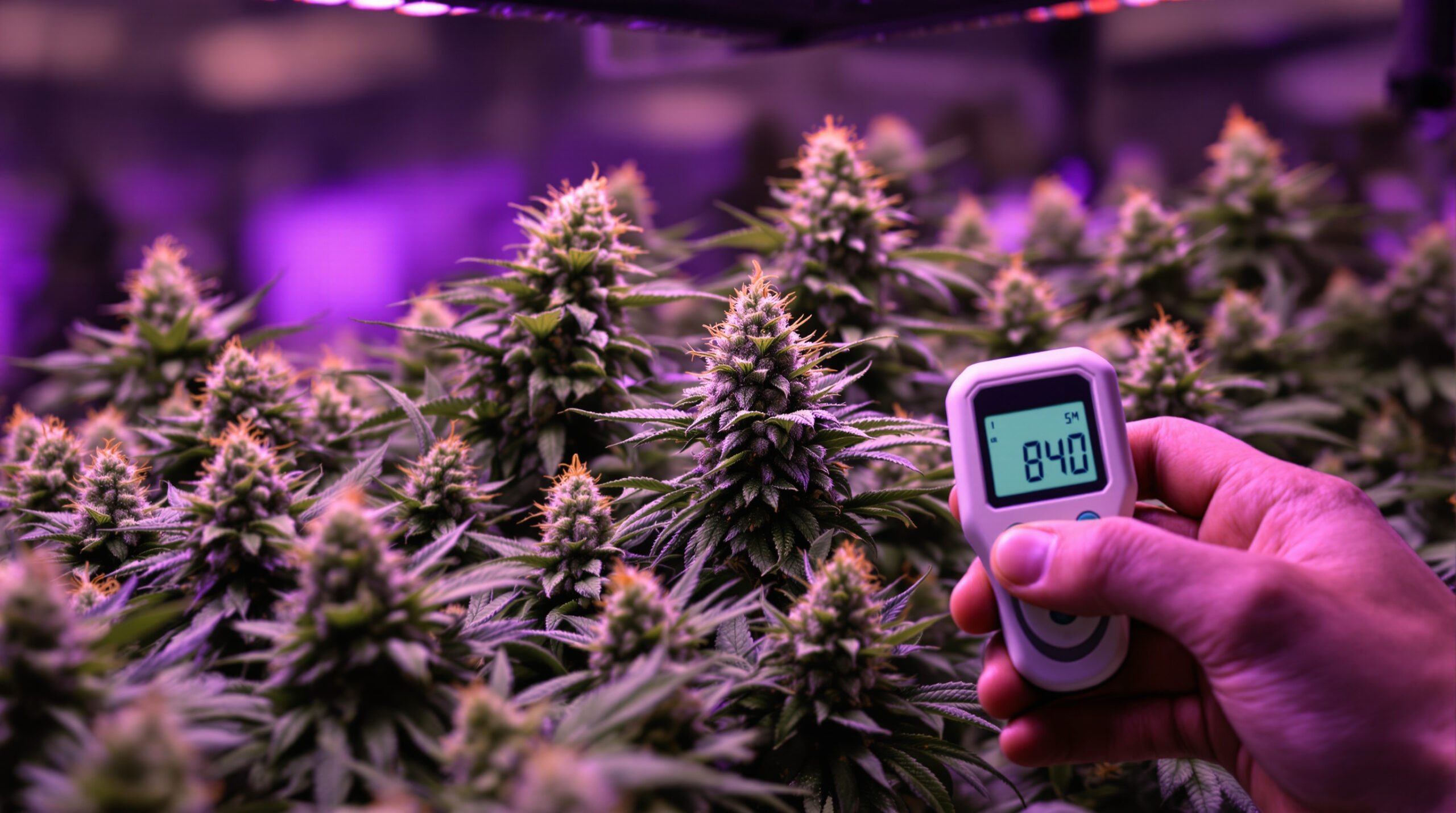
As soon as the light phase drops to twelve hours and flowering begins, the cannabis plant’s light requirements change fundamentally. Now it’s not just a question of whether enough light is arriving, but how much of it actually lands on the canopy, how long it acts, and at what distance the lamp hangs. Anyone who understands these three factors and coordinates them properly will get noticeably denser buds from the same setup without driving plants into light stress. This article breaks down the key numbers and explains what really matters in the flowering phase.
📑 Inhaltsverzeichnis
How much light does a cannabis plant need during flowering?
The central metric for light quantity is PPFD, photosynthetic photon flux density. It measures how many light particles usable for photosynthesis hit one square meter of leaf surface per second, measured in micromoles per square meter per second. For the flowering phase without additional CO₂ enrichment, a range of approximately 700 to 1000 µmol/m²/s is considered a practical standard. Within this window, plants have enough energy to build dense, resinous buds without efficiency dropping off.
A staged approach makes sense within the flowering period. In the first two to three weeks, the so-called stretch phase, around 600 µmol/m²/s is sufficient to allow plants to transition smoothly. From the middle of flowering onward, when the flower clusters form, intensity can increase to 700 to 900 µmol/m²/s. Those working with supplemental CO₂ and correspondingly higher temperatures can push the range up to 1200 or even 1500 µmol/m²/s. Without CO₂, however, there’s hardly any additional yield above around 1000 µmol/m²/s, and the risk of damage increases noticeably.


It’s interesting that pure plant physiology tolerates significantly more. Research on cannabis has examined light intensities of 1000 to 2500 µmol/m²/s and found that yield continues to increase up to about 1800 µmol/m²/s, then plateaus. Such values are neither economically nor practically sensible in hobby growing because without CO₂ supplementation and perfect climate control they lead to light burn. For home tent growing, the corridor between 700 and 1000 µmol/m²/s remains the right reference point.
Light hours during flowering: Why 12/12 isn’t set in stone
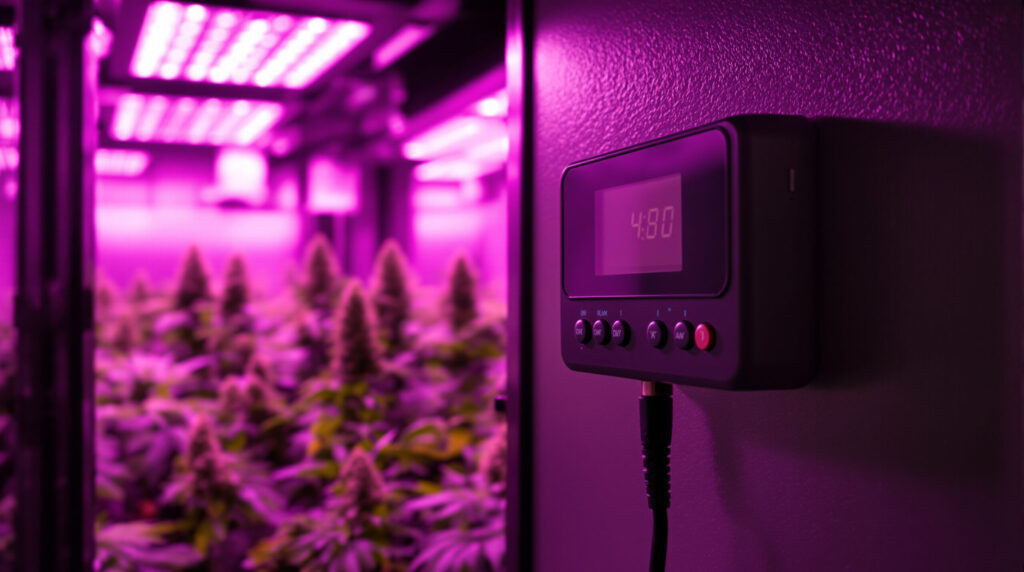
The classic 12/12 rhythm—twelve hours of light and twelve hours of uninterrupted darkness—triggers flowering in photoperiodic varieties. It mimics the shift from summer to autumn and signals the plant that it’s time to produce flowers rather than leaves. For the vast majority of growers, this is the safe standard setting, and the need for truly light-tight dark periods doesn’t change. Even small light leaks can disrupt flowering or trigger hermaphroditism.
However, the assumption that twelve hours is optimal for every variety is outdated. Current studies show that flowering initiation reliably occurs in all examined varieties even with longer light periods of up to fourteen hours. One study on two THC-rich varieties found that extending from twelve to thirteen hours of light can noticeably increase yield and quality because plants simply absorb more light energy over the day. These findings are exciting but belong in the realm of experienced growers who have their climate under control and experiment deliberately.
What matters is the interplay of intensity and duration, as both together determine the daily light amount. This metric, called the Daily Light Integral, sums the total light for a day and is ultimately more meaningful than PPFD alone. We explore how to calculate PPFD and hours into daily doses in our article on Daily Light Integral for cannabis. For flowering without CO₂, approximately 30 to 45 moles per day is the target range.
The right light distance: Precision over guesswork
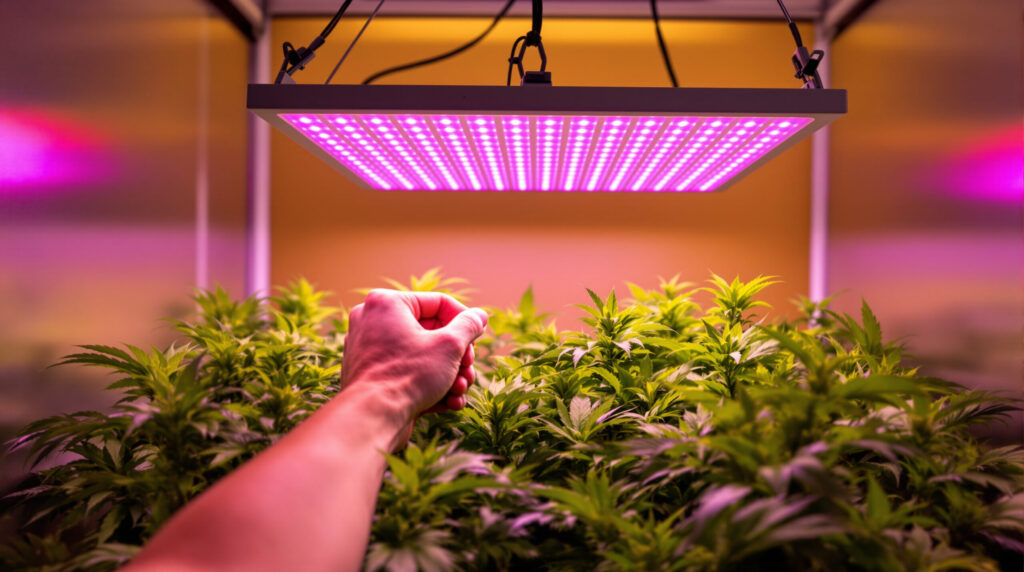
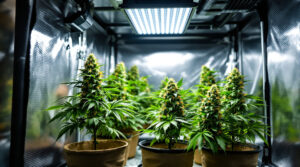
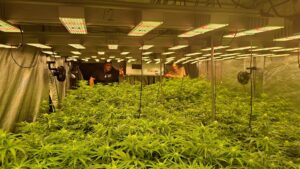
The distance between lamp and canopy is the most important lever for achieving desired PPFD. Light intensity decreases with the square of the distance, which is why even ten to fifteen centimeters more or less makes a big difference. With modern LED systems, flowering distance usually ranges from 30 to 45 centimeters above the canopy, depending on lamp output. More powerful boards prefer greater distance, weaker panels can hang closer.
High-pressure sodium lamps require a different approach because they emit considerable heat alongside light. Here the safety distance is greater, and exhaust ventilation must reliably remove the heat, otherwise the canopy will suffer heat stress. A telltale sign is leaves rolling taco-like upward at their highest points. This almost always indicates the lamp hangs too close and is applying too much heat to the tops. The only remedy is to raise the fixture or reduce power output.
Reliability only comes with a measuring device. A PAR or quantum meter shows the actual PPFD at canopy height, and only this allows clean lamp height adjustment. Those without their own device can now find smartphone apps and online calculators that provide at least rough guidance. What matters is always measuring at the height of the uppermost flowers and regularly checking values, since plants continue to grow during flowering and naturally come closer to the lamp.
Too much light: Recognizing light stress and photobleaching
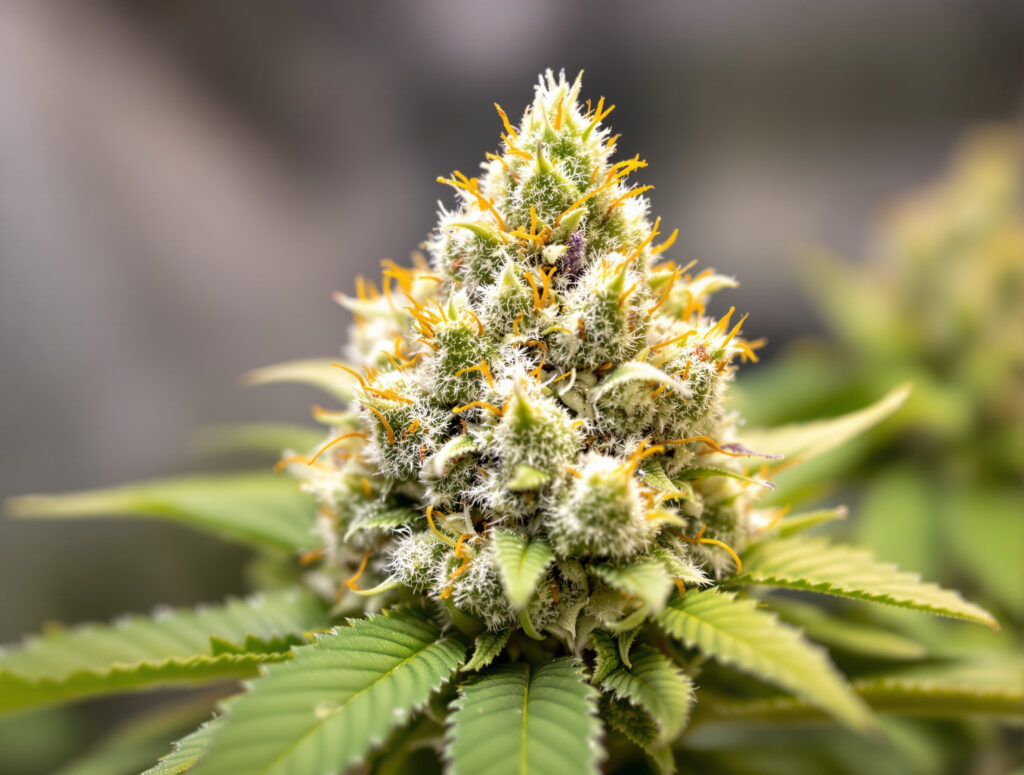
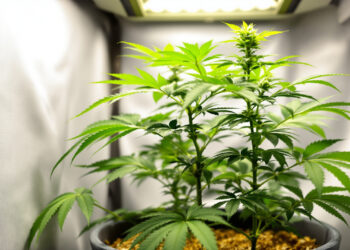
More light doesn’t automatically mean more yield. Above about 1200 µmol/m²/s without CO₂ enrichment, the equation tips, and plants respond with stress. The clearest symptom is photobleaching, where the uppermost flowers lose their color and bleach whitish. While this looks dramatic initially, it’s damage: bleached buds lose not only their color but also most of their cannabinoids and terpenes. This process is irreversible; affected flowers never recover.
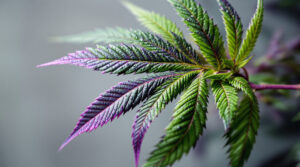
Beyond bleaching, there are other warning signs. Curled leaf edges, scorched-looking tips, and an overall stressed appearance in the upper area indicate too much light or too much heat. Often both problems occur together because a lamp hanging too close simultaneously drives both intensity and temperature higher. The countermeasure is always the same: increase distance, reduce power, or improve climate control until the uppermost leaves look relaxed again.
Light quality is inseparably linked to light quantity. Which part of the spectrum promotes flower formation and why the red spectrum particularly matters during flowering is covered in detail in our article Which light spectrum for hemp in indoor cultivation. Those who bring together intensity, duration, distance, and spectrum have the four decisive levers for strong flowering. Our complete guide to indoor cultivation provides a comprehensive overview of the setup.
Frequently asked questions
What PPFD is ideal during flowering?
Without supplemental CO₂ enrichment, 700 to 1000 µmol/m²/s is considered a sensible target range for flowering. Early on, around 600 µmol/m²/s is sufficient; toward the middle, intensity can increase to 700 to 900 µmol/m²/s. Only with CO₂ and appropriate climate control are higher values up to 1200 or 1500 µmol/m²/s economically sensible.
Are twelve hours of light during flowering mandatory?
For photoperiodic varieties, the 12/12 rhythm is the safe standard setting because twelve hours of uninterrupted darkness reliably triggers flowering. Studies show, however, that flowering initiates even with up to fourteen hours of light, and some varieties actually benefit from thirteen hours. This extension is more for experienced growers with stable climate control.
How far should the LED lamp be during flowering?
With modern LED systems, flowering distance usually ranges from 30 to 45 centimeters above the canopy, depending on lamp output. More powerful boards prefer greater distance, weaker panels can hang closer. Since plants continue to grow during flowering, distance should be regularly checked and adjusted.
How do I recognize that my plant is getting too much light?
The clearest sign is photobleaching, where the uppermost flowers bleach and turn whitish. Added to this are curled leaf edges, scorched-looking tips, and leaves bending taco-like upward. In all cases, increasing distance or reducing power helps, because bleached flowers lose their cannabinoids and don’t recover.
Do I need a measuring device for PPFD?
Wie steuerst du die Lichtintensität in der Blütephase?
Lamp height can only be reliably set with a PAR or quantum meter that shows actual PPFD at canopy height. Without your own device, smartphone apps and online calculators provide at least rough guidance. What matters is always measuring at the height of the uppermost flowers and keeping track of values throughout flowering.



Branchen-Update
News, Analysen und Reportagen — mehrmals im Monat direkt in dein Postfach.
Folge uns