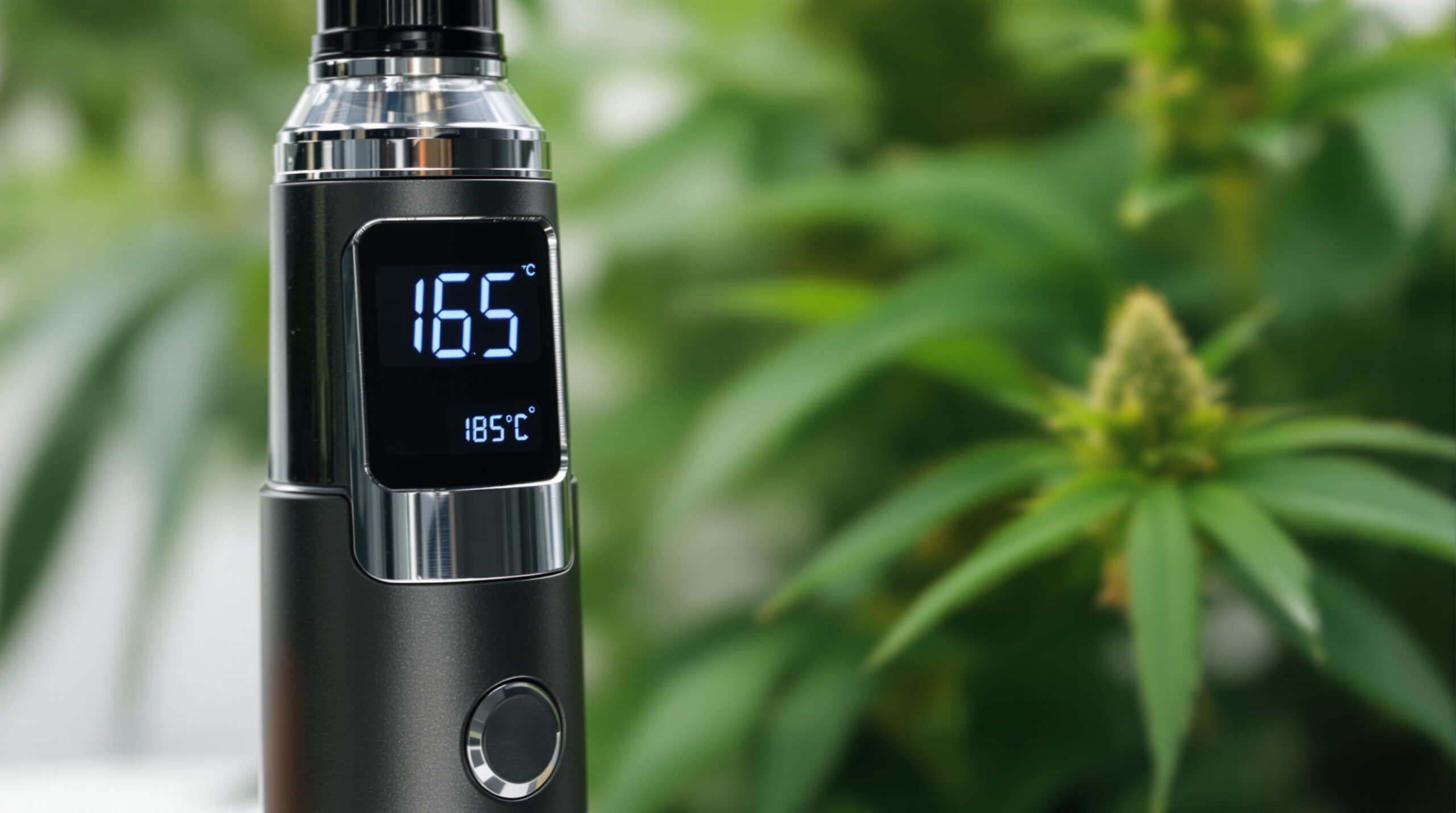
Cannabis vaporizers operate within a narrow temperature window where active compounds vaporize without combustion. Which cannabinoids and terpenes are released depends on their boiling points. Understanding this allows you to precisely control effects and aroma—a concept Ethan Russo shaped decisively in his 2011 work on the entourage effect.
📑 Inhaltsverzeichnis
Why Vaporizers Don’t Need Fire
Burning cannabis (joints, bongs) produces temperatures far exceeding 600 °C. At these temperatures, not only active cannabinoids and terpenes burn, but plant material as well—resulting in combustion byproducts like tar, benzene, and polycyclic aromatic hydrocarbons. Vaporizers operate in a controlled temperature range of 150 to 230 °C, where desired compounds vaporize without combustion.
Pomahacova et al. (2009) compared the chemical composition of vaporizer vapor with joint smoke and found significantly reduced amounts of harmful combustion byproducts. Lanz et al. (2016) confirmed in an in-vitro study that modern medical vaporizers efficiently vaporize up to 95 percent of available cannabinoids without combustion.


Boiling Points of Major Cannabinoids
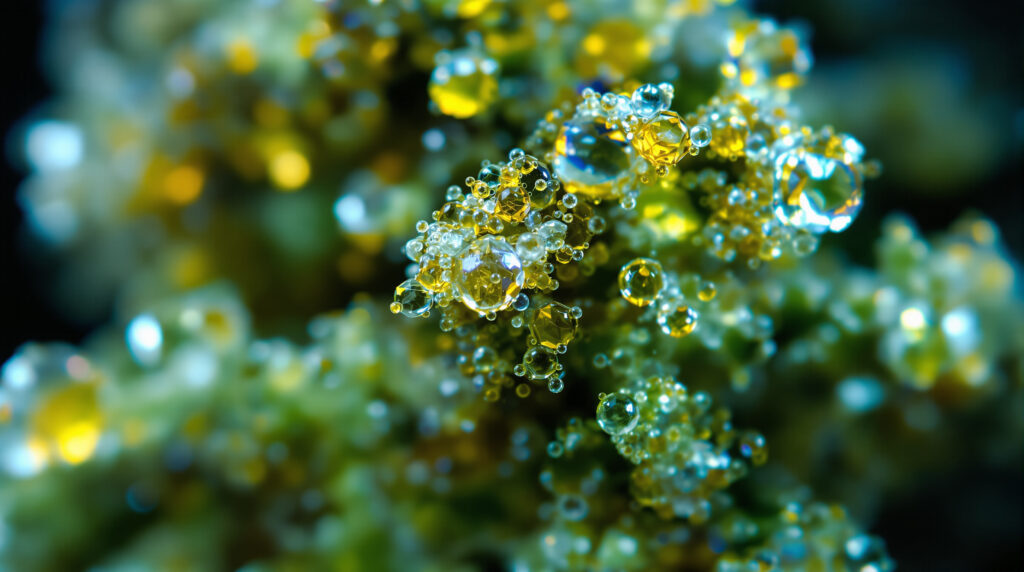
Cannabis contains over 100 cannabinoids, several of which are particularly relevant for effects. Their boiling points vary:
- THC: approximately 157 °C. The psychoactive primary cannabinoid.
- CBD: 160 to 180 °C. Calming, anti-inflammatory, anxiolytic.
- CBN: 185 °C. Sedating, sleep-promoting. Forms through THC oxidation in aged cannabis.
- CBC and THCV: 220 °C each. Specialized effect profiles, common in specialty strains.
Boiling Points of Major Terpenes
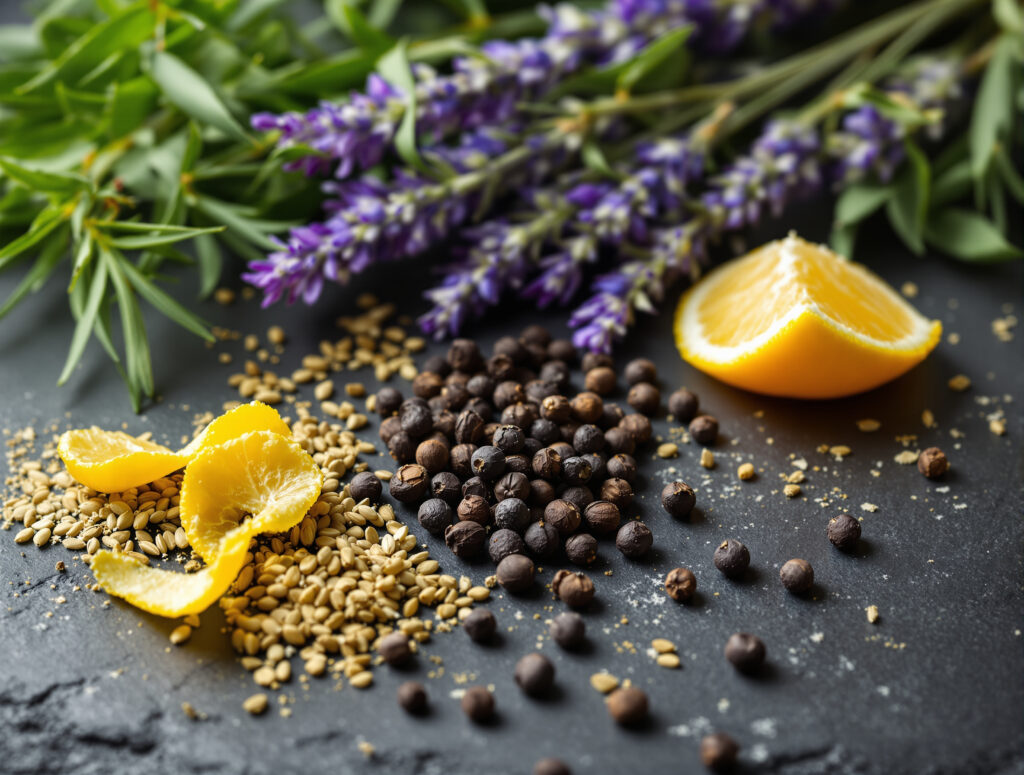
Terpenes are the plant’s aromatic compounds and contribute significantly to effects—an effect Russo described in 2011 as the entourage effect. The major cannabis terpenes and their boiling points:
- β-Caryophyllene: 119 °C. Peppery-spicy, anti-inflammatory, the only terpene that directly binds to CB2 receptors.
- α-Pinene: 155 °C. Pine wood aroma, promotes focus and can dampen THC-induced memory impairment.
- Myrcene: 167 °C. Hoppy-earthy, mildly sedating, enhances THC’s psychoactive effects.
- Limonene: 177 °C. Citrusy, mood-elevating, anxiolytic.
- Linalool: 198 °C. Lavender-like, strongly calming, sleep-promoting.
Temperature Zones and Their Effect Profiles
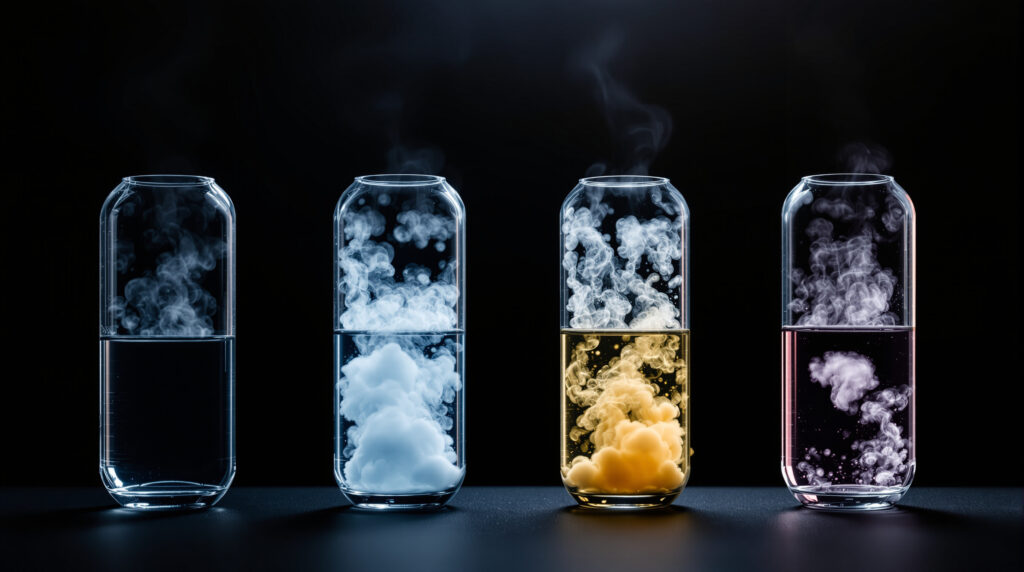
Boiling points define four practical temperature zones:
Aroma Zone, 155 to 170 °C: Low temperatures release primarily terpenes and a fraction of THC. Effects are mild, aroma maximal—ideal for consumers prioritizing flavor over effects, or as a morning-time introduction.
Functional Zone, 170 to 185 °C: Full THC activation with all major terpenes intact; CBD begins vaporizing. Clear, controllable effects suited for creative or social activities.
Balanced Zone, 185 to 195 °C: CBN is released, effects become more physical. The standard setting for many because the full cannabinoid spectrum engages.
Strong Zone, 205 to 220 °C: All cannabinoids fully vaporized, including linalool and heavier terpenes—very physical, often sedating effects. Ideal for evening use, though with trade-offs: aroma loss from light terpene vaporization and increased airway irritation from hotter vapor. Above 230 °C, gradual pyrolysis begins—not recommended.
Step-Vaping: The Best of Multiple Worlds
An advanced technique is gradually raising temperature during a session. Starting at 160 °C, then 180 °C, finally 200 °C: You get full terpene aroma first, then complete THC/CBD effects, then heavier cannabinoids. Advantage: A single loading is completely extracted with differentiated aroma throughout. The specific approach adapts best via Vaporizer Temperature Guide to your desired effects.
Frequently Asked Questions
At What Temperature Does Cannabis Vaporize Best?
The sweet spot for most users is 180 to 195 °C: THC (157 °C) and CBD (160–180 °C) are fully activated, major terpenes like myrcene (167 °C) and limonene (177 °C) remain present. For aroma priority, start at 160 °C; for maximum effects, go to 205–220 °C.
Which Cannabis Terpenes Release at Which Temperature?
β-Caryophyllene vaporizes first at 119 °C, α-pinene at 155 °C, myrcene at 167 °C, limonene at 177 °C, and linalool last at 198 °C. More details on aroma and effect profiles come from our terpene guide covering the 20 most important cannabis terpenes.
What Happens at Too High a Vaporizer Temperature?
Around 230 °C, slow pyrolysis begins: plant material decomposes, combustion byproducts form like tar and polycyclic aromatic hydrocarbons—similar to smoking a joint. Light terpenes have long vaporized, aroma becomes flat and vapor irritates airways. To leverage the full entourage effect, stay below 220 °C.
At What Temperature Is Cannabis Maximally Effective?
Maximum cannabinoid yield is reached at 195 to 215 °C. However, aroma drops significantly, and studies recommend the mid-range spectrum for chronic use because it produces less airway-irritating vapor.
Does Cannabis Really Not Burn in a Vaporizer?
With convection vaporizers (hot air systems), plant material stays well below combustion temperature. Conduction vaporizers (direct contact with heating element) can experience localized burning at too-high settings. Convection is technically cleaner.
What Temperature for Medical Use?
For pain patients and CBD-focused use, the sweet spot is 175 to 190 °C. Here THC and CBD work synergistically, linalool and β-caryophyllene with anti-inflammatory action are present, and airways are spared.
Are There Differences Between Concentrate and Flower Vapes?
Concentrates (rosin, wax, shatter) are partially decarboxylated and require lower temperatures, typically 150 to 200 °C. Flower requires 175 to 220 °C because plant material impedes heat transfer.
Wie stellst du die Temperatur an deinem Vaporizer ein?
Scientific sources: Russo EB (2011) on entourage effect · Pomahacova et al. (2009) and Lanz et al. (2016) on vaporizer efficiency · McPartland & Russo (2014) on terpene boiling points.



Branchen-Update
News, Analysen und Reportagen — mehrmals im Monat direkt in dein Postfach.
Folge uns