
After 16 years under Viktor Orbán, Hungary is undergoing a major shift in drug policy. The newly elected Tisza Party under Prime Minister Péter Magyar announces a modern national drug strategy based on evidence, data, and international best practices. For Brussels, this move signifies more than symbolic politics, as Hungary was the only EU member state that voted against UN cannabis reclassification in 2020.
📑 Inhaltsverzeichnis
Election Victory with Two-Thirds Majority
The right-conservative Tisza Party achieved a parliamentary two-thirds majority in April 2026, ending Fidesz’s uninterrupted rule since 2010. Péter Magyar, a former insider in Orbán’s political structures and prominent opposition voice since 2024, assumes the office of Prime Minister. In the newly restructured Health Ministry, separated organizationally from the Interior Ministry, Zsolt Hegedűs takes responsibility for addiction and drug policy.
In its election platform, Tisza had announced the replacement of drug laws repeatedly tightened under Orbán. Instead of criminalizing consumers, law enforcement resources will be concentrated on distribution and organized crime. Treatment and harm reduction receive a permanent place in the ministry’s strategic framework for the first time since 2010.


What the New Strategy Includes in Practice

At the center is an institute for civil society participation that integrates patient organizations, addiction support providers, and research institutions into strategy development. The National Drug Strategy that expired under Orbán in 2020 will be replaced by a new framework. A National Drug Coordinator will centrally oversee implementation.
Tamás Kardos of the Hungarian Civil Liberties Union, one of Hungary’s oldest human rights organizations, calls the inclusion of drug policy topics in the election program a „remarkable step.“ The organization, founded in 1994, had repeatedly engaged in legal disputes with the Hungarian state under Orbán and sees the new structures as an opportunity for fact-based dialogue.
No Cannabis Legalization in Sight
Tisza deliberately omits cannabis legalization or decriminalization from its program. Magyar himself emphasizes that this is about „professionalizing drug policy,“ not ideologically motivated liberalization. Medical cannabis remains permitted under strict regulation; recreational use remains criminal.
Behind this defensive line lies political calculation. Tisza’s electorate is heterogeneous on drug issues, and a legalization debate could destabilize the majority. Observers therefore consider reform steps below the legalization threshold more realistic: decriminalization of personal consumption, expansion of substance-checking services, reform of police practice.
EU Dimension: Hungary Abandons Blockade Position
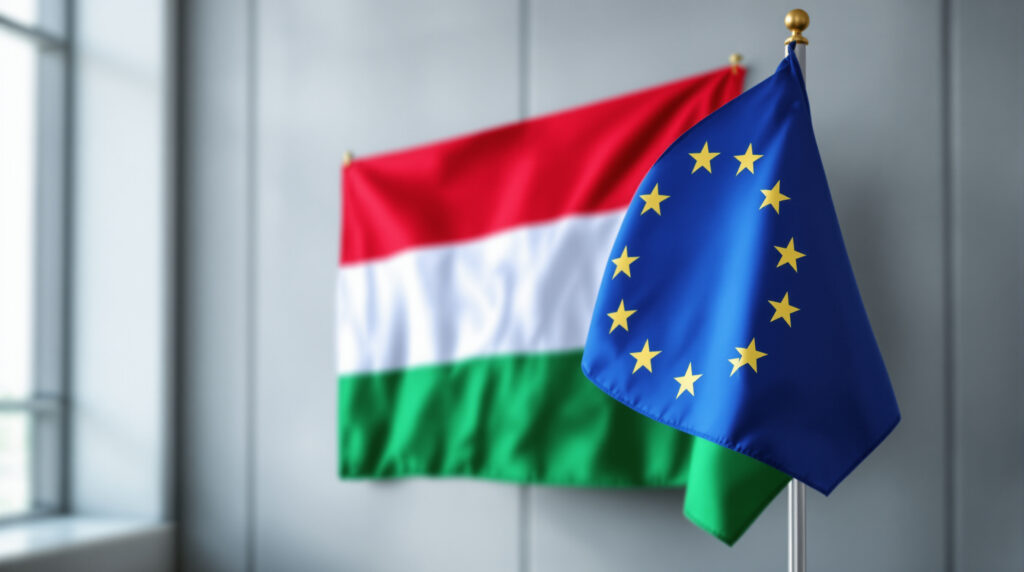
For EU cannabis policy, the change in government is of strategic significance. Under Orbán, Hungary was the only EU member state in 2020 to vote against the UN Commission on Narcotic Drugs recommendation to remove cannabis from Schedule IV of the Single Convention. This position had repeatedly complicated European reform debates. An evidence-based Tisza strategy could shift Hungary’s voice toward reform-oriented member states in the future.
More background on drug policy diversity within the Union is provided by our Cannabis International Guide 2026. A comprehensive analysis of political constellations in Central and Eastern Europe is contained in our assessment of EU cannabis policy after the European elections.
What Industry is Watching Now
From the perspective of the medical cannabis industry, Hungary’s integration into the European medical cannabis market is the focus. Providers from Germany, Czechia, and Poland are assessing whether the new government will remove administrative barriers to imports and telemedicine. So far, Hungary remains an almost untapped market with fewer than 500 documented cannabis patients.
The new ministry has not yet provided concrete timelines. A first draft of the national drug strategy is expected in the third quarter of 2026. Until then, the toughened penalties for personal consumption introduced under Orbán remain in force, which in individual cases allow prison sentences of up to two years.
Frequently Asked Questions
Will cannabis be legalized in Hungary?
Legalization of recreational use is not part of the Tisza program. The new government explicitly announces an evidence-based strategy but rules out legalization. Medical cannabis remains permitted under strict regulation.
What changes for cannabis patients?
In the short term, little changes. The number of treated patients in Hungary is below 500. The Tisza government wants to structure access, but concrete reforms are only to be expected after the new drug strategy is presented in the third quarter of 2026.
Who is Péter Magyar?
Magyar was initially an insider in Orbán’s political structures, publicly broke away in 2024, and founded the Tisza movement. His decisive electoral performance was an anti-corruption campaign. On drug issues, he positions himself pragmatically and emphasizes „professionalization over ideology.“
What significance does the election have for the EU?
Under Orbán, Hungary repeatedly acted as a brake on UN and EU drug policy. With Tisza, Hungary’s position in Brussels could shift, potentially accelerating reform processes, such as in pill and cannabis classification matters.
When will the new drug strategy be available?
The Health Ministry plans a first draft for the third quarter of 2026. Adoption and implementation are likely to extend into early 2027. A National Drug Coordinator will be appointed alongside this process.
Sollte Ungarn Cannabis für den Freizeitkonsum legalisieren?
Sources: Business of Cannabis, May 12, 2026; NORML Blog, April 18, 2026; Tisza Party election manifesto; Interview with Péter Sárosi (European Harm Reduction Network), April 30, 2026; Hungarian Civil Liberties Union.

Branchen-Update
News, Analysen und Reportagen — mehrmals im Monat direkt in dein Postfach.
Folge uns