• Kolumnen
    • Interviews
  • 🎉 MJ Berlin 2026
  • Hanf Allgemein
    • Gesellschaft & Soziales
  • Drogenkunde
    • Safer Use
    • Pflanzliche Drogen
  • Produkte
  • Strain Reviews
  • Print Magazin
  • Tools
Montag, Juni 1, 2026
Hanf Magazin
  • News
  • Medizin
    • Cannabinoide
    • Erkrankungen
    • Cannabis bei Tieren
    • Erfahrungsberichte
  • Recht & Politik
    • Deutschland
    • Österreich
    • Schweiz
    • International
    • Rechtslage DE
    • Rechtslage International
  • Wissenschaft
    • Studien
    • Forschung
  • Growing
    • Indoor-Growing
    • Outdoor-Growing
    • Strains & Reviews
    • Equipment
  • Nutzhanf
    • Baustoffe
    • Rohstoffe
    • Lebensmittel
    • Kleidung
    • Kosmetika
  • Wirtschaft
  • Konsum & Lifestyle
    • Rauchen
    • Vaporisieren
    • Essen & Rezepte
    • Kultur & Szene
    • Termine & Events
No Result
View All Result
  • News
  • Medizin
    • Cannabinoide
    • Erkrankungen
    • Cannabis bei Tieren
    • Erfahrungsberichte
  • Recht & Politik
    • Deutschland
    • Österreich
    • Schweiz
    • International
    • Rechtslage DE
    • Rechtslage International
  • Wissenschaft
    • Studien
    • Forschung
  • Growing
    • Indoor-Growing
    • Outdoor-Growing
    • Strains & Reviews
    • Equipment
  • Nutzhanf
    • Baustoffe
    • Rohstoffe
    • Lebensmittel
    • Kleidung
    • Kosmetika
  • Wirtschaft
  • Konsum & Lifestyle
    • Rauchen
    • Vaporisieren
    • Essen & Rezepte
    • Kultur & Szene
    • Termine & Events
No Result
View All Result
Hanf Magazin
No Result
View All Result
Home Marihuana Growing

Living Soil & Anarchic Growing: The Revolution of Cannabis Cultivation

von Jonas Reuter
05.05.2026
in Marihuana Growing
Lesezeit: 8 Minuten
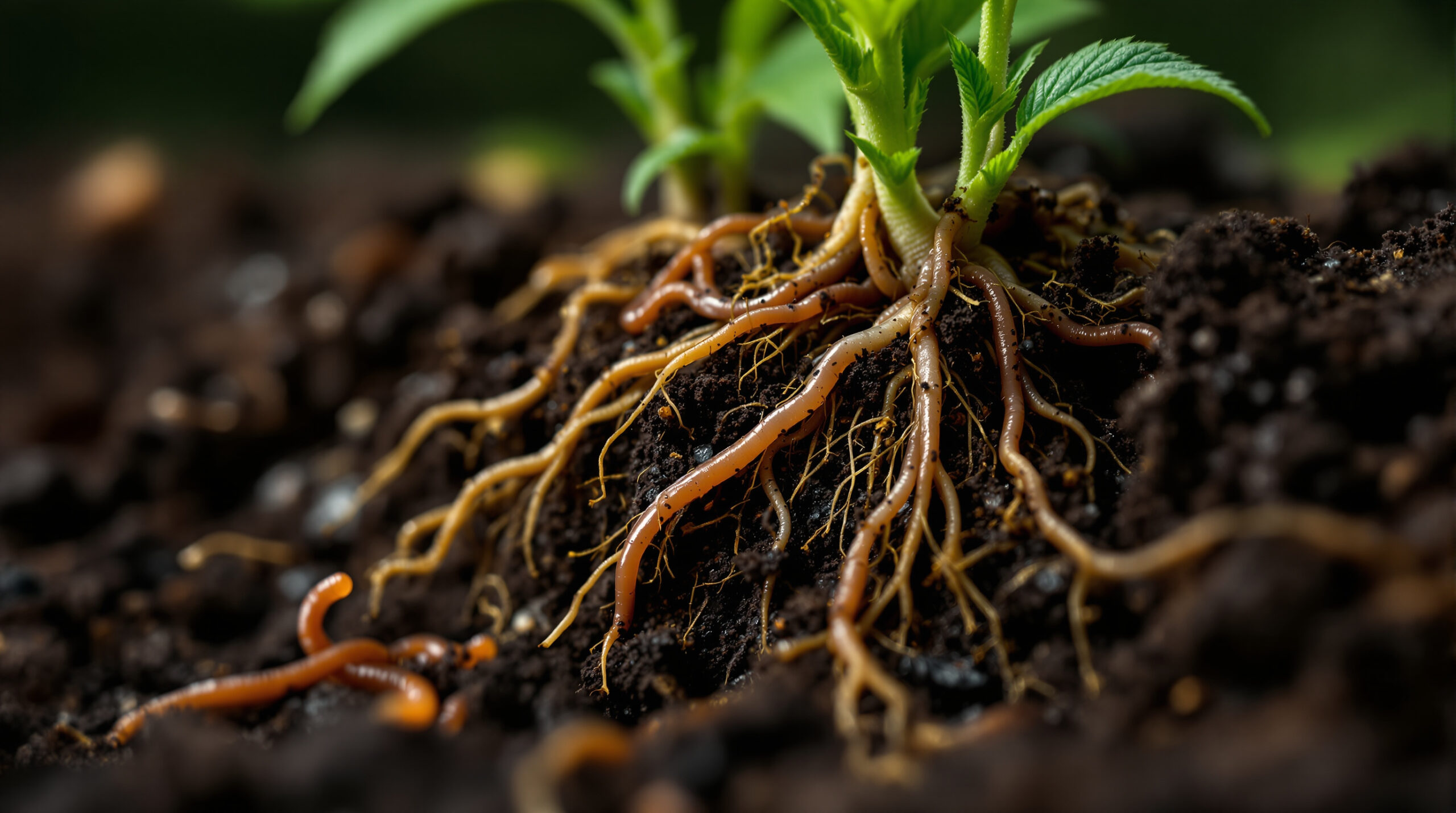
Cannabiswurzeln in lebendiger organischer Erde mit Mikroorganismen
⏱ 10 Min. Lesezeit·1.811 Wörter
Teilen:WhatsAppFacebookXLinkedInE-Mail
🌐 This article was automatically translated from German. Browse all English articles

Cannabis growing has many faces: from high-tech hydroponic systems with meticulously balanced nutrient solutions to simple outdoor plantings in the garden. Among all these approaches, a trend has developed over recent years that has caused a stir both in professional circles and among home growers: Living Soil – living earth – and the closely related approach of Anarchic Growing. But what’s really behind it?

📑 Inhaltsverzeichnis

  1. Living Soil – the Definition
  2. Where Does the Term Come From?
  3. Distinction from Conventional Growing
  4. Principles of Anarchic Growing
  5. Trust Instead of Control – the Philosophy Behind It
  6. Significance for Cannabis Cultivation
  7. Benefits at a Glance
  8. Creating Living Soil Yourself
  9. Typical Mistakes and Misconceptions
  10. Conclusion
  11. Frequently Asked Questions About Living Soil and Anarchic Growing
  12. Further Articles on Natural Cannabis Growing
  13. 💬 Fragen? Frag den Hanf-Buddy!

This article provides a comprehensive overview, explains the key fundamentals, and shows why more and more growers are abandoning synthetic fertilizers and rigid plans in favor of living soils and trusting in natural processes.

Living Soil – the Definition
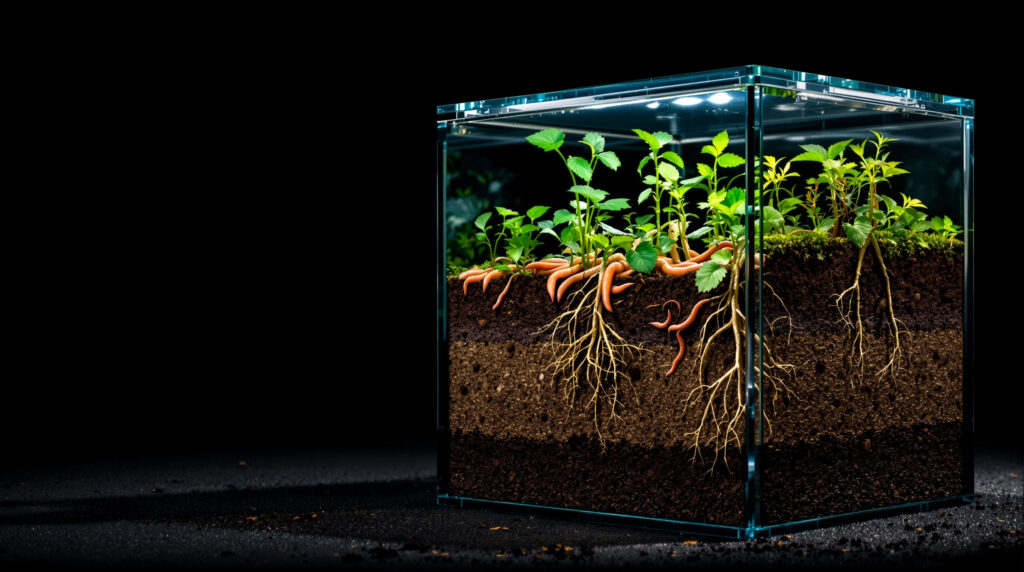
Cross-section of a living soil ecosystem with roots and microorganisms

Living soil means „living earth“ – and that’s meant literally. While conventional substrates like rockwool or coconut fiber are essentially sterile growing media, living soil is teeming with life.


GanjaFarmerGanjaFarmer

Bacteria, mycorrhizal fungi, protozoa, nematodes, earthworms, and countless other soil organisms form a complex network. This so-called soil food web ensures that organic materials are broken down and converted into plant-available nutrients. The plant roots are in constant communication with the microorganisms: they release sugars to obtain nutrients like nitrogen or phosphorus in return.

Living soil is thus a living organism as a whole – a functioning ecosystem that not only provides nutrients but also protects against disease and makes the plant more resilient.

Where Does the Term Come From?

The term living soil is not new, but in the cannabis context, it experienced a real boom primarily over the last ten years. Originally stemming from organic agriculture, the concept was popularized by pioneers like Elaine Ingham, who scientifically investigated the soil food web.

In cannabis cultivation, living soil gained significance as more and more consumers valued naturalness, sustainability, and authentic flavor. While in the 1990s and 2000s indoor grows were mainly optimized for yield and THC content, terpene profiles and ecological aspects increasingly came to the fore.

Distinction from Conventional Growing

Conventional indoor cannabis cultivation is based on a high degree of control. The grower dictates exactly what the plant receives and when, using precise fertilizer schedules, regular pH corrections, and an entire arsenal of bottled nutrients. While this method delivers calculable yields, it also means constant work, high costs, and a noticeable ecological footprint. The system resembles an artificial laboratory more than a natural habitat.

Living soil cannabis pursues a completely different approach. Instead of measuring nutrient solution daily and constantly adjusting it, you trust in soil life. The microbiology takes over the supply of nutrients to plants, regulates nutrients, and maintains stable pH. For the grower, the task is reduced to the essentials: watering, observing, and nurturing, while the earth does the real work.

Another crucial difference lies in how the substrate is handled. While in conventional setups the soil often needs to be disposed of and replaced with fresh soil after a few grows, living soil is designed to be used for many years. With some care – such as mulch, compost, or compost tea – the soil regenerates itself again and again. Instead of producing waste, a sustainable cycle emerges that conserves resources and relieves the environment.

Principles of Anarchic Growing
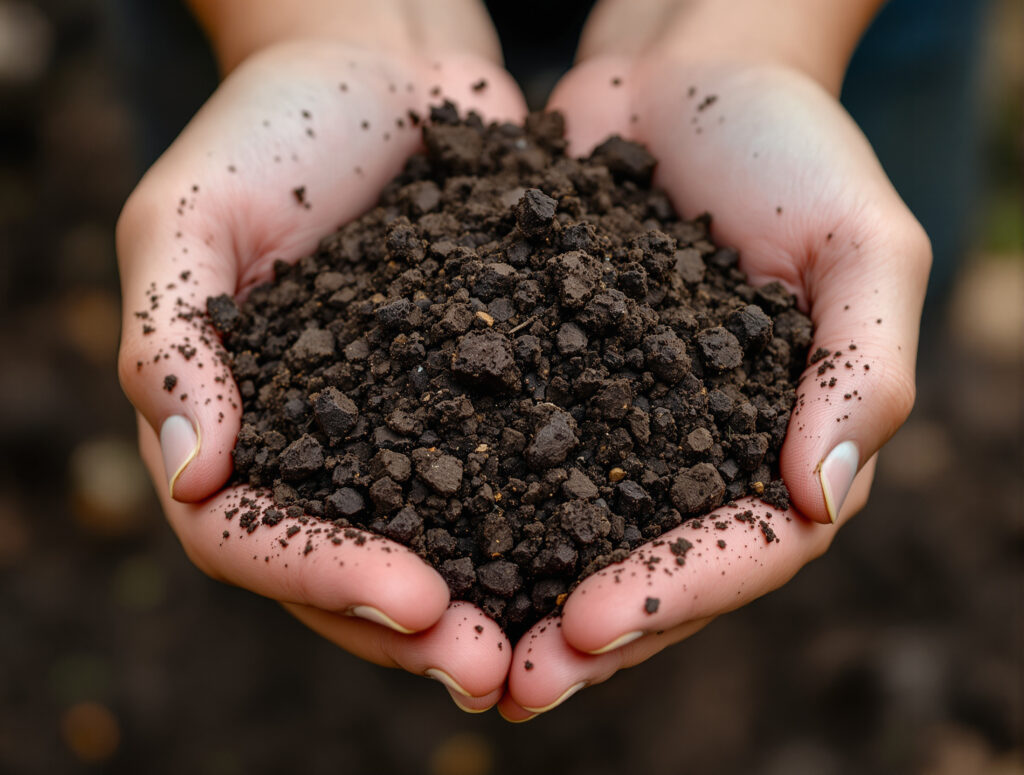
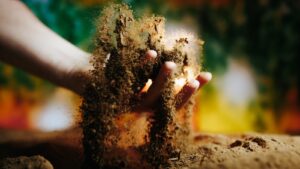
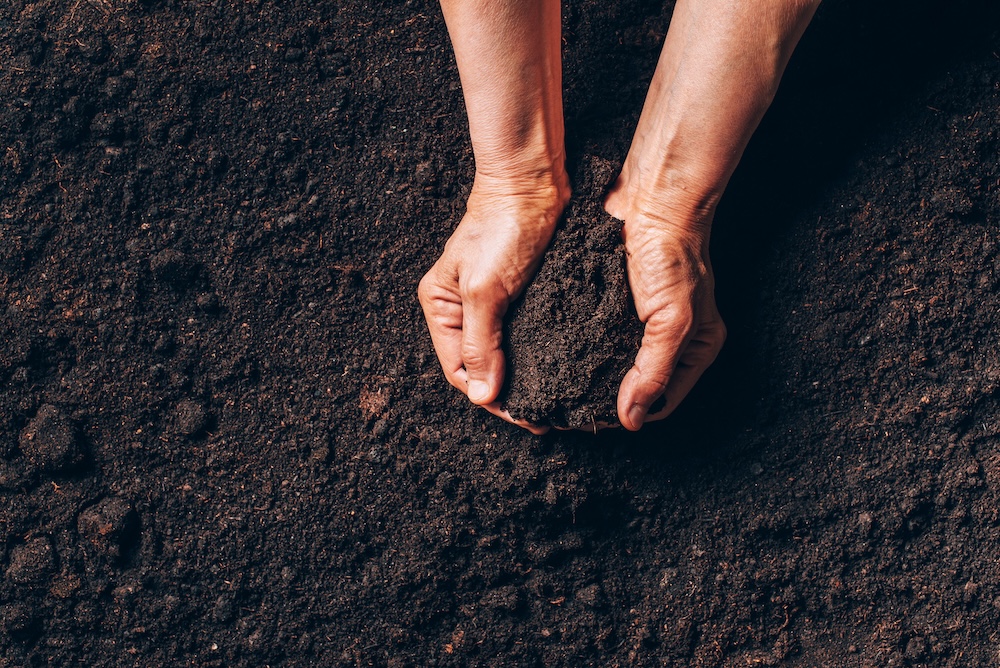
Hands holding nutrient-rich organic soil full of life

The heart of anarchic growing and living soil cannabis is not just the technique, but above all the attitude. Many growers coming from the classical indoor world are used to monitoring every little detail: pH meters, EC meters, rigid fertilizer schedules, bottles full of additives. The thought of letting all that go seems almost reckless at first. Yet it is precisely in this restraint that the real strength of the system lies.

The philosophy goes: Nature knows better. In a functioning living soil system, microbes, fungi, and soil organisms take on the tasks that are solved with chemicals and technology in conventional cultivation. The grower steps back, creates the conditions, and leaves the rest to the ecosystem. Trust dominates instead of control.

This approach changes not only the cultivation but also the relationship with the plant. Growers often report that living soil cannabis has given them a new respect for natural processes. You accompany the growth, observe, support – and experience how the plant reaches its full genetic potential without being artificially „guided.“

The basic principles can be summarized as follows:

  • Independence: As few external inputs as possible, no synthetic fertilizers.
  • Self-regulation: The soil takes over nutrient supply and balancing.
  • Low-input: Minimal effort, often just water and occasionally organic material.
  • Trust: The grower doesn’t control but accompanies.

Anarchic growing is thus not just a technique but also an attitude: away from consumer thinking toward self-empowerment and ecological responsibility.

Trust Instead of Control – the Philosophy Behind It

Perhaps the most important aspect of anarchic growing is the inner attitude. Many growers report that it initially requires effort not to constantly want to intervene. No pH meter, no fertilizer schedule, no weekly bottle mixing – for some, that sounds almost like negligence. Yet that’s precisely where the strength lies.

The philosophy says: Nature knows better. Those who build living soil create a stable system that regulates itself. Humans step into the background, observe, support, and learn. This not only brings peace to the growing process but also a completely different relationship with the plant.
Significance for Cannabis Cultivation

One of the biggest differences appears in the aroma. Plants that grow in living soil develop a significantly more complex terpene profile. The flowers smell more intensely, and the flavor notes are more varied and nuanced. Many consumers find the smoke softer and more pleasant. This is because through the symbiotic relationship with microorganisms, the plant can invest more energy in the formation of terpenes and secondary plant compounds.

Greater Resilience and Robustness

A functioning microbiome protects plants from stress and pathogens. Bacteria and mycorrhizal fungi form a protective barrier in the root area, prevent the entry of mold or harmful fungi, and help the plant cope better with dry phases or nutrient fluctuations. This significantly reduces the risk of crop failures.

💬 Hanf-Buddy — dein Cannabis-Experte
🌿 Fragen zu diesem Thema? Schreib einfach los — ich helfe dir!

Bitte verifiziere deine E-Mail. Wir haben dir einen 6-stelligen Code geschickt.

Danke für den Chat! 😊 Abonniere unseren Newsletter für mehr:

Zum Newsletter

Sustainability and Circular Economy

Living soil cannabis conserves resources and the environment. Since the soil is not replaced after each grow, an enormous amount of waste is eliminated. Instead, the substrate regenerates when supplied with compost, worm castings, or mulch. Additionally, building humus binds carbon in the soil long-term – a valuable contribution to climate protection. For many growers, this is also an ideological step: away from the disposable principle toward a cycle that perpetually sustains itself.

Benefits at a Glance

  • Ecology: No synthetic fertilizer, less waste, long-term soil health.
  • Sustainability: Substrate reuse across multiple cycles.
  • Terpene profile: More intense, diverse aromas and flavors.
  • Resilience: Stronger immune defense against pests and diseases.
  • Low-input: Less work and fewer products from the grow shop needed.

Creating Living Soil Yourself
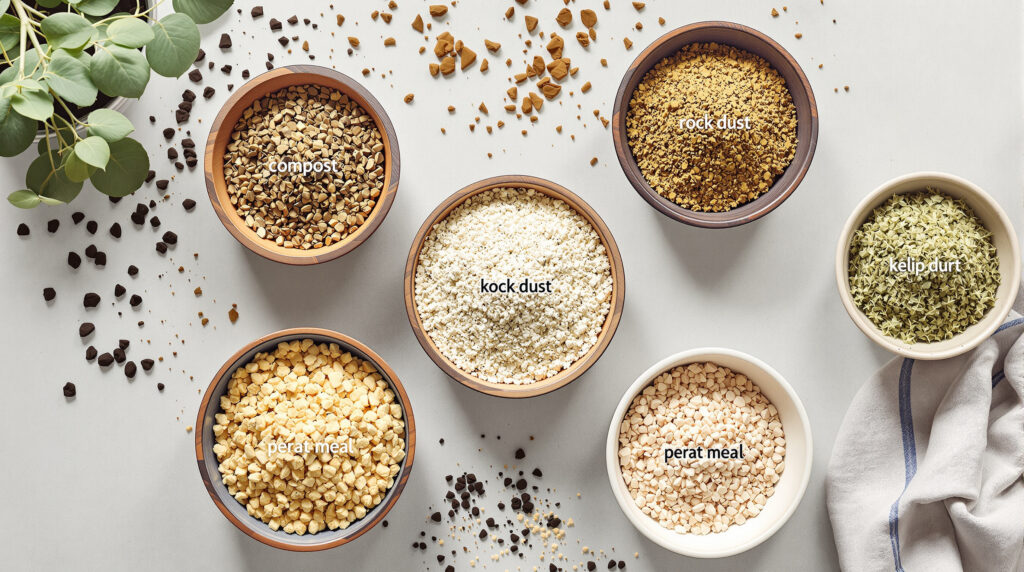
Various organic ingredients for the living soil mix from above

For beginners, living soil often sounds complicated, but getting started is simpler than many think. A classic mix consists of three basic components:

  • Base: Peat or coconut fiber for structure, perlite for airiness.
  • Humus: Compost or worm castings as a source of microorganisms.
  • Minerals: Rock dust, algae, or kelp for nutrients.

The mix should rest for several weeks so that the microbial culture can develop. During the grow, it often suffices to just water the plants. With mulch, compost tea, or occasional organic supplements, the soil remains alive for years.

Typical Mistakes and Misconceptions

As compelling as living soil cannabis is, it’s equally important to avoid typical mistakes. A common misconception is treating living soil like conventional substrate and additionally using synthetic fertilizers. This disrupts or even destroys the delicate microbiome.

Another mistake is allowing the soil to dry out completely. While conventional substrates often forgive short dry phases, microorganisms need constant moisture to remain active. If the soil is dry for too long, the entire ecosystem suffers.

Unrealistic expectations can also disappoint. Living soil doesn’t show its full effect immediately but develops over time. However, those who have patience will see better results with each subsequent cycle – both in quality and in plant stability.

Conclusion

Living soil and anarchic growing are far more than a trend – they mark a genuine paradigm shift in cannabis cultivation. Instead of control, chemicals, and disposable substrates, this approach relies on trust, natural processes, and circular economy. The soil becomes the heart of cultivation, the plant becomes a partner, and the grower becomes a silent companion.

Those who have experienced how aromatic and complex cannabis from living soil can be, how resilient the plants become, and how sustainably the system can be used over many years, quickly understand why living soil cannabis has such a growing fan base. It’s more than a technique – it’s an attitude that combines enjoyment, connection to nature, and responsibility.

Frequently Asked Questions About Living Soil and Anarchic Growing

What is Living Soil in Cannabis Growing?

Living soil refers to living earth in which bacteria, mycorrhizal fungi, earthworms, and other soil organisms form a functioning microbiome. This soil food web breaks down organic material and converts it into plant-available nutrients – the cannabis plant receives its nutrients naturally through soil life rather than through synthetic bottled fertilizers.

What is Anarchic Growing?

Anarchic growing is the attitude behind living soil: away from pH meters, EC control, and rigid fertilizer schedules, toward trust in natural processes. The grower creates the conditions – water, mulch, occasionally compost tea – and leaves the rest to the ecosystem. Low-input, self-regulation, and independence from grow shop products are the core principles.

What Advantages Does Living Soil Have Over Conventional Cannabis Growing?

Living soil cannabis develops a significantly more complex terpene profile through the symbiotic relationship between plant roots and microorganisms. Additionally, there is greater resilience against pests and diseases, long-term substrate reusability across multiple grow cycles, and a significantly lower ecological footprint through eliminated fertilizer bottles and soil disposal.

How Do I Create Living Soil Myself?

A classic living soil mix consists of three components: a base of peat or coconut fiber with perlite for structure and airiness, humus in the form of compost or worm castings as a microorganism source, and minerals from rock dust, algae, or kelp. The mix should rest for several weeks so the microbial culture can develop. For those seeking a faster approach: No Fertilizer, No pH Testing – How to Succeed with Living Soil Cannabis in Detail.

What Are the Most Common Mistakes with Living Soil Cannabis?

Three classics destroy the microbiome: additionally using synthetic fertilizers (disrupts microorganism balance), allowing the soil to dry out completely (microbes need constant moisture), and being impatient. Living soil doesn’t show its full effect in the first grow but develops over several cycles – each subsequent grow benefits from the established soil life.

Further Articles on Natural Cannabis Growing

  • No Fertilizer, No pH Testing: How Living Soil Cannabis Succeeds – the step-by-step practical guide to getting started.
  • High-End Through Permaculture: Cannabis in Harmony with Nature – how permaculture principles elevate cultivation to the next level.
  • Terpenes in Cannabis – why living soil produces more aromatic flowers.

More Articles on This Topic

  • Living Soil: The Ultimate Guide to Organic Cannabis Growing
📊 Deine Meinung zählt

Wie baust du dein Cannabis derzeit an?

✓
Danke für deine Stimme!

HE Abverkauf
Kannabia
Dr. Mang
GrowTechnology – Left
MedCanOneStop
Barney’s Farm
Khalifa Genetics
CannabisRezept Berlin
Grow Technology – Right
Royal Queen Seeds #1

Das könnte dich auch interessieren

  • → Gewächshaus Marihuana Anbau klappt nicht immer
  • → Nematoden gegen Trauermücken selbst vermehren
  • → Natürliche und ungiftige Alternativen zu PGRs

Branchen-Update

News, Analysen und Reportagen — mehrmals im Monat direkt in dein Postfach.

Folge uns

Was dich auch interessieren könnte...

Zwei Cannabis-Anbaumethoden nebeneinander: Living Soil und Hydroponik

Living Soil vs. Hydroponik: Welche Anbaumethode liefert bessere Ergebnisse?

28. Mai 2026
Lorenz Minks, Founder von Research-Gardens, in einem Cannabis-Anbau

Living Soil, Hydroponik oder Steinwolle? Lorenz Minks rechnet mit Anbau-Mythen ab

22. Mai 2026
InstagramYouTubeFacebookLinkedIn
Tags: Anarches-GrowingBodenlebenHumusKreislaufwirtschaftLiving SoilMikrobiomMykorrhizaNachhaltigkeitökologischer AnbauSoil Food WebTerpeneWurmhumus

Related Posts

Transparente Polymerprobe aus Hanf-basiertem Kunststoff im Labor
Rohstoffe aus Hanf

Hanfplastik aus dem Labor: Polycannabidiol-Carbonat hält Kochwasser stand und dehnt sich um 1.600 Prozent

von Jonas Reuter
31. Mai 2026
Nahaufnahme eines Aktivkohlefilters im Joint-Querschnitt
Cannabis rauchen & inhalieren

Aktivkohlefilter im Joint: Was die Tabakforschung sagt

von Christian Schäfer
31. Mai 2026
🛠️ Tool-Tipp
🚗THC-Fahrtauglichkeit
Risiko Grenzwert 3,5 ng/ml
→ Alle 10 Tools im Werkzeugkasten

Folge uns bei:

  • 38.8k Fans
  • 52.8k Followers
  • 3.5k Followers
  • 573 Followers
  • 2.7k Abonnenten
📰

Seit 2015

📝

4612+ Artikel

👥

180.000+ Leser/Monat

🏆

DACH #1 Cannabis-Magazin

Über uns

Hanf Magazin ist das führende deutschsprachige Fachmagazin für Cannabis — von der Pflanze bis zur Politik, von der Medizin bis zum Genuss.

Instagram YouTube Facebook LinkedIn

Themen

Cannabis News Medizin & Forschung Growing & Anbau Strain Reviews Nutzhanf & Rohstoffe Konsum & Rezepte Recht & Politik Wissenschaft & Studien

Beliebte Artikel

USA verschärfen Hanf-Definition: 0,4 Milligramm Total THC pro Behälter beendet 28-Milliarden-Dollar-IndustrieWie vaporisiere ich richtig?Warum Vaporisieren gesünder istWas ist Cannabidiol?Kiffen in der Schwangerschaft?

Branchen-Update

Cannabis-News direkt in dein Postfach.

Für Unternehmen

Werben auf Hanf Magazin Mediadaten HM Ventures Jobs & Karriere Tools & Rechner

Weitere Themen

  • Kolumnen
  • 🎉 MJ Berlin 2026
  • Hanf Allgemein
  • Drogenkunde
  • Produkte
  • Strain Reviews
  • Print Magazin
  • Tools

© 2026 Hanf Magazin

Impressum Datenschutz AGB Kontakt Presse
WhatsAppFacebookXE-Mail
No Result
View All Result
  • News
  • Medizin
    • Cannabinoide
    • Erkrankungen
    • Cannabis bei Tieren
    • Erfahrungsberichte
  • Recht & Politik
    • Deutschland
    • Österreich
    • Schweiz
    • International
    • Rechtslage DE
    • Rechtslage International
  • Wissenschaft
    • Studien
    • Forschung
  • Growing
    • Indoor-Growing
    • Outdoor-Growing
    • Strains & Reviews
    • Equipment
  • Nutzhanf
    • Baustoffe
    • Rohstoffe
    • Lebensmittel
    • Kleidung
    • Kosmetika
  • Wirtschaft
  • Konsum & Lifestyle
    • Rauchen
    • Vaporisieren
    • Essen & Rezepte
    • Kultur & Szene
    • Termine & Events
  • Kolumnen
  • 🎉 MJ Berlin 2026
  • Interviews
  • Hanf Allgemein
  • Gesellschaft & Soziales
  • Drogenkunde
  • Safer Use
  • Pflanzliche Drogen
  • Produkte
  • Strain Reviews
  • Print Magazin
  • Tools

©2026 Hanf Magazin

Datenschutz-Einstellung

Wir nutzen Cookies auf hanf-magazin.com. Einige von ihnen sind essenziell notwendig, andere helfen unsere Website und deine Nutzer-Erfahrungen zu verbessern. Wenn Sie unter 16 Jahre alt sind und Ihre Zustimmung zu freiwilligen Diensten geben möchten, müssen Sie Ihre Erziehungsberechtigten um Erlaubnis bitten. Wir verwenden Cookies und andere Technologien auf unserer Website. Einige von ihnen sind essenziell, während andere uns helfen, diese Website und Ihre Erfahrung zu verbessern. Personenbezogene Daten können verarbeitet werden (z. B. IP-Adressen), z. B. für personalisierte Anzeigen und Inhalte oder Anzeigen- und Inhaltsmessung. Weitere Informationen über die Verwendung Ihrer Daten finden Sie in unserer Datenschutzerklärung. Sie können Ihre Auswahl jederzeit unter Einstellungen widerrufen oder anpassen.

  • Essenziell
  • Marketing
  • Externe Medien

Alle akzeptieren

Nur essenzielle Cookies akzeptieren

Individuelle Datenschutzeinstellungen

Cookie-Details Datenschutzerklärung Impressum

Datenschutzeinstellungen Datenschutzeinstellungen

Wenn Sie unter 16 Jahre alt sind und Ihre Zustimmung zu freiwilligen Diensten geben möchten, müssen Sie Ihre Erziehungsberechtigten um Erlaubnis bitten. Wir verwenden Cookies und andere Technologien auf unserer Website. Einige von ihnen sind essenziell, während andere uns helfen, diese Website und Ihre Erfahrung zu verbessern. Personenbezogene Daten können verarbeitet werden (z. B. IP-Adressen), z. B. für personalisierte Anzeigen und Inhalte oder Anzeigen- und Inhaltsmessung. Weitere Informationen über die Verwendung Ihrer Daten finden Sie in unserer Datenschutzerklärung. Hier finden Sie eine Übersicht über alle verwendeten Cookies. Sie können Ihre Einwilligung zu ganzen Kategorien geben oder sich weitere Informationen anzeigen lassen und so nur bestimmte Cookies auswählen.

Alle akzeptieren Speichern Nur essenzielle Cookies akzeptieren

Zurück

Datenschutzeinstellungen

Essenzielle Cookies ermöglichen grundlegende Funktionen und sind für die einwandfreie Funktion der Website erforderlich.

Cookie-Informationen anzeigen Cookie-Informationen ausblenden

Name
AnbieterEigentümer dieser Website, Impressum
ZweckSpeichert die Einstellungen der Besucher, die in der Cookie Box von Borlabs Cookie ausgewählt wurden.
Cookie Nameborlabs-cookie
Cookie Laufzeit1 Jahr

Marketing-Cookies werden von Drittanbietern oder Publishern verwendet, um personalisierte Werbung anzuzeigen. Sie tun dies, indem sie Besucher über Websites hinweg verfolgen.

Cookie-Informationen anzeigen Cookie-Informationen ausblenden

Akzeptieren
Name
AnbieterGoogle Ireland Limited, Gordon House, Barrow Street, Dublin 4, Ireland
ZweckCookie von Google für Website-Analysen. Erzeugt statistische Daten darüber, wie der Besucher die Website nutzt.
Datenschutzerklärung https://policies.google.com/privacy?hl=de
Cookie Name_ga,_gat,_gid
Cookie Laufzeit2 Jahre

Inhalte von Videoplattformen und Social-Media-Plattformen werden standardmäßig blockiert. Wenn Cookies von externen Medien akzeptiert werden, bedarf der Zugriff auf diese Inhalte keiner manuellen Einwilligung mehr.

Cookie-Informationen anzeigen Cookie-Informationen ausblenden

Akzeptieren
Name
AnbieterMeta Platforms Ireland Limited, 4 Grand Canal Square, Dublin 2, Ireland
ZweckWird verwendet, um Facebook-Inhalte zu entsperren.
Datenschutzerklärung https://www.facebook.com/privacy/explanation
Host(s).facebook.com
Akzeptieren
Name
AnbieterSoundcloud
ZweckWird verwendet, um Soundcloud Inhalte zu entsperren.
Datenschutzerklärung https://soundcloud.com/pages/privacy
Host(s)soundcloud.com
Akzeptieren
Name
AnbieterMeta Platforms Ireland Limited, 4 Grand Canal Square, Dublin 2, Ireland
ZweckWird verwendet, um Instagram-Inhalte zu entsperren.
Datenschutzerklärung https://help.instagram.com/519522125107875/?maybe_redirect_pol=0
Host(s).instagram.com
Cookie Namepigeon_state
Cookie LaufzeitSitzung

Datenschutzerklärung Impressum

AC Infinity – Header
HE Abverkauf
Kannabia
Dr. Mang
GrowTechnology – Left
MedCanOneStop
Barney’s Farm
Khalifa Genetics
CannabisRezept Berlin
Grow Technology – Right
Royal Queen Seeds #1

Mehr aus Marihuana Growing

  • Living Soil, Hydroponik oder Steinwolle? Lorenz Minks rechnet mit Anbau-Mythen ab

    Living Soil, Hydroponik oder Steinwolle? Lorenz Minks rechnet mit Anbau-Mythen ab

    22.05.2026 — Leo Hartmann
  • Kein Dünger, kein pH-Messen: So gelingt Living Soil Cannabis

    Kein Dünger, kein pH-Messen: So gelingt Living Soil Cannabis

    09.05.2026 — Jonas Reuter
  • VPD bei Cannabis: Was Vapor Pressure Deficit wirklich misst

    VPD bei Cannabis: Was Vapor Pressure Deficit wirklich misst

    05.05.2026 — Mara König
  • Homegrow Kosten 2026: Was kostet der eigene Cannabis-Anbau?

    Homegrow Kosten 2026: Was kostet der eigene Cannabis-Anbau?

    02.04.2026 — Jonas Reuter
  • Anbau mit Cannabis Stecklingen: Warum Ganja Farmer auf genetisch identische Pflanzen setzt

    Anbau mit Cannabis Stecklingen: Warum Ganja Farmer auf genetisch identische Pflanzen setzt

    30.03.2026 — Christian Schäfer

Beliebte Artikel

  • Mary Jane Berlin 2026, alle Side Events im Überblick

    Mary Jane Berlin 2026, alle Side Events im Überblick

    26.05.2026 — Leo Hartmann
  • Living Soil, Hydroponik oder Steinwolle? Lorenz Minks rechnet mit Anbau-Mythen ab

    Living Soil, Hydroponik oder Steinwolle? Lorenz Minks rechnet mit Anbau-Mythen ab

    22.05.2026 — Leo Hartmann
  • Cannabis Mikrodosierung: Der Guide für Einsteiger und Patienten

    Cannabis Mikrodosierung: Der Guide für Einsteiger und Patienten

    25.05.2026 — Mara König
  • CBD in der Veterinäronkologie: Systematischer Review fasst sechs Krebsarten beim Hund zusammen

    CBD in der Veterinäronkologie: Systematischer Review fasst sechs Krebsarten beim Hund zusammen

    23.05.2026 — Mara König
  • Ungarn nach Orbán: Tisza-Regierung kündigt evidenzbasierte Drogenstrategie an

    Ungarn nach Orbán: Tisza-Regierung kündigt evidenzbasierte Drogenstrategie an

    25.05.2026 — Leo Hartmann

Aktuelle News

  • Schweizer Cannabis-Regulierung: IG Hanf fordert Tempo statt Verzögerung

    Schweizer Cannabis-Regulierung: IG Hanf fordert Tempo statt Verzögerung

    13.05.2026 — Christian Schäfer
  • DIW-Studie: Cannabis bleibt stabil – Kokain ist auf das Vierfache gestiegen

    DIW-Studie: Cannabis bleibt stabil – Kokain ist auf das Vierfache gestiegen

    12.05.2026 — Christian Schäfer
  • 9 Jahre CBD VITAL: Erkenntnisse aus über 1 Million Kundenstimmen

    9 Jahre CBD VITAL: Erkenntnisse aus über 1 Million Kundenstimmen

    05.05.2026 — Lucas Nestler
  • Cannabis-Medizin 2026: Bilanz vom dritten Circle of Experts in Paderborn

    Cannabis-Medizin 2026: Bilanz vom dritten Circle of Experts in Paderborn

    03.05.2026 — Mara König
  • Wie viele Cannabis-Clubs gibt es in Deutschland? Warum die Zahlen weit auseinandergehen

    Wie viele Cannabis-Clubs gibt es in Deutschland? Warum die Zahlen weit auseinandergehen

    30.04.2026 — Christian Schäfer
  • Amsterdam dreht Touristen den Joint ab: Das Coffeeshop-Verbot kehrt zurück

    Amsterdam dreht Touristen den Joint ab: Das Coffeeshop-Verbot kehrt zurück

    23.04.2026 — Christian Schäfer
  • 1.300 Sorten, 58 Anbieter: Sortenvielfalt bei Medizinalcannabis – Fluch und Segen zugleich

    1.300 Sorten, 58 Anbieter: Sortenvielfalt bei Medizinalcannabis – Fluch und Segen zugleich

    22.04.2026 — Christian Schäfer
  • STORZ & BICKEL: Deutsche Ingenieurskunst für das perfekte Verdampfungs-Ritual

    STORZ & BICKEL: Deutsche Ingenieurskunst für das perfekte Verdampfungs-Ritual

    21.04.2026 — Christian Schäfer
  • GKV soll Cannabis-Blüten nicht mehr erstatten: Was das für Patienten bedeutet

    GKV soll Cannabis-Blüten nicht mehr erstatten: Was das für Patienten bedeutet

    17.04.2026 — Christian Schäfer
  • Schluss mit Blüten auf Kassenrezept? Finanzkommission fordert Ende der GKV-Erstattung

    Schluss mit Blüten auf Kassenrezept? Finanzkommission fordert Ende der GKV-Erstattung

    15.04.2026 — Mara König

Produktvorstellungen

  • Wenn Aktivkohle auf Tip-Gefühl trifft

    Wenn Aktivkohle auf Tip-Gefühl trifft

    03.02.2026 — Christian Schäfer
  • „Warum wir wieder Boxen machen“ – der Hanf Magazin Shop

    „Warum wir wieder Boxen machen“ – der Hanf Magazin Shop

    15.01.2026 — Leo Hartmann
  • AirVape Legacy Pro 2 – Der Klassiker neu definiert

    AirVape Legacy Pro 2 – Der Klassiker neu definiert

    29.10.2025 — Dieter Klaus Glasmann
  • Der Begleiter für dein Wohlbefinden - Hanfosan CBD-Öl 10 %

    Der Begleiter für dein Wohlbefinden - Hanfosan CBD-Öl 10 %

    09.07.2025 — Dieter Klaus Glasmann
  • Kontrolle über Körper und Geist - Renact REST und RELIEF

    Kontrolle über Körper und Geist - Renact REST und RELIEF

    06.06.2025 — Dieter Klaus Glasmann
🇩🇪 Deutsch 🇬🇧 English ✓ 🇪🇸 Español 🇫🇷 Français 🇧🇷 Português 🇮🇹 Italiano 🇵🇱 Polski 🇹🇷 Türkçe 🇳🇱 Nederlands 🇨🇿 Čeština 🇯🇵 日本語 🇰🇷 한국어 🇷🇺 Русский 🇸🇦 العربية 🇹🇭 ไทย 🇮🇳 हिन्दी