Note: The interview was conducted in writing. Answers were lightly edited for readability and spelling without changing content. Jasmin Göbel moderates the Holistic Green Fireside Chats at Mary Jane Berlin. Further reading: holistic-green.de and the HOLISTIC GREEN YouTube channel.
📑 Inhaltsverzeichnis
- Frequently Asked Questions About HOLISTIC GREEN and Conscious Cannabis Consumption
- Frequently Asked Questions About HOLISTIC GREEN and Conscious Cannabis Consumption
- Frequently Asked Questions About HOLISTIC GREEN and Conscious Cannabis Consumption
- Frequently Asked Questions About HOLISTIC GREEN and Conscious Cannabis Consumption
- Frequently Asked Questions About HOLISTIC GREEN and Conscious Cannabis Consumption
- Frequently Asked Questions About HOLISTIC GREEN and Conscious Cannabis Consumption
- Frequently Asked Questions About HOLISTIC GREEN and Conscious Cannabis Consumption
- Frequently Asked Questions About HOLISTIC GREEN and Conscious Cannabis Consumption
- Frequently Asked Questions About HOLISTIC GREEN and Conscious Cannabis Consumption
- Frequently Asked Questions About HOLISTIC GREEN and Conscious Cannabis Consumption
- Frequently Asked Questions About HOLISTIC GREEN and Conscious Cannabis Consumption
- 💬 Fragen? Frag den Hanf-Buddy!
Frequently Asked Questions About HOLISTIC GREEN and Conscious Cannabis Consumption
Who is Jasmin Göbel and what does HOLISTIC GREEN stand for?
Jasmin Göbel is founder of HOLISTIC GREEN, holistic health coach, cannabis educator and speaker. Before HOLISTIC GREEN, she built the trade fair format CannaFriends. HOLISTIC GREEN doesn’t view cannabis in isolation, but as part of a larger health framework encompassing nervous system, sleep, regulation and quality of life – combining education, coaching and functional products.
What does conscious cannabis consumption mean?
Conscious consumption means using cannabis deliberately, with measured doses and in practical everyday contexts, rather than just chasing the highest THC value. When you keep effects, quantity and occasion in mind, you prevent unwanted effects. Our guide to cannabis microdosing shows how a particularly low-dose approach works.


What role do the nervous system and sleep play in cannabis consumption?
Cannabis works through the body’s own endocannabinoid system, which helps regulate stress, sleep and overall balance – we explain the basics in our article on the endocannabinoid system. Especially on the sleep question, it’s worth looking soberly at the research: what science really shows is summarized in our analysis cannabis and sleep.
Why is the female perspective important in cannabis culture?
Topics like nervous system, hormones and mental health are often experienced differently in women – a female visual language and perspective makes modern cannabis culture more accessible. Our article The Healer Queen explores the close connection between cannabis and women’s health.
What are functional edibles and why are they trending?
Functional edibles are consumable products – such as gummies or tinctures – that combine cannabinoids with a specific purpose. This sector is still underrepresented in Germany, but technically a lot is happening: we explain in detail why new technologies are making edibles work faster.
Question 7: Branding Mistakes in 2026
You also work in cannabis brand consulting. Which three branding mistakes do you see most frequently in Germany in 2026?
Jasmin: The most common mistake, in my view, is that many cannabis brands still try to be either maximally edgy or maximally medical, and in doing so become completely interchangeable.
I often see two extremes in naming: either very generic Cali aesthetics or extremely technical pharma names without emotional connection. Real brand identity is often missing in between.
In visual language, cannabis is often either oversexualized, over-styled or presented purely functionally. Many brands forget that trust, atmosphere and cultural relevance have become much more important than pure provocation.
And tonally, I often see a major problem with hype marketing: higher THC, aggressive sales, quick attention. That might work short-term, but long-term you don’t build a strong brand that way.
The community is developing massively right now. Today people want more transparency, quality, conviction and genuine guidance. The strongest brands in the coming years won’t be the loudest, but the most credible. Cannabis culture is becoming more mature, and that’s exactly what brands need to understand too.
„The strongest brands in the coming years won’t be the loudest, but the most credible.“
Jasmin Göbel · HOLISTIC GREEN
Question 8: Where HOLISTIC GREEN Stands in 24 Months
Where will HOLISTIC GREEN stand in 24 months? Magazine, platform, events, products. Do you have a clear direction?
Jasmin: Yes, absolutely. The direction is clearer than ever. HOLISTIC GREEN is consciously developing into a genuine trust brand in the cannabis and health space, with the clear goal of educating people, accompanying them, and making modern holistic health more tangible.
I believe many people sense intuitively today that something has gotten out of balance: stress, overstimulation, sleep, nutrition, overwhelm or even their own consumption. That’s exactly why we need more spaces, education and modern approaches that look behind the issues rather than just treating symptoms or quick effects.
For me, cannabis is not a pure lifestyle product, but an incredibly exciting tool within a much larger context of nervous system, regulation and quality of life.
In the next 24 months, platform, community, talks, education, products, workshops and own event formats will therefore grow much more closely together. HOLISTIC GREEN should become exactly the place where modern cannabis culture, genuine education and holistic health come together credibly.
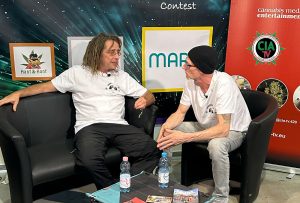
Note: The interview was conducted in writing. Answers were lightly edited for readability and spelling without changing content. Jasmin Göbel moderates the Holistic Green Fireside Chats at Mary Jane Berlin. Further reading: holistic-green.de and the HOLISTIC GREEN YouTube channel.
Frequently Asked Questions About HOLISTIC GREEN and Conscious Cannabis Consumption
Who is Jasmin Göbel and what does HOLISTIC GREEN stand for?
Jasmin Göbel is founder of HOLISTIC GREEN, holistic health coach, cannabis educator and speaker. Before HOLISTIC GREEN, she built the trade fair format CannaFriends. HOLISTIC GREEN doesn’t view cannabis in isolation, but as part of a larger health framework encompassing nervous system, sleep, regulation and quality of life – combining education, coaching and functional products.
What does conscious cannabis consumption mean?
Conscious consumption means using cannabis deliberately, with measured doses and in practical everyday contexts, rather than just chasing the highest THC value. When you keep effects, quantity and occasion in mind, you prevent unwanted effects. Our guide to cannabis microdosing shows how a particularly low-dose approach works.
What role do the nervous system and sleep play in cannabis consumption?
Cannabis works through the body’s own endocannabinoid system, which helps regulate stress, sleep and overall balance – we explain the basics in our article on the endocannabinoid system. Especially on the sleep question, it’s worth looking soberly at the research: what science really shows is summarized in our analysis cannabis and sleep.
Why is the female perspective important in cannabis culture?
Topics like nervous system, hormones and mental health are often experienced differently in women – a female visual language and perspective makes modern cannabis culture more accessible. Our article The Healer Queen explores the close connection between cannabis and women’s health.
What are functional edibles and why are they trending?
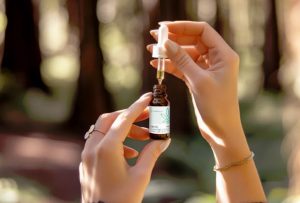
Functional edibles are consumable products – such as gummies or tinctures – that combine cannabinoids with a specific purpose. This sector is still underrepresented in Germany, but technically a lot is happening: we explain in detail why new technologies are making edibles work faster.
Question 6: Feminine Visual Language as Market Setting
HOLISTIC GREEN has a distinctly feminine visual language. Is that a conscious market positioning, or does it emerge from your personal background?
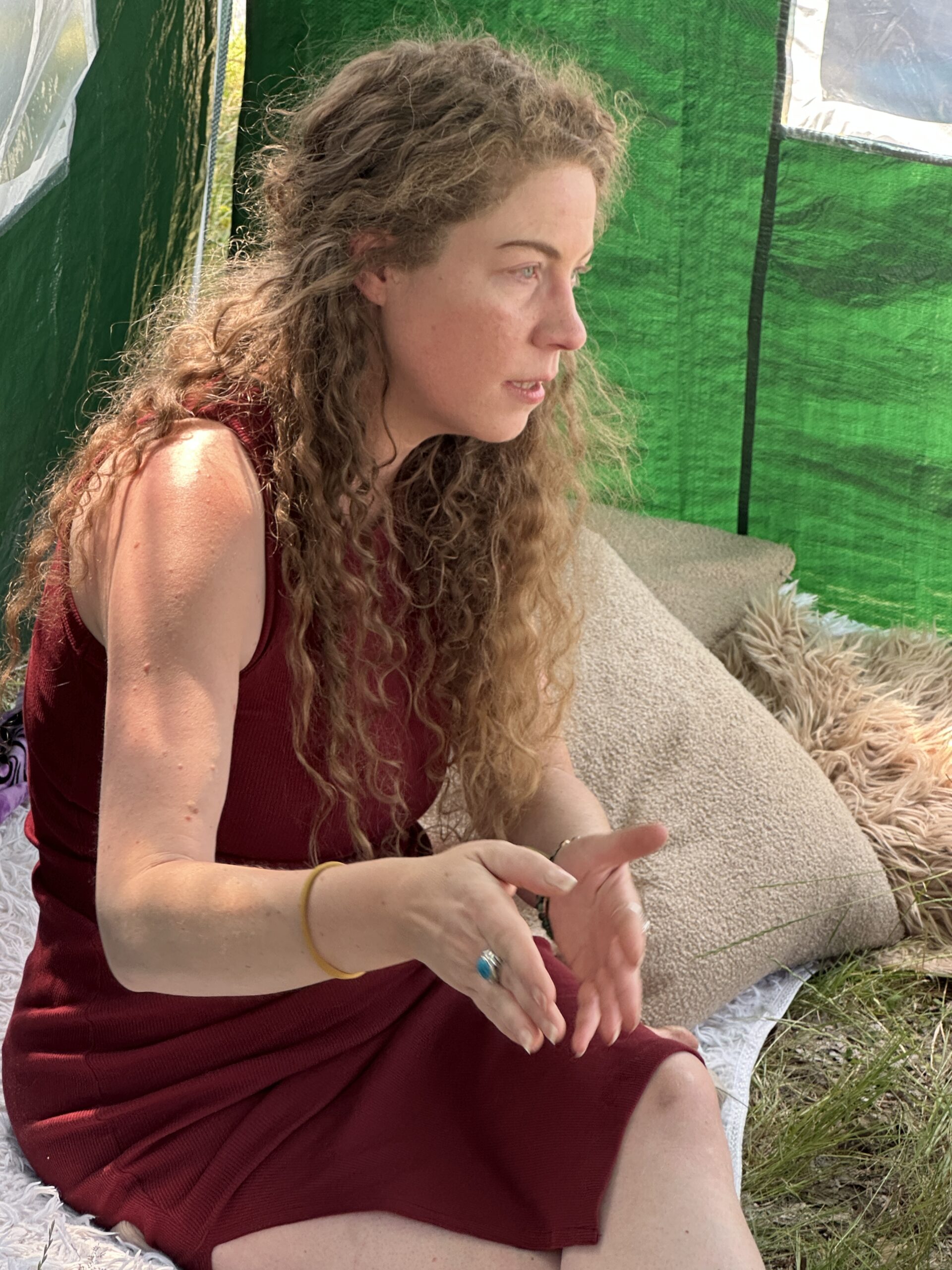
Jasmin: The visual language of HOLISTIC GREEN emerges very organically from my personality and background, but is also a conscious market positioning. The cannabis industry has long been visually either very masculine, very medical or presented very stereotypically. I wanted to consciously move away from that.
It was important to me to show that modern cannabis culture can also be soft, high-quality, emotionally intelligent and aesthetic without losing depth or credibility.
The female perspective naturally plays a big role here, especially since topics like nervous system, hormones, mental health or regulation are often experienced differently in women. At the same time, I notice that surprisingly many men feel addressed by the brand, precisely because HOLISTIC GREEN doesn’t come across as loud or artificial. That was also my goal.
I believe people today generally yearn more for authenticity, calm and genuine connection, visually as well. That’s why the visual language isn’t just about „feminine,“ but about atmosphere, trust and a new form of modern cannabis aesthetics that feels more conscious, high-quality and human.
Question 7: Branding Mistakes in 2026
You also work in cannabis brand consulting. Which three branding mistakes do you see most frequently in Germany in 2026?
Jasmin: The most common mistake, in my view, is that many cannabis brands still try to be either maximally edgy or maximally medical, and in doing so become completely interchangeable.
I often see two extremes in naming: either very generic Cali aesthetics or extremely technical pharma names without emotional connection. Real brand identity is often missing in between.
In visual language, cannabis is often either oversexualized, over-styled or presented purely functionally. Many brands forget that trust, atmosphere and cultural relevance have become much more important than pure provocation.
And tonally, I often see a major problem with hype marketing: higher THC, aggressive sales, quick attention. That might work short-term, but long-term you don’t build a strong brand that way.
The community is developing massively right now. Today people want more transparency, quality, conviction and genuine guidance. The strongest brands in the coming years won’t be the loudest, but the most credible. Cannabis culture is becoming more mature, and that’s exactly what brands need to understand too.
„The strongest brands in the coming years won’t be the loudest, but the most credible.“
Jasmin Göbel · HOLISTIC GREEN
Question 8: Where HOLISTIC GREEN Stands in 24 Months
Where will HOLISTIC GREEN stand in 24 months? Magazine, platform, events, products. Do you have a clear direction?
Jasmin: Yes, absolutely. The direction is clearer than ever. HOLISTIC GREEN is consciously developing into a genuine trust brand in the cannabis and health space, with the clear goal of educating people, accompanying them, and making modern holistic health more tangible.
I believe many people sense intuitively today that something has gotten out of balance: stress, overstimulation, sleep, nutrition, overwhelm or even their own consumption. That’s exactly why we need more spaces, education and modern approaches that look behind the issues rather than just treating symptoms or quick effects.
For me, cannabis is not a pure lifestyle product, but an incredibly exciting tool within a much larger context of nervous system, regulation and quality of life.
In the next 24 months, platform, community, talks, education, products, workshops and own event formats will therefore grow much more closely together. HOLISTIC GREEN should become exactly the place where modern cannabis culture, genuine education and holistic health come together credibly.
Note: The interview was conducted in writing. Answers were lightly edited for readability and spelling without changing content. Jasmin Göbel moderates the Holistic Green Fireside Chats at Mary Jane Berlin. Further reading: holistic-green.de and the HOLISTIC GREEN YouTube channel.
Frequently Asked Questions About HOLISTIC GREEN and Conscious Cannabis Consumption
Who is Jasmin Göbel and what does HOLISTIC GREEN stand for?
Jasmin Göbel is founder of HOLISTIC GREEN, holistic health coach, cannabis educator and speaker. Before HOLISTIC GREEN, she built the trade fair format CannaFriends. HOLISTIC GREEN doesn’t view cannabis in isolation, but as part of a larger health framework encompassing nervous system, sleep, regulation and quality of life – combining education, coaching and functional products.
What does conscious cannabis consumption mean?
Conscious consumption means using cannabis deliberately, with measured doses and in practical everyday contexts, rather than just chasing the highest THC value. When you keep effects, quantity and occasion in mind, you prevent unwanted effects. Our guide to cannabis microdosing shows how a particularly low-dose approach works.
What role do the nervous system and sleep play in cannabis consumption?
Cannabis works through the body’s own endocannabinoid system, which helps regulate stress, sleep and overall balance – we explain the basics in our article on the endocannabinoid system. Especially on the sleep question, it’s worth looking soberly at the research: what science really shows is summarized in our analysis cannabis and sleep.
Why is the female perspective important in cannabis culture?
Topics like nervous system, hormones and mental health are often experienced differently in women – a female visual language and perspective makes modern cannabis culture more accessible. Our article The Healer Queen explores the close connection between cannabis and women’s health.
What are functional edibles and why are they trending?
Functional edibles are consumable products – such as gummies or tinctures – that combine cannabinoids with a specific purpose. This sector is still underrepresented in Germany, but technically a lot is happening: we explain in detail why new technologies are making edibles work faster.
Question 5: Underrepresented Lifestyle Topics
Which cannabis lifestyle topics are still underrepresented in German discourse in 2026 from your perspective?
Jasmin: In my view, conscious consumption is still massively underrepresented in German cannabis discourse. And honestly, I believe that’s exactly where one of the most important keys to the future lies – health-wise, socially and politically.
Many discussions still revolve around THC values, quick effects or legalization debates. We rarely discuss how cannabis can be used meaningfully, regulated and pragmatically in everyday life. Meanwhile, I notice in the community that many people are actually looking for exactly that.
I also believe that ignorance drives many people either into the „higher, stronger, more“ trap or causes them to have bad experiences and reject cannabis entirely, even though it could help them very well in a different form or dosage.
In places like parts of the USA, you can already see how diverse modern cannabis culture can actually be: edibles, tinctures, infused products, creams or functional applications are already standard there. Especially the edibles and functional space is still extremely underrepresented in Germany in my view, even though enormous potential lies there for many patients and conscious consumers.
Question 6: Feminine Visual Language as Market Setting
HOLISTIC GREEN has a distinctly feminine visual language. Is that a conscious market positioning, or does it emerge from your personal background?
Jasmin: The visual language of HOLISTIC GREEN emerges very organically from my personality and background, but is also a conscious market positioning. The cannabis industry has long been visually either very masculine, very medical or presented very stereotypically. I wanted to consciously move away from that.
It was important to me to show that modern cannabis culture can also be soft, high-quality, emotionally intelligent and aesthetic without losing depth or credibility.
The female perspective naturally plays a big role here, especially since topics like nervous system, hormones, mental health or regulation are often experienced differently in women. At the same time, I notice that surprisingly many men feel addressed by the brand, precisely because HOLISTIC GREEN doesn’t come across as loud or artificial. That was also my goal.
I believe people today generally yearn more for authenticity, calm and genuine connection, visually as well. That’s why the visual language isn’t just about „feminine,“ but about atmosphere, trust and a new form of modern cannabis aesthetics that feels more conscious, high-quality and human.
Question 7: Branding Mistakes in 2026
You also work in cannabis brand consulting. Which three branding mistakes do you see most frequently in Germany in 2026?
Jasmin: The most common mistake, in my view, is that many cannabis brands still try to be either maximally edgy or maximally medical, and in doing so become completely interchangeable.
I often see two extremes in naming: either very generic Cali aesthetics or extremely technical pharma names without emotional connection. Real brand identity is often missing in between.
In visual language, cannabis is often either oversexualized, over-styled or presented purely functionally. Many brands forget that trust, atmosphere and cultural relevance have become much more important than pure provocation.
And tonally, I often see a major problem with hype marketing: higher THC, aggressive sales, quick attention. That might work short-term, but long-term you don’t build a strong brand that way.
The community is developing massively right now. Today people want more transparency, quality, conviction and genuine guidance. The strongest brands in the coming years won’t be the loudest, but the most credible. Cannabis culture is becoming more mature, and that’s exactly what brands need to understand too.
„The strongest brands in the coming years won’t be the loudest, but the most credible.“
Jasmin Göbel · HOLISTIC GREEN
Question 8: Where HOLISTIC GREEN Stands in 24 Months
Where will HOLISTIC GREEN stand in 24 months? Magazine, platform, events, products. Do you have a clear direction?
Jasmin: Yes, absolutely. The direction is clearer than ever. HOLISTIC GREEN is consciously developing into a genuine trust brand in the cannabis and health space, with the clear goal of educating people, accompanying them, and making modern holistic health more tangible.
I believe many people sense intuitively today that something has gotten out of balance: stress, overstimulation, sleep, nutrition, overwhelm or even their own consumption. That’s exactly why we need more spaces, education and modern approaches that look behind the issues rather than just treating symptoms or quick effects.
For me, cannabis is not a pure lifestyle product, but an incredibly exciting tool within a much larger context of nervous system, regulation and quality of life.
In the next 24 months, platform, community, talks, education, products, workshops and own event formats will therefore grow much more closely together. HOLISTIC GREEN should become exactly the place where modern cannabis culture, genuine education and holistic health come together credibly.
Note: The interview was conducted in writing. Answers were lightly edited for readability and spelling without changing content. Jasmin Göbel moderates the Holistic Green Fireside Chats at Mary Jane Berlin. Further reading: holistic-green.de and the HOLISTIC GREEN YouTube channel.
Frequently Asked Questions About HOLISTIC GREEN and Conscious Cannabis Consumption
Who is Jasmin Göbel and what does HOLISTIC GREEN stand for?
Jasmin Göbel is founder of HOLISTIC GREEN, holistic health coach, cannabis educator and speaker. Before HOLISTIC GREEN, she built the trade fair format CannaFriends. HOLISTIC GREEN doesn’t view cannabis in isolation, but as part of a larger health framework encompassing nervous system, sleep, regulation and quality of life – combining education, coaching and functional products.
What does conscious cannabis consumption mean?
Conscious consumption means using cannabis deliberately, with measured doses and in practical everyday contexts, rather than just chasing the highest THC value. When you keep effects, quantity and occasion in mind, you prevent unwanted effects. Our guide to cannabis microdosing shows how a particularly low-dose approach works.
What role do the nervous system and sleep play in cannabis consumption?
Cannabis works through the body’s own endocannabinoid system, which helps regulate stress, sleep and overall balance – we explain the basics in our article on the endocannabinoid system. Especially on the sleep question, it’s worth looking soberly at the research: what science really shows is summarized in our analysis cannabis and sleep.
Why is the female perspective important in cannabis culture?
Topics like nervous system, hormones and mental health are often experienced differently in women – a female visual language and perspective makes modern cannabis culture more accessible. Our article The Healer Queen explores the close connection between cannabis and women’s health.
What are functional edibles and why are they trending?
Functional edibles are consumable products – such as gummies or tinctures – that combine cannabinoids with a specific purpose. This sector is still underrepresented in Germany, but technically a lot is happening: we explain in detail why new technologies are making edibles work faster.
Question 4: Curation of the Fireside Chats
The MJB fireside chats combine science, personal stories and industry voices. How do you curate your guests, and what determines how topics fit together?
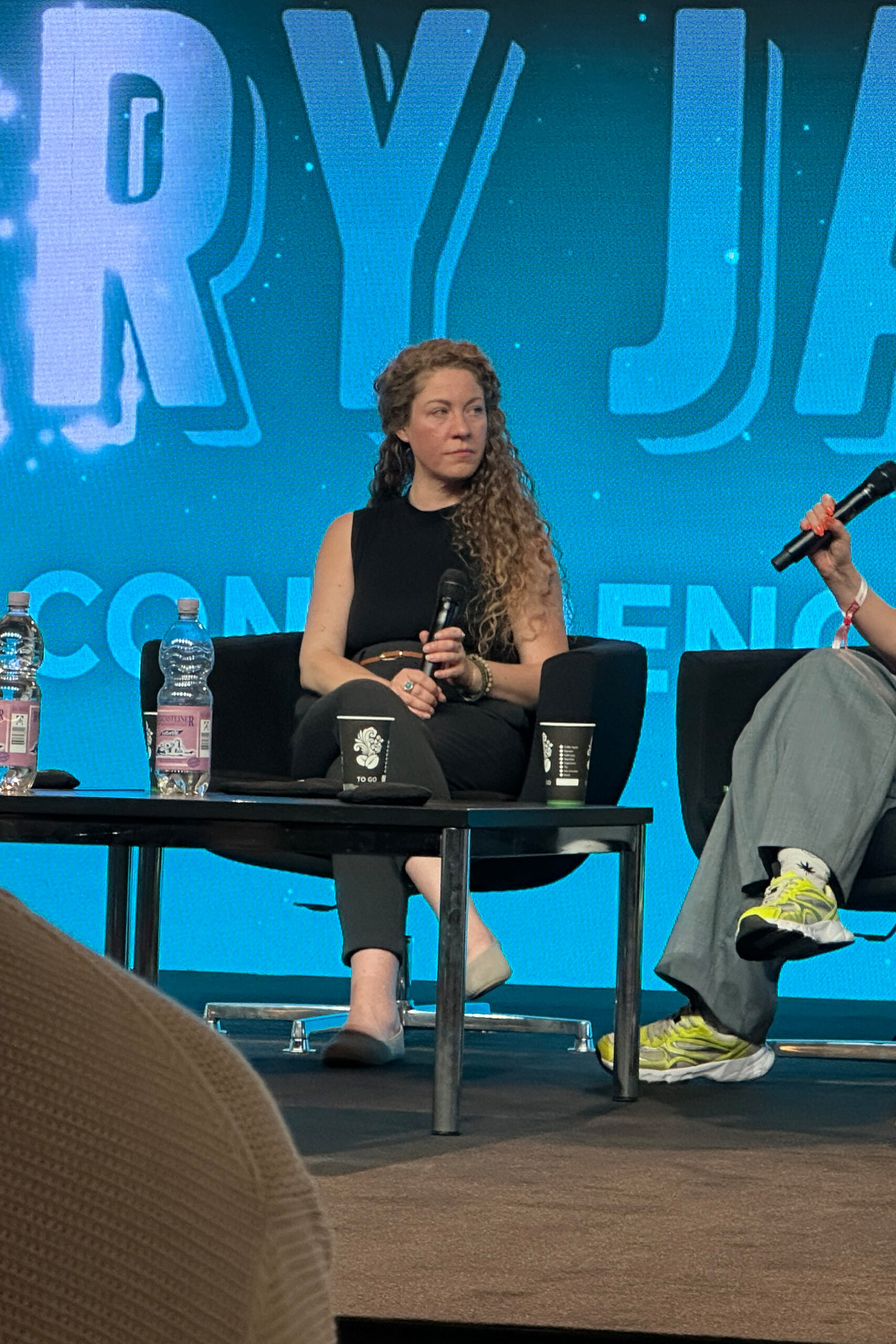
Jasmin: I actually curate quite intuitively, but at the same time extremely consciously. Over the years I’ve built a large network, from patients, doctors, scientists and entrepreneurs to people from the community, culture or other creative areas around cannabis. I always look at the person behind the profile first. How does someone speak? What attitude do they bring? Is there genuine experience or just a role?
And honestly, I can tell fairly quickly whether something flows or not. It’s important to me that people are allowed to be authentic. Even if someone seems very technical or reserved at first, I often try to make the genuine core visible. That’s exactly where conversations become interesting.
Thematically, I focus on what the community, patients or the industry are really grappling with right now. Where are the fears? Where are the missing bridges? Where are people still talking past each other?
I’m interested in exactly this connection of science, real stories and tangible experience. When a doctor explains something and next to them a patient or consumer describes exactly that effect from their everyday life, understanding suddenly emerges. That’s precisely what I create and hold space for, online, on stages, at events or one-on-one. Because for me, genuine education happens where people really meet.
Question 5: Underrepresented Lifestyle Topics
Which cannabis lifestyle topics are still underrepresented in German discourse in 2026 from your perspective?
Jasmin: In my view, conscious consumption is still massively underrepresented in German cannabis discourse. And honestly, I believe that’s exactly where one of the most important keys to the future lies – health-wise, socially and politically.
Many discussions still revolve around THC values, quick effects or legalization debates. We rarely discuss how cannabis can be used meaningfully, regulated and pragmatically in everyday life. Meanwhile, I notice in the community that many people are actually looking for exactly that.
I also believe that ignorance drives many people either into the „higher, stronger, more“ trap or causes them to have bad experiences and reject cannabis entirely, even though it could help them very well in a different form or dosage.
In places like parts of the USA, you can already see how diverse modern cannabis culture can actually be: edibles, tinctures, infused products, creams or functional applications are already standard there. Especially the edibles and functional space is still extremely underrepresented in Germany in my view, even though enormous potential lies there for many patients and conscious consumers.
Question 6: Feminine Visual Language as Market Setting
HOLISTIC GREEN has a distinctly feminine visual language. Is that a conscious market positioning, or does it emerge from your personal background?
Jasmin: The visual language of HOLISTIC GREEN emerges very organically from my personality and background, but is also a conscious market positioning. The cannabis industry has long been visually either very masculine, very medical or presented very stereotypically. I wanted to consciously move away from that.
It was important to me to show that modern cannabis culture can also be soft, high-quality, emotionally intelligent and aesthetic without losing depth or credibility.
The female perspective naturally plays a big role here, especially since topics like nervous system, hormones, mental health or regulation are often experienced differently in women. At the same time, I notice that surprisingly many men feel addressed by the brand, precisely because HOLISTIC GREEN doesn’t come across as loud or artificial. That was also my goal.
I believe people today generally yearn more for authenticity, calm and genuine connection, visually as well. That’s why the visual language isn’t just about „feminine,“ but about atmosphere, trust and a new form of modern cannabis aesthetics that feels more conscious, high-quality and human.
Question 7: Branding Mistakes in 2026
You also work in cannabis brand consulting. Which three branding mistakes do you see most frequently in Germany in 2026?
Jasmin: The most common mistake, in my view, is that many cannabis brands still try to be either maximally edgy or maximally medical, and in doing so become completely interchangeable.
I often see two extremes in naming: either very generic Cali aesthetics or extremely technical pharma names without emotional connection. Real brand identity is often missing in between.
In visual language, cannabis is often either oversexualized, over-styled or presented purely functionally. Many brands forget that trust, atmosphere and cultural relevance have become much more important than pure provocation.
And tonally, I often see a major problem with hype marketing: higher THC, aggressive sales, quick attention. That might work short-term, but long-term you don’t build a strong brand that way.
The community is developing massively right now. Today people want more transparency, quality, conviction and genuine guidance. The strongest brands in the coming years won’t be the loudest, but the most credible. Cannabis culture is becoming more mature, and that’s exactly what brands need to understand too.
„The strongest brands in the coming years won’t be the loudest, but the most credible.“
Jasmin Göbel · HOLISTIC GREEN
Question 8: Where HOLISTIC GREEN Stands in 24 Months
Where will HOLISTIC GREEN stand in 24 months? Magazine, platform, events, products. Do you have a clear direction?
Jasmin: Yes, absolutely. The direction is clearer than ever. HOLISTIC GREEN is consciously developing into a genuine trust brand in the cannabis and health space, with the clear goal of educating people, accompanying them, and making modern holistic health more tangible.
I believe many people sense intuitively today that something has gotten out of balance: stress, overstimulation, sleep, nutrition, overwhelm or even their own consumption. That’s exactly why we need more spaces, education and modern approaches that look behind the issues rather than just treating symptoms or quick effects.
For me, cannabis is not a pure lifestyle product, but an incredibly exciting tool within a much larger context of nervous system, regulation and quality of life.
In the next 24 months, platform, community, talks, education, products, workshops and own event formats will therefore grow much more closely together. HOLISTIC GREEN should become exactly the place where modern cannabis culture, genuine education and holistic health come together credibly.
Note: The interview was conducted in writing. Answers were lightly edited for readability and spelling without changing content. Jasmin Göbel moderates the Holistic Green Fireside Chats at Mary Jane Berlin. Further reading: holistic-green.de and the HOLISTIC GREEN YouTube channel.
Frequently Asked Questions About HOLISTIC GREEN and Conscious Cannabis Consumption
Who is Jasmin Göbel and what does HOLISTIC GREEN stand for?
Jasmin Göbel is founder of HOLISTIC GREEN, holistic health coach, cannabis educator and speaker. Before HOLISTIC GREEN, she built the trade fair format CannaFriends. HOLISTIC GREEN doesn’t view cannabis in isolation, but as part of a larger health framework encompassing nervous system, sleep, regulation and quality of life – combining education, coaching and functional products.
What does conscious cannabis consumption mean?
Conscious consumption means using cannabis deliberately, with measured doses and in practical everyday contexts, rather than just chasing the highest THC value. When you keep effects, quantity and occasion in mind, you prevent unwanted effects. Our guide to cannabis microdosing shows how a particularly low-dose approach works.
What role do the nervous system and sleep play in cannabis consumption?
Cannabis works through the body’s own endocannabinoid system, which helps regulate stress, sleep and overall balance – we explain the basics in our article on the endocannabinoid system. Especially on the sleep question, it’s worth looking soberly at the research: what science really shows is summarized in our analysis cannabis and sleep.
Why is the female perspective important in cannabis culture?
Topics like nervous system, hormones and mental health are often experienced differently in women – a female visual language and perspective makes modern cannabis culture more accessible. Our article The Healer Queen explores the close connection between cannabis and women’s health.
What are functional edibles and why are they trending?
Functional edibles are consumable products – such as gummies or tinctures – that combine cannabinoids with a specific purpose. This sector is still underrepresented in Germany, but technically a lot is happening: we explain in detail why new technologies are making edibles work faster.
Question 3: Friction Between Three Worlds
Patient perspective, branding expertise, business education. You connect three worlds. Where do the most interesting productive frictions arise in your daily business?
Jasmin: The most interesting frictions emerge exactly where real people meet an extremely rapidly growing business. I move daily between patients, community, doctors, brands, politics, science and companies, and each of these worlds talks about cannabis in completely different ways.
As a patient, I know the personal side very intensely. At the same time, I’ve been working in cannabis marketing for years and know how strongly communication steers perception. That’s where the most interesting tensions often arise: between genuine education and sales pressure, between regulatory constraints and community reality, or between what people actually need and what’s being marketed loudest right now.
Through my work in the holistic space and many conversations with people, I get direct insight into where actual needs lie: nervous system, sleep, stress, regulation, overwhelm or simply more quality of life.
I notice that the industry is changing. Many no longer just want the highest THC value or the next chemical hype. They want to understand why cannabis works, when it helps and how to handle it more consciously. These conversations are now generating new formats, workshops, coaching offerings or products like the FUNCTIONAL GUMMIES, developed from genuine patient and everyday experience.
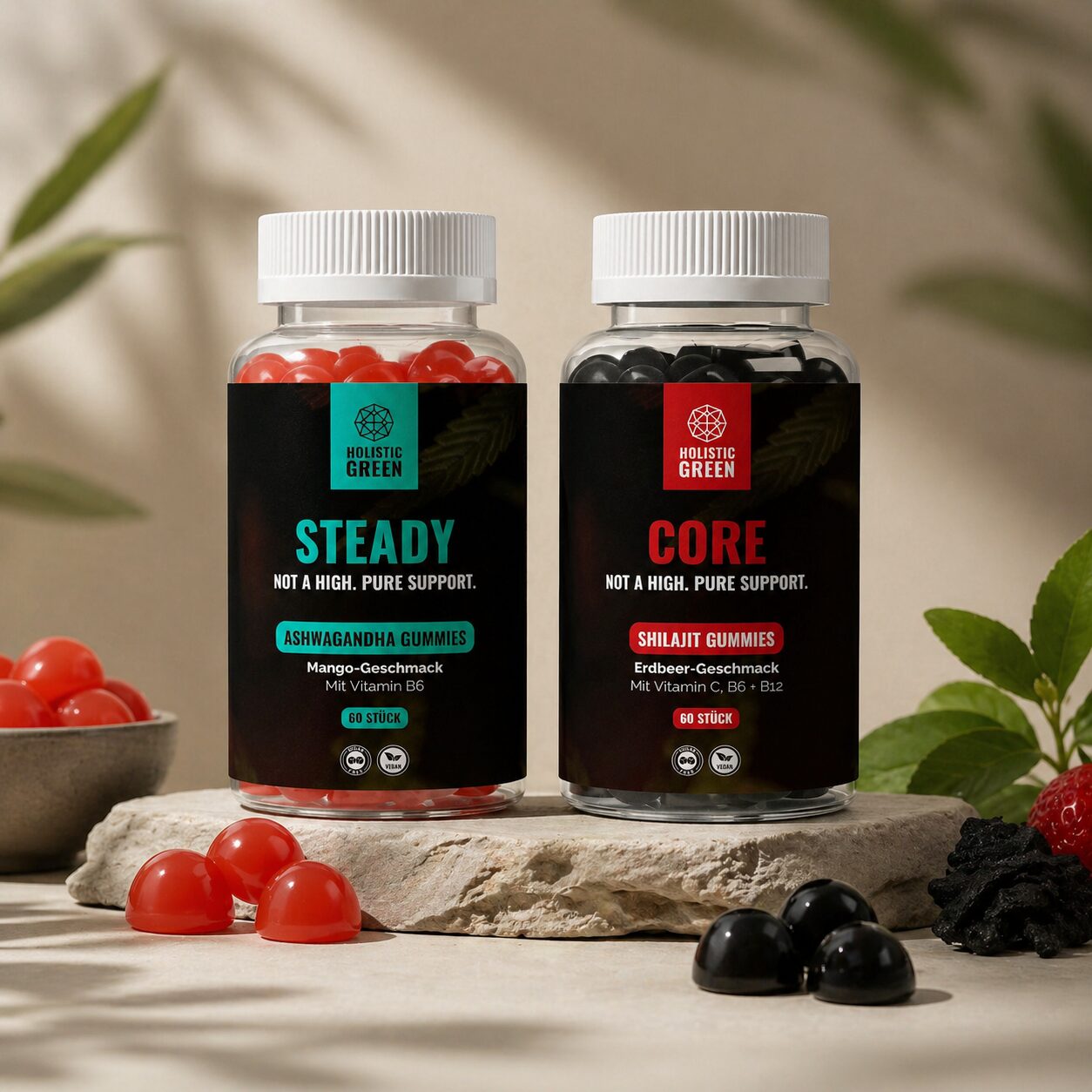
„Many no longer just want the highest THC value or the next chemical hype. They want to understand why cannabis works, when it helps and how to handle it more consciously.“
Jasmin Göbel · HOLISTIC GREEN
Question 4: Curation of the Fireside Chats
The MJB fireside chats combine science, personal stories and industry voices. How do you curate your guests, and what determines how topics fit together?
Jasmin: I actually curate quite intuitively, but at the same time extremely consciously. Over the years I’ve built a large network, from patients, doctors, scientists and entrepreneurs to people from the community, culture or other creative areas around cannabis. I always look at the person behind the profile first. How does someone speak? What attitude do they bring? Is there genuine experience or just a role?
And honestly, I can tell fairly quickly whether something flows or not. It’s important to me that people are allowed to be authentic. Even if someone seems very technical or reserved at first, I often try to make the genuine core visible. That’s exactly where conversations become interesting.
Thematically, I focus on what the community, patients or the industry are really grappling with right now. Where are the fears? Where are the missing bridges? Where are people still talking past each other?
I’m interested in exactly this connection of science, real stories and tangible experience. When a doctor explains something and next to them a patient or consumer describes exactly that effect from their everyday life, understanding suddenly emerges. That’s precisely what I create and hold space for, online, on stages, at events or one-on-one. Because for me, genuine education happens where people really meet.
Question 5: Underrepresented Lifestyle Topics
Which cannabis lifestyle topics are still underrepresented in German discourse in 2026 from your perspective?
Jasmin: In my view, conscious consumption is still massively underrepresented in German cannabis discourse. And honestly, I believe that’s exactly where one of the most important keys to the future lies – health-wise, socially and politically.
Many discussions still revolve around THC values, quick effects or legalization debates. We rarely discuss how cannabis can be used meaningfully, regulated and pragmatically in everyday life. Meanwhile, I notice in the community that many people are actually looking for exactly that.
I also believe that ignorance drives many people either into the „higher, stronger, more“ trap or causes them to have bad experiences and reject cannabis entirely, even though it could help them very well in a different form or dosage.
In places like parts of the USA, you can already see how diverse modern cannabis culture can actually be: edibles, tinctures, infused products, creams or functional applications are already standard there. Especially the edibles and functional space is still extremely underrepresented in Germany in my view, even though enormous potential lies there for many patients and conscious consumers.
Question 6: Feminine Visual Language as Market Setting
HOLISTIC GREEN has a distinctly feminine visual language. Is that a conscious market positioning, or does it emerge from your personal background?
Jasmin: The visual language of HOLISTIC GREEN emerges very organically from my personality and background, but is also a conscious market positioning. The cannabis industry has long been visually either very masculine, very medical or presented very stereotypically. I wanted to consciously move away from that.
It was important to me to show that modern cannabis culture can also be soft, high-quality, emotionally intelligent and aesthetic without losing depth or credibility.
The female perspective naturally plays a big role here, especially since topics like nervous system, hormones, mental health or regulation are often experienced differently in women. At the same time, I notice that surprisingly many men feel addressed by the brand, precisely because HOLISTIC GREEN doesn’t come across as loud or artificial. That was also my goal.
I believe people today generally yearn more for authenticity, calm and genuine connection, visually as well. That’s why the visual language isn’t just about „feminine,“ but about atmosphere, trust and a new form of modern cannabis aesthetics that feels more conscious, high-quality and human.
Question 7: Branding Mistakes in 2026
You also work in cannabis brand consulting. Which three branding mistakes do you see most frequently in Germany in 2026?
Jasmin: The most common mistake, in my view, is that many cannabis brands still try to be either maximally edgy or maximally medical, and in doing so become completely interchangeable.
I often see two extremes in naming: either very generic Cali aesthetics or extremely technical pharma names without emotional connection. Real brand identity is often missing in between.
In visual language, cannabis is often either oversexualized, over-styled or presented purely functionally. Many brands forget that trust, atmosphere and cultural relevance have become much more important than pure provocation.
And tonally, I often see a major problem with hype marketing: higher THC, aggressive sales, quick attention. That might work short-term, but long-term you don’t build a strong brand that way.
The community is developing massively right now. Today people want more transparency, quality, conviction and genuine guidance. The strongest brands in the coming years won’t be the loudest, but the most credible. Cannabis culture is becoming more mature, and that’s exactly what brands need to understand too.
„The strongest brands in the coming years won’t be the loudest, but the most credible.“
Jasmin Göbel · HOLISTIC GREEN
Question 8: Where HOLISTIC GREEN Stands in 24 Months
Where will HOLISTIC GREEN stand in 24 months? Magazine, platform, events, products. Do you have a clear direction?
Jasmin: Yes, absolutely. The direction is clearer than ever. HOLISTIC GREEN is consciously developing into a genuine trust brand in the cannabis and health space, with the clear goal of educating people, accompanying them, and making modern holistic health more tangible.
I believe many people sense intuitively today that something has gotten out of balance: stress, overstimulation, sleep, nutrition, overwhelm or even their own consumption. That’s exactly why we need more spaces, education and modern approaches that look behind the issues rather than just treating symptoms or quick effects.
For me, cannabis is not a pure lifestyle product, but an incredibly exciting tool within a much larger context of nervous system, regulation and quality of life.
In the next 24 months, platform, community, talks, education, products, workshops and own event formats will therefore grow much more closely together. HOLISTIC GREEN should become exactly the place where modern cannabis culture, genuine education and holistic health come together credibly.
Note: The interview was conducted in writing. Answers were lightly edited for readability and spelling without changing content. Jasmin Göbel moderates the Holistic Green Fireside Chats at Mary Jane Berlin. Further reading: holistic-green.de and the HOLISTIC GREEN YouTube channel.
Frequently Asked Questions About HOLISTIC GREEN and Conscious Cannabis Consumption
Who is Jasmin Göbel and what does HOLISTIC GREEN stand for?
Jasmin Göbel is founder of HOLISTIC GREEN, holistic health coach, cannabis educator and speaker. Before HOLISTIC GREEN, she built the trade fair format CannaFriends. HOLISTIC GREEN doesn’t view cannabis in isolation, but as part of a larger health framework encompassing nervous system, sleep, regulation and quality of life – combining education, coaching and functional products.
What does conscious cannabis consumption mean?
Conscious consumption means using cannabis deliberately, with measured doses and in practical everyday contexts, rather than just chasing the highest THC value. When you keep effects, quantity and occasion in mind, you prevent unwanted effects. Our guide to cannabis microdosing shows how a particularly low-dose approach works.
What role do the nervous system and sleep play in cannabis consumption?
Cannabis works through the body’s own endocannabinoid system, which helps regulate stress, sleep and overall balance – we explain the basics in our article on the endocannabinoid system. Especially on the sleep question, it’s worth looking soberly at the research: what science really shows is summarized in our analysis cannabis and sleep.
Why is the female perspective important in cannabis culture?
Topics like nervous system, hormones and mental health are often experienced differently in women – a female visual language and perspective makes modern cannabis culture more accessible. Our article The Healer Queen explores the close connection between cannabis and women’s health.
What are functional edibles and why are they trending?
Functional edibles are consumable products – such as gummies or tinctures – that combine cannabinoids with a specific purpose. This sector is still underrepresented in Germany, but technically a lot is happening: we explain in detail why new technologies are making edibles work faster.
Question 2: Conscious Cannabis Lifestyle Without Esotericism
„Conscious cannabis lifestyle“ is a term that can quickly sound esoteric. How do you keep the brand holistic and tangible at the same time?
Jasmin: By looking at the bigger picture and not viewing cannabis in isolation. That’s exactly what I’ve often missed in the industry. Either cannabis was completely glorified or everything was reduced to THC. For me, cannabis has always been a tool within a much larger interplay of nervous system, nutrition, stress, regulation, sleep, routines and quality of life.
Precisely because cannabis can amplify things, conscious handling is so important. If a person is constantly high, overstimulated or living in a dysregulated way, cannabis can often push that even further. But when people start looking at their nervous system, their daily lives and their health more holistically, the effects of cannabis often change completely.
At the same time, I bring my experience from marketing regulated markets. I know how extremely communication shapes perception, especially in the cannabis industry. In recent years, everything has been reduced to „higher, stronger, more THC.“ But I notice very clearly right now that the community itself is starting to rethink. Many people are no longer simply looking for the strongest effect, but for genuine education, quality and more conscious handling.
That’s exactly why I keep HOLISTIC GREEN tangible: through genuine conversations, real experiences and real education. On my YouTube channel, at the fireside chats or in workshops, I deliberately bring different perspectives together.
Question 3: Friction Between Three Worlds
Patient perspective, branding expertise, business education. You connect three worlds. Where do the most interesting productive frictions arise in your daily business?
Jasmin: The most interesting frictions emerge exactly where real people meet an extremely rapidly growing business. I move daily between patients, community, doctors, brands, politics, science and companies, and each of these worlds talks about cannabis in completely different ways.
As a patient, I know the personal side very intensely. At the same time, I’ve been working in cannabis marketing for years and know how strongly communication steers perception. That’s where the most interesting tensions often arise: between genuine education and sales pressure, between regulatory constraints and community reality, or between what people actually need and what’s being marketed loudest right now.
Through my work in the holistic space and many conversations with people, I get direct insight into where actual needs lie: nervous system, sleep, stress, regulation, overwhelm or simply more quality of life.
I notice that the industry is changing. Many no longer just want the highest THC value or the next chemical hype. They want to understand why cannabis works, when it helps and how to handle it more consciously. These conversations are now generating new formats, workshops, coaching offerings or products like the FUNCTIONAL GUMMIES, developed from genuine patient and everyday experience.
„Many no longer just want the highest THC value or the next chemical hype. They want to understand why cannabis works, when it helps and how to handle it more consciously.“
Jasmin Göbel · HOLISTIC GREEN
Question 4: Curation of the Fireside Chats
The MJB fireside chats combine science, personal stories and industry voices. How do you curate your guests, and what determines how topics fit together?
Jasmin: I actually curate quite intuitively, but at the same time extremely consciously. Over the years I’ve built a large network, from patients, doctors, scientists and entrepreneurs to people from the community, culture or other creative areas around cannabis. I always look at the person behind the profile first. How does someone speak? What attitude do they bring? Is there genuine experience or just a role?
And honestly, I can tell fairly quickly whether something flows or not. It’s important to me that people are allowed to be authentic. Even if someone seems very technical or reserved at first, I often try to make the genuine core visible. That’s exactly where conversations become interesting.
Thematically, I focus on what the community, patients or the industry are really grappling with right now. Where are the fears? Where are the missing bridges? Where are people still talking past each other?
I’m interested in exactly this connection of science, real stories and tangible experience. When a doctor explains something and next to them a patient or consumer describes exactly that effect from their everyday life, understanding suddenly emerges. That’s precisely what I create and hold space for, online, on stages, at events or one-on-one. Because for me, genuine education happens where people really meet.
Question 5: Underrepresented Lifestyle Topics
Which cannabis lifestyle topics are still underrepresented in German discourse in 2026 from your perspective?
Jasmin: In my view, conscious consumption is still massively underrepresented in German cannabis discourse. And honestly, I believe that’s exactly where one of the most important keys to the future lies – health-wise, socially and politically.
Many discussions still revolve around THC values, quick effects or legalization debates. We rarely discuss how cannabis can be used meaningfully, regulated and pragmatically in everyday life. Meanwhile, I notice in the community that many people are actually looking for exactly that.
I also believe that ignorance drives many people either into the „higher, stronger, more“ trap or causes them to have bad experiences and reject cannabis entirely, even though it could help them very well in a different form or dosage.
In places like parts of the USA, you can already see how diverse modern cannabis culture can actually be: edibles, tinctures, infused products, creams or functional applications are already standard there. Especially the edibles and functional space is still extremely underrepresented in Germany in my view, even though enormous potential lies there for many patients and conscious consumers.
Question 6: Feminine Visual Language as Market Setting
HOLISTIC GREEN has a distinctly feminine visual language. Is that a conscious market positioning, or does it emerge from your personal background?
Jasmin: The visual language of HOLISTIC GREEN emerges very organically from my personality and background, but is also a conscious market positioning. The cannabis industry has long been visually either very masculine, very medical or presented very stereotypically. I wanted to consciously move away from that.
It was important to me to show that modern cannabis culture can also be soft, high-quality, emotionally intelligent and aesthetic without losing depth or credibility.
The female perspective naturally plays a big role here, especially since topics like nervous system, hormones, mental health or regulation are often experienced differently in women. At the same time, I notice that surprisingly many men feel addressed by the brand, precisely because HOLISTIC GREEN doesn’t come across as loud or artificial. That was also my goal.
I believe people today generally yearn more for authenticity, calm and genuine connection, visually as well. That’s why the visual language isn’t just about „feminine,“ but about atmosphere, trust and a new form of modern cannabis aesthetics that feels more conscious, high-quality and human.
Question 7: Branding Mistakes in 2026
You also work in cannabis brand consulting. Which three branding mistakes do you see most frequently in Germany in 2026?
Jasmin: The most common mistake, in my view, is that many cannabis brands still try to be either maximally edgy or maximally medical, and in doing so become completely interchangeable.
I often see two extremes in naming: either very generic Cali aesthetics or extremely technical pharma names without emotional connection. Real brand identity is often missing in between.
In visual language, cannabis is often either oversexualized, over-styled or presented purely functionally. Many brands forget that trust, atmosphere and cultural relevance have become much more important than pure provocation.
And tonally, I often see a major problem with hype marketing: higher THC, aggressive sales, quick attention. That might work short-term, but long-term you don’t build a strong brand that way.
The community is developing massively right now. Today people want more transparency, quality, conviction and genuine guidance. The strongest brands in the coming years won’t be the loudest, but the most credible. Cannabis culture is becoming more mature, and that’s exactly what brands need to understand too.
„The strongest brands in the coming years won’t be the loudest, but the most credible.“
Jasmin Göbel · HOLISTIC GREEN
Question 8: Where HOLISTIC GREEN Stands in 24 Months
Where will HOLISTIC GREEN stand in 24 months? Magazine, platform, events, products. Do you have a clear direction?
Jasmin: Yes, absolutely. The direction is clearer than ever. HOLISTIC GREEN is consciously developing into a genuine trust brand in the cannabis and health space, with the clear goal of educating people, accompanying them, and making modern holistic health more tangible.
I believe many people sense intuitively today that something has gotten out of balance: stress, overstimulation, sleep, nutrition, overwhelm or even their own consumption. That’s exactly why we need more spaces, education and modern approaches that look behind the issues rather than just treating symptoms or quick effects.
For me, cannabis is not a pure lifestyle product, but an incredibly exciting tool within a much larger context of nervous system, regulation and quality of life.
In the next 24 months, platform, community, talks, education, products, workshops and own event formats will therefore grow much more closely together. HOLISTIC GREEN should become exactly the place where modern cannabis culture, genuine education and holistic health come together credibly.
Note: The interview was conducted in writing. Answers were lightly edited for readability and spelling without changing content. Jasmin Göbel moderates the Holistic Green Fireside Chats at Mary Jane Berlin. Further reading: holistic-green.de and the HOLISTIC GREEN YouTube channel.
Frequently Asked Questions About HOLISTIC GREEN and Conscious Cannabis Consumption
Who is Jasmin Göbel and what does HOLISTIC GREEN stand for?
Jasmin Göbel is founder of HOLISTIC GREEN, holistic health coach, cannabis educator and speaker. Before HOLISTIC GREEN, she built the trade fair format CannaFriends. HOLISTIC GREEN doesn’t view cannabis in isolation, but as part of a larger health framework encompassing nervous system, sleep, regulation and quality of life – combining education, coaching and functional products.
What does conscious cannabis consumption mean?
Conscious consumption means using cannabis deliberately, with measured doses and in practical everyday contexts, rather than just chasing the highest THC value. When you keep effects, quantity and occasion in mind, you prevent unwanted effects. Our guide to cannabis microdosing shows how a particularly low-dose approach works.
What role do the nervous system and sleep play in cannabis consumption?
Cannabis works through the body’s own endocannabinoid system, which helps regulate stress, sleep and overall balance – we explain the basics in our article on the endocannabinoid system. Especially on the sleep question, it’s worth looking soberly at the research: what science really shows is summarized in our analysis cannabis and sleep.
Why is the female perspective important in cannabis culture?
Topics like nervous system, hormones and mental health are often experienced differently in women – a female visual language and perspective makes modern cannabis culture more accessible. Our article The Healer Queen explores the close connection between cannabis and women’s health.
What are functional edibles and why are they trending?
Functional edibles are consumable products – such as gummies or tinctures – that combine cannabinoids with a specific purpose. This sector is still underrepresented in Germany, but technically a lot is happening: we explain in detail why new technologies are making edibles work faster.
Question 1: The Trigger
You built CannaFriends as a trade fair and are a multi-host at MJB for the Holistic Green Fireside Chats. What triggered you to position HOLISTIC GREEN as an independent entity?
Jasmin: HOLISTIC GREEN emerged from a mix of necessity, vision and genuine community. I had long wanted to build something of my own that meaningfully connects cannabis, health, education and modern culture. But the final trigger was actually my exit from the trade fair world.
Through constant Instagram suspensions, I became increasingly visible and suddenly became the face to the outside world. Eventually many people knew „Jasmin Holistic Green“ rather than just the event. That’s when I realized that people don’t just respond to an event, but to attitude, trust and honest communication.
After my exit, I could theoretically have disappeared entirely. Instead, I realized how much the network, community and trust had already grown. At the same time, my YouTube channel was immediately classified as a health and education format despite cannabis topics. That also mirrors my experience from regulated markets. When communication is built credibly, genuine trust emerges.
I had already worked in the medical cannabis field before partial legalization, closely with doctors and patients, and always said: if cannabis ever becomes legal, I want to be actively involved because cannabis has given me back a significant piece of quality of life.
Question 2: Conscious Cannabis Lifestyle Without Esotericism
„Conscious cannabis lifestyle“ is a term that can quickly sound esoteric. How do you keep the brand holistic and tangible at the same time?
Jasmin: By looking at the bigger picture and not viewing cannabis in isolation. That’s exactly what I’ve often missed in the industry. Either cannabis was completely glorified or everything was reduced to THC. For me, cannabis has always been a tool within a much larger interplay of nervous system, nutrition, stress, regulation, sleep, routines and quality of life.
Precisely because cannabis can amplify things, conscious handling is so important. If a person is constantly high, overstimulated or living in a dysregulated way, cannabis can often push that even further. But when people start looking at their nervous system, their daily lives and their health more holistically, the effects of cannabis often change completely.
At the same time, I bring my experience from marketing regulated markets. I know how extremely communication shapes perception, especially in the cannabis industry. In recent years, everything has been reduced to „higher, stronger, more THC.“ But I notice very clearly right now that the community itself is starting to rethink. Many people are no longer simply looking for the strongest effect, but for genuine education, quality and more conscious handling.
That’s exactly why I keep HOLISTIC GREEN tangible: through genuine conversations, real experiences and real education. On my YouTube channel, at the fireside chats or in workshops, I deliberately bring different perspectives together.
Question 3: Friction Between Three Worlds
Patient perspective, branding expertise, business education. You connect three worlds. Where do the most interesting productive frictions arise in your daily business?
Jasmin: The most interesting frictions emerge exactly where real people meet an extremely rapidly growing business. I move daily between patients, community, doctors, brands, politics, science and companies, and each of these worlds talks about cannabis in completely different ways.
As a patient, I know the personal side very intensely. At the same time, I’ve been working in cannabis marketing for years and know how strongly communication steers perception. That’s where the most interesting tensions often arise: between genuine education and sales pressure, between regulatory constraints and community reality, or between what people actually need and what’s being marketed loudest right now.
Through my work in the holistic space and many conversations with people, I get direct insight into where actual needs lie: nervous system, sleep, stress, regulation, overwhelm or simply more quality of life.
I notice that the industry is changing. Many no longer just want the highest THC value or the next chemical hype. They want to understand why cannabis works, when it helps and how to handle it more consciously. These conversations are now generating new formats, workshops, coaching offerings or products like the FUNCTIONAL GUMMIES, developed from genuine patient and everyday experience.
„Many no longer just want the highest THC value or the next chemical hype. They want to understand why cannabis works, when it helps and how to handle it more consciously.“
Jasmin Göbel · HOLISTIC GREEN
Question 4: Curation of the Fireside Chats
The MJB fireside chats combine science, personal stories and industry voices. How do you curate your guests, and what determines how topics fit together?
Jasmin: I actually curate quite intuitively, but at the same time extremely consciously. Over the years I’ve built a large network, from patients, doctors, scientists and entrepreneurs to people from the community, culture or other creative areas around cannabis. I always look at the person behind the profile first. How does someone speak? What attitude do they bring? Is there genuine experience or just a role?
And honestly, I can tell fairly quickly whether something flows or not. It’s important to me that people are allowed to be authentic. Even if someone seems very technical or reserved at first, I often try to make the genuine core visible. That’s exactly where conversations become interesting.
Thematically, I focus on what the community, patients or the industry are really grappling with right now. Where are the fears? Where are the missing bridges? Where are people still talking past each other?
I’m interested in exactly this connection of science, real stories and tangible experience. When a doctor explains something and next to them a patient or consumer describes exactly that effect from their everyday life, understanding suddenly emerges. That’s precisely what I create and hold space for, online, on stages, at events or one-on-one. Because for me, genuine education happens where people really meet.
Question 5: Underrepresented Lifestyle Topics
Which cannabis lifestyle topics are still underrepresented in German discourse in 2026 from your perspective?
Jasmin: In my view, conscious consumption is still massively underrepresented in German cannabis discourse. And honestly, I believe that’s exactly where one of the most important keys to the future lies – health-wise, socially and politically.
Many discussions still revolve around THC values, quick effects or legalization debates. We rarely discuss how cannabis can be used meaningfully, regulated and pragmatically in everyday life. Meanwhile, I notice in the community that many people are actually looking for exactly that.
I also believe that ignorance drives many people either into the „higher, stronger, more“ trap or causes them to have bad experiences and reject cannabis entirely, even though it could help them very well in a different form or dosage.
In places like parts of the USA, you can already see how diverse modern cannabis culture can actually be: edibles, tinctures, infused products, creams or functional applications are already standard there. Especially the edibles and functional space is still extremely underrepresented in Germany in my view, even though enormous potential lies there for many patients and conscious consumers.
Question 6: Feminine Visual Language as Market Setting
HOLISTIC GREEN has a distinctly feminine visual language. Is that a conscious market positioning, or does it emerge from your personal background?
Jasmin: The visual language of HOLISTIC GREEN emerges very organically from my personality and background, but is also a conscious market positioning. The cannabis industry has long been visually either very masculine, very medical or presented very stereotypically. I wanted to consciously move away from that.
It was important to me to show that modern cannabis culture can also be soft, high-quality, emotionally intelligent and aesthetic without losing depth or credibility.
The female perspective naturally plays a big role here, especially since topics like nervous system, hormones, mental health or regulation are often experienced differently in women. At the same time, I notice that surprisingly many men feel addressed by the brand, precisely because HOLISTIC GREEN doesn’t come across as loud or artificial. That was also my goal.
I believe people today generally yearn more for authenticity, calm and genuine connection, visually as well. That’s why the visual language isn’t just about „feminine,“ but about atmosphere, trust and a new form of modern cannabis aesthetics that feels more conscious, high-quality and human.
Question 7: Branding Mistakes in 2026
You also work in cannabis brand consulting. Which three branding mistakes do you see most frequently in Germany in 2026?
Jasmin: The most common mistake, in my view, is that many cannabis brands still try to be either maximally edgy or maximally medical, and in doing so become completely interchangeable.
I often see two extremes in naming: either very generic Cali aesthetics or extremely technical pharma names without emotional connection. Real brand identity is often missing in between.
In visual language, cannabis is often either oversexualized, over-styled or presented purely functionally. Many brands forget that trust, atmosphere and cultural relevance have become much more important than pure provocation.
And tonally, I often see a major problem with hype marketing: higher THC, aggressive sales, quick attention. That might work short-term, but long-term you don’t build a strong brand that way.
The community is developing massively right now. Today people want more transparency, quality, conviction and genuine guidance. The strongest brands in the coming years won’t be the loudest, but the most credible. Cannabis culture is becoming more mature, and that’s exactly what brands need to understand too.
„The strongest brands in the coming years won’t be the loudest, but the most credible.“
Jasmin Göbel · HOLISTIC GREEN
Question 8: Where HOLISTIC GREEN Stands in 24 Months
Where will HOLISTIC GREEN stand in 24 months? Magazine, platform, events, products. Do you have a clear direction?
Jasmin: Yes, absolutely. The direction is clearer than ever. HOLISTIC GREEN is consciously developing into a genuine trust brand in the cannabis and health space, with the clear goal of educating people, accompanying them, and making modern holistic health more tangible.
I believe many people sense intuitively today that something has gotten out of balance: stress, overstimulation, sleep, nutrition, overwhelm or even their own consumption. That’s exactly why we need more spaces, education and modern approaches that look behind the issues rather than just treating symptoms or quick effects.
For me, cannabis is not a pure lifestyle product, but an incredibly exciting tool within a much larger context of nervous system, regulation and quality of life.
In the next 24 months, platform, community, talks, education, products, workshops and own event formats will therefore grow much more closely together. HOLISTIC GREEN should become exactly the place where modern cannabis culture, genuine education and holistic health come together credibly.
Note: The interview was conducted in writing. Answers were lightly edited for readability and spelling without changing content. Jasmin Göbel moderates the Holistic Green Fireside Chats at Mary Jane Berlin. Further reading: holistic-green.de and the HOLISTIC GREEN YouTube channel.
Frequently Asked Questions About HOLISTIC GREEN and Conscious Cannabis Consumption
Who is Jasmin Göbel and what does HOLISTIC GREEN stand for?
Jasmin Göbel is founder of HOLISTIC GREEN, holistic health coach, cannabis educator and speaker. Before HOLISTIC GREEN, she built the trade fair format CannaFriends. HOLISTIC GREEN doesn’t view cannabis in isolation, but as part of a larger health framework encompassing nervous system, sleep, regulation and quality of life – combining education, coaching and functional products.
What does conscious cannabis consumption mean?
Conscious consumption means using cannabis deliberately, with measured doses and in practical everyday contexts, rather than just chasing the highest THC value. When you keep effects, quantity and occasion in mind, you prevent unwanted effects. Our guide to cannabis microdosing shows how a particularly low-dose approach works.
What role do the nervous system and sleep play in cannabis consumption?
Cannabis works through the body’s own endocannabinoid system, which helps regulate stress, sleep and overall balance – we explain the basics in our article on the endocannabinoid system. Especially on the sleep question, it’s worth looking soberly at the research: what science really shows is summarized in our analysis cannabis and sleep.
Why is the female perspective important in cannabis culture?
Topics like nervous system, hormones and mental health are often experienced differently in women – a female visual language and perspective makes modern cannabis culture more accessible. Our article The Healer Queen explores the close connection between cannabis and women’s health.
What are functional edibles and why are they trending?
Functional edibles are consumable products – such as gummies or tinctures – that combine cannabinoids with a specific purpose. This sector is still underrepresented in Germany, but technically a lot is happening: we explain in detail why new technologies are making edibles work faster.
💬 In Conversation
Jasmin Göbel, Founder HOLISTIC GREEN
Jasmin Göbel is founder of HOLISTIC GREEN, holistic health coach, cannabis educator, host and speaker. Before HOLISTIC GREEN, she built the cannabis trade fair format CannaFriends. Today she moderates the Holistic Green Fireside Chats at Mary Jane Berlin, runs a YouTube channel with a focus on health and education, and advises companies in the DACH region as a cannabis brand consultant.
Question 1: The Trigger
You built CannaFriends as a trade fair and are a multi-host at MJB for the Holistic Green Fireside Chats. What triggered you to position HOLISTIC GREEN as an independent entity?
Jasmin: HOLISTIC GREEN emerged from a mix of necessity, vision and genuine community. I had long wanted to build something of my own that meaningfully connects cannabis, health, education and modern culture. But the final trigger was actually my exit from the trade fair world.
Through constant Instagram suspensions, I became increasingly visible and suddenly became the face to the outside world. Eventually many people knew „Jasmin Holistic Green“ rather than just the event. That’s when I realized that people don’t just respond to an event, but to attitude, trust and honest communication.
After my exit, I could theoretically have disappeared entirely. Instead, I realized how much the network, community and trust had already grown. At the same time, my YouTube channel was immediately classified as a health and education format despite cannabis topics. That also mirrors my experience from regulated markets. When communication is built credibly, genuine trust emerges.
I had already worked in the medical cannabis field before partial legalization, closely with doctors and patients, and always said: if cannabis ever becomes legal, I want to be actively involved because cannabis has given me back a significant piece of quality of life.
Question 2: Conscious Cannabis Lifestyle Without Esotericism
„Conscious cannabis lifestyle“ is a term that can quickly sound esoteric. How do you keep the brand holistic and tangible at the same time?
Jasmin: By looking at the bigger picture and not viewing cannabis in isolation. That’s exactly what I’ve often missed in the industry. Either cannabis was completely glorified or everything was reduced to THC. For me, cannabis has always been a tool within a much larger interplay of nervous system, nutrition, stress, regulation, sleep, routines and quality of life.
Precisely because cannabis can amplify things, conscious handling is so important. If a person is constantly high, overstimulated or living in a dysregulated way, cannabis can often push that even further. But when people start looking at their nervous system, their daily lives and their health more holistically, the effects of cannabis often change completely.
At the same time, I bring my experience from marketing regulated markets. I know how extremely communication shapes perception, especially in the cannabis industry. In recent years, everything has been reduced to „higher, stronger, more THC.“ But I notice very clearly right now that the community itself is starting to rethink. Many people are no longer simply looking for the strongest effect, but for genuine education, quality and more conscious handling.
That’s exactly why I keep HOLISTIC GREEN tangible: through genuine conversations, real experiences and real education. On my YouTube channel, at the fireside chats or in workshops, I deliberately bring different perspectives together.
Question 3: Friction Between Three Worlds
Patient perspective, branding expertise, business education. You connect three worlds. Where do the most interesting productive frictions arise in your daily business?
Jasmin: The most interesting frictions emerge exactly where real people meet an extremely rapidly growing business. I move daily between patients, community, doctors, brands, politics, science and companies, and each of these worlds talks about cannabis in completely different ways.
As a patient, I know the personal side very intensely. At the same time, I’ve been working in cannabis marketing for years and know how strongly communication steers perception. That’s where the most interesting tensions often arise: between genuine education and sales pressure, between regulatory constraints and community reality, or between what people actually need and what’s being marketed loudest right now.
Through my work in the holistic space and many conversations with people, I get direct insight into where actual needs lie: nervous system, sleep, stress, regulation, overwhelm or simply more quality of life.
I notice that the industry is changing. Many no longer just want the highest THC value or the next chemical hype. They want to understand why cannabis works, when it helps and how to handle it more consciously. These conversations are now generating new formats, workshops, coaching offerings or products like the FUNCTIONAL GUMMIES, developed from genuine patient and everyday experience.
„Many no longer just want the highest THC value or the next chemical hype. They want to understand why cannabis works, when it helps and how to handle it more consciously.“
Jasmin Göbel · HOLISTIC GREEN
Question 4: Curation of the Fireside Chats
The MJB fireside chats combine science, personal stories and industry voices. How do you curate your guests, and what determines how topics fit together?
Jasmin: I actually curate quite intuitively, but at the same time extremely consciously. Over the years I’ve built a large network, from patients, doctors, scientists and entrepreneurs to people from the community, culture or other creative areas around cannabis. I always look at the person behind the profile first. How does someone speak? What attitude do they bring? Is there genuine experience or just a role?
And honestly, I can tell fairly quickly whether something flows or not. It’s important to me that people are allowed to be authentic. Even if someone seems very technical or reserved at first, I often try to make the genuine core visible. That’s exactly where conversations become interesting.
Thematically, I focus on what the community, patients or the industry are really grappling with right now. Where are the fears? Where are the missing bridges? Where are people still talking past each other?
I’m interested in exactly this connection of science, real stories and tangible experience. When a doctor explains something and next to them a patient or consumer describes exactly that effect from their everyday life, understanding suddenly emerges. That’s precisely what I create and hold space for, online, on stages, at events or one-on-one. Because for me, genuine education happens where people really meet.
Question 5: Underrepresented Lifestyle Topics
Which cannabis lifestyle topics are still underrepresented in German discourse in 2026 from your perspective?
Jasmin: In my view, conscious consumption is still massively underrepresented in German cannabis discourse. And honestly, I believe that’s exactly where one of the most important keys to the future lies – health-wise, socially and politically.
Many discussions still revolve around THC values, quick effects or legalization debates. We rarely discuss how cannabis can be used meaningfully, regulated and pragmatically in everyday life. Meanwhile, I notice in the community that many people are actually looking for exactly that.
I also believe that ignorance drives many people either into the „higher, stronger, more“ trap or causes them to have bad experiences and reject cannabis entirely, even though it could help them very well in a different form or dosage.
In places like parts of the USA, you can already see how diverse modern cannabis culture can actually be: edibles, tinctures, infused products, creams or functional applications are already standard there. Especially the edibles and functional space is still extremely underrepresented in Germany in my view, even though enormous potential lies there for many patients and conscious consumers.
Question 6: Feminine Visual Language as Market Setting
HOLISTIC GREEN has a distinctly feminine visual language. Is that a conscious market positioning, or does it emerge from your personal background?
Jasmin: The visual language of HOLISTIC GREEN emerges very organically from my personality and background, but is also a conscious market positioning. The cannabis industry has long been visually either very masculine, very medical or presented very stereotypically. I wanted to consciously move away from that.
It was important to me to show that modern cannabis culture can also be soft, high-quality, emotionally intelligent and aesthetic without losing depth or credibility.
The female perspective naturally plays a big role here, especially since topics like nervous system, hormones, mental health or regulation are often experienced differently in women. At the same time, I notice that surprisingly many men feel addressed by the brand, precisely because HOLISTIC GREEN doesn’t come across as loud or artificial. That was also my goal.
I believe people today generally yearn more for authenticity, calm and genuine connection, visually as well. That’s why the visual language isn’t just about „feminine,“ but about atmosphere, trust and a new form of modern cannabis aesthetics that feels more conscious, high-quality and human.
Question 7: Branding Mistakes in 2026
You also work in cannabis brand consulting. Which three branding mistakes do you see most frequently in Germany in 2026?
Jasmin: The most common mistake, in my view, is that many cannabis brands still try to be either maximally edgy or maximally medical, and in doing so become completely interchangeable.
I often see two extremes in naming: either very generic Cali aesthetics or extremely technical pharma names without emotional connection. Real brand identity is often missing in between.
In visual language, cannabis is often either oversexualized, over-styled or presented purely functionally. Many brands forget that trust, atmosphere and cultural relevance have become much more important than pure provocation.
And tonally, I often see a major problem with hype marketing: higher THC, aggressive sales, quick attention. That might work short-term, but long-term you don’t build a strong brand that way.
The community is developing massively right now. Today people want more transparency, quality, conviction and genuine guidance. The strongest brands in the coming years won’t be the loudest, but the most credible. Cannabis culture is becoming more mature, and that’s exactly what brands need to understand too.
„The strongest brands in the coming years won’t be the loudest, but the most credible.“
Jasmin Göbel · HOLISTIC GREEN
Question 8: Where HOLISTIC GREEN Stands in 24 Months
Where will HOLISTIC GREEN stand in 24 months? Magazine, platform, events, products. Do you have a clear direction?
Jasmin: Yes, absolutely. The direction is clearer than ever. HOLISTIC GREEN is consciously developing into a genuine trust brand in the cannabis and health space, with the clear goal of educating people, accompanying them, and making modern holistic health more tangible.
I believe many people sense intuitively today that something has gotten out of balance: stress, overstimulation, sleep, nutrition, overwhelm or even their own consumption. That’s exactly why we need more spaces, education and modern approaches that look behind the issues rather than just treating symptoms or quick effects.
For me, cannabis is not a pure lifestyle product, but an incredibly exciting tool within a much larger context of nervous system, regulation and quality of life.
In the next 24 months, platform, community, talks, education, products, workshops and own event formats will therefore grow much more closely together. HOLISTIC GREEN should become exactly the place where modern cannabis culture, genuine education and holistic health come together credibly.
Note: The interview was conducted in writing. Answers were lightly edited for readability and spelling without changing content. Jasmin Göbel moderates the Holistic Green Fireside Chats at Mary Jane Berlin. Further reading: holistic-green.de and the HOLISTIC GREEN YouTube channel.
Frequently Asked Questions About HOLISTIC GREEN and Conscious Cannabis Consumption
Who is Jasmin Göbel and what does HOLISTIC GREEN stand for?
Jasmin Göbel is founder of HOLISTIC GREEN, holistic health coach, cannabis educator and speaker. Before HOLISTIC GREEN, she built the trade fair format CannaFriends. HOLISTIC GREEN doesn’t view cannabis in isolation, but as part of a larger health framework encompassing nervous system, sleep, regulation and quality of life – combining education, coaching and functional products.
What does conscious cannabis consumption mean?
Conscious consumption means using cannabis deliberately, with measured doses and in practical everyday contexts, rather than just chasing the highest THC value. When you keep effects, quantity and occasion in mind, you prevent unwanted effects. Our guide to cannabis microdosing shows how a particularly low-dose approach works.
What role do the nervous system and sleep play in cannabis consumption?
Cannabis works through the body’s own endocannabinoid system, which helps regulate stress, sleep and overall balance – we explain the basics in our article on the endocannabinoid system. Especially on the sleep question, it’s worth looking soberly at the research: what science really shows is summarized in our analysis cannabis and sleep.
Why is the female perspective important in cannabis culture?
Topics like nervous system, hormones and mental health are often experienced differently in women – a female visual language and perspective makes modern cannabis culture more accessible. Our article The Healer Queen explores the close connection between cannabis and women’s health.
What are functional edibles and why are they trending?
Functional edibles are consumable products – such as gummies or tinctures – that combine cannabinoids with a specific purpose. This sector is still underrepresented in Germany, but technically a lot is happening: we explain in detail why new technologies are making edibles work faster.
Anyone who wants to understand Germany’s cannabis discourse in 2026 beyond THC races and legalization headlines can hardly avoid Jasmin Göbel. The former CannaFriends creator has built her own brand with HOLISTIC GREEN, consistently viewing cannabis as part of a larger health framework encompassing the nervous system, sleep, regulation and quality of life. Beyond that, she moderates the Holistic Green Fireside Chats at Mary Jane Berlin, runs a YouTube channel that is classified as a health and education format despite cannabis topics, and works as a cannabis brand consultant.
In a written interview with Hanf Magazin, Göbel discusses what triggered her exit from the trade fair world, why she believes the German cannabis industry is still massively underrepresenting conscious consumption, which three branding mistakes she sees most frequently in 2026, and where she sees HOLISTIC GREEN in 24 months.
The answers were submitted in writing and minimally edited for readability.
💬 In Conversation
Jasmin Göbel, Founder HOLISTIC GREEN
Jasmin Göbel is founder of HOLISTIC GREEN, holistic health coach, cannabis educator, host and speaker. Before HOLISTIC GREEN, she built the cannabis trade fair format CannaFriends. Today she moderates the Holistic Green Fireside Chats at Mary Jane Berlin, runs a YouTube channel with a focus on health and education, and advises companies in the DACH region as a cannabis brand consultant.
Question 1: The Trigger
You built CannaFriends as a trade fair and are a multi-host at MJB for the Holistic Green Fireside Chats. What triggered you to position HOLISTIC GREEN as an independent entity?
Jasmin: HOLISTIC GREEN emerged from a mix of necessity, vision and genuine community. I had long wanted to build something of my own that meaningfully connects cannabis, health, education and modern culture. But the final trigger was actually my exit from the trade fair world.
Through constant Instagram suspensions, I became increasingly visible and suddenly became the face to the outside world. Eventually many people knew „Jasmin Holistic Green“ rather than just the event. That’s when I realized that people don’t just respond to an event, but to attitude, trust and honest communication.
After my exit, I could theoretically have disappeared entirely. Instead, I realized how much the network, community and trust had already grown. At the same time, my YouTube channel was immediately classified as a health and education format despite cannabis topics. That also mirrors my experience from regulated markets. When communication is built credibly, genuine trust emerges.
I had already worked in the medical cannabis field before partial legalization, closely with doctors and patients, and always said: if cannabis ever becomes legal, I want to be actively involved because cannabis has given me back a significant piece of quality of life.
Question 2: Conscious Cannabis Lifestyle Without Esotericism
„Conscious cannabis lifestyle“ is a term that can quickly sound esoteric. How do you keep the brand holistic and tangible at the same time?
Jasmin: By looking at the bigger picture and not viewing cannabis in isolation. That’s exactly what I’ve often missed in the industry. Either cannabis was completely glorified or everything was reduced to THC. For me, cannabis has always been a tool within a much larger interplay of nervous system, nutrition, stress, regulation, sleep, routines and quality of life.
Precisely because cannabis can amplify things, conscious handling is so important. If a person is constantly high, overstimulated or living in a dysregulated way, cannabis can often push that even further. But when people start looking at their nervous system, their daily lives and their health more holistically, the effects of cannabis often change completely.
At the same time, I bring my experience from marketing regulated markets. I know how extremely communication shapes perception, especially in the cannabis industry. In recent years, everything has been reduced to „higher, stronger, more THC.“ But I notice very clearly right now that the community itself is starting to rethink. Many people are no longer simply looking for the strongest effect, but for genuine education, quality and more conscious handling.
That’s exactly why I keep HOLISTIC GREEN tangible: through genuine conversations, real experiences and real education. On my YouTube channel, at the fireside chats or in workshops, I deliberately bring different perspectives together.
Question 3: Friction Between Three Worlds
Patient perspective, branding expertise, business education. You connect three worlds. Where do the most interesting productive frictions arise in your daily business?
Jasmin: The most interesting frictions emerge exactly where real people meet an extremely rapidly growing business. I move daily between patients, community, doctors, brands, politics, science and companies, and each of these worlds talks about cannabis in completely different ways.
As a patient, I know the personal side very intensely. At the same time, I’ve been working in cannabis marketing for years and know how strongly communication steers perception. That’s where the most interesting tensions often arise: between genuine education and sales pressure, between regulatory constraints and community reality, or between what people actually need and what’s being marketed loudest right now.
Through my work in the holistic space and many conversations with people, I get direct insight into where actual needs lie: nervous system, sleep, stress, regulation, overwhelm or simply more quality of life.
I notice that the industry is changing. Many no longer just want the highest THC value or the next chemical hype. They want to understand why cannabis works, when it helps and how to handle it more consciously. These conversations are now generating new formats, workshops, coaching offerings or products like the FUNCTIONAL GUMMIES, developed from genuine patient and everyday experience.
„Many no longer just want the highest THC value or the next chemical hype. They want to understand why cannabis works, when it helps and how to handle it more consciously.“
Jasmin Göbel · HOLISTIC GREEN
Question 4: Curation of the Fireside Chats
The MJB fireside chats combine science, personal stories and industry voices. How do you curate your guests, and what determines how topics fit together?
Jasmin: I actually curate quite intuitively, but at the same time extremely consciously. Over the years I’ve built a large network, from patients, doctors, scientists and entrepreneurs to people from the community, culture or other creative areas around cannabis. I always look at the person behind the profile first. How does someone speak? What attitude do they bring? Is there genuine experience or just a role?
And honestly, I can tell fairly quickly whether something flows or not. It’s important to me that people are allowed to be authentic. Even if someone seems very technical or reserved at first, I often try to make the genuine core visible. That’s exactly where conversations become interesting.
Thematically, I focus on what the community, patients or the industry are really grappling with right now. Where are the fears? Where are the missing bridges? Where are people still talking past each other?
I’m interested in exactly this connection of science, real stories and tangible experience. When a doctor explains something and next to them a patient or consumer describes exactly that effect from their everyday life, understanding suddenly emerges. That’s precisely what I create and hold space for, online, on stages, at events or one-on-one. Because for me, genuine education happens where people really meet.
Question 5: Underrepresented Lifestyle Topics
Which cannabis lifestyle topics are still underrepresented in German discourse in 2026 from your perspective?
Jasmin: In my view, conscious consumption is still massively underrepresented in German cannabis discourse. And honestly, I believe that’s exactly where one of the most important keys to the future lies – health-wise, socially and politically.
Many discussions still revolve around THC values, quick effects or legalization debates. We rarely discuss how cannabis can be used meaningfully, regulated and pragmatically in everyday life. Meanwhile, I notice in the community that many people are actually looking for exactly that.
I also believe that ignorance drives many people either into the „higher, stronger, more“ trap or causes them to have bad experiences and reject cannabis entirely, even though it could help them very well in a different form or dosage.
In places like parts of the USA, you can already see how diverse modern cannabis culture can actually be: edibles, tinctures, infused products, creams or functional applications are already standard there. Especially the edibles and functional space is still extremely underrepresented in Germany in my view, even though enormous potential lies there for many patients and conscious consumers.
Question 6: Feminine Visual Language as Market Setting
HOLISTIC GREEN has a distinctly feminine visual language. Is that a conscious market positioning, or does it emerge from your personal background?
Jasmin: The visual language of HOLISTIC GREEN emerges very organically from my personality and background, but is also a conscious market positioning. The cannabis industry has long been visually either very masculine, very medical or presented very stereotypically. I wanted to consciously move away from that.
It was important to me to show that modern cannabis culture can also be soft, high-quality, emotionally intelligent and aesthetic without losing depth or credibility.
The female perspective naturally plays a big role here, especially since topics like nervous system, hormones, mental health or regulation are often experienced differently in women. At the same time, I notice that surprisingly many men feel addressed by the brand, precisely because HOLISTIC GREEN doesn’t come across as loud or artificial. That was also my goal.
I believe people today generally yearn more for authenticity, calm and genuine connection, visually as well. That’s why the visual language isn’t just about „feminine,“ but about atmosphere, trust and a new form of modern cannabis aesthetics that feels more conscious, high-quality and human.
Question 7: Branding Mistakes in 2026
You also work in cannabis brand consulting. Which three branding mistakes do you see most frequently in Germany in 2026?
Jasmin: The most common mistake, in my view, is that many cannabis brands still try to be either maximally edgy or maximally medical, and in doing so become completely interchangeable.
I often see two extremes in naming: either very generic Cali aesthetics or extremely technical pharma names without emotional connection. Real brand identity is often missing in between.
In visual language, cannabis is often either oversexualized, over-styled or presented purely functionally. Many brands forget that trust, atmosphere and cultural relevance have become much more important than pure provocation.
And tonally, I often see a major problem with hype marketing: higher THC, aggressive sales, quick attention. That might work short-term, but long-term you don’t build a strong brand that way.
The community is developing massively right now. Today people want more transparency, quality, conviction and genuine guidance. The strongest brands in the coming years won’t be the loudest, but the most credible. Cannabis culture is becoming more mature, and that’s exactly what brands need to understand too.
„The strongest brands in the coming years won’t be the loudest, but the most credible.“
Jasmin Göbel · HOLISTIC GREEN
Question 8: Where HOLISTIC GREEN Stands in 24 Months
Where will HOLISTIC GREEN stand in 24 months? Magazine, platform, events, products. Do you have a clear direction?
Jasmin: Yes, absolutely. The direction is clearer than ever. HOLISTIC GREEN is consciously developing into a genuine trust brand in the cannabis and health space, with the clear goal of educating people, accompanying them, and making modern holistic health more tangible.
I believe many people sense intuitively today that something has gotten out of balance: stress, overstimulation, sleep, nutrition, overwhelm or even their own consumption. That’s exactly why we need more spaces, education and modern approaches that look behind the issues rather than just treating symptoms or quick effects.
For me, cannabis is not a pure lifestyle product, but an incredibly exciting tool within a much larger context of nervous system, regulation and quality of life.
In the next 24 months, platform, community, talks, education, products, workshops and own event formats will therefore grow much more closely together. HOLISTIC GREEN should become exactly the place where modern cannabis culture, genuine education and holistic health come together credibly.
Note: The interview was conducted in writing. Answers were lightly edited for readability and spelling without changing content. Jasmin Göbel moderates the Holistic Green Fireside Chats at Mary Jane Berlin. Further reading: holistic-green.de and the HOLISTIC GREEN YouTube channel.
Frequently Asked Questions About HOLISTIC GREEN and Conscious Cannabis Consumption
Who is Jasmin Göbel and what does HOLISTIC GREEN stand for?
Jasmin Göbel is founder of HOLISTIC GREEN, holistic health coach, cannabis educator and speaker. Before HOLISTIC GREEN, she built the trade fair format CannaFriends. HOLISTIC GREEN doesn’t view cannabis in isolation, but as part of a larger health framework encompassing nervous system, sleep, regulation and quality of life – combining education, coaching and functional products.
What does conscious cannabis consumption mean?
Conscious consumption means using cannabis deliberately, with measured doses and in practical everyday contexts, rather than just chasing the highest THC value. When you keep effects, quantity and occasion in mind, you prevent unwanted effects. Our guide to cannabis microdosing shows how a particularly low-dose approach works.
What role do the nervous system and sleep play in cannabis consumption?
Cannabis works through the body’s own endocannabinoid system, which helps regulate stress, sleep and overall balance – we explain the basics in our article on the endocannabinoid system. Especially on the sleep question, it’s worth looking soberly at the research: what science really shows is summarized in our analysis cannabis and sleep.
Why is the female perspective important in cannabis culture?
Topics like nervous system, hormones and mental health are often experienced differently in women – a female visual language and perspective makes modern cannabis culture more accessible. Our article The Healer Queen explores the close connection between cannabis and women’s health.
What are functional edibles and why are they trending?
Functional edibles are consumable products – such as gummies or tinctures – that combine cannabinoids with a specific purpose. This sector is still underrepresented in Germany, but technically a lot is happening: we explain in detail why new technologies are making edibles work faster.
Anyone who wants to understand Germany’s cannabis discourse in 2026 beyond THC races and legalization headlines can hardly avoid Jasmin Göbel. The former CannaFriends creator has built her own brand with HOLISTIC GREEN, consistently viewing cannabis as part of a larger health framework encompassing the nervous system, sleep, regulation and quality of life. Beyond that, she moderates the Holistic Green Fireside Chats at Mary Jane Berlin, runs a YouTube channel that is classified as a health and education format despite cannabis topics, and works as a cannabis brand consultant.
In a written interview with Hanf Magazin, Göbel discusses what triggered her exit from the trade fair world, why she believes the German cannabis industry is still massively underrepresenting conscious consumption, which three branding mistakes she sees most frequently in 2026, and where she sees HOLISTIC GREEN in 24 months.
The answers were submitted in writing and minimally edited for readability.
💬 In Conversation
Jasmin Göbel, Founder HOLISTIC GREEN
Jasmin Göbel is founder of HOLISTIC GREEN, holistic health coach, cannabis educator, host and speaker. Before HOLISTIC GREEN, she built the cannabis trade fair format CannaFriends. Today she moderates the Holistic Green Fireside Chats at Mary Jane Berlin, runs a YouTube channel with a focus on health and education, and advises companies in the DACH region as a cannabis brand consultant.
Question 1: The Trigger
You built CannaFriends as a trade fair and are a multi-host at MJB for the Holistic Green Fireside Chats. What triggered you to position HOLISTIC GREEN as an independent entity?
Jasmin: HOLISTIC GREEN emerged from a mix of necessity, vision and genuine community. I had long wanted to build something of my own that meaningfully connects cannabis, health, education and modern culture. But the final trigger was actually my exit from the trade fair world.
Through constant Instagram suspensions, I became increasingly visible and suddenly became the face to the outside world. Eventually many people knew „Jasmin Holistic Green“ rather than just the event. That’s when I realized that people don’t just respond to an event, but to attitude, trust and honest communication.
After my exit, I could theoretically have disappeared entirely. Instead, I realized how much the network, community and trust had already grown. At the same time, my YouTube channel was immediately classified as a health and education format despite cannabis topics. That also mirrors my experience from regulated markets. When communication is built credibly, genuine trust emerges.
I had already worked in the medical cannabis field before partial legalization, closely with doctors and patients, and always said: if cannabis ever becomes legal, I want to be actively involved because cannabis has given me back a significant piece of quality of life.
Question 2: Conscious Cannabis Lifestyle Without Esotericism
„Conscious cannabis lifestyle“ is a term that can quickly sound esoteric. How do you keep the brand holistic and tangible at the same time?
Jasmin: By looking at the bigger picture and not viewing cannabis in isolation. That’s exactly what I’ve often missed in the industry. Either cannabis was completely glorified or everything was reduced to THC. For me, cannabis has always been a tool within a much larger interplay of nervous system, nutrition, stress, regulation, sleep, routines and quality of life.
Precisely because cannabis can amplify things, conscious handling is so important. If a person is constantly high, overstimulated or living in a dysregulated way, cannabis can often push that even further. But when people start looking at their nervous system, their daily lives and their health more holistically, the effects of cannabis often change completely.
At the same time, I bring my experience from marketing regulated markets. I know how extremely communication shapes perception, especially in the cannabis industry. In recent years, everything has been reduced to „higher, stronger, more THC.“ But I notice very clearly right now that the community itself is starting to rethink. Many people are no longer simply looking for the strongest effect, but for genuine education, quality and more conscious handling.
That’s exactly why I keep HOLISTIC GREEN tangible: through genuine conversations, real experiences and real education. On my YouTube channel, at the fireside chats or in workshops, I deliberately bring different perspectives together.
Question 3: Friction Between Three Worlds
Patient perspective, branding expertise, business education. You connect three worlds. Where do the most interesting productive frictions arise in your daily business?
Jasmin: The most interesting frictions emerge exactly where real people meet an extremely rapidly growing business. I move daily between patients, community, doctors, brands, politics, science and companies, and each of these worlds talks about cannabis in completely different ways.
As a patient, I know the personal side very intensely. At the same time, I’ve been working in cannabis marketing for years and know how strongly communication steers perception. That’s where the most interesting tensions often arise: between genuine education and sales pressure, between regulatory constraints and community reality, or between what people actually need and what’s being marketed loudest right now.
Through my work in the holistic space and many conversations with people, I get direct insight into where actual needs lie: nervous system, sleep, stress, regulation, overwhelm or simply more quality of life.
I notice that the industry is changing. Many no longer just want the highest THC value or the next chemical hype. They want to understand why cannabis works, when it helps and how to handle it more consciously. These conversations are now generating new formats, workshops, coaching offerings or products like the FUNCTIONAL GUMMIES, developed from genuine patient and everyday experience.
„Many no longer just want the highest THC value or the next chemical hype. They want to understand why cannabis works, when it helps and how to handle it more consciously.“
Jasmin Göbel · HOLISTIC GREEN
Question 4: Curation of the Fireside Chats
The MJB fireside chats combine science, personal stories and industry voices. How do you curate your guests, and what determines how topics fit together?
Jasmin: I actually curate quite intuitively, but at the same time extremely consciously. Over the years I’ve built a large network, from patients, doctors, scientists and entrepreneurs to people from the community, culture or other creative areas around cannabis. I always look at the person behind the profile first. How does someone speak? What attitude do they bring? Is there genuine experience or just a role?
And honestly, I can tell fairly quickly whether something flows or not. It’s important to me that people are allowed to be authentic. Even if someone seems very technical or reserved at first, I often try to make the genuine core visible. That’s exactly where conversations become interesting.
Thematically, I focus on what the community, patients or the industry are really grappling with right now. Where are the fears? Where are the missing bridges? Where are people still talking past each other?
I’m interested in exactly this connection of science, real stories and tangible experience. When a doctor explains something and next to them a patient or consumer describes exactly that effect from their everyday life, understanding suddenly emerges. That’s precisely what I create and hold space for, online, on stages, at events or one-on-one. Because for me, genuine education happens where people really meet.
Question 5: Underrepresented Lifestyle Topics
Which cannabis lifestyle topics are still underrepresented in German discourse in 2026 from your perspective?
Jasmin: In my view, conscious consumption is still massively underrepresented in German cannabis discourse. And honestly, I believe that’s exactly where one of the most important keys to the future lies – health-wise, socially and politically.
Many discussions still revolve around THC values, quick effects or legalization debates. We rarely discuss how cannabis can be used meaningfully, regulated and pragmatically in everyday life. Meanwhile, I notice in the community that many people are actually looking for exactly that.
I also believe that ignorance drives many people either into the „higher, stronger, more“ trap or causes them to have bad experiences and reject cannabis entirely, even though it could help them very well in a different form or dosage.
In places like parts of the USA, you can already see how diverse modern cannabis culture can actually be: edibles, tinctures, infused products, creams or functional applications are already standard there. Especially the edibles and functional space is still extremely underrepresented in Germany in my view, even though enormous potential lies there for many patients and conscious consumers.
Question 6: Feminine Visual Language as Market Setting
HOLISTIC GREEN has a distinctly feminine visual language. Is that a conscious market positioning, or does it emerge from your personal background?
Jasmin: The visual language of HOLISTIC GREEN emerges very organically from my personality and background, but is also a conscious market positioning. The cannabis industry has long been visually either very masculine, very medical or presented very stereotypically. I wanted to consciously move away from that.
It was important to me to show that modern cannabis culture can also be soft, high-quality, emotionally intelligent and aesthetic without losing depth or credibility.
The female perspective naturally plays a big role here, especially since topics like nervous system, hormones, mental health or regulation are often experienced differently in women. At the same time, I notice that surprisingly many men feel addressed by the brand, precisely because HOLISTIC GREEN doesn’t come across as loud or artificial. That was also my goal.
I believe people today generally yearn more for authenticity, calm and genuine connection, visually as well. That’s why the visual language isn’t just about „feminine,“ but about atmosphere, trust and a new form of modern cannabis aesthetics that feels more conscious, high-quality and human.
Question 7: Branding Mistakes in 2026
You also work in cannabis brand consulting. Which three branding mistakes do you see most frequently in Germany in 2026?
Jasmin: The most common mistake, in my view, is that many cannabis brands still try to be either maximally edgy or maximally medical, and in doing so become completely interchangeable.
I often see two extremes in naming: either very generic Cali aesthetics or extremely technical pharma names without emotional connection. Real brand identity is often missing in between.
In visual language, cannabis is often either oversexualized, over-styled or presented purely functionally. Many brands forget that trust, atmosphere and cultural relevance have become much more important than pure provocation.
And tonally, I often see a major problem with hype marketing: higher THC, aggressive sales, quick attention. That might work short-term, but long-term you don’t build a strong brand that way.
The community is developing massively right now. Today people want more transparency, quality, conviction and genuine guidance. The strongest brands in the coming years won’t be the loudest, but the most credible. Cannabis culture is becoming more mature, and that’s exactly what brands need to understand too.
„The strongest brands in the coming years won’t be the loudest, but the most credible.“
Jasmin Göbel · HOLISTIC GREEN
Question 8: Where HOLISTIC GREEN Stands in 24 Months
Where will HOLISTIC GREEN stand in 24 months? Magazine, platform, events, products. Do you have a clear direction?
Jasmin: Yes, absolutely. The direction is clearer than ever. HOLISTIC GREEN is consciously developing into a genuine trust brand in the cannabis and health space, with the clear goal of educating people, accompanying them, and making modern holistic health more tangible.
I believe many people sense intuitively today that something has gotten out of balance: stress, overstimulation, sleep, nutrition, overwhelm or even their own consumption. That’s exactly why we need more spaces, education and modern approaches that look behind the issues rather than just treating symptoms or quick effects.
For me, cannabis is not a pure lifestyle product, but an incredibly exciting tool within a much larger context of nervous system, regulation and quality of life.
In the next 24 months, platform, community, talks, education, products, workshops and own event formats will therefore grow much more closely together. HOLISTIC GREEN should become exactly the place where modern cannabis culture, genuine education and holistic health come together credibly.
Note: The interview was conducted in writing. Answers were lightly edited for readability and spelling without changing content. Jasmin Göbel moderates the Holistic Green Fireside Chats at Mary Jane Berlin. Further reading: holistic-green.de and the HOLISTIC GREEN YouTube channel.
Frequently Asked Questions About HOLISTIC GREEN and Conscious Cannabis Consumption
Who is Jasmin Göbel and what does HOLISTIC GREEN stand for?
Jasmin Göbel is founder of HOLISTIC GREEN, holistic health coach, cannabis educator and speaker. Before HOLISTIC GREEN, she built the trade fair format CannaFriends. HOLISTIC GREEN doesn’t view cannabis in isolation, but as part of a larger health framework encompassing nervous system, sleep, regulation and quality of life – combining education, coaching and functional products.
What does conscious cannabis consumption mean?
Conscious consumption means using cannabis deliberately, with measured doses and in practical everyday contexts, rather than just chasing the highest THC value. When you keep effects, quantity and occasion in mind, you prevent unwanted effects. Our guide to cannabis microdosing shows how a particularly low-dose approach works.
What role do the nervous system and sleep play in cannabis consumption?
Cannabis works through the body’s own endocannabinoid system, which helps regulate stress, sleep and overall balance – we explain the basics in our article on the endocannabinoid system. Especially on the sleep question, it’s worth looking soberly at the research: what science really shows is summarized in our analysis cannabis and sleep.
Why is the female perspective important in cannabis culture?
Topics like nervous system, hormones and mental health are often experienced differently in women – a female visual language and perspective makes modern cannabis culture more accessible. Our article The Healer Queen explores the close connection between cannabis and women’s health.
What are functional edibles and why are they trending?
Wie gehst du persönlich mit Cannabis um?
Functional edibles are consumable products – such as gummies or tinctures – that combine cannabinoids with a specific purpose. This sector is still underrepresented in Germany, but technically a lot is happening: we explain in detail why new technologies are making edibles work faster.

Branchen-Update
News, Analysen und Reportagen — mehrmals im Monat direkt in dein Postfach.
Folge uns