Anyone standing today in front of of the shelf at a Cannabis Social Club dispensary, selecting a strain from a licensed retailer in Switzerland, or deciding on their next cultivation for homegrow, faces a seemingly overwhelming selection. Hundreds of strains, each with its own name, its own terpene profile, its own promise of effects – yet much of it sounds the same.
📑 Inhaltsverzeichnis
- Cannabis Strains at a Glance: Indica, Sativa, Hybrid, and Ruderalis
- Terpenes and Cannabinoids: The True Character Makers of a Cannabis Strain
- Cannabis Strains 2026 in Profile: The Most Important Varieties
- Cannabis Strains for Beginners: Getting Started Without Risk
- Cannabis Strains in Medicine: Strain Selection Based on Symptoms
- Seed Knowledge: Regular, Feminized, and Autoflowering Compared
- Frequently Asked Questions About Cannabis Strains
- 💬 Fragen? Frag den Hanf-Buddy!
This strain guide brings structure to the jungle. It explains what actually differentiates cannabis strains from one another, which varieties are particularly relevant in 2026, and what beginners, experienced consumers, and medical patients should look for when making their selection.
Cannabis Strains at a Glance: Indica, Sativa, Hybrid, and Ruderalis
The classical division into Indica, Sativa, and Hybrid remains the most widely used system in practice for categorizing cannabis strains – even though science increasingly views this categorization critically. Botanically, all cultivated cannabis plants are subspecies of Cannabis sativa L., which have developed genetically very far apart through decades of selective breeding. For practical everyday orientation, the classification nevertheless remains useful.


Indica strains originally come from the highlands of Southwest Asia – Afghanistan, Pakistan, and the Hindu Kush region. The plants are compact, bushy, and develop dense, resin-heavy flowers with short flowering times. When consuming an Indica-dominant strain, users typically experience body-focused, relaxing effects that are well-suited for evening use and unwinding after a long day. The aroma profile is typically earthy, musky, sometimes sweet and heavy. The high resin content made Indica genetics the foundation of classic hashish production in Morocco and Afghanistan.
Sativa strains come from equatorial regions: Mexico, Colombia, Thailand, Jamaica, South Africa. They grow mostly over two meters tall, require long flowering times, and develop loosely structured, elongated flower clusters. The effects are considered head-focused, energizing, and creativity-promoting, making them ideal for daytime consumption and creative activities. The aroma profiles are typically fruity, fresh, sometimes tropical-sweet.
Hybrid strains today make up the large majority of commercial and private cultivation. Breeders cross Indica and Sativa genetics to deliberately combine properties: relaxing body effects paired with mental clarity, shorter cultivation times with better yields, more robust plants with improved aroma profiles. Hybrids can be Indica-dominant, Sativa-dominant, or balanced – the exact characteristics depend on the specific genetics and terpene profile.
A fourth category that has gained enormous importance in the homegrow space is Cannabis ruderalis – the origin plant of autoflowering genetics. This wild type from Siberia and Central Asia adapted to long summers with extreme daylight and short vegetation periods by flowering independently of light rhythms. Ruderalis alone has low cannabinoid content and is uninteresting as a recreational drug – but as a genetic basis for autoflower breeding, it is indispensable. More on this in the seed section.
A trend that is increasingly taking hold in expert discourse in 2026 is the move away from the term „strain“ toward „chemovar“ (chemical variety). The term describes cannabis varieties not by their origin or botany, but by their chemical composition: which cannabinoids, which terpenes, in what ratio? For consumers, this is a sensible perspective because it relates directly to the expected effects.
Terpenes and Cannabinoids: The True Character Makers of a Cannabis Strain
Anyone who believes that THC content alone determines the quality or effects of a strain is mistaken. Research from recent years has clearly shown that terpenes – volatile aroma compounds produced in the resin glands of the cannabis plant – significantly influence how a strain feels, how long the effects last, and what secondary effects occur.
The central principle behind this is the so-called entourage effect: the cannabinoids THC, CBD, CBG, CBN, and their relatives work more strongly and more differentiated in combination with terpenes than any single substance alone. Isolated THC is not the same as a full-spectrum cannabis experience. For a detailed explanation of how this mechanism works, see our foundational article on the entourage effect.
An overview of the most important terpenes in cannabis strains and their effect profiles: Myrcene is the most commonly occurring terpene and acts earthy, musky, and sedating – high myrcene content correlates with stronger relaxing, couch-locking effects. Limonene smells like citrus fruits and is considered mood-lifting, antidepressant, and energizing. Pinene reminds of pine and forest, promotes mental clarity, and has bronchial-dilating effects. Linalool is floral-lavender-like and has documented anxiolytic and sedative properties. Caryophyllene is the only terpene that directly binds to cannabinoid receptors (CB2), acts peppery-spicy, and is anti-inflammatory. For a comprehensive overview of all relevant terpenes, see our article on the 20 most important cannabis terpenes.
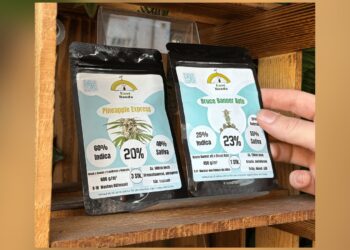
For strain selection in practice, this means: a „Sativa“ with high myrcene content can still have relaxing and sedating effects. An „Indica“ with lots of limonene can be energizing and head-focused. The pure Indica/Sativa label says less than the terpene profile – those wanting to select based on specific effects should look first at terpene labeling, which reputable suppliers and social clubs increasingly provide.
Cannabis Strains 2026 in Profile: The Most Important Varieties
The international cannabis market in 2026 is dominated by a handful of classic and newer strains that convince through consistent quality, reproducible effect profiles, and genetic stability. Here’s an overview of the most important varieties:
Gelato is one of the most popular hybrid strains worldwide. The genetics combine Sunset Sherbet with Thin Mint Girl Scout Cookies. The result: a creamy-sweet aroma profile with dessert notes, a THC content between 20 and 26 percent, and a balanced effect of initial euphoria and deep body relaxation. The dominant terpene is caryophyllene, complemented by limonene and humulene. Gelato is suitable for evening recreational use and is very popular with medical patients being treated for chronic pain and stress.
Wedding Cake (also known as Pink Cookies) is an Indica-dominant hybrid from Triangle Kush and Animal Mints. Vanilla aromas, earthy notes, caryophyllene as the leading structure, and a THC content of up to 27 percent characterize this strain. The effect is body-heavy and long-lasting – ideal for evenings. For newcomers, the high THC content is a clear warning: start with a small dose and wait for effects to manifest.
Sour Diesel is a true classic and remains relevant in 2026. This Sativa-dominant strain from New York has a distinctive, fuel-like smell – dominated by myrcene, limonene, and caryophyllene – and delivers an energetic, focused effect at 20 to 25 percent THC. Sour Diesel is the first choice for creative projects, long workdays, and social evenings.
Royal Highness offers the ideal balance for beginners and medical patients: around 14 percent THC and 14 percent CBD in a 1:1 ratio. The effect is mild, clear, and well-controllable. This ratio is considered particularly advantageous in cannabinoid therapy because CBD softens the psychoactive peaks of THC while bringing its own therapeutic properties.
Purplematic CBD is a nearly THC-free strain with up to 17 percent CBD. For people who want to use the therapeutic properties of cannabis without experiencing psychoactive effects, this strain is the first choice. Lavender-colored flowers, floral-sweet aromas, linalool-dominated terpene profile.
OG Kush is a cornerstone of cannabis culture and the genetic foundation of hundreds of modern strains. Earthy, pine- and lemon-like aromas, a THC content around 23 percent, and a hybrid effect that relaxes the body while keeping the mind clear. Anyone wanting to understand the genealogy of modern cannabis strains cannot get around OG Kush.
Gorilla Glue #4 (GG4) ranks among the most potent strains on the market: THC values of 28 to over 30 percent are not uncommon. The strain delivers a couch-locking, deeply relaxing high and is prized by very experienced consumers for its extreme resin content. For beginners, GG4 is definitely not recommended.
Beyond these classics, increasingly more locally cultivated varieties are establishing themselves in Germany in 2026 through Cannabis Social Clubs. Clubs often breed their own phenotypes of established genetics adapted to regional climate and growing conditions. While these „community phenotypes“ are less frequently documented, they can match or even surpass imported varieties in direct comparison.
Cannabis Strains for Beginners: Getting Started Without Risk
Anyone consuming cannabis for the first time, or starting again after long abstinence, should consciously choose a strain with low to moderate THC content and preferably a good CBD component. High THC concentrations can trigger fear, panic attacks, and disorientation in inexperienced users. The strain isn’t the problem – it’s the wrong dose for that experience level.
A good rule of thumb: under ten percent THC for the first time, 10 to 15 percent for occasional consumers. Strains with CBD content are particularly recommended because CBD works anxiolytically and moderates the psychoactive effects of THC. Classic beginner strains with balanced THC:CBD profiles: Royal Highness, Dance World, Pennywise, Cannatonic. These strains enable a controlled introduction where the likelihood of unpleasant overdose symptoms is significantly lower than with high-potency pure THC strains.
When consuming: start slowly and wait for effects – especially when eating cannabis products (edibles), where effects can take up to two hours to appear. The most common beginner problem is impatience: after an hour you don’t notice strong effects, so you consume more – and then get overwhelmed by the delayed total effect. Inhalation does show faster effects but is also difficult to dose if you don’t yet know your personal response threshold. For more information about the physiological basis of cannabis effects, our article on the pharmacodynamics of the hemp plant offers well-founded scientific introduction.
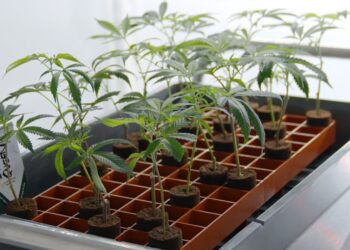
For home cultivation within the legally permitted three plants under German cannabis law, feminized autoflower strains are especially recommended for beginners. They forgive light management mistakes, grow quickly (8 to 12 weeks from germination to harvest), and remain robust even under suboptimal conditions. Yields are lower than with feminized photoperiod strains, but getting started is possible without deep specialized knowledge.
Cannabis Strains in Medicine: Strain Selection Based on Symptoms
Medical cannabis patients in Germany can rely on a significantly broader selection following partial legalization in 2024 and regulatory developments in 2025/2026. Choosing the right strain should always be done in close consultation with the treating physician – the following information is intended as an orientation framework but does not replace medical advice.
For chronic pain, Indica-dominant strains with high THC content and sedating terpene profiles (myrcene, caryophyllene) have proven effective. The pronounced body effects help relieve muscle tension and reduce pain perception. Well-known patient strains in this segment: Afghan Kush, Northern Lights, Granddaddy Purple. For daytime use, hybrids with more moderate THC content make more sense to maintain work ability.
For anxiety disorders and PTSD, balanced or CBD-dominant strains are clearly the better choice. High THC can intensify anxiety or trigger panic in predisposed patients. CBD-rich strains with linalool and caryophyllene as dominant terpenes have documented anxiolytic effects. Documented strains for this indication: Royal Highness, ACDC, Harlequin.
For sleep disorders, many patients turn to Indica hybrids with high myrcene content, consumed in low doses in the evening. Gorilla Glue #4, Wedding Cake, or Northern Lights are known for their sleep-inducing properties. Important: cannabis can improve the falling-asleep process in the short term, but with long-term use it can alter sleep architecture – REM sleep can be partially suppressed with regular cannabis use, which can impair sleep quality in the long run.
For appetite loss and nausea – for example as a side effect of chemotherapy or AIDS-associated cachexia – THC-rich strains with uplifting, euphoria-inducing effects are particularly effective. Sativa hybrids with limonene profiles additionally support mood regulation. For a comprehensive overview of patient care, see our patient guide for medical cannabis in Germany.
Generally, for all patient groups: cannabis as medicine requires a structured approach. A consumption diary documenting strain, dose, application method, timing, and effect observations is essential to recognize patterns and optimize therapy over time. Individual variance is high – what works well for one patient doesn’t necessarily work for another.
Seed Knowledge: Regular, Feminized, and Autoflowering Compared
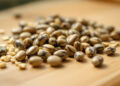
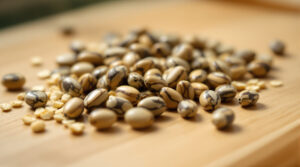
Anyone wanting to grow cannabis strains themselves faces a fundamental decision: which seed type fits your experience level, growing situation, and goals? The three main categories are regular, feminized, and autoflowering – and each has its specific justification.
Regular seeds result from natural pollination of a female plant by a male plant. The ratio of male to female plants is statistically 50:50. For experienced breeders wanting to develop their own crosses or secure selected mother plant phenotypes for clones, regular seeds are indispensable. For pure harvest operations they’re impractical: male plants must be identified and removed early before they pollinate the females and ruin the harvest.
Feminized seeds have been bred to produce female plants 99.9 percent of the time. The process uses chemical stressors (colloidal silver or silver thiosulfate) to force a female plant to produce pollen. This pollen fertilizes another female plant, creating seeds containing only XX chromosomes. Feminized photoperiod strains require 12 to 20 weeks from germination to harvest – longer than autoflower, but with significantly higher yields and more pronounced cannabinoid-terpene profiles. Challenge: they respond sensitively to light stress – wrong photoperiods or light leaks can encourage hermaphroditism.
Autoflowering seeds integrate Cannabis ruderalis genetics, enabling automatic flowering without changing light rhythms. The total development time of typically 8 to 12 weeks makes autoflower strains particularly attractive for beginners and multiple-harvest concepts. Modern autoflower hybrids have made significant progress in recent years in yield, cannabinoid content, and terpene profile – the gap to feminized photoperiod strains is narrower than five years ago. After harvesting, for information on optimally securing quality and shelf life, our guide to harvesting, drying, and curing covers all essential information.
For the typical homegrow within the three permitted plants under German cannabis law, feminized autoflower strains are recommended as the optimal entry point. They combine the simplicity of automatic flowering with the guaranteed female genetics of feminized strains and allow successful first harvest even under non-optimal indoor conditions. After one or two seasons of experience, growers can switch to feminized photoperiod strains and achieve significantly higher yields.
Frequently Asked Questions About Cannabis Strains
What’s the difference between Indica and Sativa strains?
Indica strains originate from Southwest Asian highlands and typically produce body-focused, relaxing, sedating effects – optimal for evening use and physical discomfort. Sativa strains come from equatorial regions and tend toward head-focused, energizing, creativity-promoting effects – better for daytime. In practice, most modern strains are hybrids. More important than the label is the terpene profile: myrcene-rich strains produce relaxing effects, limonene-dominant strains energize – regardless of botanical classification.
Which cannabis strains have the highest THC content?
Among the most THC-potent strains in 2026 are Gorilla Glue #4 (over 30%), Bruce Banner (up to 29%), Wedding Cake (up to 27%), and Royal Gorilla (up to 30%). These high-potency strains are exclusively suitable for very experienced consumers. High THC concentrations significantly increase the risk of fear reactions, paranoia, and with long-term use, psychological dependence – especially in people with genetic predisposition to psychotic disorders.
Which cannabis strains are suitable for medical patients?
Strain selection for medical applications depends on the symptom profile. For chronic pain, Indica-dominant high-potency strains with sedating terpene profiles have proven effective. For anxiety disorders and PTSD, CBD-rich strains with balanced THC:CBD ratios are preferable. For sleep disorders, myrcene-rich Indicas help. Generally: strain decisions should always be made in consultation with a physician experienced in cannabis medicine – even well-intentioned self-treatment can be counterproductive.
What are autoflower strains and who are they suitable for?
Autoflower strains contain Cannabis ruderalis genetics and flower automatically without needing the light cycle adjusted to 12/12 hours. They develop in 8 to 12 weeks from germination to harvest, are robust, and forgiving of beginner mistakes. Yields are lower than feminized photoperiod strains, but have been significantly improved through modern breeding techniques. For German homegrow entry with three permitted plants, feminized autoflower strains are the most popular and lowest-risk option.
How do I choose the right cannabis strain for myself?
Wonach wählst du Cannabis-Sorten am häufigsten aus?
Strain selection is based on three factors: purpose of use (recreational versus medical), experience level (beginner versus advanced consumer), and consumption situation (time of day, social environment, activity level). As a beginner: low THC, CBD-containing, balanced hybrids. As a grower: feminized autoflower to start, feminized photoperiod for higher yields. As a patient: always in consultation with your doctor. And fundamentally: the terpene profile reveals more about expected effects than THC value alone – anyone learning to read terpene profiles chooses more precisely than someone relying only on labels.








Branchen-Update
News, Analysen und Reportagen — mehrmals im Monat direkt in dein Postfach.
Folge uns