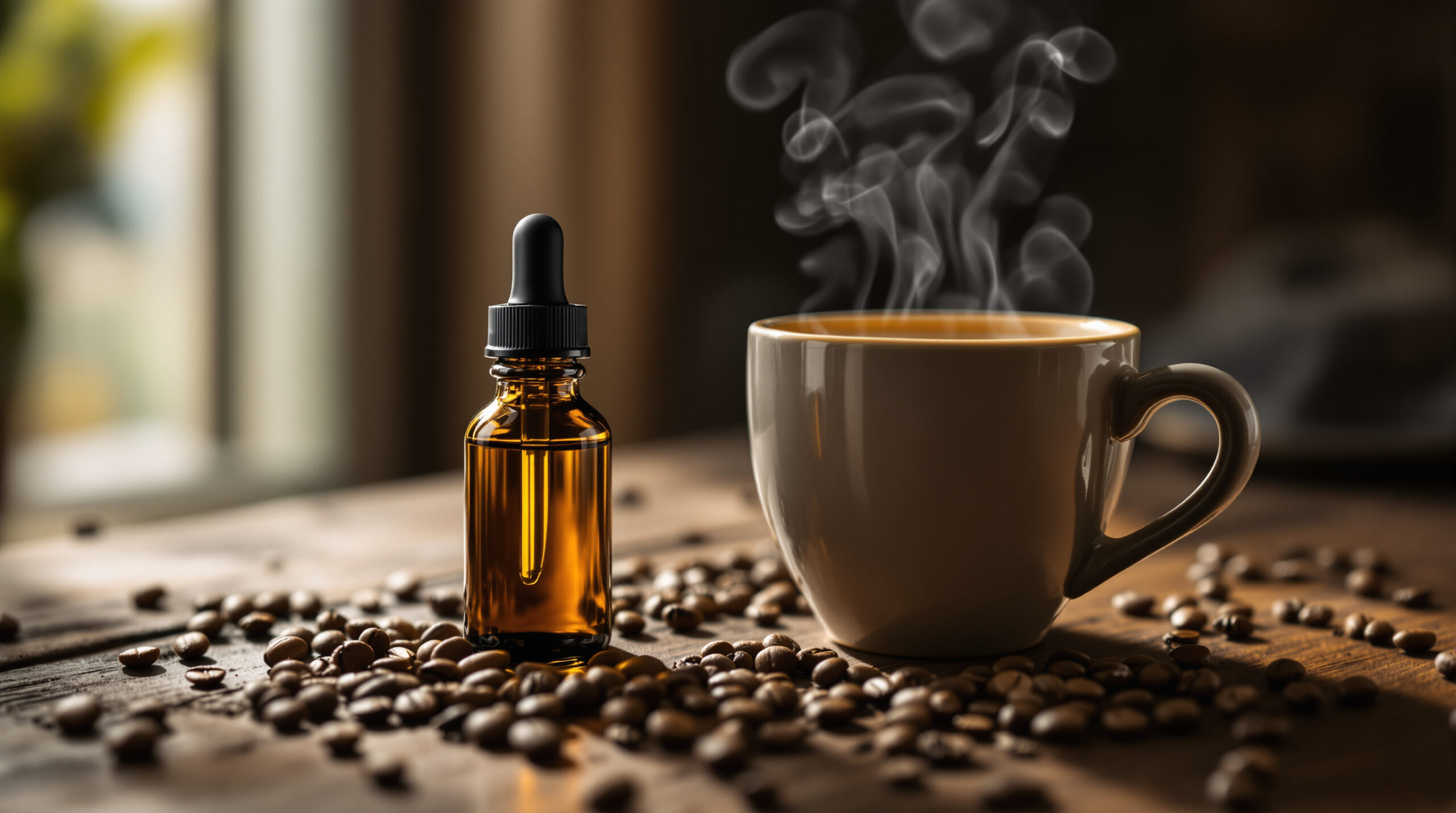
The idea sounds like the perfect life hack for long days: a coffee that not only wakes you up but also relaxes you at the same time. Cannabis coffee promises exactly this mixture of caffeine kick and cannabinoid serenity, and it’s long since become more than a niche phenomenon from US coffee shops. Yet behind the image of the „alert high“ lies a pharmacologically quite contradictory combination. We’ve taken a look at what happens in the body when caffeine and cannabinoids are consumed together, why the market for such beverages is growing rapidly, and what you should pay attention to before bringing your coffee pot and grinder together.
📑 Inhaltsverzeichnis
What Cannabis Coffee Actually Is
The term cannabis coffee encompasses several quite different products. The most widespread are CBD coffees, in which a non-intoxicating cannabidiol extract is incorporated into beans, powder, or capsules. Beyond that, there are THC-containing variants in legal markets that actually have psychoactive effects, as well as homemade infusions made from decarboxylated cannabis and a fat carrier. What they all have in common is the basic idea of combining two of the world’s most popular psychoactive substances in a single drink: caffeine as a legal stimulant and a cannabinoid as a relaxing or intoxicating component.
The distinction between industrially manufactured beverages and the kitchen variety is important. In your own kitchen, THC can only be made usable if the plant material is first heated and thus activated. We describe this step in detail in our article on decarboxylation as the most important step in cooking with cannabis. If you skip it, you end up pouring just a slightly grassy-tasting coffee that pharmacologically triggers hardly anything.


Caffeine and Cannabinoids: Two Systems That Can’t Be Ignored
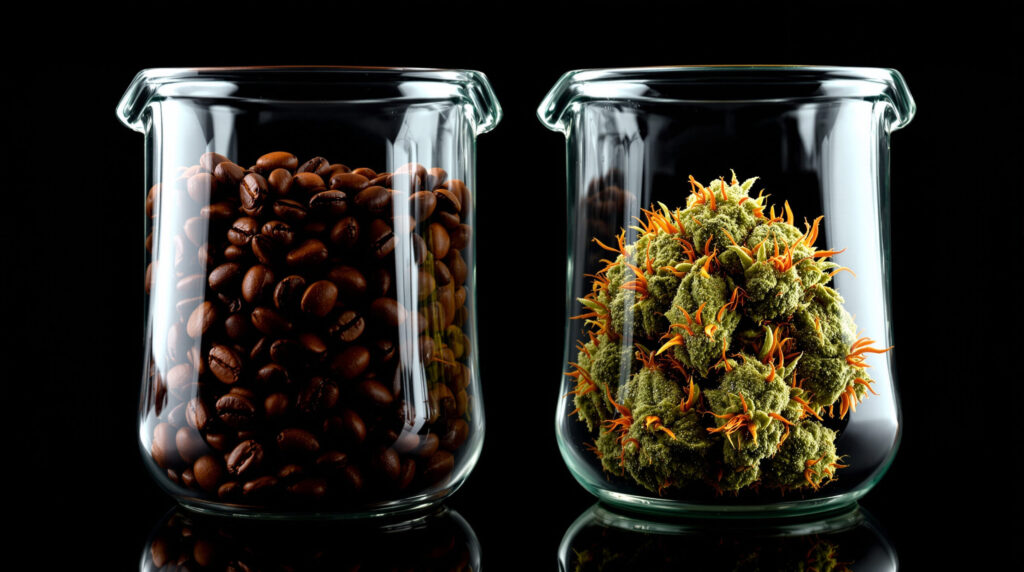
The supposedly „alert high“ is based on two completely different mechanisms of action. Caffeine blocks adenosine receptors in the brain and thus prevents the tiredness signal, while THC docks onto the CB1 receptors of the endocannabinoid system and unfolds its psychoactive effects there. At first glance, both substances run alongside each other. In reality, however, the adenosine and cannabinoid systems interlock at several points, which is why the combined effect is not simply the sum of the individual effects.
How closely these two worlds are intertwined is already evident from subjective experience. Caffeine can mitigate the heaviness and lack of drive triggered by cannabis, so that consumption feels more functional. Conversely, cannabinoids dampen nervousness and heart racing in some people, which accompany high caffeine doses. It is precisely this mutual buffering that makes the image of a pleasantly balanced beverage so appealing. That we perceive coffee and cannabis as more similar than one might expect is even suggested by a study indicating that coffee has similarly strong effects on our brains as cannabis.
What Research Says About the Interaction
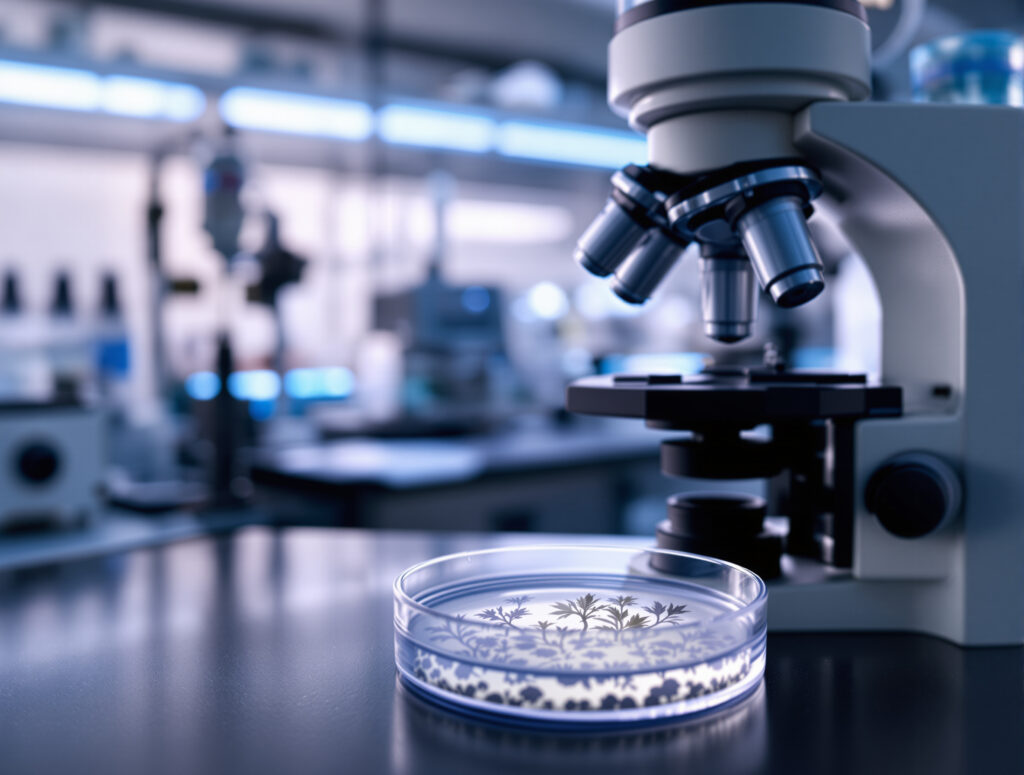
As appealing as the idea of a harmonious duo is, the scientific data paint a more complicated picture. A frequently cited study by Panlilio and colleagues from 2012, published in the British Journal of Pharmacology, examined the combined effect of THC and caffeine on working memory in rats. The surprising result: low caffeine doses did not improve the memory deficits caused by THC, but actually intensified them. The obvious assumption that the stimulant would offset the forgetfulness could not be confirmed in this model.
There is also contradictory evidence regarding how caffeine changes the intensity of the high. Some research findings suggest that regular coffee consumption lowers the levels of certain neurotransmitters in the endocannabinoid system, so typical cannabis effects like the munchies may be weaker. Other observations suggest that caffeine slows the breakdown of THC and thus prolongs the effect. This disagreement is no accident but a result of different dosages, species, and experimental setups. For everyday life, this means above all one thing: the reaction is highly individual and cannot be reliably predicted.
There’s also a practical problem. Both substances can increase heart rate and blood pressure on their own and promote feelings of anxiety. If a high caffeine dose meets a high THC dose, these effects can add together in the worst case instead of balancing each other out. Those prone to restlessness or panic attacks should approach the combination with caution.
From Trend to Billion-Dollar Market
Regardless of pharmacological fine-tuning, cannabis coffee has become a serious economic factor. Market analyses see the CBD-containing coffee sector on a steep growth path, with annual growth rates in the high single to double-digit percentage range over the coming years. This development is driven by health-conscious consumers who want to combine their morning ritual with an active ingredient attributed with relaxing properties, without giving up their usual caffeine routine.
Technically, this boom has only become possible through advances in processing. Cannabinoids are fat-soluble and cannot be easily distributed in an aqueous beverage. Modern emulsions and nanoemulsions ensure that the active ingredients dissolve evenly in the coffee and are better absorbed by the body. The result is ready-made coffee pods, ground mixtures, and ready-to-drink bottles that promise consistent dosing, something the kitchen variety can only dream of.
Preparing Cannabis Coffee Yourself
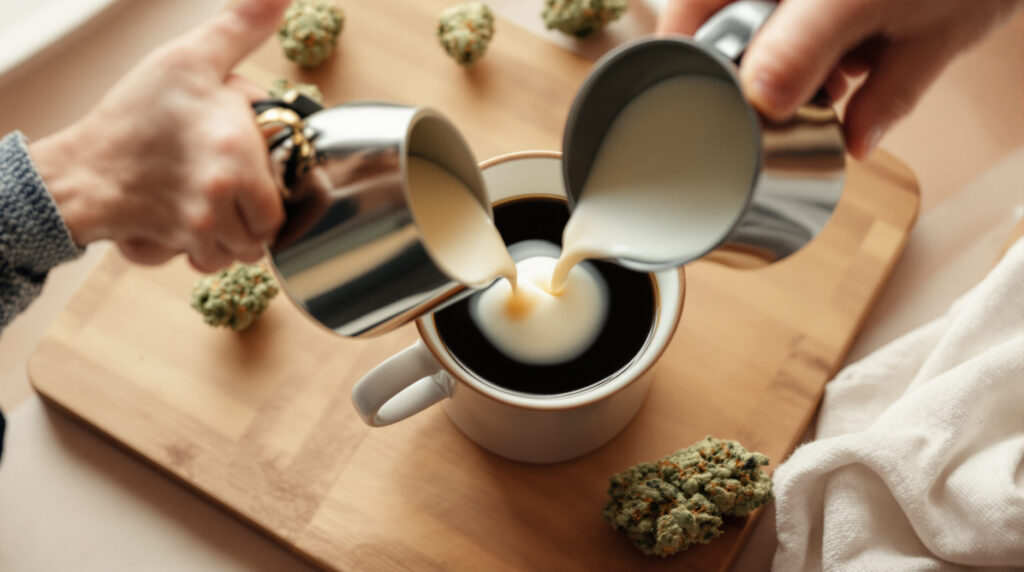
If you want to try the homemade variety, there are two basic rules you can’t get around. First, the cannabis must be decarboxylated, typically at around 110 to 120 degrees Celsius for about 30 to 40 minutes, so that the inactive acid form is converted into active THC. Second, you need a fat carrier like cream, whole milk, butter, or coconut oil, to which the cannabinoids can bind. Black filter coffee without fat extracts hardly any active compound and tastes bitter and grassy on top of that.
The biggest hurdle in home use is dosing. Unlike a standardized industrial product, the active compound content of the flower varies, and the fat doesn’t bind the cannabinoids in a hundred percent reproducible way. If you’re too generous here, you risk a significantly stronger and longer-lasting effect than intended, because orally ingested THC has a delayed onset and is converted in the liver to a more potent metabolite. We explain in detail how to avoid this pitfall in our guide to proper dosing with cannabis edibles. The rule of thumb is: start low, wait at least two hours, and only then think about increasing the dose.
Legal Framework and Honest Expectations
What is legally permitted depends heavily on the active ingredient. CBD coffees with a THC content below legal limits operate in a largely permissible framework in Germany, although the exact classification can vary from product to product. THC-containing cannabis coffee, on the other hand, is subject to cannabis legislation and is not freely available for sale. Handing over a ready-mixed, intoxicating beverage across the counter remains a different matter than home cultivation for personal use.
The question remains about realistic expectations. Cannabis coffee is not a miracle cure that uncontradictorily combines wakefulness and deep relaxation. The two substances don’t always pull in the same physiological direction, and the result depends on dose, order, individual tolerance, and how you’re feeling that day. As a consciously used companion for a quiet morning, the combination can have its appeal. But if you expect the ultimate productivity boost, you’ll likely be disappointed by the „alert high.“
Frequently Asked Questions
Does cannabis coffee really make you alert and high at the same time?
Theoretically yes, because caffeine and THC work through separate systems. In practice, however, the result is very individual. Caffeine can mitigate the drive-inhibiting component of the high, while the psychoactive effect remains. At higher doses, however, side effects like heart racing and nervousness can also add up instead of balancing each other out.
Is CBD coffee the same as THC coffee?
No. CBD coffee contains cannabidiol and has no intoxicating effect, which is why it is largely permissible in Germany. THC-containing cannabis coffee, on the other hand, is psychoactive and falls under cannabis legislation. While both varieties are similar in taste, they are worlds apart pharmacologically and legally.
Why do you need to heat cannabis for coffee?
In the raw flower, the cannabinoid exists as an inactive acid form. Only through heating, the so-called decarboxylation, does the psychoactive THC form. Without this step, the beverage remains largely ineffective, no matter how much plant material you use.
Does cannabis coffee absolutely need milk or fat?
With homemade THC coffees, yes. Cannabinoids are fat-soluble and only bind to a fat carrier like cream, butter, or coconut oil. Black coffee without fat extracts hardly any active compound. With industrial products, special emulsions take on this task.
How do you dose cannabis coffee safely?
Hast du schon mal Kaffee mit Cannabis kombiniert?
Since orally ingested THC has a delayed and often stronger effect, the rule is: dose low and be patient. Wait at least two hours before adding more. With ready-made products, the stated active ingredient content helps, but with the kitchen variety, the dose remains difficult to calculate.






Branchen-Update
News, Analysen und Reportagen — mehrmals im Monat direkt in dein Postfach.
Folge uns