On April 1, 2026—exactly two years after the Cannabis Consumption Act came into force—the federal government must submit a new accountability report. The second interim report from the EKOCAN evaluation arrives at a critical political juncture: in a grand coalition between CDU/CSU and SPD, partners are still divided over the future of this controversial law. This time, the spotlight falls on an issue that has concerned critics from the beginning: organized crime.
📑 Inhaltsverzeichnis
Two Years of Cannabis Law—First Assessment from October 2025
Before the new report emerges, a look back proves worthwhile. The first EKOCAN interim report from October 2025 dispelled several concerns. The much-invoked surge in youth consumption never materialized. Total cannabis consumption in Germany was estimated at 670 to 823 tons annually—a figure reflecting existing reality rather than a boom triggered by the law. What was truly remarkable was the finding on law enforcement: cannabis-related offenses in the „recorded crime“ category fell by 60 to 80 percent. Consumption-related possession offenses have largely disappeared.
What changed simultaneously is how authorities work. Instead of possession crimes, regulatory violations now require different administrative handling. Why police and justice systems still struggle with the Cannabis Act has already been thoroughly examined by hanf-magazin.com.


What the April 2026 Report Specifically Examines
The second interim report has a clearly defined focus: the impact of the Cannabis Act on cannabis-related organized crime. For the first time, it comprehensively incorporates expertise from the German Federal Criminal Police (BKA). Researchers examine changes in black market volume since April 2024, possible shifts in criminal structures, and developments in general drug crime. In parallel, consumption patterns across age groups, impacts on road safety, and law enforcement practices are being analyzed.
This is no academic exercise. The results will directly influence political decision-making processes, and the methodological framework of the Cannabis Act evaluation is crucial for determining how reliable the final conclusions are.
Black Market: Suppressed or Simply Displaced?
The central question many are waiting for: Has legalization weakened the black market, or has it merely adapted? In Germany, two opposing interpretations exist. BKA President Holger Münch emphasized in spring 2026 that the cannabis black market remains robust. Simultaneously, data from Switzerland, where similar regulated pilot models operate, show that legal supply gradually pushes back illegal sales over the long term—though not overnight.
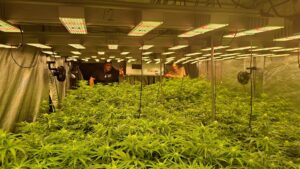
The structural problem is well-known: the roughly 500 licensed cultivation associations in Germany have so far reached only a small fraction of actual consumers. As long as the gap between legal supply and real demand remains so large, a market for illegal structures persists. This is less a failure of the law than a failure in implementation: too many hurdles for approvals, too few functioning clubs across the country.
The Political Explosive Power of the Report
Rarely has an evaluation document been so politically charged as this interim report. The grand coalition committed in its coalition agreement to an open-ended evaluation—which de facto means the findings should serve as a basis for political decisions. A complete repeal of the law is considered unlikely, since the SPD as coalition partner would block any rollback. More realistic are targeted adjustments: stricter requirements for cultivation associations, expanded prevention programs, and possibly corrections to possession limits or membership numbers.
For those affected, club members, and patients, the April report is a moment of truth. How Germany stands two years after legalization cannot be reduced to a single headline. What the interim report will reveal is a differentiated picture—and that’s precisely what makes it politically difficult to instrumentalize.
The final comprehensive evaluation report is expected by the Federal Health Ministry only on April 1, 2028. Until then, Germany’s Cannabis Act remains what it has been from the start: an experiment under observation.
Frequently Asked Questions
What is the CanG Interim Report April 2026?
It is the second evaluation report on the effects of the Cannabis Consumption Act (KCanG), which must be submitted by April 1, 2026, according to legal requirements. The focus is on the law’s impact on cannabis-related organized crime.
Who produces the interim report?
The scientific accompanying evaluation is conducted by the EKOCAN consortium. For the second interim report, data from the German Federal Criminal Police (BKA) is comprehensively incorporated for the first time.
What did the first interim report from October 2025 show?
The first report showed no significant increase in consumption, particularly among youth. Simultaneously, cannabis-related crimes in recorded crime fell by 60 to 80 percent. Total consumption in Germany was estimated at 670 to 823 tons annually.
Has legalization reduced the black market?
The data are mixed. Authorities like the BKA point to a still-active illegal market, while early trends suggest gradual displacement. Critically, cultivation associations have so far reached only a small portion of consumers—which continues to leave room for illegal structures.
What political consequences does the report have?
Glaubst du, das CanG hat den Schwarzmarkt geschwächt?
The findings will directly influence discussion about possible adjustments to the Cannabis Act. Complete repeal is considered unlikely, while tightening or fine-tuning cultivation association requirements and prevention measures remain possible.




Branchen-Update
News, Analysen und Reportagen — mehrmals im Monat direkt in dein Postfach.
Folge uns