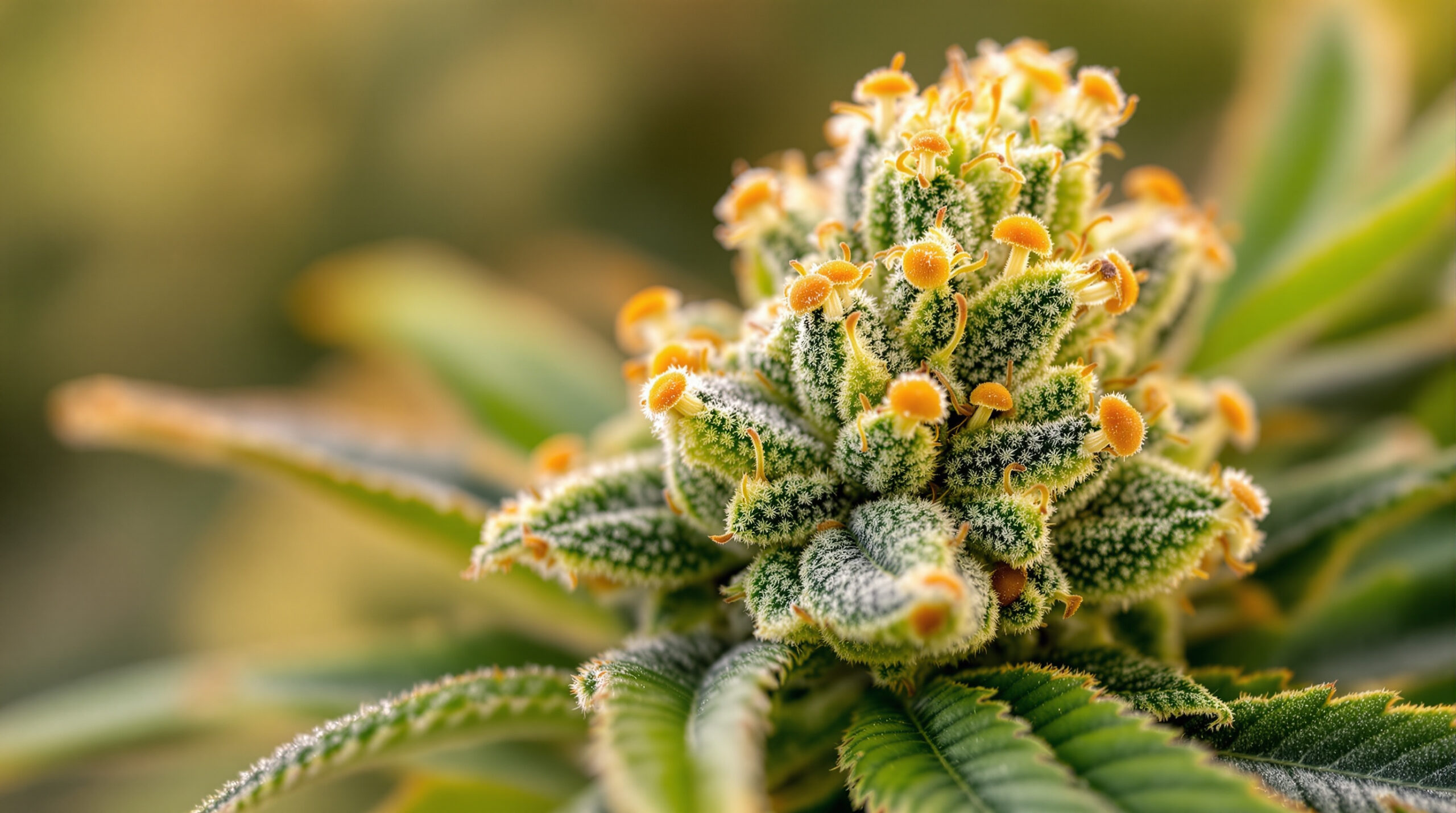
When Do Cannabis Plants Start Smelling? Odor Throughout the Growing Cycle
Few questions occupy home growers more than this one: When exactly do cannabis plants start to smell? Those cultivating in apartments, townhouses, or thin-walled dwellings want to know when an unassuming green sprout transforms into a fragrant powerhouse. The answer is less straightforward than many guides suggest. Odor doesn’t develop overnight but rather progresses through distinct phases aligned with the plant’s life cycle.
📑 Inhaltsverzeichnis
- When Do Cannabis Plants Start Smelling? Odor Throughout the Growing Cycle
- Germination and Seedling Stage: Nearly Odorless
- Vegetative Phase: The First Grassy Notes
- Flowering Phase: When Odor Truly Explodes
- Factors Influencing Odor Intensity
- Keeping Odor Under Control: Practical Discreet Growing
- Frequently Asked Questions
- 💬 Fragen? Frag den Hanf-Buddy!
In this article, we’ll follow a cannabis plant from germination through harvest, examining precisely when different odors emerge, how intense they become, and which factors amplify or suppress them. Understanding this odor curve is more than academically interesting—it determines whether a grow remains discreet or whether neighbors catch a whiff.
Germination and Seedling Stage: Nearly Odorless
For the first one to two weeks after germination, a cannabis plant produces virtually no detectable odor. The seedling directs all its energy toward developing its first true leaf pairs and establishing a sturdy root system. The trichomes—the glands responsible for the characteristic cannabis aroma—are not yet active during this phase. If you hold your nose close to the pot, you might detect only an earthy, slightly green smell that comes more from the substrate than the plant itself.


For odor planning purposes, this means there’s virtually no discretion risk in the first weeks. However, this changes faster than many beginners expect once the plant enters the vegetative phase.
Vegetative Phase: The First Grassy Notes
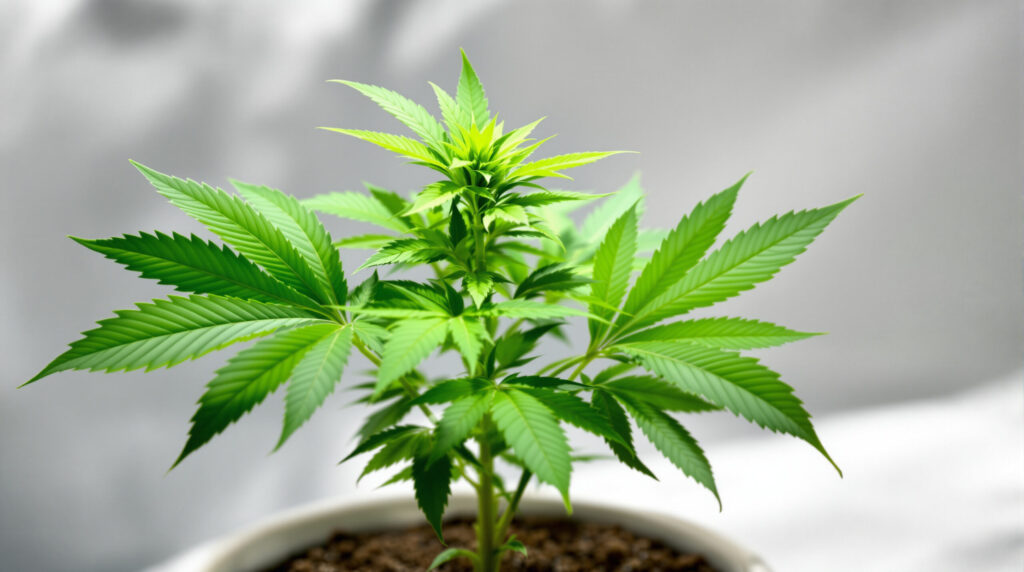
Around three to six weeks in, depending on the strain, cannabis plants begin noticeably smelling during their growth phase. The odor at this stage is grassy, fresh, and herbaceous—comparable to freshly mowed lawn or crushed tomato leaves. Early trichomes form on the leaves but still produce relatively little essential oil.
Characteristic of this phase is that the smell remains tightly localized. You typically need to get close to the plant to perceive it clearly. However, touching or pruning a vegetative plant causes bruised tissue to suddenly release more aroma. Indoor growers who defoliate or train plants during this phase should expect brief odor spikes. For detailed insights into which aromatic compounds create these fragrance notes, check our article on when hemp smells and why.
With autoflowering strains, this timeline shifts forward. Since Automatics don’t require separate light adjustments, they transition to flowering earlier and develop more intense aroma correspondingly—often by the third or fourth week of life.
Flowering Phase: When Odor Truly Explodes
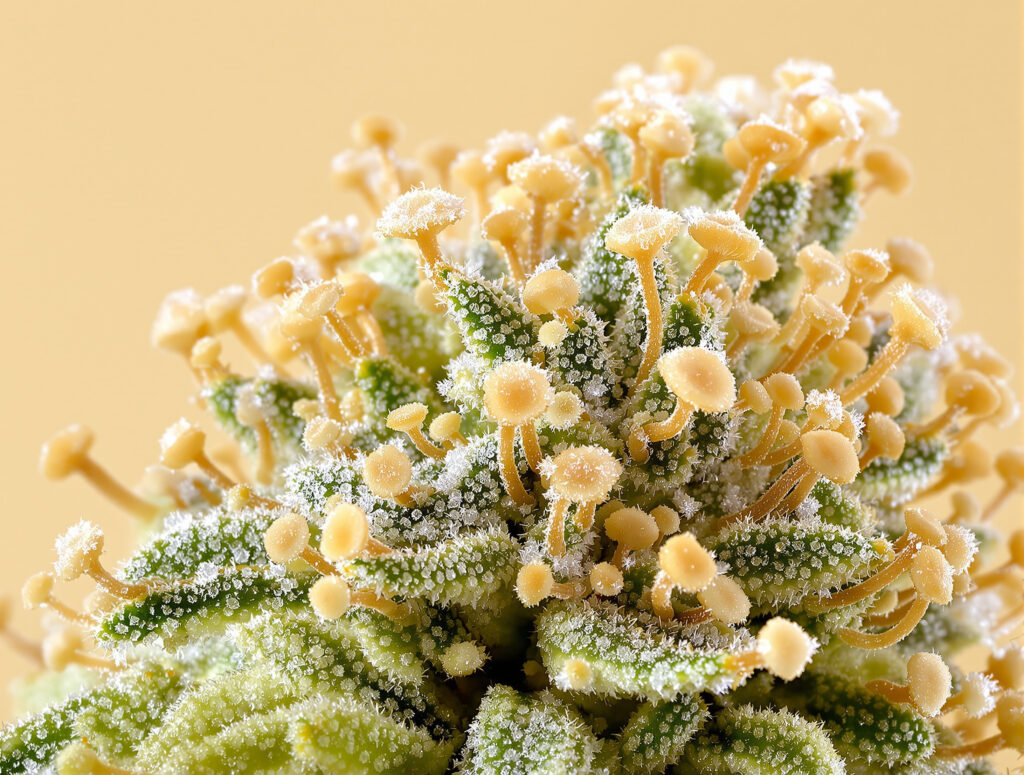
Real odor development begins with flowering. Once the plant redirects energy from leaves and stems toward flower production, terpene production skyrockets. These volatile aromatic compounds are the actual scent carriers. During the pre-flowering stage—the first one to two weeks after switching to a 12-hour light cycle—odor remains moderate. But it intensifies week by week.
By around week four or five of flowering, odor development reaches levels that can’t easily be concealed without countermeasures. Trichomes on developing buds fill with resin, and aroma intensifies daily. Depending on genetics, fruity, sweet, earthy, diesel-like, or skunky notes now dominate. For a detailed explanation of how these resinous glands develop, see our article on trichomes as hemp’s shimmering secret.
Peak odor arrives in the final two to three weeks before harvest. During this ripening phase, terpene synthesis runs at full capacity, and flowers release their complete, strain-specific aroma. Opening the grow tent at this point fills the entire room with scent within seconds. These final weeks represent the most critical period for discretion throughout the entire grow.
Factors Influencing Odor Intensity
How strongly a cannabis plant smells depends on more than maturity alone. Genetics play a central role. Some strains—classic Skunk lines, for example—are notoriously pungent, while other genetics are considerably more subtle. Those prioritizing discretion should choose less aromatic strain lines from the start.
Environmental conditions also affect odor intensity. High temperatures cause terpenes to evaporate faster, amplifying perceived smell. Good ventilation disperses aromatics throughout the space, while excessive humidity not only increases mold risk but also keeps scent molecules airborne longer. Plant size and plant count compound the effect: ten vigorous flowering plants smell exponentially stronger than a single specimen.
Lastly, physical contact plays a role. Every touch, pruning, or movement of the plant suddenly releases aroma. Those working in the grow room should expect brief but intense odor spikes significantly exceeding baseline levels.
Keeping Odor Under Control: Practical Discreet Growing
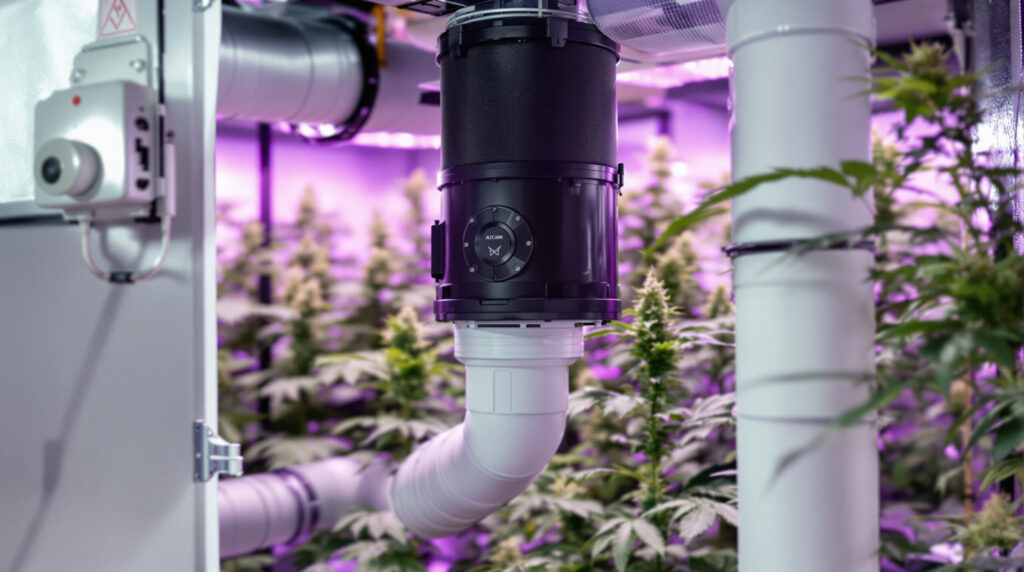
For indoor growers, active odor control becomes essential by flowering at the latest. The preferred solution is an activated carbon filter in the exhaust system. Porous activated charcoal binds volatile terpenes before they escape outside, and high-quality filters achieve odor reduction of up to 99 percent. It’s critical to position the filter at the start of the exhaust line and ensure proper sizing.
One often-overlooked pitfall: At very high humidity, water vapor clogs the carbon’s pores, and filter effectiveness can collapse entirely. Stable climate control in the grow tent is therefore essential not just for plant health but also for odor management. For additional strategies to manage cannabis smell indoors, consult our guide on keeping cannabis odor under control in your home.
Supplementary measures include a well-sealed grow tent, slight negative pressure in the room, and avoiding drafts that could push unfiltered air outside. Gel-based odor neutralizers can serve as an additional layer but should never replace the activated carbon filter, as they only mask odor rather than removing it.
Frequently Asked Questions
Which week do cannabis plants smell strongest?
Peak odor arrives in the final two to three weeks before harvest. During this ripening phase, terpene synthesis runs at full capacity, and flowers release their complete, strain-specific aroma. By this point, active odor control is absolutely essential.
Do cannabis plants smell during the vegetative phase?
Yes, around three to six weeks in, plants develop a light, grassy smell during vegetation. However, this odor remains localized and is usually only noticeable in immediate proximity. Only flowering triggers the dramatic increase in intensity.
Why do autoflowers smell sooner than regular strains?
Autoflowering strains don’t require separate light adjustments and therefore transition to flowering earlier. Since odor development depends primarily on flowering, Automatics typically develop more intense aroma by week three or four compared to photoperiodic strains.
Does an activated carbon filter really work against odor?
A properly sized activated carbon filter reliably binds volatile terpenes and achieves up to 99 percent odor reduction with quality models. Low humidity is critical, as water vapor can clog the carbon’s pores and significantly diminish effectiveness.
Can I completely avoid odor in an apartment?
Hattest du beim Homegrow schon einmal Probleme mit dem Geruch?
You can never eliminate odor entirely, but you can reduce it to an inconspicuous level. The combination of less aromatic genetics, a well-sealed grow tent, a powerful activated carbon filter, and stable climate control reliably keeps odor under control in practice.







Branchen-Update
News, Analysen und Reportagen — mehrmals im Monat direkt in dein Postfach.
Folge uns