
• Kolumnen
    • Interviews
  • Hanf Allgemein
    • Gesellschaft & Soziales
  • Drogenkunde
    • Safer Use
    • Pflanzliche Drogen
  • Produkte
  • Strain Reviews
  • Print Magazin
  • Tools
Dienstag, Juli 21, 2026
Hanf Magazin
  • News
  • Medizin
    • Cannabinoide
    • Erkrankungen
    • Cannabis bei Tieren
    • Erfahrungsberichte
  • Recht & Politik
    • Deutschland
    • Österreich
    • Schweiz
    • International
    • Rechtslage DE
    • Rechtslage International
  • Wissenschaft
    • Studien
    • Forschung
  • Growing
    • Indoor-Growing
    • Outdoor-Growing
    • Strains & Reviews
    • Equipment
  • Nutzhanf
    • Baustoffe
    • Rohstoffe
    • Lebensmittel
    • Kleidung
    • Kosmetika
  • Wirtschaft
  • Konsum & Lifestyle
    • Rauchen
    • Vaporisieren
    • Essen & Rezepte
    • Kultur & Szene
    • Termine & Events
No Result
View All Result
  • News
  • Medizin
    • Cannabinoide
    • Erkrankungen
    • Cannabis bei Tieren
    • Erfahrungsberichte
  • Recht & Politik
    • Deutschland
    • Österreich
    • Schweiz
    • International
    • Rechtslage DE
    • Rechtslage International
  • Wissenschaft
    • Studien
    • Forschung
  • Growing
    • Indoor-Growing
    • Outdoor-Growing
    • Strains & Reviews
    • Equipment
  • Nutzhanf
    • Baustoffe
    • Rohstoffe
    • Lebensmittel
    • Kleidung
    • Kosmetika
  • Wirtschaft
  • Konsum & Lifestyle
    • Rauchen
    • Vaporisieren
    • Essen & Rezepte
    • Kultur & Szene
    • Termine & Events
No Result
View All Result
Hanf Magazin
No Result
View All Result
Home Hanf News & aktuelle Nachrichten

632 Kilograms of Medicine in the Incinerator: The Düsseldorf Cannabis Case

von Leo Hartmann
18.07.2026
in Hanf News & aktuelle Nachrichten
Lesezeit: 5 Minuten
Medizinisches Cannabis in versiegelten Paketen vor offenem Verbrennungsofen
⏱ 6 Min. Lesezeit·1.173 Wörter
Teilen:WhatsAppFacebookXLinkedInE-Mail
🌐 This article was automatically translated from German. Browse all English articles

632 kilograms of medical cannabis, legally imported and worth approximately 122,000 euros, went up in smoke in an incinerator in early July. The case from Düsseldorf is no isolated incident, but rather a textbook example of bureaucratic dead ends and the systematic destruction of usable goods.

📑 Inhaltsverzeichnis

  1. What happened in Düsseldorf
  2. A bureaucratic limbo, not malice
  3. Why it had to be burned
  4. A pattern, not an isolated case
  5. Conclusion
  6. Frequently Asked Questions
  7. 💬 Fragen? Frag den Hanf-Buddy!

Sometimes a single number tells more than any fundamental debate. In this case, it’s 632 kilograms. That’s how much medical marijuana the Düsseldorf Main Customs Office had incinerated on July 7, 2026. The goods were neither smuggled nor illegal, but had been properly imported as a pharmaceutical substance. Nevertheless, they ended up in the furnace. How this happened reveals much about the friction losses in an still-young, heavily regulated market.

What happened in Düsseldorf

Sealed packages in a cordoned-off customs storage area behind a gate

The shipment had already arrived in December 2023 at Düsseldorf Airport. The paperwork was complete, the import was legal. Yet the goods were never released. The reason was mundane and consequential in equal measure: the importer could not pay the import sales tax due of roughly 23,000 euros. Insolvency proceedings were opened against him, and the 632 kilograms remained stored at customs.


GanjaFarmerGanjaFarmer

So about 30 months passed. When destruction finally came, the cannabis was no longer usable for medical purposes anyway because it had exceeded its expiration date. The goods had been valued at approximately 122,000 euros. In the end, nothing remained but ash and an uncomfortable question: How can vetted, legally imported medicine age for years in a customs warehouse until it becomes nothing but hazardous waste?

A bureaucratic limbo, not malice
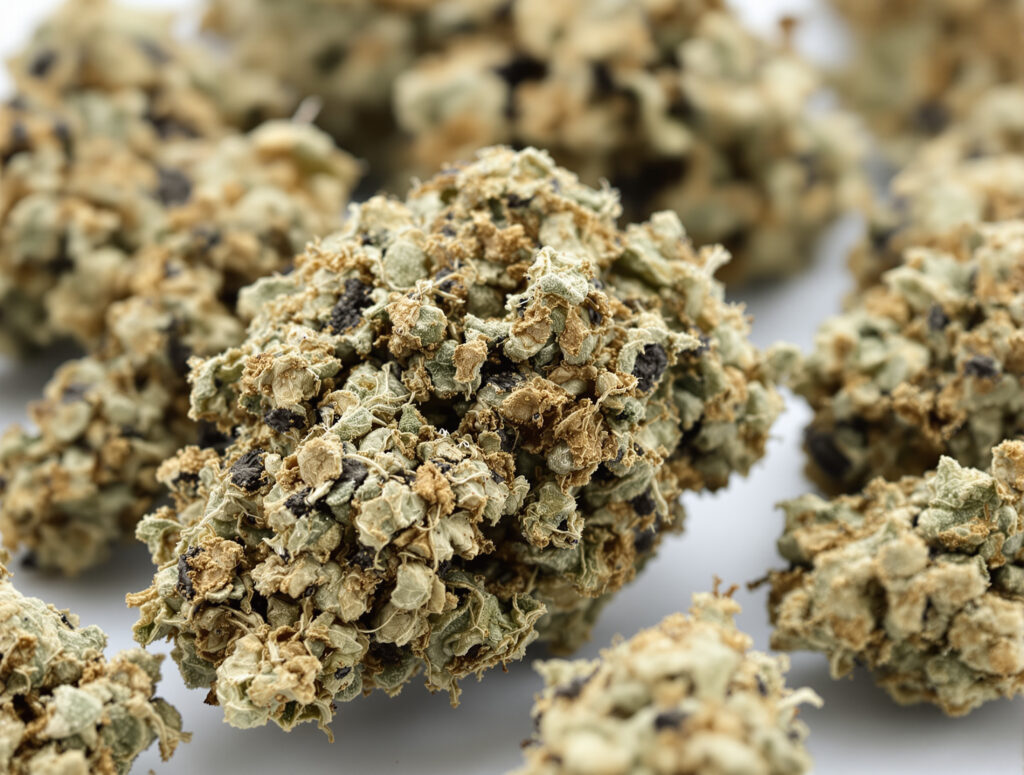
Close-up of an expired medical cannabis flower showing signs of oxidation

It’s important to be honest about the context. Medicine was not deliberately burned that patients needed. At the time of destruction, the goods had expired and were therefore no longer fit for distribution. The real scandal lies before that: in a process that holds usable pharmaceutical material in a dead end for months until decay renders it worthless. A small, outstanding tax claim and an insolvency proceeding were enough to make goods worth six figures unusable.

The case gains particular irony from current health policy. At the same time, lawmakers drastically cut reimbursement of medicinal cannabis for insurance patients. We’ve reported on how the Bundestag removed dried flowers from insurance coverage. While many patients will now worry about their supply and have to pay for flowers themselves, legally imported medicine rots away in customs warehouses elsewhere. Both processes have nothing directly to do with each other, yet they combine to paint a picture in which a scarce and expensive resource is treated with surprising carelessness.

Why it had to be burned

A natural objection is that the cannabis could have been donated, used for research, or otherwise utilized. Legally, this is barely possible. As a controlled substance, cannabis is subject to strict regulations. Non-marketable or expired controlled substances must be provably and completely destroyed, typically by incineration under supervision. Further use, such as for research purposes, would only be conceivable under special authorization and with impeccable quality, but not with an expired product. The destruction itself thus follows the rules. What is questionable is not the end, but the path leading to it.

A pattern, not an isolated case

Waste incinerator facility with chimneys and disposal containers outdoors

The Düsseldorf case exemplifies a larger phenomenon: the deliberate destruction of usable goods. It’s most visible in retail. By estimates, roughly one in twenty-five returned products is destroyed, which in Germany alone corresponds to roughly 20 million items per year. Lawmakers have responded: The Circular Economy Act includes in Section 23 a so-called duty of care that obliges manufacturers and retailers to preserve the usability of their goods rather than letting them become waste. On the European level, the Ecodesign Regulation has been in effect since July 18, 2024, which explicitly prohibits the destruction of unsold goods in certain areas.

Retail is just one example. The balance is even more drastic with food, of which millions of tons are thrown away in Germany year after year, a significant portion of which is still edible. Whether new goods, returns, or food: it always comes down to the same mechanism—that destruction is simpler from a business or legal perspective than further use. This same logic applies to the cannabis case, only with the additional leverage of controlled substance law.

Cannabis has a special feature. Overproduction and destruction are internationally known issues in the industry. In Canada, for example, roughly one quarter of cannabis production is destroyed annually because more is grown than the market can absorb. Here too, the market has been in motion since partial legalization, with growing import volumes and a noticeable price decline of roughly 25 percent in two years. The larger the quantities traded, the greater the number of batches that can no longer reach the market for legal or economic reasons. Germany currently lacks reliable public statistics on how much seized or non-marketable cannabis ends up in incinerators annually. The Federal Criminal Police Office’s situation report lists seizure quantities, but not destroyed stocks. Reliable overall figures cannot be derived from this, and we deliberately refrain from estimating them here.

💬 Hanf-Buddy — dein Cannabis-Experte
🌿 Fragen zu diesem Thema? Schreib einfach los — ich helfe dir!

Bitte verifiziere deine E-Mail. Wir haben dir einen 6-stelligen Code geschickt.

Danke für den Chat! 😊 Abonniere unseren Newsletter für mehr:

Zum Newsletter

Conclusion

632 kilograms in the garbage incinerator is more than a curious footnote. The case shows how a still-incomplete system of tax law, insolvency law, and controlled substance regulations can devalue usable medicine without anyone explicitly intending to waste it. The destruction at the end was correct. The path leading there was avoidable. When an outstanding claim of 23,000 euros is enough to block medical cannabis worth 122,000 euros for years until it expires, then the problem lies not in the furnace, but in the process before it.

Frequently Asked Questions


Why were 632 kilograms of medicinal cannabis destroyed in Düsseldorf?

The legally imported goods arrived in 2023 but were never released because the importer could not pay the import sales tax of around 23,000 euros and went into insolvency. After approximately 30 months in the customs warehouse, the cannabis had expired and was therefore no longer fit for distribution, so it had to be destroyed on July 7, 2026.

Why couldn’t the cannabis be donated or used for research?

As a controlled substance, cannabis is subject to strict regulations. Non-marketable or expired controlled substances must be provably and completely destroyed, typically by incineration under supervision. Further use for research purposes would only be conceivable under special authorization and with impeccable quality, but not with an expired product.

What role does customs play in handling cannabis?

Customs is the central interface for cannabis import, storage, and destruction. With growing legal import volumes, the issue is gaining importance—how intensively the authorities address it professionally was demonstrated by the transformation at Hamburg Main Customs Office around HamCan.

How important are imports for Germany’s cannabis supply?

A large portion of the medicinal cannabis used in Germany comes from abroad, which makes international supply chains vulnerable. Even the first medicinal hemp import from the USA to Israel showed how dependent the market is on functioning import and customs processes. When a batch fails as in Düsseldorf, it’s lost to supply.

📊 Deine Meinung zählt

Sollte abgelaufenes Medizinalcannabis für die Forschung freigegeben werden?

✓
Danke für deine Stimme!

Sources: Düsseldorf Main Customs Office (press release on destruction, July 15, 2026), t-online, apotheke-adhoc, ddorf-aktuell; Federal Ministry for the Environment (duty of care, Circular Economy Act); EU Ecodesign Regulation.


HE Abverkauf
Kannabia
Dr. Mang
MedCanOneStop
Khalifa Genetics
S&B Phase-Out Crafty2 160×600
S&B Phase-Out Plenty1 160×600
S&B Phase-Out Combi 160×600
S&B Phase-Out Plenty2 (Years&Sessions) 160×600
S&B Phase-Out Crafty1 160×600
Royal Queen Seeds #1

Das könnte dich auch interessieren

  • → Wie viel Aktivismus ist gesund?
  • → Das Cannabis-Modellprojekt
  • → 4/20 bei den Grünen – Legalisierung ist Wahlkampfthema

Branchen-Update

News, Analysen und Reportagen — mehrmals im Monat direkt in dein Postfach.

Folge uns

Was dich auch interessieren könnte...

Leerer Anbauraum mit vorbereiteter Ausrüstung, der nicht genutzt werden darf

Bayern blockiert Cannabis-Anbau: Hanfverband und CSC Inntal klagen

13. Juni 2026
Orale Cannabis-Lösung in pharmazeutischer Tropfflasche auf Labortisch

VER-01 von Vertanical: FDA-Breakthrough-Status für Cannabis-Schmerzmittel aus München

5. Juni 2026
InstagramYouTubeFacebookLinkedIn
Tags: DeutschlandLegalisierungMedizinalcannabis

Related Posts

Streaming-Setup mit Mikrofon, Laptop und Twitch-Interface-Licht
Szeneleben

Darf man auf Twitch kiffen? Was die Streaming-Regeln wirklich sagen

von Christian Schäfer
27. Juni 2026
Cannabis-Versand per Post - St. Gallen Pilotversuch
Rechtslage in der Schweiz

St. Gallen startet Cannabis-Pilotversuch mit Schweizer Premiere: Bezug per Post

von Leo Hartmann
25. Juni 2026
🛠️ Tool-Tipp
💡DLI-Rechner
Tägliche Lichtmenge in mol/m²/Tag
→ Alle 10 Tools im Werkzeugkasten

Folge uns bei:

  • 38.8k Fans
  • 52.8k Followers
  • 3.5k Followers
  • 573 Followers
📰

Seit 2015

📝

4713+ Artikel

👥

180.000+ Leser/Monat

🏆

DACH #1 Cannabis-Magazin

Über uns

Hanf Magazin ist das führende deutschsprachige Fachmagazin für Cannabis — von der Pflanze bis zur Politik, von der Medizin bis zum Genuss.

Instagram Facebook LinkedIn

Themen

Cannabis News Medizin & Forschung Growing & Anbau Strain Reviews Nutzhanf & Rohstoffe Konsum & Rezepte Recht & Politik Wissenschaft & Studien

Beliebte Artikel

Männlichen Hanf erkennen: Vorblüten, Merkmale und was dann zu tun istWie vaporisiere ich richtig?Warum Vaporisieren gesünder istWas ist Cannabidiol?Kiffen in der Schwangerschaft?

Branchen-Update

Cannabis-News direkt in dein Postfach.

Für Unternehmen

Werben auf Hanf Magazin Mediadaten HM Ventures Jobs & Karriere Tools & Rechner

Weitere Themen

  • Kolumnen
  • Hanf Allgemein
  • Drogenkunde
  • Produkte
  • Strain Reviews
  • Print Magazin
  • Tools

© 2026 Hanf Magazin

Impressum Datenschutz AGB Kontakt Presse
WhatsAppFacebookXE-Mail
No Result
View All Result
  • News
  • Medizin
    • Cannabinoide
    • Erkrankungen
    • Cannabis bei Tieren
    • Erfahrungsberichte
  • Recht & Politik
    • Deutschland
    • Österreich
    • Schweiz
    • International
    • Rechtslage DE
    • Rechtslage International
  • Wissenschaft
    • Studien
    • Forschung
  • Growing
    • Indoor-Growing
    • Outdoor-Growing
    • Strains & Reviews
    • Equipment
  • Nutzhanf
    • Baustoffe
    • Rohstoffe
    • Lebensmittel
    • Kleidung
    • Kosmetika
  • Wirtschaft
  • Konsum & Lifestyle
    • Rauchen
    • Vaporisieren
    • Essen & Rezepte
    • Kultur & Szene
    • Termine & Events
  • Kolumnen
  • Interviews
  • Hanf Allgemein
  • Gesellschaft & Soziales
  • Drogenkunde
  • Safer Use
  • Pflanzliche Drogen
  • Produkte
  • Strain Reviews
  • Print Magazin
  • Tools

©2026 Hanf Magazin

Datenschutz-Einstellung

Wir nutzen Cookies auf hanf-magazin.com. Einige von ihnen sind essenziell notwendig, andere helfen unsere Website und deine Nutzer-Erfahrungen zu verbessern. Wenn Sie unter 16 Jahre alt sind und Ihre Zustimmung zu freiwilligen Diensten geben möchten, müssen Sie Ihre Erziehungsberechtigten um Erlaubnis bitten. Wir verwenden Cookies und andere Technologien auf unserer Website. Einige von ihnen sind essenziell, während andere uns helfen, diese Website und Ihre Erfahrung zu verbessern. Personenbezogene Daten können verarbeitet werden (z. B. IP-Adressen), z. B. für personalisierte Anzeigen und Inhalte oder Anzeigen- und Inhaltsmessung. Weitere Informationen über die Verwendung Ihrer Daten finden Sie in unserer Datenschutzerklärung. Sie können Ihre Auswahl jederzeit unter Einstellungen widerrufen oder anpassen.

  • Essenziell
  • Marketing
  • Externe Medien

Alle akzeptieren

Nur essenzielle Cookies akzeptieren

Individuelle Datenschutzeinstellungen

Cookie-Details Datenschutzerklärung Impressum

Datenschutzeinstellungen Datenschutzeinstellungen

Wenn Sie unter 16 Jahre alt sind und Ihre Zustimmung zu freiwilligen Diensten geben möchten, müssen Sie Ihre Erziehungsberechtigten um Erlaubnis bitten. Wir verwenden Cookies und andere Technologien auf unserer Website. Einige von ihnen sind essenziell, während andere uns helfen, diese Website und Ihre Erfahrung zu verbessern. Personenbezogene Daten können verarbeitet werden (z. B. IP-Adressen), z. B. für personalisierte Anzeigen und Inhalte oder Anzeigen- und Inhaltsmessung. Weitere Informationen über die Verwendung Ihrer Daten finden Sie in unserer Datenschutzerklärung. Hier finden Sie eine Übersicht über alle verwendeten Cookies. Sie können Ihre Einwilligung zu ganzen Kategorien geben oder sich weitere Informationen anzeigen lassen und so nur bestimmte Cookies auswählen.

Alle akzeptieren Speichern Nur essenzielle Cookies akzeptieren

Zurück

Datenschutzeinstellungen

Essenzielle Cookies ermöglichen grundlegende Funktionen und sind für die einwandfreie Funktion der Website erforderlich.

Cookie-Informationen anzeigen Cookie-Informationen ausblenden

Name
AnbieterEigentümer dieser Website, Impressum
ZweckSpeichert die Einstellungen der Besucher, die in der Cookie Box von Borlabs Cookie ausgewählt wurden.
Cookie Nameborlabs-cookie
Cookie Laufzeit1 Jahr

Marketing-Cookies werden von Drittanbietern oder Publishern verwendet, um personalisierte Werbung anzuzeigen. Sie tun dies, indem sie Besucher über Websites hinweg verfolgen.

Cookie-Informationen anzeigen Cookie-Informationen ausblenden

Akzeptieren
Name
AnbieterGoogle Ireland Limited, Gordon House, Barrow Street, Dublin 4, Ireland
ZweckCookie von Google für Website-Analysen. Erzeugt statistische Daten darüber, wie der Besucher die Website nutzt.
Datenschutzerklärung https://policies.google.com/privacy?hl=de
Cookie Name_ga,_gat,_gid
Cookie Laufzeit2 Jahre

Inhalte von Videoplattformen und Social-Media-Plattformen werden standardmäßig blockiert. Wenn Cookies von externen Medien akzeptiert werden, bedarf der Zugriff auf diese Inhalte keiner manuellen Einwilligung mehr.

Cookie-Informationen anzeigen Cookie-Informationen ausblenden

Akzeptieren
Name
AnbieterMeta Platforms Ireland Limited, 4 Grand Canal Square, Dublin 2, Ireland
ZweckWird verwendet, um Facebook-Inhalte zu entsperren.
Datenschutzerklärung https://www.facebook.com/privacy/explanation
Host(s).facebook.com
Akzeptieren
Name
AnbieterSoundcloud
ZweckWird verwendet, um Soundcloud Inhalte zu entsperren.
Datenschutzerklärung https://soundcloud.com/pages/privacy
Host(s)soundcloud.com
Akzeptieren
Name
AnbieterMeta Platforms Ireland Limited, 4 Grand Canal Square, Dublin 2, Ireland
ZweckWird verwendet, um Instagram-Inhalte zu entsperren.
Datenschutzerklärung https://help.instagram.com/519522125107875/?maybe_redirect_pol=0
Host(s).instagram.com
Cookie Namepigeon_state
Cookie LaufzeitSitzung

Datenschutzerklärung Impressum

HE Abverkauf
Dr. Mang
MedCanOneStop
Khalifa Genetics
S&B Phase-Out Crafty1 160×600
Royal Queen Seeds #1

Mehr aus Hanf News & aktuelle Nachrichten

  • Bayern blockiert Cannabis-Anbau: Hanfverband und CSC Inntal klagen

    Bayern blockiert Cannabis-Anbau: Hanfverband und CSC Inntal klagen

    13.06.2026 — Christian Schäfer
  • VER-01 von Vertanical: FDA-Breakthrough-Status für Cannabis-Schmerzmittel aus München

    VER-01 von Vertanical: FDA-Breakthrough-Status für Cannabis-Schmerzmittel aus München

    05.06.2026 — Leo Hartmann
  • Alsdorfer Lunte: Unter 2 Euro pro Gramm, MwSt-Klage, KI im Backend

    Alsdorfer Lunte: Unter 2 Euro pro Gramm, MwSt-Klage, KI im Backend

    03.06.2026 — Christian Schäfer
  • Schweizer Cannabis-Regulierung: IG Hanf fordert Tempo statt Verzögerung

    Schweizer Cannabis-Regulierung: IG Hanf fordert Tempo statt Verzögerung

    13.05.2026 — Christian Schäfer
  • DIW-Studie: Cannabis bleibt stabil – Kokain ist auf das Vierfache gestiegen

    DIW-Studie: Cannabis bleibt stabil – Kokain ist auf das Vierfache gestiegen

    12.05.2026 — Christian Schäfer

Beliebte Artikel

  • VEAZY: der kompakteste Vaporizer von Storz & Bickel im Überblick

    VEAZY: der kompakteste Vaporizer von Storz & Bickel im Überblick

    20.07.2026 — Leo Hartmann
  • Ist Kiffen gesünder als Rauchen? Was der Vergleich mit Tabak zeigt

    Ist Kiffen gesünder als Rauchen? Was der Vergleich mit Tabak zeigt

    18.07.2026 — Christian Schäfer
  • Tomatenerde für Cannabis? Was an dem Hausmittel wirklich dran ist

    Tomatenerde für Cannabis? Was an dem Hausmittel wirklich dran ist

    10.07.2026 — Jonas Reuter
  • Saying Goodbye to Two Classics: Storz & Bickel Launches Final Season for PLENTY and CRAFTY+

    Saying Goodbye to Two Classics: Storz & Bickel Launches Final Season for PLENTY and CRAFTY+

    14.07.2026 — Christian Schäfer
  • Ab wann riechen Cannabispflanzen? Geruch über den gesamten Grow

    Ab wann riechen Cannabispflanzen? Geruch über den gesamten Grow

    13.07.2026 — Jonas Reuter

Aktuelle News

  • 632 Kilogramm Medizin im Müllofen: Der Düsseldorfer Cannabis-Fall

    632 Kilogramm Medizin im Müllofen: Der Düsseldorfer Cannabis-Fall

    18.07.2026 — Leo Hartmann
  • Bayern blockiert Cannabis-Anbau: Hanfverband und CSC Inntal klagen

    Bayern blockiert Cannabis-Anbau: Hanfverband und CSC Inntal klagen

    13.06.2026 — Christian Schäfer
  • VER-01 von Vertanical: FDA-Breakthrough-Status für Cannabis-Schmerzmittel aus München

    VER-01 von Vertanical: FDA-Breakthrough-Status für Cannabis-Schmerzmittel aus München

    05.06.2026 — Leo Hartmann
  • Alsdorfer Lunte: Unter 2 Euro pro Gramm, MwSt-Klage, KI im Backend

    Alsdorfer Lunte: Unter 2 Euro pro Gramm, MwSt-Klage, KI im Backend

    03.06.2026 — Christian Schäfer
  • Schweizer Cannabis-Regulierung: IG Hanf fordert Tempo statt Verzögerung

    Schweizer Cannabis-Regulierung: IG Hanf fordert Tempo statt Verzögerung

    13.05.2026 — Christian Schäfer
  • DIW-Studie: Cannabis bleibt stabil – Kokain ist auf das Vierfache gestiegen

    DIW-Studie: Cannabis bleibt stabil – Kokain ist auf das Vierfache gestiegen

    12.05.2026 — Christian Schäfer
  • 9 Jahre CBD VITAL: Erkenntnisse aus über 1 Million Kundenstimmen

    9 Jahre CBD VITAL: Erkenntnisse aus über 1 Million Kundenstimmen

    05.05.2026 — Lucas Nestler
  • Cannabis-Medizin 2026: Bilanz vom dritten Circle of Experts in Paderborn

    Cannabis-Medizin 2026: Bilanz vom dritten Circle of Experts in Paderborn

    03.05.2026 — Mara König

Produktvorstellungen

  • Wenn Aktivkohle auf Tip-Gefühl trifft

    Wenn Aktivkohle auf Tip-Gefühl trifft

    03.02.2026 — Christian Schäfer
  • „Warum wir wieder Boxen machen“ – der Hanf Magazin Shop

    „Warum wir wieder Boxen machen“ – der Hanf Magazin Shop

    15.01.2026 — Leo Hartmann
  • AirVape Legacy Pro 2 – Der Klassiker neu definiert

    AirVape Legacy Pro 2 – Der Klassiker neu definiert

    29.10.2025 — Dieter Klaus Glasmann
  • Der Begleiter für dein Wohlbefinden - Hanfosan CBD-Öl 10 %

    Der Begleiter für dein Wohlbefinden - Hanfosan CBD-Öl 10 %

    09.07.2025 — Dieter Klaus Glasmann
  • Kontrolle über Körper und Geist - Renact REST und RELIEF

    Kontrolle über Körper und Geist - Renact REST und RELIEF

    06.06.2025 — Dieter Klaus Glasmann
🇩🇪 Deutsch 🇬🇧 English ✓ 🇪🇸 Español 🇫🇷 Français 🇧🇷 Português 🇮🇹 Italiano 🇵🇱 Polski 🇹🇷 Türkçe 🇳🇱 Nederlands 🇨🇿 Čeština 🇯🇵 日本語 🇰🇷 한국어 🇷🇺 Русский 🇸🇦 العربية 🇹🇭 ไทย 🇮🇳 हिन्दी