What Does Deadly Nightshade Look Like Overall?
Deadly nightshade stands out immediately by its size. This perennial herb grows upright and reaches between 50 and 150 centimeters depending on location, significantly taller than most edible berry shrubs. The stem is bluntly angular, often tinged reddish, and slightly ridged. Fine hairs cover the entire plant, giving it a matte, slightly glandular appearance.
📑 Inhaltsverzeichnis
- What Does Deadly Nightshade Look Like Overall?
- Leaves, Stems, and Flowers in Detail
- The Berries: The Most Dangerous Identifying Feature
- Where Deadly Nightshade Grows and When You Might Encounter It
- Confusion Risk: The Toxic Look-Alike Compared
- Why the Harmless Appearance Is So Deceptive
- Frequently Asked Questions
- 💬 Fragen? Frag den Hanf-Buddy!
Its branching pattern is characteristic. Around one meter in height, the main stem typically divides into three horizontally spreading branches, which then repeatedly fork outward. This creates a broad, spreading, almost shrub-like growth pattern, even though botanically it remains a herbaceous perennial. Viewed as a whole, the plant presents a bushy form with hanging individual flowers and later with solitary fruits.
Leaves, Stems, and Flowers in Detail
The leaves are oval to elliptical in shape, tapering to a lance-like point. They range from gray-green to dark green, are shortly stalked, and feel slightly velvety due to fine hairs covering them. Large specimens reach up to 15 centimeters long and 8 centimeters wide. A striking feature is their paired arrangement: on flowering stems, leaves often occur in pairs with one noticeably larger leaf and one considerably smaller leaf sitting close together.


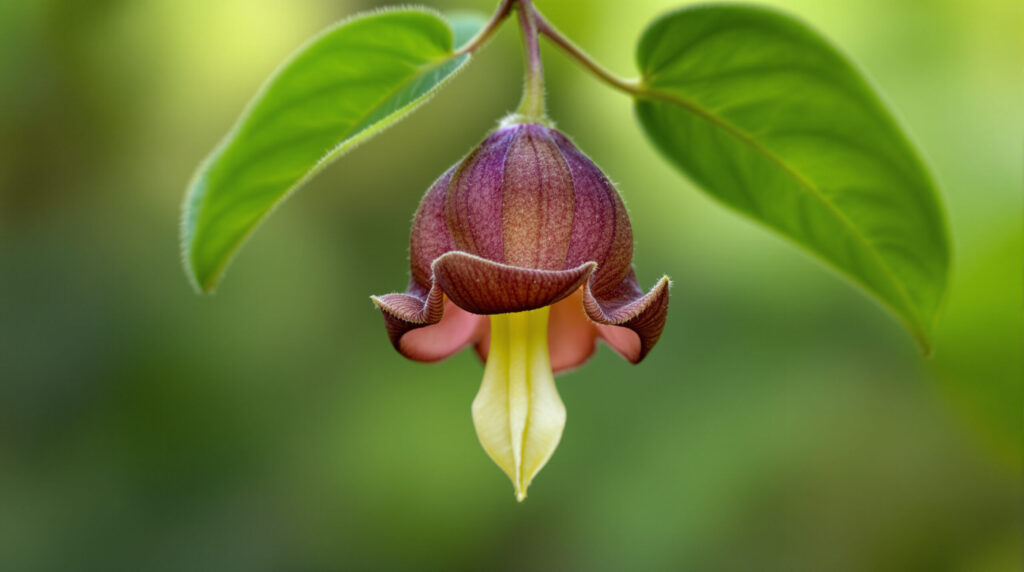
Between June and August, the plant displays inconspicuous yet unmistakable flowers. They are bell-shaped and hang singly in the leaf axils. The exterior displays a dull violet-brown color, while the base and interior are yellowish. This combination of brown exterior and yellowish base is rarely found in any similar plants. Anyone who sees these flowers has already identified a very reliable distinguishing feature.
The Berries: The Most Dangerous Identifying Feature
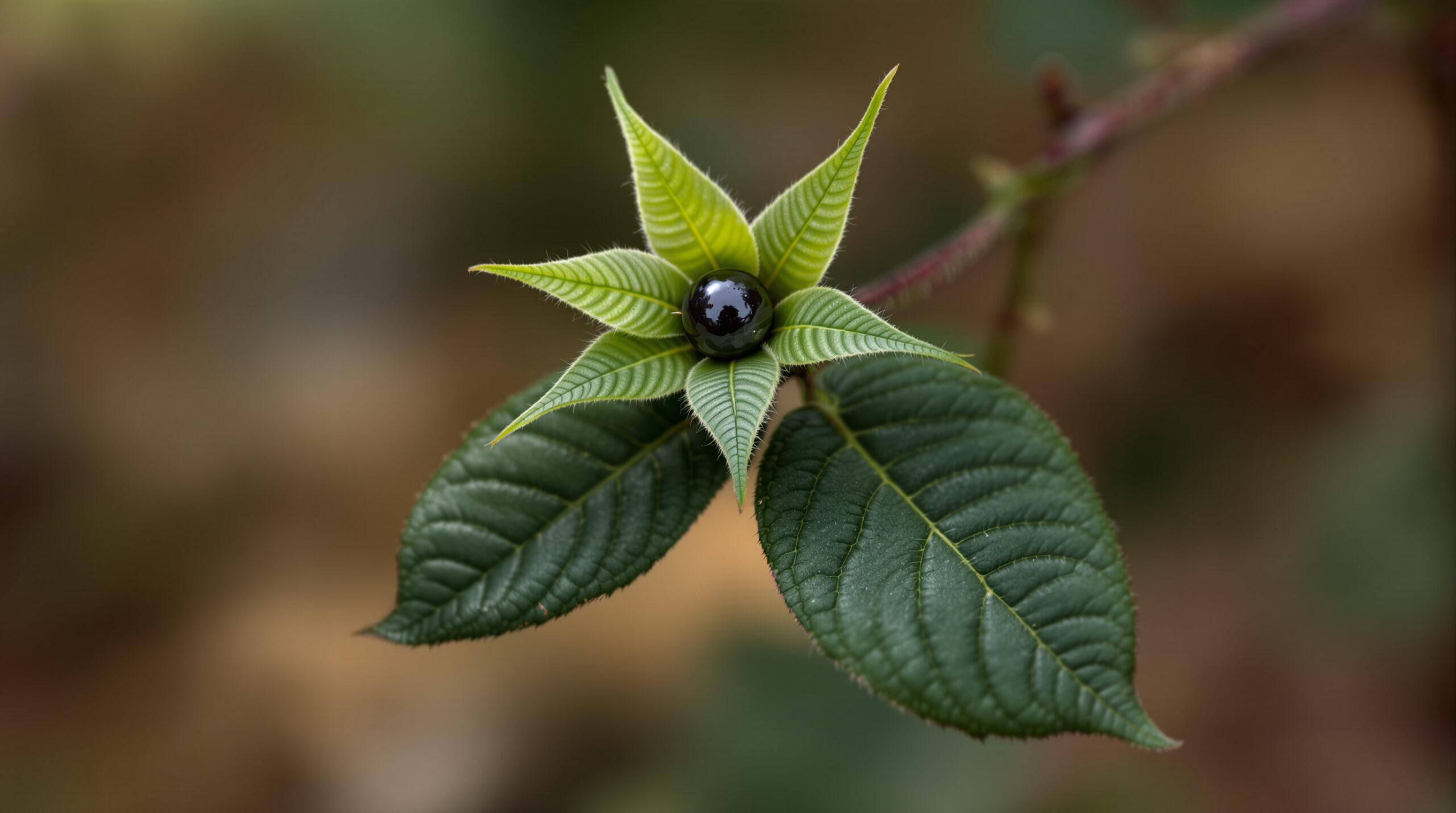
From August into October, the notorious fruits ripen from the flowers. The berries are spherical, about the size of cherries, and display a black-violet, lacquer-like glossy surface when mature. This seductive appearance makes them dangerously attractive, and they taste slightly sweet while giving no warning through smell or taste.
The most important detail sits directly beneath the fruit. Each berry rests on a star-shaped, five-pointed calyx whose sharp leaves extend well beyond the berry’s edge. Furthermore, the fruits grow singly and not in dense clusters or bunches. Anyone finding a solitary black sphere on a green star should immediately think of deadly nightshade. No edible native berry shrub bears its fruits in this manner.
Where Deadly Nightshade Grows and When You Might Encounter It
Deadly nightshade is native to Central and Southern Europe and widely distributed throughout much of Europe. It prefers warm, semi-shaded locations and settles readily at forest edges, on clearings, in clear-cut areas, and along fresh forest paths. It thrives particularly on humus-rich, lime-containing soils in deciduous and mixed deciduous forests. In the Alps, it climbs to heights of around 1650 meters.
Because it favors light, disturbed areas, it often appears precisely where people hike or forage for berries. After a windfall or clearing, it can form entire colonies within a few years. Vigilance is especially worthwhile at sunny forest margins in late summer when the dark fruits ripen. Deadly nightshade belongs to the large family of Solanaceae (nightshade family), which also includes many useful plants.
Confusion Risk: The Toxic Look-Alike Compared
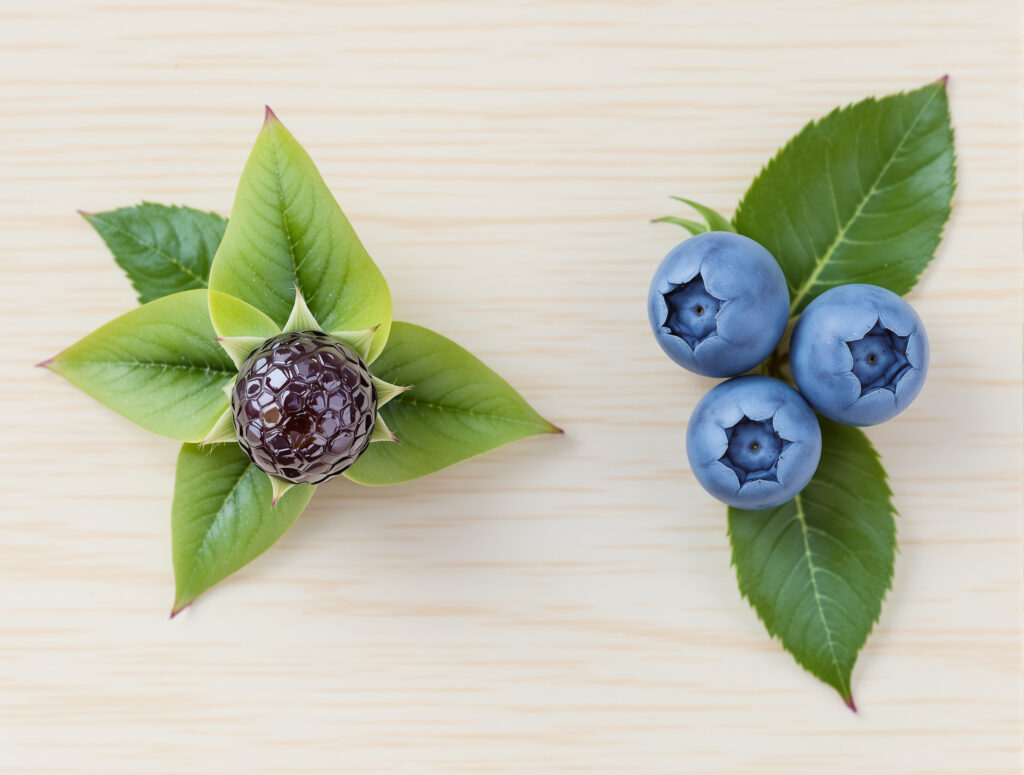
The most dangerous mistake involves confusing it with bilberry (blueberry). Both bear dark, glossy fruits, but the differences are clear upon close inspection. Bilberry shrubs remain low and rarely exceed 50 centimeters in height, while deadly nightshade can reach human height. Bilberry berries are smaller, more blue-frosted, and slightly flattened with a small crown at the upper end. They also grow in small clusters rather than singly on a large green star.
Confusion also occurs with other forest plants, such as dark fruits from elderberry or cherry laurel. The decisive factor remains the combination of features: tall, branched growth, brown-yellow bell-shaped flowers, and solitary berries with a star-shaped calyx. Another similarly treacherous example of an attractive but highly poisonous forest plant is the yew with its red seed arils. When in doubt, the basic foraging rule always applies: whatever cannot be identified with absolute certainty stays on the plant.
Why the Harmless Appearance Is So Deceptive
The attractive appearance of deadly nightshade stands in stark contrast to its toxicity. The entire plant contains tropane alkaloids, primarily atropine, hyoscyamine, and scopolamine. In the ripe berries, atropine predominates; in the leaves, hyoscyamine. These substances block certain docking sites in the body for the neurotransmitter acetylcholine, thereby deeply affecting the nervous system.
Typical poisoning signs include dry mucous membranes, widely dilated pupils, vision disturbances, a racing pulse, flushed skin, and severe agitation progressing to hallucinations. At higher doses, cramps, paralysis, and in the worst case, death from respiratory paralysis threaten. For children, as few as three to five berries can be fatal; for adults, approximately ten to twenty berries constitute a life-threatening dose. Historically, the plant actually owes its name „belladonna“ to this very effect, as Renaissance women would place drops of the juice in their eyes to dilate their pupils. For more information on the cultural history and pharmacological effects, read the detailed portrait of deadly nightshade.
Frequently Asked Questions
How can you definitively identify deadly nightshade?
The safest feature is the solitary, glossy black berry resting on a star-shaped, five-pointed calyx. Combined with the tall, branched growth reaching up to 150 centimeters and the bell-shaped flowers that are violet-brown on the outside and yellowish on the inside, these features together indicate deadly nightshade with high certainty.
What do deadly nightshade berries look like?
The ripe berries are spherical, about cherry-sized, and black-violet with a lacquer-like glossy surface. They grow singly rather than in clusters. Beneath each fruit, a green, star-shaped calyx spreads outward, its points extending beyond the berry’s edge.
Can deadly nightshade be confused with bilberry?
Yes, this is the most common and dangerous confusion. However, bilberries grow on shrubs under 50 centimeters tall, are smaller, blue-frosted, and slightly flattened. They appear in clusters, while deadly nightshade bears its larger, glossy black berries singly on the conspicuous calyx.
Where does deadly nightshade grow?
Deadly nightshade is found primarily at forest edges, on clearings, and in clear-cut areas in deciduous and mixed deciduous forests. It prefers warm, semi-shaded locations on humus-rich, lime-containing soils. It is widespread in many low mountain ranges and climbs in the Alps to approximately 1650 meters elevation.
What happens in case of deadly nightshade poisoning?
Bist du schon einmal einer Tollkirsche in der Natur begegnet?
Initial signs include dry mouth, dilated pupils, vision disturbances, rapid pulse, flushed skin, and severe restlessness progressing to hallucinations. At higher doses, cramps and respiratory paralysis threaten. If poisoning is suspected, contact emergency services immediately and preserve any plant remains for identification.






Branchen-Update
News, Analysen und Reportagen — mehrmals im Monat direkt in dein Postfach.
Folge uns