Advertisement · This article is created in paid cooperation with NORDDAMPF. Selection, research, and editorial assessment are the responsibility of Hemp Magazine.
📑 Inhaltsverzeichnis
- The heating system determines how the device feels
- Temperature control: The number on the display says little
- Battery: Sessions per charge and USB-C
- Warranty and spare parts: the point comparisons overlook
- A German manufacturer as example: NORDDAMPF
- Buying a vaporizer: Five questions before purchase
- 💬 Fragen? Frag den Hanf-Buddy!
Vaporizers are almost always compared by temperature range and heat-up time. For everyday use, however, other factors matter: how the device heats, how stably it maintains temperature, how many sessions one battery charge can handle, and what happens if something gets stuck after two years.
Before diving into heating systems and datasheets, a brief note from the manufacturer featured in this article: NORDDAMPF is announcing a new vaporizer drop for October 29 at 6 p.m. The company isn’t revealing exactly what’s coming yet. On the teaser page „Something waits beneath the ice,“ there’s a countdown and signup for anyone who wants to be notified at launch. Those who keep the purchasing criteria from this article in mind can measure the new device against them immediately.
First-time vaporizer buyers face datasheets that all look similar. Nearly every device claims a range up to around 210 degrees, and nearly every one boasts a short heat-up time. The differences you actually notice after a few months of use are rarely listed there. This article covers four points that prove most important in practice and shows, using a Lower Saxony manufacturer as an example, how these are reflected across a product line. Those who want to buy a vaporizer from NORDDAMPF will find three device lines that address these four points in different ways.
The heating system determines how the device feels
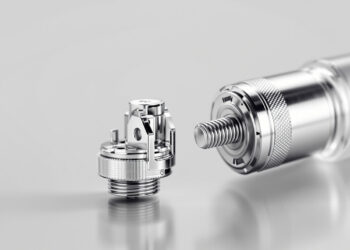
Conduction means the material sits directly on a hot surface. This is quick and produces dense vapor, but heats unevenly, so stirring between draws is often necessary. Convection works with hot air flowing through the material. This is more even and tastes cleaner, but requires more energy and thus more battery. Hybrid devices combine both.
There’s no universal answer to which system is better—it depends on whether someone prefers short individual draws or long sessions. We’ve explained in detail how both principles work physically and what that means for cannabinoid delivery in Convection vs. Conduction.
Temperature control: The number on the display says little
What matters isn’t which temperature is selectable, but how precisely the device maintains it during a draw. Every draw cools the chamber. How quickly a device adjusts determines whether the second and third draw taste like the first. Budget devices display a temperature, but adjust coarsely, resulting in burned flavor toward the end of the chamber.
A practical checkpoint when comparing: Does the manufacturer specify the temperature adjustment increments and describe how adjustment works? Those who say nothing about this usually have nothing to say.
Battery: Sessions per charge and USB-C
Manufacturer runtime claims assume ideal conditions. A more realistic question is how many sessions a device can manage before needing to plug in, and how quickly it charges again. A milliamp-hour figure alone says little: hybrid devices need more energy than pure conduction devices, and short sessions with frequent heat-ups drain the battery faster than one long session.
Three things matter in everyday use: USB-C instead of a proprietary cable, so the device can charge from any power bank. A fast-charging function so an hour of charging is enough for an evening. And the manufacturer’s specification of how many sessions one charge provides. Those who cite a specific number usually measured it.
Warranty and spare parts: the point comparisons overlook
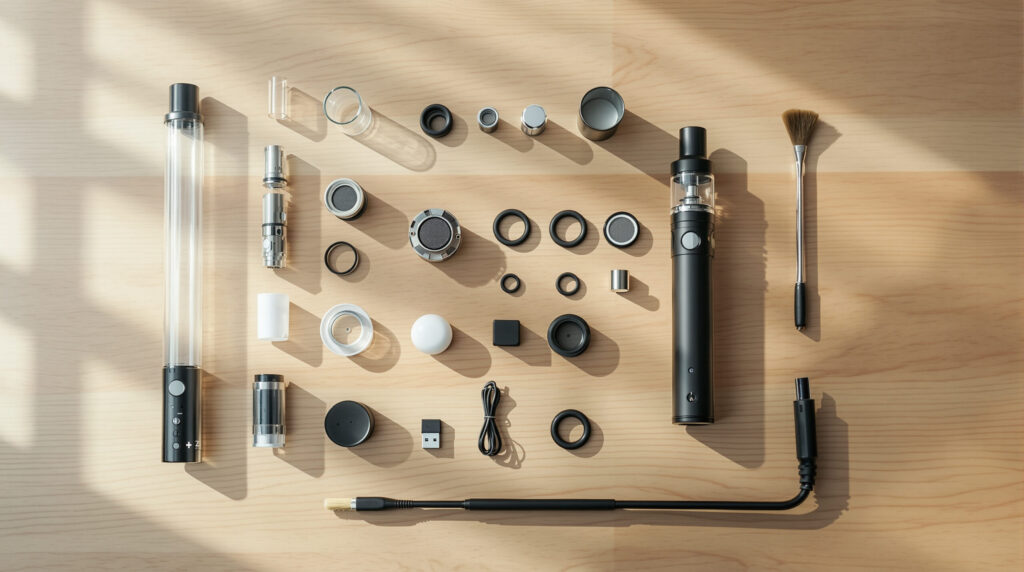
A vaporizer is a device with wear parts. Screens, seals, mouthpieces, and glass components break—that’s normal. The practically most important question is whether these parts are available individually and for how long. With imported devices lacking European representation, a cracked glass mouthpiece often means the end of the device.
Add to this the warranty period and where a defective device must be sent. A location in Germany or the EU isn’t a quality marker in itself, but it shortens shipping and avoids customs complications on returns. If you search the manufacturer’s site for spare parts before buying and find nothing, you already know enough. Two years warranty should be the minimum standard for devices over 80 euros, and checking the warranty terms takes two minutes.
A German manufacturer as example: NORDDAMPF
How this translates to a product line can be shown using NORDDAMPF. The company is based in Ganderkesee, Lower Saxony, and maintains three device lines that differ less in feature lists than in target audience.
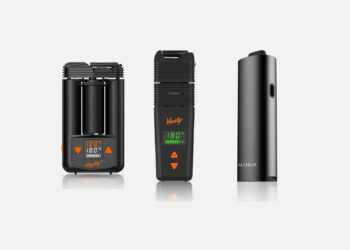
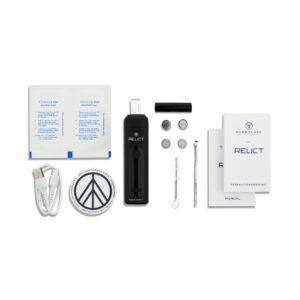
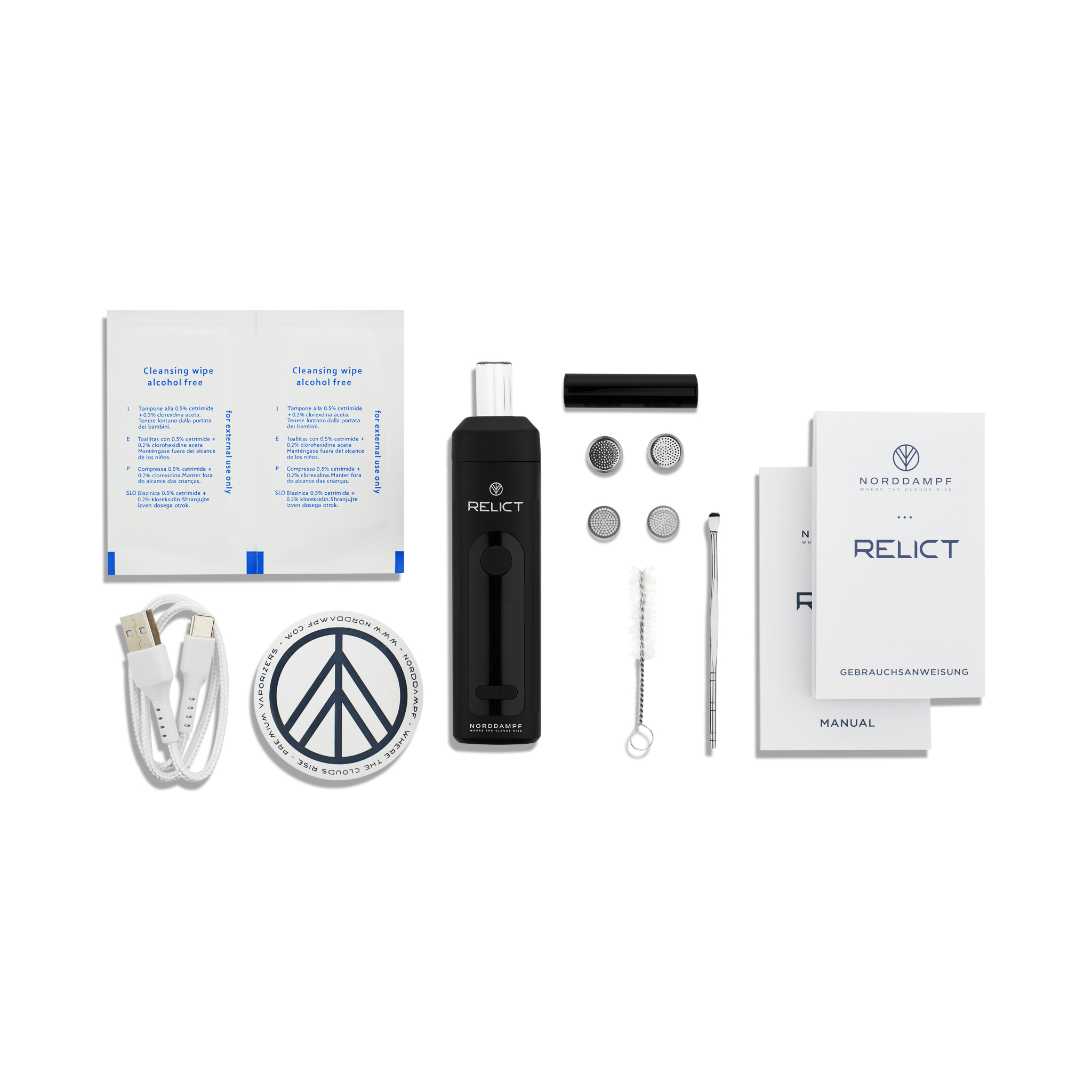
RELICT is the flagship model. According to the manufacturer, it uses a Dual Heating System that heats both the floor and side walls of the herb chamber, and adjusts temperature between 160 and 240 degrees in one-degree increments. This is exactly the checkpoint from the temperature control section. It also features an OLED display, 25 to 30 second heat-up time, a 2600 milliamp-hour battery with USB-C, and a stainless steel dosing capsule system. We featured this device in a separate article.
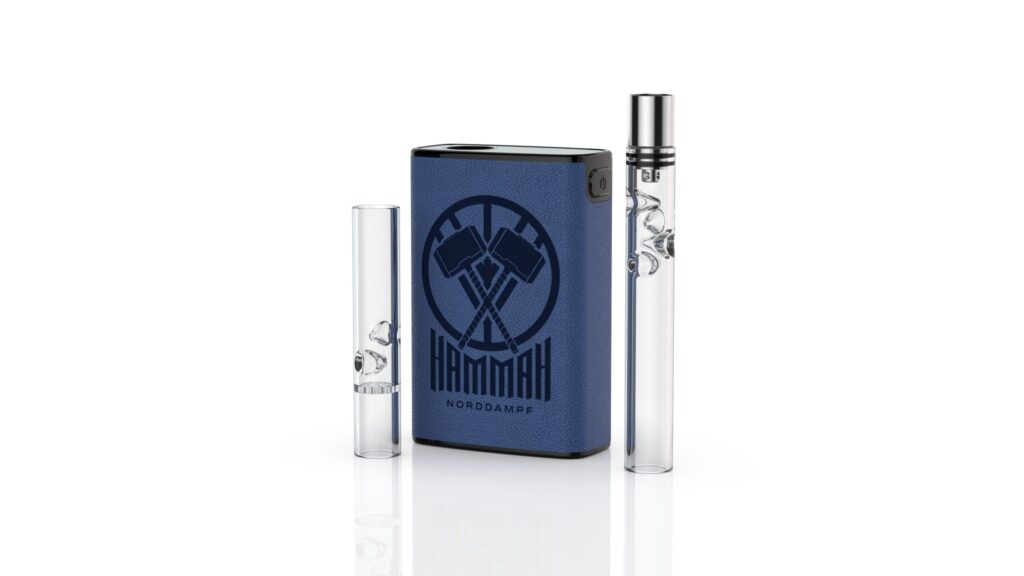
HAMMAH is the hybrid device for on-the-go. Convection and conduction are combined, there are five temperature levels from 180 to 220 degrees, the manufacturer lists heat-up time at 30 seconds, and the device is 90 millimeters tall and weighs 85 grams. Herbs are filled directly into a glass mouthpiece, so the entire vapor path is glass. We’ve also provided a detailed overview of this device.
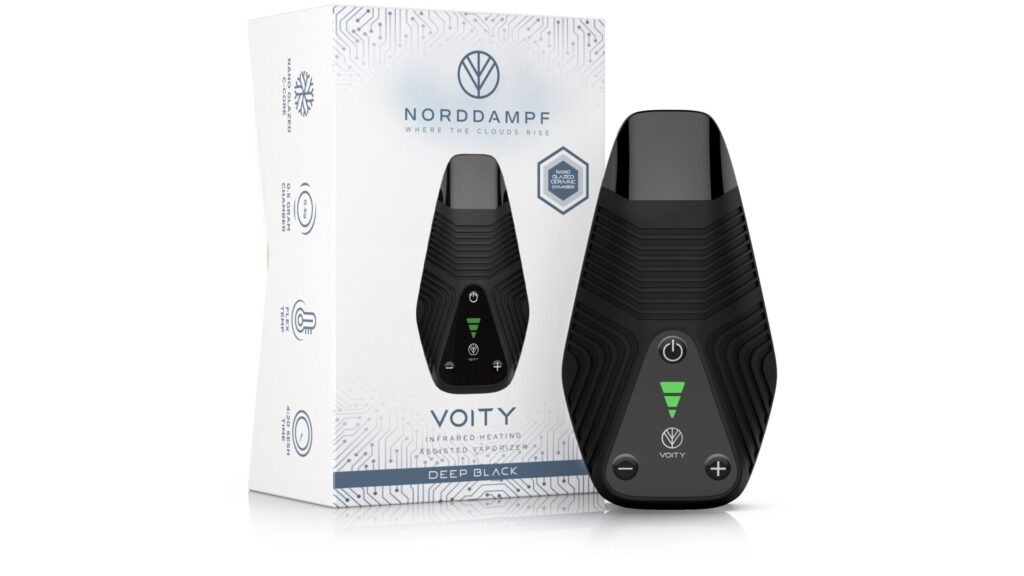
VOITY is positioned as an entry-level device: also hybrid heating, plus an infrared-assisted ceramic chamber with 0.5 gram capacity, three preset heat levels between 175 and 215 degrees, and a 1800 milliamp-hour battery that the manufacturer says provides ten to twelve sessions and can be used while charging. We’ve also featured this device.
What’s interesting about this structure is less each individual specification than the logic behind it: each line has its own accessories and spare parts, from glass mouthpieces and screens to cooling units and dosing capsules. The manufacturer provides two years warranty on all devices, and support and repair handling run through the company headquarters in Ganderkesee. This is exactly the point from the previous section, and it’s easier to deliver for a manufacturer based in Germany than for a direct import. We reported on a separate keynote where the company outlined how it views its own development.
Buying a vaporizer: Five questions before purchase
- Conduction, convection, or hybrid—and does it suit short draws or long sessions?
- In what increments can temperature be adjusted, and does the manufacturer say anything about temperature regulation?
- How many sessions does one battery charge provide, and does the device charge via USB-C?
- Are screens, seals, and mouthpieces available individually?
- How long is the warranty, and where does the device go for repair?
Anyone who can answer these five questions has usually already made the decision. Everything else is a matter of preference, and that can’t be read from a datasheet anyway.
Note: This article reflects the status of October 20, 2026. Information about devices and product lines comes from the respective manufacturers and was not verified by us in a laboratory. The article contains no health claims and no consumption recommendations. Devices of this type are for adults only.
Worauf achtest du beim Kauf eines Vaporizers am meisten?
Sources: NORDDAMPF manufacturer specifications, October 2026; manufacturer teaser page for the October 29, 2026 drop, accessed October 20, 2026; our own reporting on Relict, Hammah, Voity, and the Norddampf keynote.








Branchen-Update
News, Analysen und Reportagen — mehrmals im Monat direkt in dein Postfach.
Folge uns