Honeybees are among the most beneficial insects on the planet. Yet their populations face threats from various environmental factors, posing a significant risk to entire ecosystems. Parasitic infections frequently decimate bee colonies, making research in this field urgently needed to develop new strategies for preserving populations.
📑 Inhaltsverzeichnis
Earlier studies have already demonstrated that cannabis possesses antimicrobial properties and could therefore be considered for treating infections. A study published in 2025 has now provided evidence that hemp represents an effective treatment method against parasitic infection in bees.
Effective Against a Dangerous Parasite
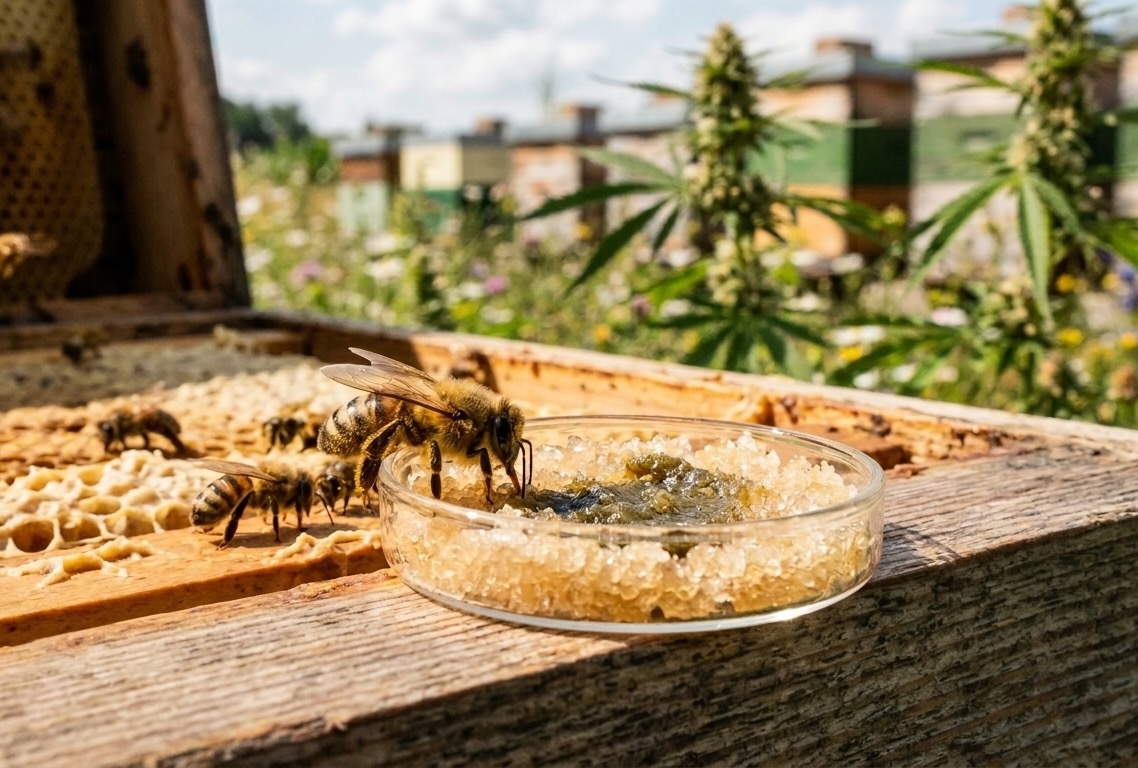
The study examined the effectiveness of hemp flower material against a parasite called Nosema ceranae. This is a single-celled parasite that primarily infects honeybees and causes nosemosis. This infection is one of the most common diseases in bee colonies and contributes significantly to bee mortality.


The disease causes severe dehydration, comparable to diarrhea in humans. Particularly problematic is the fact that various pesticides used in agriculture can further increase bees‘ susceptibility to nosemosis. The present study investigated whether extracts from hemp flowers can eliminate the parasites and their spores in bee colonies.
Hemp Extracts in Rock Sugar
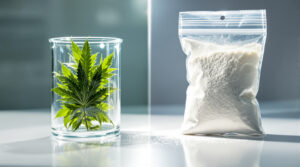
Researchers tested the effectiveness of two different hemp varieties—one CBD-dominant and the other primarily containing THC. Extracts were prepared from the flowers and incorporated into rock sugar at different concentrations of 1%, 2%, and 4%. This sugar extract was then fed to bee colonies infested with Nosema ceranae. The result: all treatment groups showed a significant reduction in Nosema ceranae spores.
Regardless of cannabinoid profile, spore load decreased as the concentration of hemp extract in the rock sugar increased. However, no clear difference in effectiveness against spores was found between THC-dominant and CBD-dominant extracts. Eliminating parasite spores is particularly important because they remain viable in the environment for extended periods and continue to be infectious.
Notably, bees treated with CBD extracts at concentrations of 1% or 2% showed longer survival rates than those treated with THC-rich extracts. The CBD and THC content also influenced food intake. Bees treated with THC extracts at 2% or 4% showed significantly increased consumption of water and food.
A Gentler Alternative
The effectiveness of hemp extracts was compared to Fumagillin, the standard medication for nosemosis, which beekeepers also add to sugar syrup. Fumagillin is very effective at combating parasite spores, but comes with significant health risks. Traces of the medication can even pass into honey.
While the tested hemp extracts could not eliminate spores as effectively as Fumagillin—though survival time for bees treated with low CBD concentrations was significantly longer—the conclusion is clear: the examined hemp extracts demonstrated effective activity against Nosema ceranae and should be considered in the future as a health-safe alternative.



Sollte Hanf als natürliches Mittel in der Imkerei zugelassen werden?
Branchen-Update
News, Analysen und Reportagen — mehrmals im Monat direkt in dein Postfach.
Folge uns