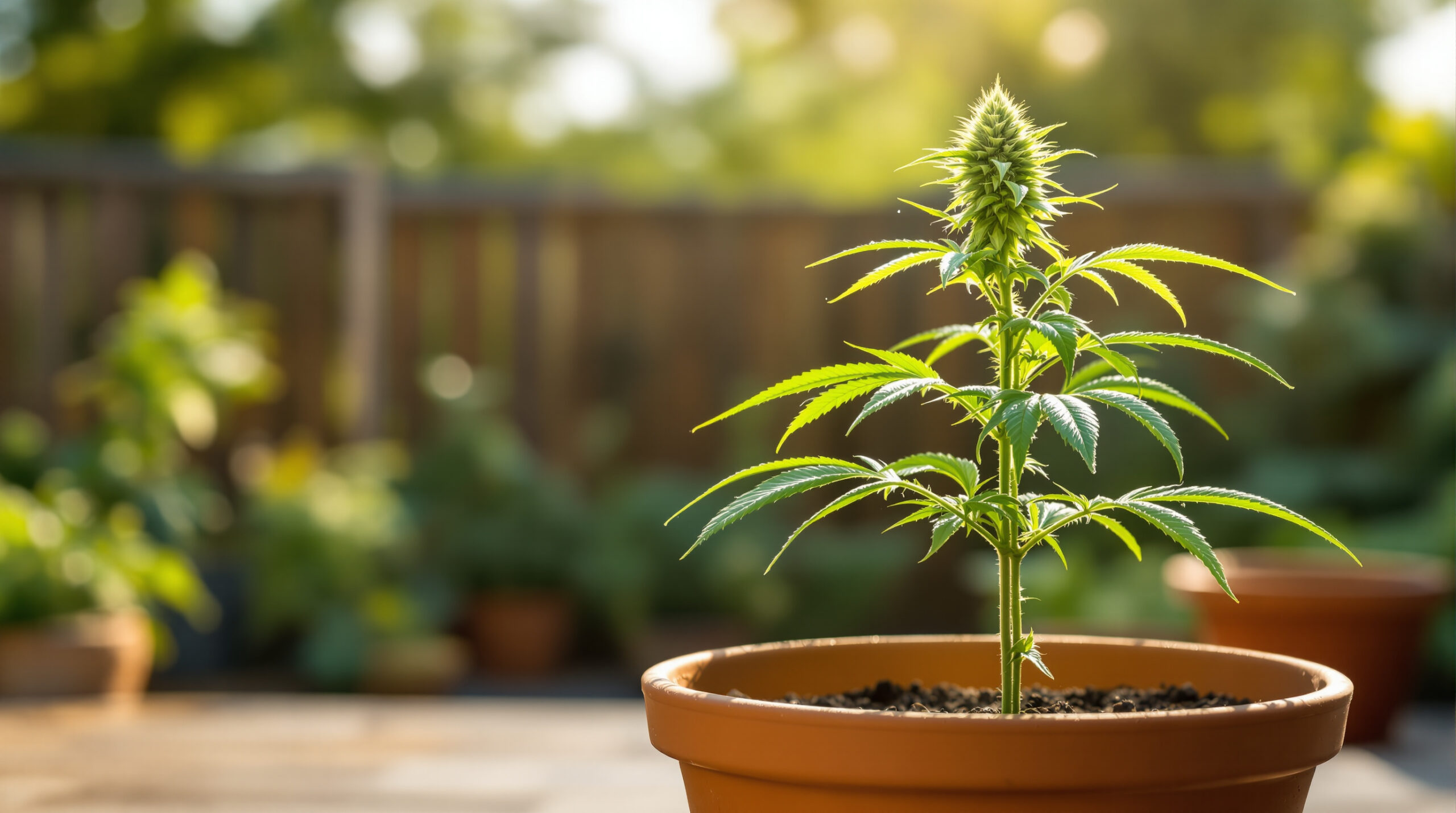
Anyone in Germany who wants to legally grow cannabis outdoors has had a clearly defined playing field since the Cannabis Consumption Act came into force, but also faces a whole series of practical decisions. Three plants, one location, one year’s time, and ideally at the end, a presentable harvest of dry, mold-free flowers in jars. Anyone who wants to achieve this needs more than a few seeds and a free Sunday morning in the garden. Outdoor growing is seasonal work, and the season begins in your head, long before the first bags of potting soil are purchased.
📑 Inhaltsverzeichnis
- The legal framework for outdoor growing in Germany 2026
- Site selection and microclimate: Where your outdoor plants really thrive
- Variety selection 2026: Photoperiod or autoflower for German latitudes
- The outdoor annual calendar month by month
- Substrate, pot size, and organic nutrient supply
- Mold protection, pests, and the critical weeks before harvest
- Harvest, drying, and the transition to the 2027 growing year
- Frequently asked questions about outdoor cannabis cultivation
- 💬 Fragen? Frag den Hanf-Buddy!
This annual guide describes the complete outdoor cycle for the 2026 season in Germany. It is intended for hobby gardeners who want to get their three plants allowed under the Cannabis Consumption Act through the season in the garden, on the balcony or on the terrace without police visits, without mold shock in September, and without the classic beginner’s mistake of choosing in May genetics bred for central Italy. We walk through the cultivation step by step, from the legal framework through variety selection to drying, and place special emphasis on those points where German climate and German law make the difference compared to countless English-language grow guides.
The legal framework for outdoor growing in Germany 2026
Since April 1, 2024, adults in Germany are allowed to cultivate up to three female cannabis plants for personal consumption. This regulation continues unchanged into 2026 and forms the legal foundation for any private outdoor grow. The key points are summarized quickly, but should be recalled before each season starts because the details determine the risk of prosecution.


Three living plants per adult at their place of usual residence are permitted—that is, in your own apartment, house, or associated garden. The plants must be secured so that neither children nor adolescents can access them. Complete visual screening is not legally mandatory, but practically almost always advisable, because an openly visible cannabis bush in the front yard can attract thieves and create conflicts with neighbors that, while legally irrelevant, can make the growing year unpleasant in practice. Those cultivating on a balcony should use privacy mats, trellises, and fast-growing companion plants like sunflowers or hops to provide discreet coverage. We have covered the legal situation in detail in our overview of cannabis legalization in Germany.
It’s important to know that the harvest from private home cultivation does not escape the 50-gram storage limit for apartments. After a successful outdoor grow, several hundred grams of dried flowers can quickly accumulate, which legally cannot be stored half at the neighbor’s place. The clean solution is to early on prepare edibles or tinctures with the dried flowers, properly store larger quantities long-term, or, in a member’s association or cannabis social club, pass them on to fellow participants. Growing in allotment gardens typically remains prohibited because federal allotment law and most association bylaws leave no room for discretion. Those who place plants there risk losing their plot, regardless of federal legal permission.
Site selection and microclimate: Where your outdoor plants really thrive
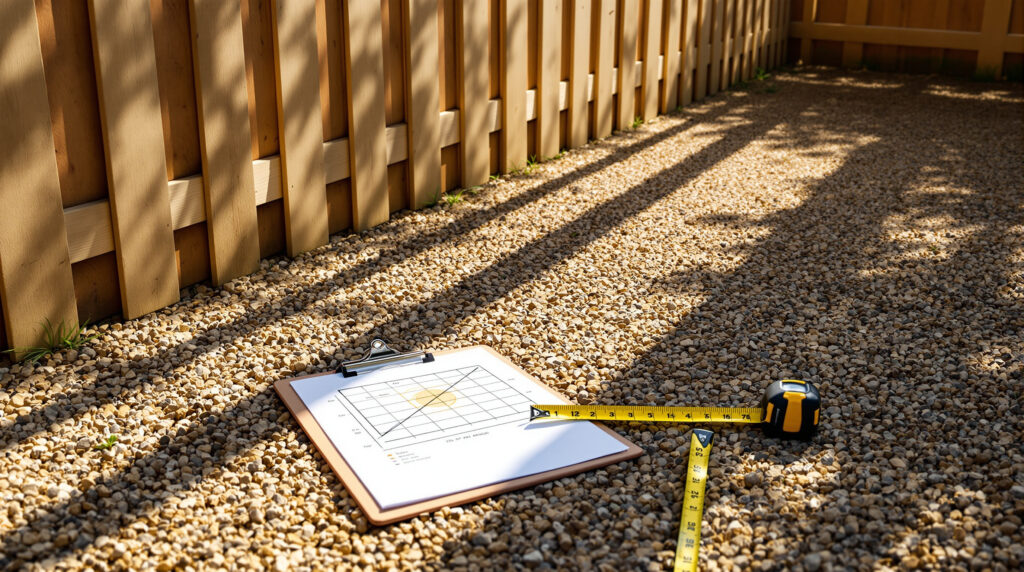
The location determines more than half of the later yield. Cannabis is a sun plant and requires ideally six to eight hours of direct sun per day, measured across the season. Even a slightly shaded spot under an apple tree can make the difference between plump, resinous buds and scrawny, mold-prone flowers. Before the season starts, a simple observation day in April is worthwhile, when it’s noted hourly when the planned placement receives sun and when it’s in shade. If someone finds that only three hours of direct light arrives, they should reconsider the location or opt from the start for a shade-tolerant sativa-dominant genetics.
Just as important as sun hours is wind. Gentle, regular breezes strengthen stems, keep fungal spores in motion, and significantly reduce the risk of botrytis during the flowering phase. Complete stillness in a protected courtyard corner sounds pleasant in spring, but by late summer it transforms into a humid chamber where every bud becomes a mold trap. A slightly elevated location, an open trellis instead of a dense wall, and ground clearance of at least twenty centimeters between pot and paving improve air circulation around the plant and help late summer precipitation evaporate quickly.
Northern German locations with humid Atlantic climate require different strategies than sites in southern Germany. In the north, the use of autoflower genetics with short life cycles is generally recommended, because a September harvest avoids the risk of October precipitation. In hillside locations in southern Germany or in the sheltered valleys of Saxony and Thuringia, traditional photoperiod genetics remain the higher-yielding option. Those living in areas with frequent late summer rain should additionally consider purchasing a small, mobile greenhouse with good ventilation. This not only protects from precipitation but also extends the usable growing season at the beginning and end of the season.
Variety selection 2026: Photoperiod or autoflower for German latitudes
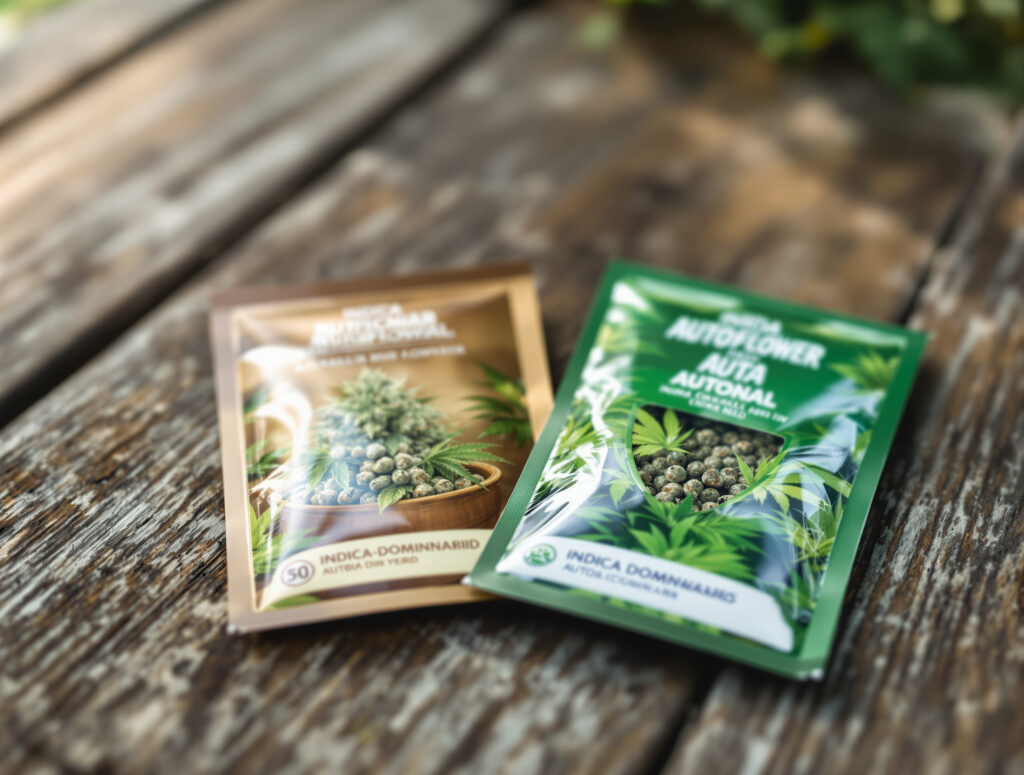
The genetics decision is the most important switch point of the entire growing year. Cannabis varieties respond differently to day length, temperature fluctuations, and humidity, and for German latitudes between 47 and 55 degrees north, there is only a limited spectrum that really reliably delivers yields. For anyone who wants to proceed through the season relaxed, there are essentially two paths: short, robust photoperiod hybrids or fast autoflowers with a life cycle of eight to twelve weeks.
Photoperiod varieties for the German season
Classical photoperiod genetics begin flowering as soon as days shorten in August and are ideally harvest-ready by mid-September to early October. Proven classics for German latitudes are early-flowering indica-dominant hybrids like Northern Lights, Critical, Early Skunk, or Frisian Dew, which have been tested for decades in northwestern European climate regions. Their great advantage is yield, as a mature photoperiod plant can reach one and a half meters or more under good conditions and produce correspondingly much flower material. Their disadvantage is the narrow time window: if someone germinates too late in May or encounters a cold snap in September, they run into the mold storm. For those seeking a deeper introduction to different variety types, our variety guide 2026 provides a comprehensive overview.
Autoflower varieties as a safe harbor
Self-flowering varieties trigger flowering independent of day length according to a genetic schedule, usually three to four weeks after germination. This shortens the entire cycle to around ten weeks, and seeding in mid-May leads to harvest in late July or early August, well before the first autumn rains. For inexperienced growers and for everyone cultivating in northern Germany or the foothills of the Alps, autoflower genetics in 2026 is by far the most relaxed choice. With correct care, even a second planting in June with a second harvest in September is realistic, provided the three-plant limit is kept clean over the season and is not exceeded in parallel. Our article on growing autoflowers provides a detailed introduction to this genetics family.
One more criterion should tip the scales in variety selection, something that goes under the radar in many grow guides: mold resistance. Genetics bred for Mediterranean climates with dry late summers often collapse completely in central European late summer humidity. Resistant lines from the Netherlands or northern Germany are the better choice here. A well-founded explanation of what to look for when selecting seeds and which designations really have significance is provided by our background article on understanding cannabis genetics.
The outdoor annual calendar month by month
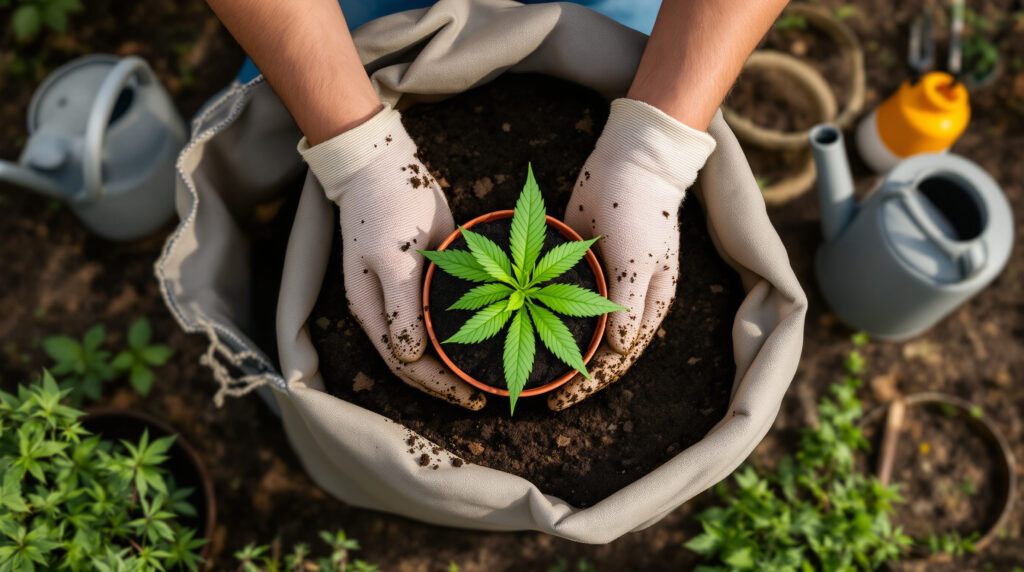
Outdoor growing lives by the rhythm of the seasons. The following monthly schedule describes the classic cycle for a photoperiod plant in central Germany. Those cultivating with autoflowers should shift the entire plan two to three months back and shorten the vegetative phase accordingly.
March and April: Preparation and germination
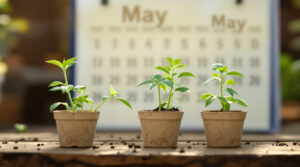
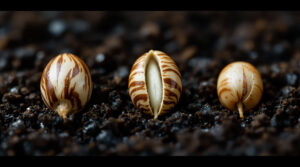
March is for site observation, substrate mixing, and obtaining seeds. Those wanting to work organically now set up compost tea preparations and obtain horn meal, worm castings, and rock dust. In April, germination begins, classically in damp kitchen towels or directly in small seed-starting pots under windowsill plant lights. As long as nighttime temperatures fall below ten degrees, seedlings stay indoors and are only put outside for a few hours during the day for hardening off.
May: Planting out and vegetative start
After the Ice Saints around mid-May, young plants can finally go outside permanently. They are planted in the final pot, which depending on the variety should have between 30 and 50 liters volume. The rule of thumb is roughly one liter of substrate per week of life, and a mature photoperiod plant easily lives twenty weeks outdoors. Larger pots buffer heat, drought, and nutrient fluctuations better. In the first weeks after planting out, plants grow slowly and need little fertilizer because they are building their root mass.
June and July: Stretch growth and training
On the long days around the summer solstice, plants undergo their growth spurt. This is when the later form—compact or sprawling—is decided. Those short on space now employ low-stress training, the careful bending down of main branches to form a wide, low canopy. More aggressive methods like topping—cutting off the growth tip—should be completed by early July at the latest so the plant can still recover before flowering begins. Fertilization in this phase remains nitrogen-focused for growth, organically for example through regular compost tea applications once a week.
August: Transition to flowering
With shortening days from early August, the hormonal shift to the flowering phase begins. Plants stretch once more during the first two weeks of flowering, then the first white flower hairs form. Now fertilizer needs shift away from nitrogen toward phosphorus and potassium. Organic growers rely on comfrey tea, compost tea with banana content, or finished bio-bloom fertilizer lines. August also brings increased risk of spider mites and powdery mildew, which is why daily inspection of leaf undersides is mandatory.
September and October: Ripeness and harvest
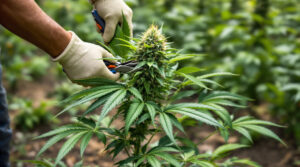
Peak flowering occurs in September. Now trichome density and resin production reach their peak, while mold risk rises with every rain day. Harvest timing is determined by trichome color: milky white means maximum THC, amber shifts the effect profile toward sedation. A magnifying glass with thirty to sixty times magnification is essential equipment for the final weeks. Those not harvested by mid-October risk a ruined harvest with every additional day. We have documented the complete post-harvest process in our guide on harvesting, drying, and curing cannabis.
Substrate, pot size, and organic nutrient supply
Outdoor cannabis lives from rich, living soil. The typical outdoor mix consists of roughly 60 percent high-quality organic potting soil, 20 percent mature compost, 10 percent perlite or pumice for drainage, and 10 percent worm castings. To this are added, depending on pot size, a handful of horn meal as a nitrogen long-term depot, three tablespoons of rock dust for mineralization, and a splash of seaweed meal for the trace element spectrum. This mix typically carries a plant for the first six to eight weeks without additional fertilization. Those pursuing living soil principles build the soil over years and harvest from the same pot in multiple seasons with minimal fertilizer input.
The final pot should hold at least 30 liters, better 50 or 65 liters if the variety has the growth potential. Fabric pots have proven superior to plastic because they improve root air values, prevent the formation of circling root balls, and dissipate excess heat. Black plastic pots heat up to as much as 50 degrees in high summer and cause lasting damage to root hairs. Those planting in ground dig a hole at least 60 by 60 centimeters and fill it with the described mix. Watering is done as needed: water infrequently and thoroughly rather than adding small amounts daily. In high summer, water demand for large plants can easily reach ten liters per day; a drip line with timer removes much of this work.
In the pre-flowering and flowering phases, the plant’s nutrient needs shift significantly. Nitrogen is reduced while phosphorus and potassium are increased because the plant now switches to flower production. Those working organically apply once weekly a compost tea from worm castings, a small amount of banana peel, a tablespoon of molasses, and water that has been aerated for at least twelve hours. Mineral fertilizers also work but require precise dosing, as mistakes quickly show up in leaf burn or flavor disturbances. In the sense of sustainability, which outdoor growing naturally lends itself to anyway, the organic line is usually the rounder choice.
Mold protection, pests, and the critical weeks before harvest
The final four to six weeks of the season determine success or total loss. Botrytis cinerea, the notorious gray mold, is the biggest threat to every Central European outdoor grow. The fungus preferentially enters dense, humid flower crowns, begins flourishing inside, and often becomes visible from the outside only when a first discolored leaf falls from the bud. By then the affected bud is lost and must be generously cut out, ideally with five centimeters safety margin from visible damage. From a purely health precaution perspective: moldy flowers belong in the trash, not in a jar and certainly not in the lungs.
Botrytis can be prevented through the combination of short-flowering genetics, good location with air movement, early thinning of inner leaf mass, and mechanical rain protection during flowering. Plants should be gently shaken out after every rainfall so water doesn’t remain in buds. Daily inspection in the final four weeks before harvest is mandatory. Aspergillus, a second dangerous fungal genus, affects stored rather than growing material, but is a realistic post-harvest risk after humid harvests. Our article on Aspergillus on cannabis provides a detailed overview of medically relevant fungal genera.
Alongside fungi, animal pests play a role. Spider mites, aphids, thrips, and caterpillars appear in varying intensity depending on region and weather. In organic cultivation, beneficial insects like lacewing larvae or predatory mites prove effective, supplemented by neem oil applications outside the flowering phase. Once flowering begins, any spraying should stop, as residues accumulate in trichomes and become unpleasantly noticeable when later burned. Those who monitor early and keep populations low usually get by without harsh interventions.
Harvest, drying, and the transition to the 2027 growing year
Harvest is not the end of the growing year but the transition to the most time-consuming phase: drying and curing. Cut plants are hung upside down at 18 to 20 degrees and 55 to 60 percent humidity for seven to fourteen days, then allowed to mature in glass containers with controlled residual moisture for at least four weeks. Those who rush this lose aroma, potency, and storage stability. Investment in a hygrometer and appropriate moisture packs that keep residual moisture stable is worthwhile for every serious home grower.
Parallel to drying, it’s worth looking ahead to next year. Which variety proved itself, which location delivered, which pot size was too small, which fertilizer schedule too harsh? A brief season diary noting weather events, care steps, and observations is the cheapest and most effective investment for the next season. Those wanting to know what financial scale an average home grow entails will find realistic figures for season planning in our breakdown of home grow costs 2026.
Frequently asked questions about outdoor cannabis cultivation
When should I start outdoor growing in Germany in 2026?
The ideal sowing time for photoperiod varieties is between mid-April and mid-May. Young seedlings remain indoors and are only permanently planted outside after the Ice Saints around mid-May. Autoflower varieties allow more flexible timing: sowings from May through early July are possible, with correspondingly later harvest. Those cultivating in northern Germany or the Alpine foothills should not germinate later than mid-May to safely complete the September harvest.
How many plants can I legally grow outdoors in Germany?
According to the Cannabis Consumption Act, three living, female cannabis plants per adult at their place of usual residence are permitted. This three-plant limit applies regardless of growing location, both indoor and outdoor. If more than one adult lives in the household, individual allowances add up. A family with two adults can therefore keep up to six plants, provided each person can demonstrate personal consumption.
Which varieties are best suited to German climate?
For German latitudes, short-flowering, mold-resistant indica-dominant hybrids like Northern Lights, Critical, Early Skunk, or Frisian Dew have proven themselves. Those playing it safe or cultivating in the rain-rich north should opt for autoflower genetics, such as White Widow Auto, Northern Lights Auto, or comparable short-cycle lines. Varieties developed for Mediterranean climates regularly fail in Central European late summer humidity.
How do I protect my outdoor plants from mold?
The most effective mold protection is the combination of short-flowering genetics, good location with air movement, early thinning of inner leaf mass, and mechanical rain protection during flowering. Plants should be gently shaken out after each rainfall so water doesn’t remain in buds. Daily inspection in the final four weeks before harvest is mandatory. Affected buds are generously cut out and disposed of, never further processed.
Do I need a visual screen for cannabis plants in my garden?
Complete visual screening is not legally mandatory but practically advisable in most residential situations. Legally required is only protection against access by children and adolescents. From a practical standpoint, several reasons support a visual screen: theft prevention, avoiding neighbor conflicts, and protecting your own privacy. Trellises with sunflowers, hops, or dense companion plants solve this both optically and biologically.
How much water do cannabis plants need in summer?
Water needs depend heavily on pot size, substrate, variety, and weather. A mature photoperiod plant in a 50-liter fabric pot can easily transpire ten liters per day on hot summer days. Rather than watering daily with small amounts, outdoor plants should be watered less frequently but thoroughly, until water exits the pot bottom. This develops deep, strong root systems and makes the plant more resistant to brief dry periods. A drip line with timer is a worthwhile investment for those who work.
More articles on this topic
Hast du schon einmal Cannabis outdoor angebaut?







Branchen-Update
News, Analysen und Reportagen — mehrmals im Monat direkt in dein Postfach.
Folge uns