Like all Arab nations, Lebanon enforces strict drug laws where possession of even small amounts carries draconian penalties. Even CBD remains illegal. Yet Lebanon is paradoxically one of the world’s largest hashish producers. Everyone knows legendary strains like Red Lebanese, whose distinctive red coloring remains somewhat mysterious to this day.
📑 Inhaltsverzeichnis
For several years, even Lebanon has debated legalizing cannabis for medical purposes. A corresponding law has stalled multiple times, but now implementation appears imminent. However, the driving force isn’t public health—rather, an empty state treasury has led officials to consider cannabis as a revenue source. Nevertheless, this represents significant progress for an Arab nation.
Illegal Cultivation as a Livelihood
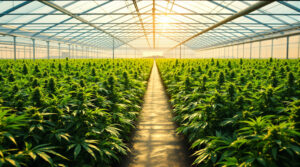
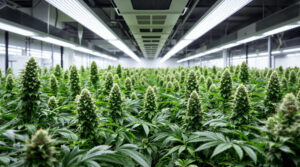
Like many Arab countries, Lebanon exhibits an absurd ambivalence regarding cannabis. Despite strict prohibition, hemp cultivation has deep roots and made the country one of the world’s largest exporters. The Bekaa Valley especially offers ideal climatic conditions. For local residents, hemp farming is the only viable means of earning a living.


Because cultivation is illegal, farmers face persecution, yet the practice has continued unabated. In recent years, the government has attempted a new approach—legalizing cultivation at least for medical purposes.
The Long Road to Liberalization
In 2018, Parliamentary Speaker Nabih Berri announced plans to draft legislation for medical cannabis use. The model cited was medical cannabis programs in numerous European countries and the United States. The law was intended to legalize both medical cannabis and industrial hemp cultivation. The legislation passed officially in 2020, but implementation repeatedly stalled. As the country’s economic situation deteriorated dramatically, cannabis re-emerged as a potential state revenue source. Swift implementation is now more urgent than ever.
Replenishing State Coffers and Combating the Black Market
A dedicated government agency was tasked with implementing measures to reduce the budget deficit. In response, the earlier medical cannabis legalization was revisited. Official estimates suggest the state could generate annual revenues of up to one billion US dollars from cannabis cultivation. The produced cannabis would be sold to local and international pharmaceutical companies. Simultaneously, this measure aims to suppress the black market.
According to recent reporting by Al Jazeera, Lebanon has reached a historic turning point: decades of persecution against hemp farmers forced to work in secrecy are coming to an end. Although recreational use remains strictly prohibited and economic interests dominate, Lebanon is taking a first step in the right direction.
Scientific Evidence Recognized Even in Lebanon
Despite restrictive drug policies, Lebanon hasn’t entirely closed itself off from scientific evidence. In particular, the 2020 legislative changes brought renewed focus to evidence-based reassessment of cannabis. The psychiatry department at Saint Joseph University in Beirut published research in 2022 examining the current scientific landscape of the plant. Existing findings from other countries were reviewed and evaluated. They similarly concluded that legalization doesn’t lead to explosive increases in consumption.
The persistent gateway drug theory was also debunked. Instead, the research pointed to numerous conditions where cannabis demonstrably offers therapeutic benefit. Even before the 2020 legislative change, voices calling for cannabis reassessment had been growing.
Lebanon’s national ethics board recommended using cannabis in an evidence-based framework for specific conditions. The Lebanese psychiatric society announced in 2020 that most users are aware of potential risks. Simultaneously, it emphasized that psychiatric complications occur only in a minority of users.
Sources
Implementation Begins:
turkiyetoday.com
mugglehead.com
Initial Announcement 2018:
reuters.com
Studies from Beirut:
pmc.ncbi.nlm.nih.gov







Sollten Länder Cannabis aus wirtschaftlichen Gründen legalisieren dürfen?
Branchen-Update
News, Analysen und Reportagen — mehrmals im Monat direkt in dein Postfach.
Folge uns