Can You Smoke Lavender? The Honest Answer
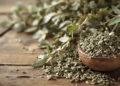
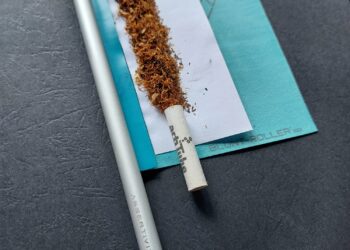
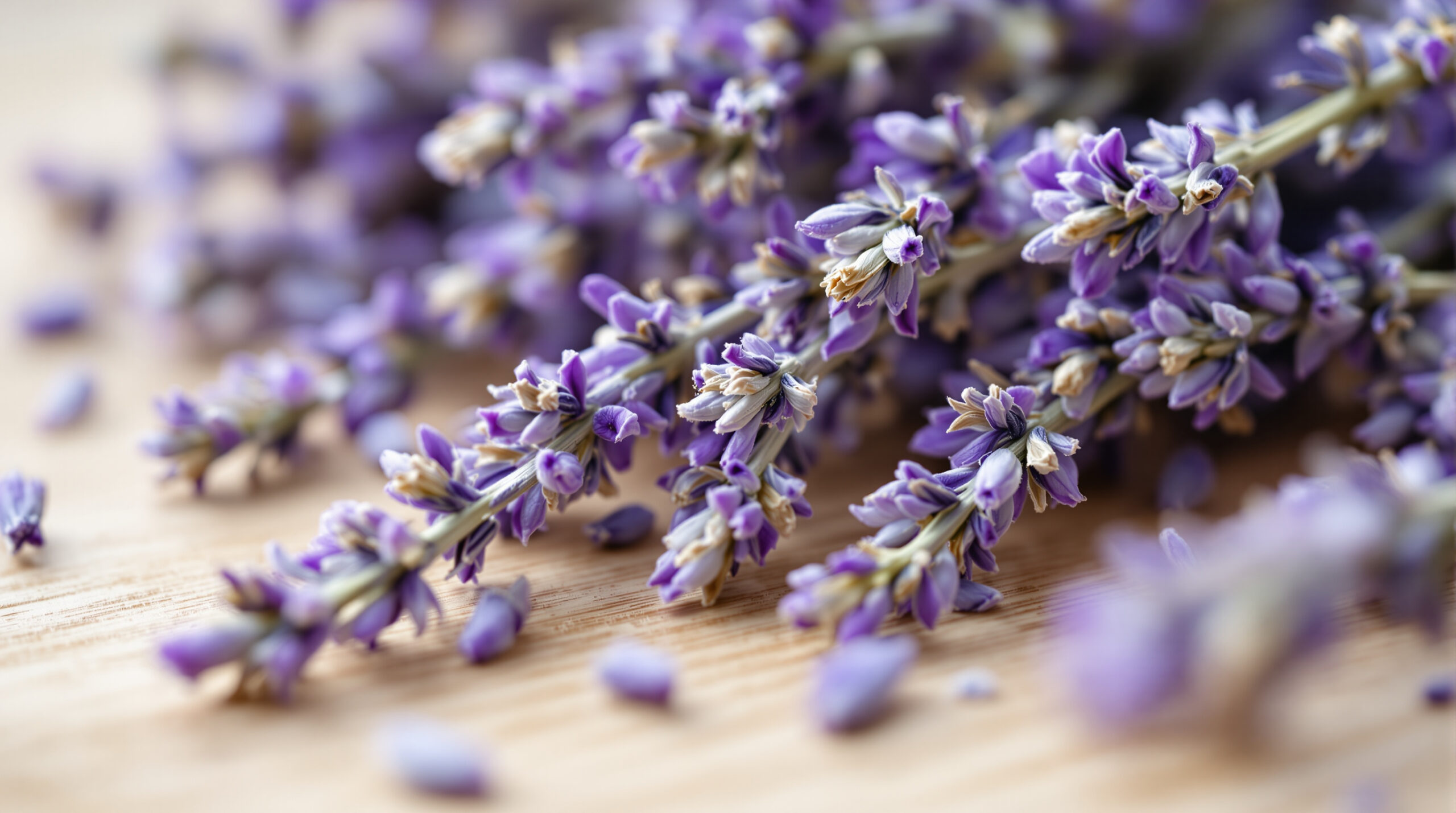
Yes, technically you can smoke dried lavender. The fine flowers and leaves of true lavender (Lavandula angustifolia) burn similarly to other herbal smoking blends and roll easily into papers. Legally, it’s completely unproblematic in most countries, since lavender contains no psychoactive substances and isn’t regulated as a controlled drug. So if you’re wondering whether it’s permitted, you can relax on that front.
📑 Inhaltsverzeichnis
- Can You Smoke Lavender? The Honest Answer
- What Actually Happens When Lavender Burns
- Linalool: The Bridge Between Lavender and Cannabis
- Effects: What Research Actually Proves
- Health Risks: Smoke Remains Smoke
- Lavender in Smoking Blends and as a Tobacco Replacement
- Frequently Asked Questions
- 💬 Fragen? Frag den Hanf-Buddy!
That said, the honest answer comes with a caveat. Lavender won’t get you high, and smoked pure, it tastes surprisingly sharp and soapy to most people. In practice, the flower is rarely consumed alone but rather as an aromatic component in a blend. The real appeal lies less in intoxication than in the scent and the ritualistic experience of inhaling plant material without nicotine.
What Actually Happens When Lavender Burns
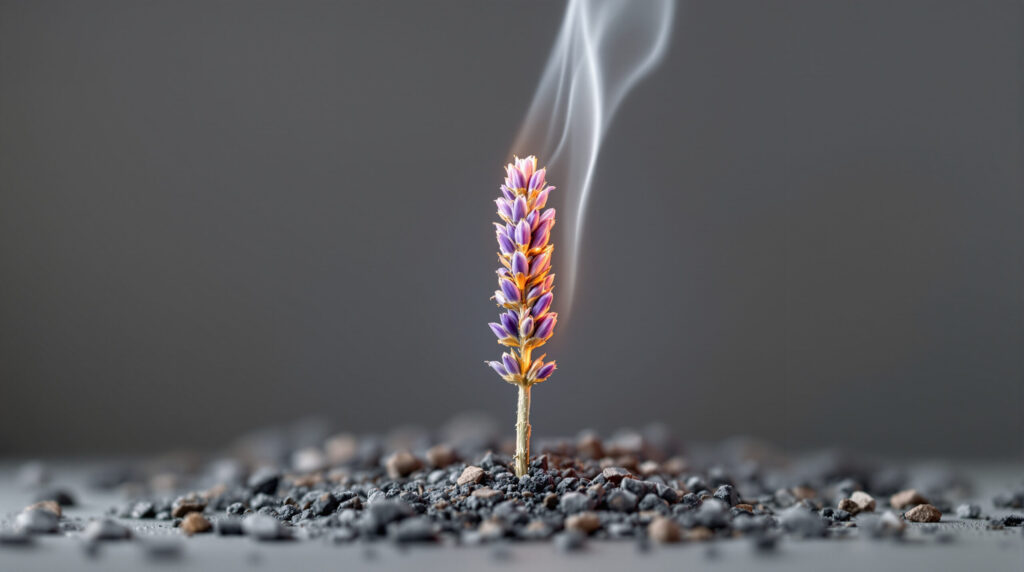
Lavender’s characteristic scent comes from its essential oils. The dominant molecule is linalool, a monoterpene that makes up twenty to forty-five percent of the essential oil depending on the variety. Then there’s linalyl acetate, which gives the aroma its soft, slightly floral note. These compounds are responsible for lavender’s calming reputation when inhaled through a diffuser or experienced in a pillow.


When you smoke it, however, this logic breaks down. Linalool and other terpenes are heat-sensitive and largely burn away at the temperatures of a glowing cigarette instead of reaching your lungs intact. What remains is mostly smoke. The delicate active compound that makes the plant so popular survives the open flame only partially. Those seeking the relaxing component lose it precisely through combustion.
Linalool: The Bridge Between Lavender and Cannabis
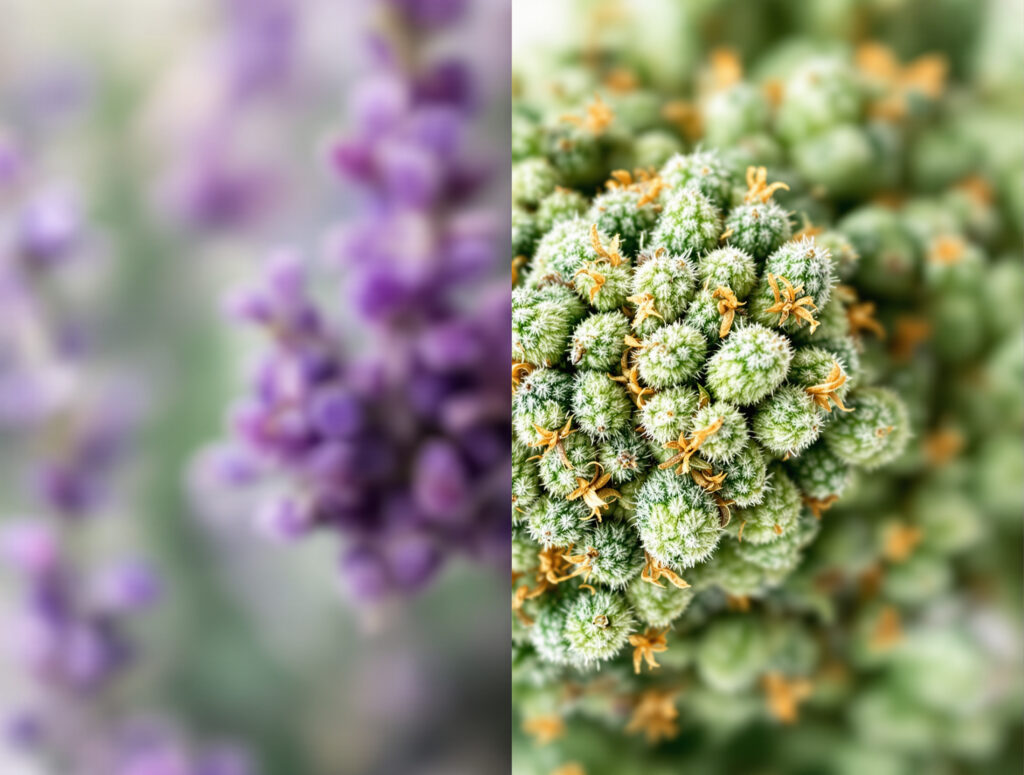
Lavender becomes interesting for cannabis enthusiasts precisely because of this molecule. Linalool appears in over two hundred plant species, including basil, thyme, and cannabis. Certain cannabis strains smell distinctly of lavender because they carry a high linalool content in their terpene profile. This occasionally leads to confusion when non-experts mistake a floral cannabis scent for an herb or vice versa.
This shared chemistry also explains why both plants are credited with calming and sleep-promoting effects. The crucial difference is that lavender contains no cannabinoids and therefore produces no intoxicating effects whatsoever. Those wanting to understand the role of terpenes in detail will find the pharmacological connections in our complete guide to terpenes in cannabis. Beyond the hemp plant itself, it’s worth exploring how our article on cannabinoids and active compounds in other plants illuminates the topic.
Effects: What Research Actually Proves
The scientific foundation for lavender’s calming effects is solid, but applies almost exclusively to nasal inhalation and oral intake. A meta-analysis of eleven randomized controlled trials confirms that lavender oil has significantly sleep-promoting effects, with a diffuser using just a few drops before bedtime showing the strongest results. In clinical trials, a standardized oral supplement even worked comparably to the sedative lorazepam for generalized anxiety disorder.
For smoking, however, this body of research is completely absent. No credible study demonstrates that smoked flowers achieve the same effects as a diffuser or capsule. The calming impression many users report likely stems largely from ritual, deep breathing, and expectation. This isn’t a worthless effect, but it shouldn’t be confused with a pharmacologically confirmed one.
Health Risks: Smoke Remains Smoke
The most persistent myth about this topic claims that smoking lavender is healthy. That’s false. Every combustion of plant material produces carbon monoxide, fine particulates, and potentially other irritants depending on conditions. These particles are so tiny they penetrate deep into the lungs‘ fine branches, where they can promote inflammation. The fact that lavender contains no nicotine doesn’t change the fundamental burden from smoke itself.
Nicotine-free herbal blends do release measurably fewer harmful substances than tobacco and carry no physical dependence risk. They’re not without risk, however. Those wanting to benefit from lavender’s relaxing terpenes without irritating their lungs are far better served by a diffuser, herbal tea, or vaporizing at low temperatures. Vaporization avoids combustion entirely, producing far fewer combustion byproducts.
Lavender in Smoking Blends and as a Tobacco Replacement
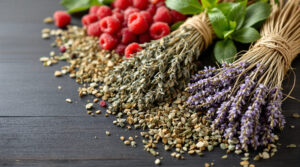
In practice, lavender usually plays a supporting role. Because of its intense aroma, experienced blenders recommend adding only a small amount while milder base herbs like raspberry leaf, mullein, or damiana form the bulk. A ratio of roughly one part lavender to two or three parts other herbs has proven effective. This keeps the scent pleasant without turning soapy.
Those seeking to transition from tobacco should understand lavender for what it is: an aromatic ingredient, not a cure-all. Our detailed guide to nicotine-free herbal tobacco replacements offers a comprehensive overview of suitable base herbs. And for those wondering which plants work for blending, our article exploring which herbs you can smoke has the answers.
Frequently Asked Questions
Does smoking lavender get you high?
No. Lavender contains no psychoactive cannabinoids or intoxicating compounds. It may produce a subjective feeling of relaxation through ritual and scent, but it doesn’t alter consciousness. Anyone expecting an intoxicating effect will be disappointed.
Is smoking lavender healthier than tobacco?
Lavender contains no nicotine and creates no physical dependence, so tobacco’s addictive potential disappears. Combustion still produces carbon monoxide and fine particulates that burden the lungs. Smoked lavender isn’t healthier in an absolute sense, only less taxing than a traditional cigarette.
Why does some cannabis smell like lavender?
Both plants share the terpene linalool, which carries the typical floral lavender scent. Cannabis strains high in linalool smell similar even though they’re botanically unrelated. The scent is therefore not a sign of a shared active compound in the THC sense.
How much lavender belongs in a smoking blend?
Because of its intense aroma, only a small amount is needed. A ratio of roughly one part lavender to two or three parts milder base herbs has proven effective. Too much lavender quickly makes the blend taste sharp and soapy.
Are there gentler alternatives to smoking?
Hast du schon mal Lavendel oder andere Kräuter geraucht?
Yes. For experiencing linalool’s calming effects, a diffuser, lavender tea, or vaporizing at low temperatures work far better. Vaporization avoids combustion entirely, preserving most terpenes while producing minimal combustion byproducts.






Branchen-Update
News, Analysen und Reportagen — mehrmals im Monat direkt in dein Postfach.
Folge uns