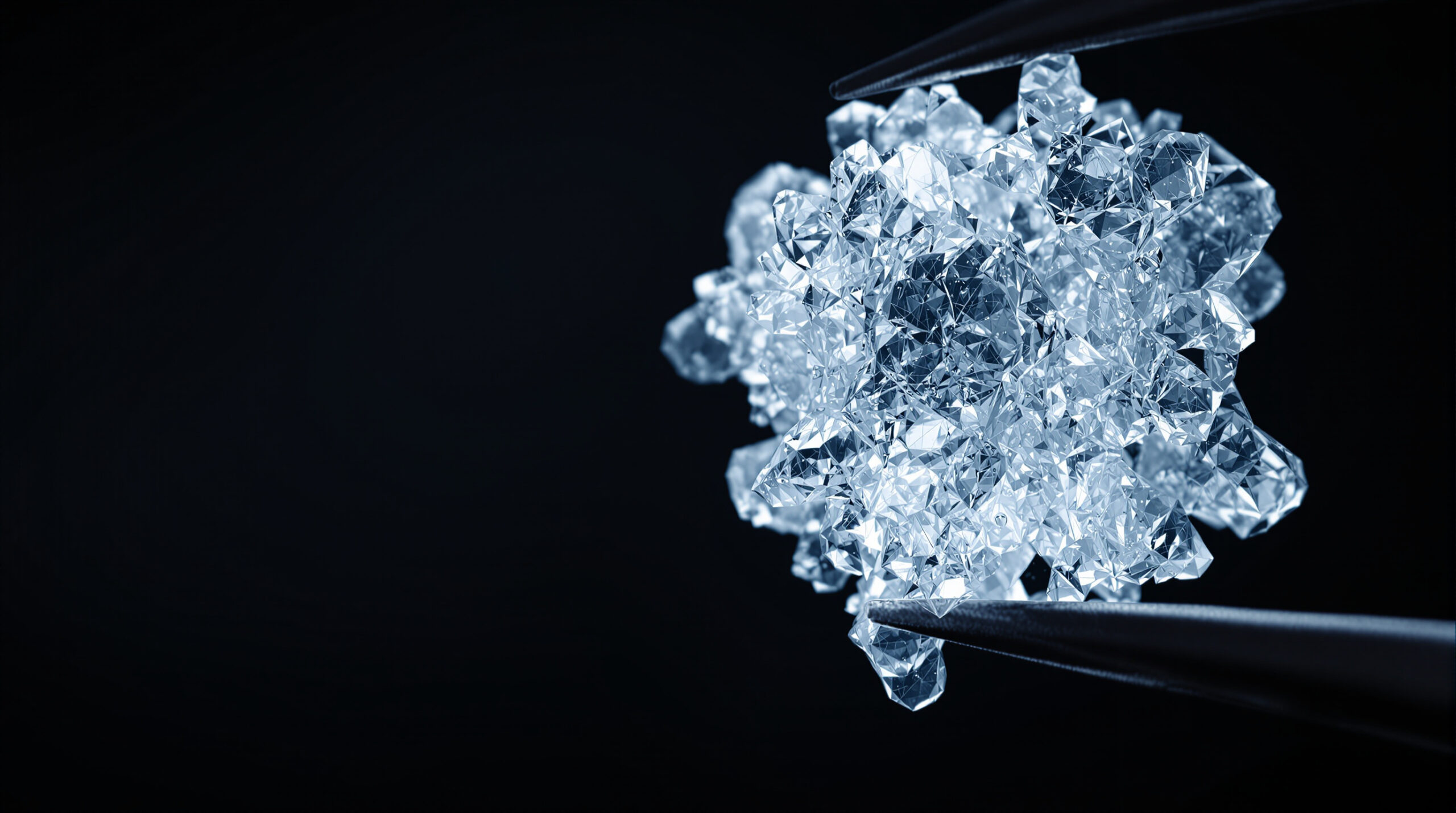
A research team at the University of Connecticut has developed a hemp-based thermoplastic that overcomes the key limitations of plant-based bioplastics. The polymer survives contact with boiling water, can be stretched to sixteen times its original length, and contains 92 percent biogenic material. The study, published in the Cell Press journal Chem Circularity in early May 2026, describes the first polycarbonate based on cannabidiol that could replace market-ready petrochemical plastics like PET.
📑 Inhaltsverzeichnis
Polycannabidiol Carbonate: The CBD Polymer from the Lab
At the heart of the work lies a new material with the somewhat unwieldy name polycannabidiol carbonate. Behind this term lies a chemical idea that finally provides hemp-based alternative to bisphenol-A. Bisphenol-A, or BPA, has been the central building block of many polycarbonates for decades, yet it is suspected of acting as an endocrine disruptor that influences the hormone system. The EU cosmetics regulation and several national food authorities have already restricted BPA.
„The hope is that cannabidiol takes the place of bisphenol-A,“ says study leader Gregory Sotzing from the Department of Chemistry at the University of Connecticut. Co-author Mukerrem Cakmak from Purdue University has published several preliminary studies on CBD-based polycarbonates in recent years. According to the authors, the new material is the first to achieve both high thermal stability and industrial processability simultaneously.


Boiling Water-Resistant and 1,600 Percent Stretchable
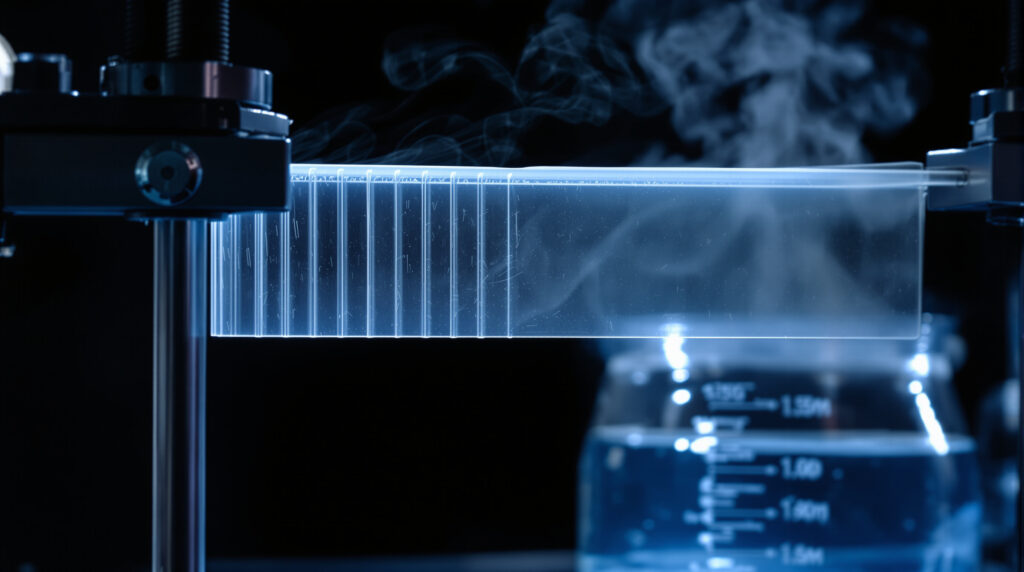
The material properties documented in the publication explain why the study is attracting attention in the polymer community. Two values stand out. First, the glass transition temperature of polycannabidiol carbonate is high enough that it does not soften when exposed to boiling water. „Very few plastics from natural raw materials achieve this property, if any,“ says Sotzing. This opens up applications for drinking bottles, hot beverage packaging, and sterilizable food containers.
Second, the material stretches elastically to sixteen times its original length. 1,600 percent elongation is unusual for a polymer with a high glass transition temperature. Generally, the rule of thumb is: the more heat-resistant the plastic, the more brittle it is. Polycannabidiol carbonate breaks this rule. Additionally, the material surface exhibits a water contact angle higher than that of common polyolefins. This is relevant for applications such as nanoparticle coatings or catheter surfaces in medical technology.
Recycling: Chemical Depolymerization Recovers CBD
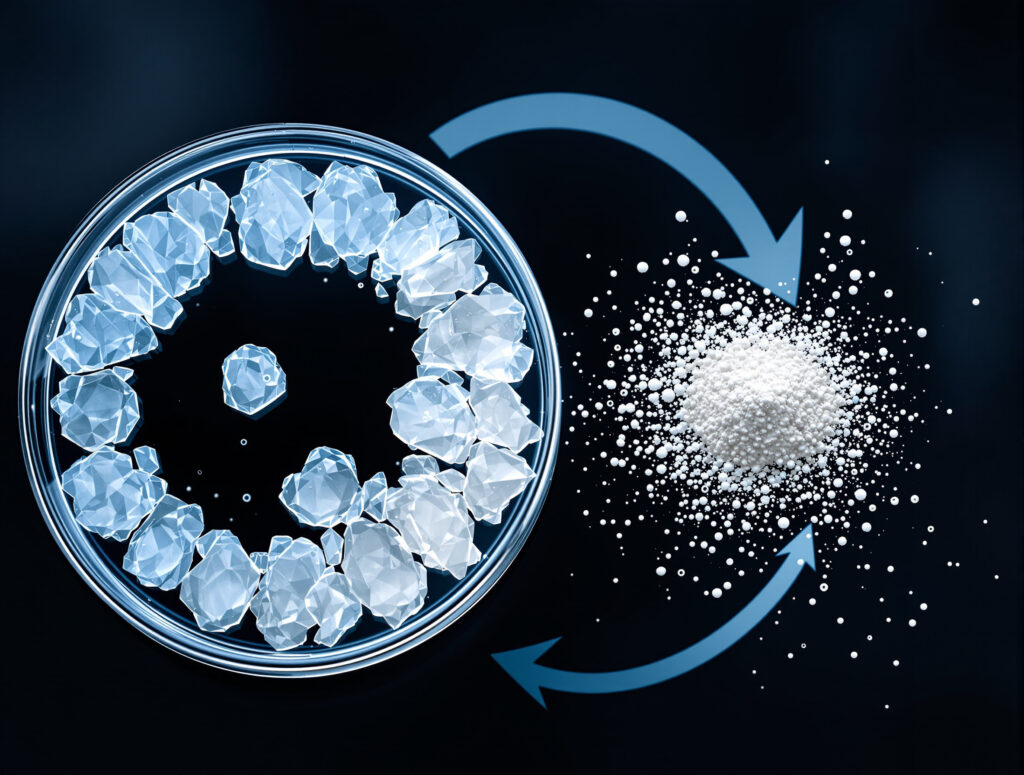
A recurring problem with bio-based polymers is their end-of-life. Many supposedly sustainable plastics can only be composted under exotic conditions and ultimately end up in landfills. The UConn team has chosen a different model. Polycannabidiol carbonate decomposes back into its building blocks under basic catalysis without requiring enzymes or other living microorganisms. The recovered cannabidiol can subsequently be processed into new polymer, creating a closed material loop.
This positions the material in a gap that classic bioplastics like PLA cannot fill. PLA is industrially fermented from corn or sugarcane but suffers from low heat resistance and recycling logic that barely functions in practice. Hanf-Magazin has analyzed the problems with classical bioplastic approaches from hemp in previous years. The new UConn study builds significantly on this.
What Prevents Scaling
As promising as the material properties are, the path to industrial application is not straightforward. Global cannabidiol production currently does not suffice to cover even a relevant portion of PET demand. PET represents roughly 70 million tons annually in the world market, while CBD is in the low four-digit ton range. A complete conversion is not realistic in the near term.
Hemp nevertheless has structural advantages in this calculation. The plant requires little water, needs minimal pesticides, and fits into crop rotation with corn and soybeans. This makes it suitable for broad expansion in cultivation. If the CBD market grows through European hemp cultivation areas, a significant bio-based share in the packaging market could be achieved in the medium term. Research into hemp fiber-based bioplastics in Germany pursues a related but fiber-based strategy.
Tension Over ECHA CBD Classification
A shadow hangs over the research field. The European Chemicals Agency (ECHA) proposed in March 2026 to classify cannabidiol as reproductive toxic in category 1B. The final decision from the EU Commission is pending. Should the classification go through, CBD in food-contact packaging would likely not be approved. The UConn study argues with the polymerized, chemically bound form, in which free CBD in the finished material should not be migration-capable. How regulators will judge this remains open. Hanf-Magazin has analyzed the ECHA classification of CBD as reproductive toxic in detail.
For the German-speaking industrial hemp sector, this is a mixed message. On one hand, polycannabidiol carbonate opens industrial applications for CBD beyond the consumer market, which faces regulatory pressure. On the other hand, the ECHA classification could complicate the industrial pathway as well. Anyone betting on CBD-based materials must keep an eye on at least two regulatory fronts simultaneously.
Frequently Asked Questions
What is Polycannabidiol Carbonate?
It is a bio-based polycarbonate plastic in which the suspected endocrine disruptor bisphenol-A is replaced by cannabidiol from hemp. The material was developed by Gregory Sotzing at the University of Connecticut and Mukerrem Cakmak at Purdue University and is, with a bio-based content of 92 percent, one of the plant-derived thermoplastics with the highest heat resistance.
Can This Material Really Replace PET?
Technically, polycannabidiol carbonate achieves the properties that would allow PET substitution, including heat resistance, clarity, and melt processability. Practically, the insufficient global CBD production prevents rapid market penetration. In the medium term, niche applications in food packaging, medical technology, or specialty films are more likely.
Is the Hemp Plastic Biodegradable?
The material is not compostable in the classical sense. However, it can be chemically broken down into its building blocks through basic catalysis. The recovered cannabidiol can be processed into new polymer. This corresponds more to the concept of a closed material loop than to biological degradability.
Where Might the Polymer First Be Used?
Researchers mention transparent films, coatings, food packaging with heat applications, drinking bottles, and flexible substrates for electronics. Nanoparticle coatings and medical catheters are also interesting due to the high water contact angle. Which application reaches the market first depends primarily on the scalability of production.
What Role Does the ECHA CBD Classification Play?
The ECHA proposed in March 2026 to classify cannabidiol as reproductive toxic. A final EU decision is pending. Should the classification take effect, CBD-containing consumer products with food contact would be legally risky. The extent to which polymerized, chemically bound CBD would be covered remains open. The hemp industry will monitor this closely.
Würdest du Hanfplastik statt herkömmlichem Kunststoff bevorzugen?
Sources: Chem Circularity, Cell Press (Polycannabidiol Carbonate Synthesis Study, May 2026), UConn Today (University of Connecticut Research Press Release), Ganjapreneur (Coverage May 19, 2026), EurekAlert (Pre-publication). Analysis by Hanf-Magazin.






Branchen-Update
News, Analysen und Reportagen — mehrmals im Monat direkt in dein Postfach.
Folge uns