
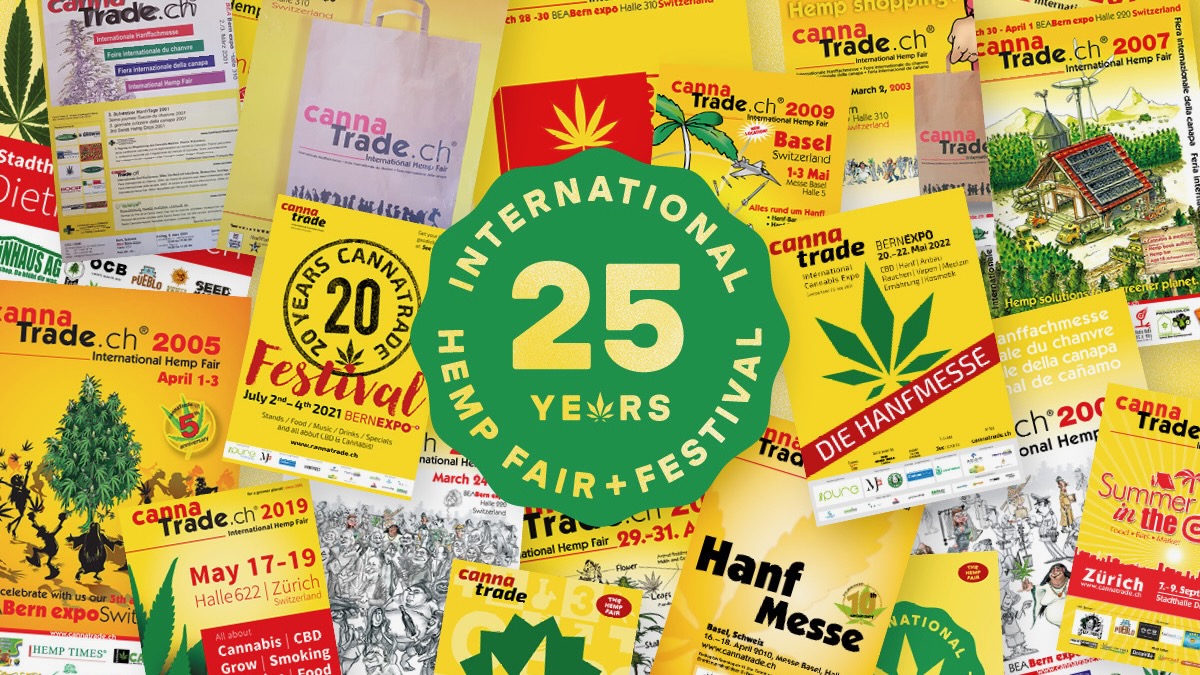
From Gray Zone to Platform: 25 Years of Hemp History
Those who know the history of CannaTrade are reading the history of European cannabis development. In the late 1990s, the market was characterized by what became known as the „scent sachet era“: hemp products were sold in a legal gray zone, under the guise of room and textile products. CannaTrade was then a gathering place for a scene that officially couldn’t say what it was.
📑 Inhaltsverzeichnis
Then came the shock of 2008. Three days before the trade show opened, a letter arrived. Organizer Ben Arn recalls:
„We were in the middle of setup when the letter came. I looked at the big Greenhouse Seeds banner and had to tell 30 seed companies they could no longer sell.“
The state had eliminated the hemp seed exception. The trade show survived, but lost exhibitor numbers for years and had to adapt its format.


What followed was a slow reinvention. Switzerland raised the legal THC threshold to 1 percent, which made the CBD boom possible in the first place. The niche market became a multi-billion-dollar business, the scene event became an industry platform. Today, professionals from across Europe visit the trade show – pharmacists, investors, agronomists, and politicians sit at the same conference tables as seasoned activists.
2026: A Trade Show in Turbulent Times
The jubilee edition takes place at a historically favorable moment. In Switzerland, cannabis pilot projects with around 15,000 participants are underway, intended to serve as the basis for possible complete regulation. At the same time, parliament is discussing a new cannabis products law. The Swiss pilot projects are considered a model across Europe – and CannaTrade 2026 will put this development at the center of attention.
Friday kicks off with an opening conference on Switzerland’s new cannabis law. National Council member Barbara Gysi will moderate a panel discussion bringing together representatives from politics, science, and industry. On Saturday, the focus shifts to the ongoing pilot projects: What insights have they provided so far, and what does that mean for planned regulation? Swiss pilot programs have long been considered pioneering for Europe – at CannaTrade 2026, they will be publicly evaluated for the first time on this scale.
Festival, Competition, and Medical Pavilion
Anyone who only knows CannaTrade as a trade show will be surprised in 2026. The supporting program is more comprehensive than ever. The festival Buds and Beats combines music, art, and cannabis culture – featuring Radio RaBe on stage, art zones, and designated smoking areas.
Combat-tested comes the Joint Roll Contest: Whoever takes the top spot in the Swiss championship for rolling speed and quality takes five grams of gold home. In parallel, the internationally staffed CannaSwissCup takes place, moderated by Cali P. And those seeking a medical perspective will find it in the separate Medical Pavilion – an offering specifically for healthcare professionals.
For B2B visitors, there’s a dedicated day plus the CB Lounge as a networking area. The trade show has thus evolved into a three-part offering: trade show, cultural event, and industry meeting under one roof. The last edition in 2024 was already marked by transformation – in 2026, the trade show continues this course.
What CannaTrade Means for the Industry
For many in the industry, CannaTrade is more than just a trade show. It’s a barometer: who exhibits, what is exhibited, and how full the conference halls are, says a lot about the state of the European cannabis economy that year. In 2026, visitor numbers are likely to exceed those of earlier editions – too much is in motion.
Switzerland is transitioning from a pilot country to a regulatory model. And CannaTrade, which once began as a small community booth, is today the platform where this transformation is publicly negotiated. 25 years – that’s no coincidence, that’s persuasive work.
Frequently Asked Questions About CannaTrade 2026
When and Where Does CannaTrade 2026 Take Place?
CannaTrade 2026 runs from May 29 to 31, 2026. The venue is once again Halle 622 in Zurich, Switzerland. The halls offer over 6,000 square meters of space for exhibitors from around the world and an international audience eager to experience the latest industry developments firsthand.
What’s Special About the 2026 Jubilee Edition?
In 2026, CannaTrade celebrates its 25th anniversary. Since its founding in 2001, the event has evolved from a small Swiss niche trade show to Europe’s oldest and one of its most significant cannabis trade shows. For the jubilee, special retrospectives, expanded exhibitor areas, and exclusive networking events are expected, honoring the pioneering work of the past two and a half decades.
What Program Events Are There Besides the Trade Show?
Beyond classic exhibitor booths, CannaTrade 2026 offers its customary diverse supporting program. This includes the CannaSwissCup, where the best Swiss cannabis flowers are awarded in various categories. There’s also the Chillout Area with a broad culinary offering at the Hemp Food Festival. Expert lectures as part of the CannaTrade Conference provide information on current trends in medicine, law, and cultivation technology.
Is CannaTrade Suitable for Professional Visitors?
Yes, the trade show puts strong emphasis on the business-to-business sector. There are special business tickets providing access to the exclusive Business Lounge. This is the central place for networking, cooperation discussions, and exchange between producers, dealers, and service providers in the international cannabis economy. Traditionally, the early hours of trade show Friday are also reserved for professional visitors.
What Significance Does CannaTrade Have for the European Cannabis Economy?
CannaTrade is considered the most important barometer for the Swiss market, but its influence extends far beyond national borders. Since Switzerland often takes a leading role in regulating pilot projects and handling CBD and genetics issues, international companies use the trade show as a strategic entry point into the European market. The trade show functions as a bridge between Europe’s different regulatory approaches and promotes cross-border knowledge transfer.







Würdest du die CannaTrade 2026 in Zürich besuchen?
Branchen-Update
News, Analysen und Reportagen — mehrmals im Monat direkt in dein Postfach.
Folge uns