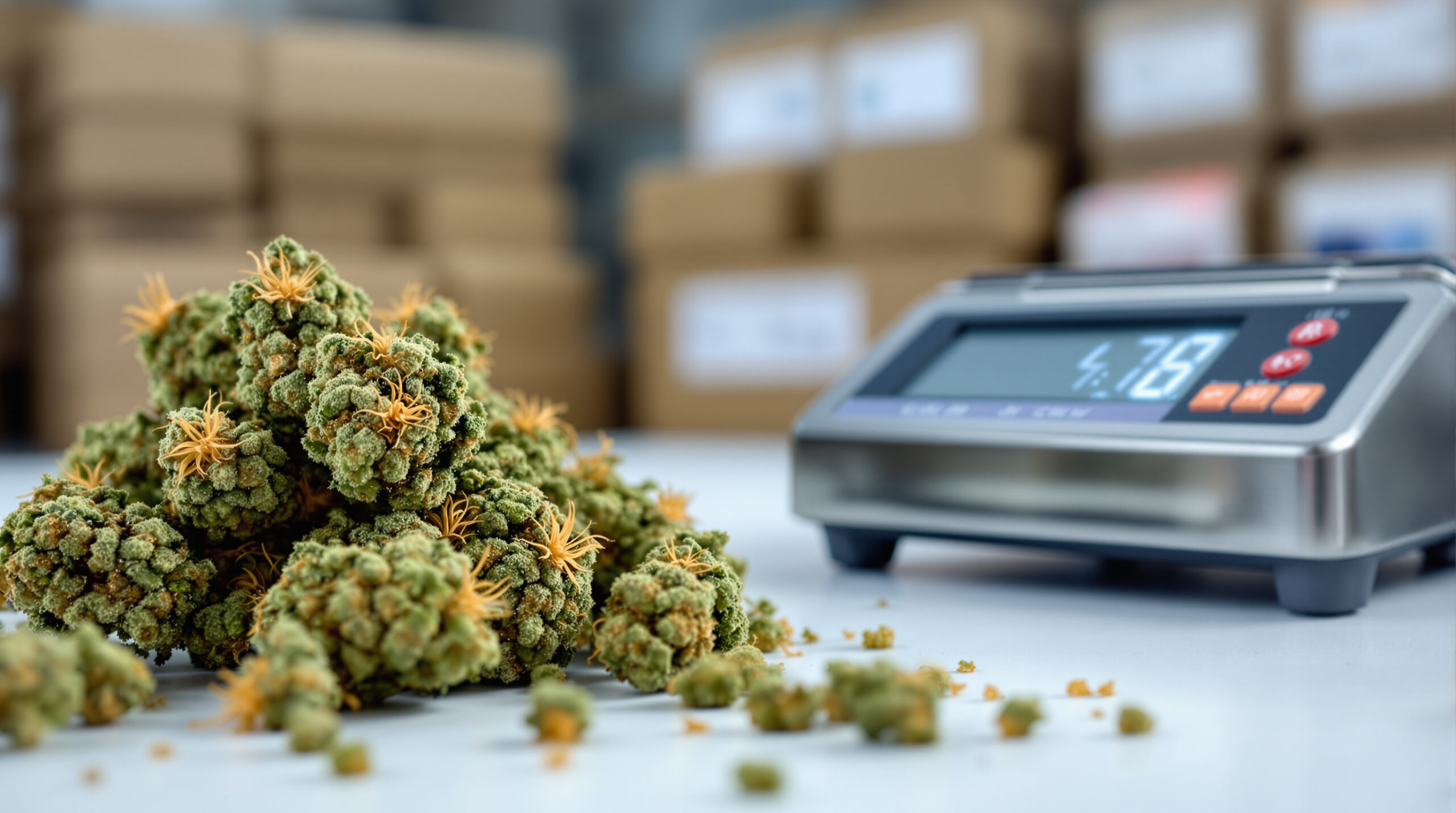
Germany’s medical cannabis market is delivering interim results that won’t please everyone in the industry. Within two years, prices for physician-prescribed cannabis flowers have fallen by roughly a quarter. The industry news service Krautinvest interprets this development as the first clear maturity signal of Europe’s largest cannabis market. For pharmacies and importers, the compression represents a real margin challenge, while for patients it offers a quiet glimmer of hope.
📑 Inhaltsverzeichnis
- How Sharply Have Cannabis Prices Fallen in Germany?
- What’s Driving Cannabis Price Compression?
- What North America and Great Britain Reveal About the Next Stage
- What Does the Price Decline Mean for Pharmacies, Patients, and Health Insurance?
- What Comes After Price Compression?
- Frequently Asked Questions
- 💬 Fragen? Frag den Hanf-Buddy!
How Sharply Have Cannabis Prices Fallen in Germany?
The Krautinvest analysis from May 28, 2026 cites an average price reduction of around 25 percent between early 2024 and May 2026. During the same period, the entire import market has multiplied many times over—a classic pattern in which additional suppliers simultaneously enter a market and compress pharmacy prices. While 2024 saw dried medical cannabis flowers in pharmacies frequently priced between eight and eleven euros per gram, many wholesale offers today are significantly lower. Retail price ranges lag behind due to pharmacies factoring in mixed pricing strategies and inventory turnover.
The price movement runs parallel to a market shift that is also visible in official import figures. For the first time in two years, German cannabis imports declined slightly in the first quarter of 2026. We examined this in detail in our analysis of the 50.5 tons of imports in Q1 2026. Simultaneously, the spread between the most expensive and cheapest varieties is narrowing, as high-THC standard genetics become increasingly interchangeable.


What’s Driving Cannabis Price Compression?

Several factors are at work simultaneously. First, the number of licensed importers and wholesale distributors has increased significantly since the Medical Cannabis Act took effect, while patient demand is growing but not at the same pace as supply. Second, Canadian and Portuguese producers have substantially expanded their EU-GMP capacity over the last 18 months. Third, newcomers from North Macedonia, Colombia, Australia, and Lesotho are pressing into the German market with aggressive list prices to secure a position ahead of the expected consolidation wave.
A technical factor adds to this. Irradiation and alternative decontamination procedures are becoming cheaper and more widespread, reducing per-kilogram unit costs. On the pharmacy side, digital ordering platforms and larger wholesale clusters are reducing friction losses in logistics. The result is a market that has transitioned from supply scarcity to a mature phase with price competition in just a few years.
What North America and Great Britain Reveal About the Next Stage

Germany’s price dynamics closely resemble patterns observed in Canada and individual U.S. states between 2018 and 2022. There, wholesale prices fell 40 to 60 percent over three to four years before a new equilibrium emerged. Krautinvest argues that Germany could follow a similar curve, though potentially with less steep declines, because the medical nature of the market enforces minimum quality standards and thus creates a hard price floor.
A look at Great Britain also shows that the DACH region is not alone in the international distribution struggle. Our overview of UK imports in 2025 documents how Canada now supplies British importers directly rather than routing through continental hubs. Even in our assessment of Thailand after its cannabis legalization, we see how quickly a liberalized market reorganizes after the initial euphoria phase. Comparison with the German Prohibition Partners market report makes clear how central volume and patient numbers remain for price stability.
What Does the Price Decline Mean for Pharmacies, Patients, and Health Insurance?

For supplying pharmacies, compression reshapes the business model. Raw margins per gram shrink, while demands increase for inventory turnover, product range breadth, and pharmaceutical consultation. Pharmacies with large cannabis assortments can offset the decline through higher volumes. Small neighborhood pharmacies, however, must calculate whether the indication-based business remains economically viable. Against this backdrop, the debate over statutory health insurance (GKV) reimbursement gains new urgency, because lower wholesale prices reduce the room for justifying reform to insurance companies.
For patients, compression is initially good news. Self-paying patients benefit directly because lower wholesale prices eventually reach pharmacy counters. For those with statutory insurance seeking cost coverage approval, entitlements don’t change, but the justification burden against insurers decreases. The more interesting question is whether price maturity also leads to expanded treatment indications. As long as per-unit costs fall, the high therapy cost argument weakens, enabling physicians to work more strategically with cannabinoid therapies.
What Comes After Price Compression?
Krautinvest points to two realistic scenarios. In the first path, the German market consolidates through acquisitions and market exits until a stable price level settles. In the second path, new product categories like standardized cannabis extracts, vape cartridges, and edibles appear in standard care once regulatory clarity emerges. Both scenarios are not mutually exclusive. A mix is likely, in which pure flower suppliers lose market share and integrated providers with their own genetics, production, and distribution increasingly define the market.
For the DACH region outside Germany, an indirect dynamic is emerging. Austria and Switzerland often orient themselves by German wholesale price levels because the largest volumes move there. If German wholesale prices continue falling, Swiss pharmacy chains also come under pressure to justify their higher margins.
Frequently Asked Questions
How much have cannabis prices in Germany fallen since 2024?
According to Krautinvest’s analysis from May 28, 2026, the average price reduction stands at around 25 percent over two years. The exact amount depends on variety, THC content, origin, and wholesale channel, but the trend is visible market-wide.
Will cannabis flowers now be cheaper at the pharmacy?
Wholesale prices are falling faster than pharmacy prices because pharmacies sell down existing inventory and use mixed pricing strategies. Over six to twelve months, however, retail prices should also drop noticeably, especially for standard high-availability genetics.
Does price compression have consequences for quality?
The medical nature of the market sets a quality floor because EU-GMP standards and decontamination procedures remain mandatory. A price floor effect through minimum quality is therefore likely; a race to the bottom like in parts of the U.S. recreational market is unlikely under German regulatory conditions.
What does compression mean for investors in the cannabis industry?
Pure import traders without brands, production, or platform logistics face margin pressure. Integrated providers with their own genetics, pharmacy networks, and patient engagement are better positioned. Consolidation through acquisitions becomes more likely, especially in the mid-market segment.
Does price compression change the GKV debate over cannabis flowers?
Lower wholesale prices weaken health insurers‘ cost argument because the fiscal burden per patient decreases. Discussion shifts more toward which indications remain reimbursable and what role telemedicine plays in prescribing.
Kaufst du dein Medizinalcannabis derzeit günstiger als vor zwei Jahren?
Source: Krautinvest, „Germany May Be the First Warning Sign of Global Cannabis Price Compression,“ May 28, 2026, plus proprietary market observation and supplementary industry reports.




Branchen-Update
News, Analysen und Reportagen — mehrmals im Monat direkt in dein Postfach.
Folge uns