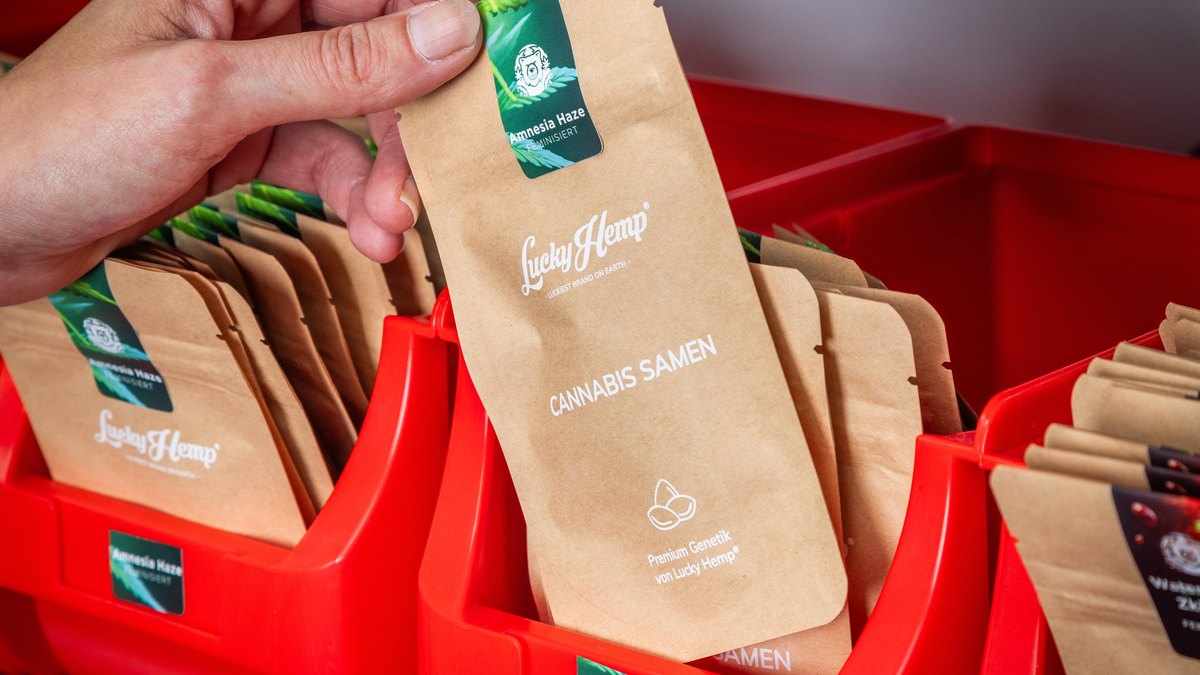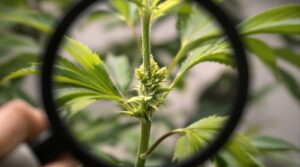
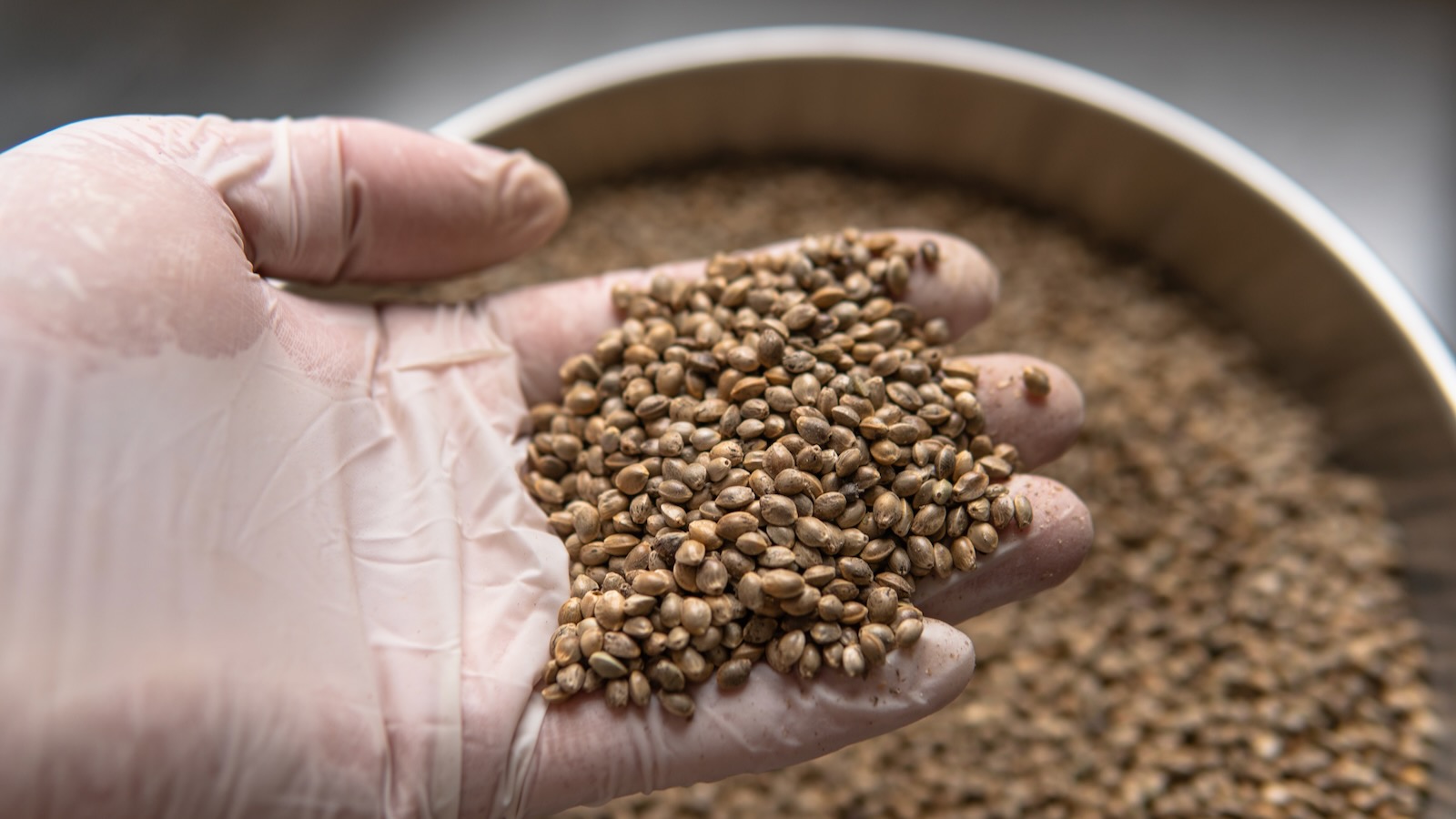
Anyone in Germany who legally grows up to three plants at home faces perhaps the most important decision of the entire growing season before a single seed even touches soil. The choice of the right cannabis genetics determines how large the plant grows, how long it flowers, how much it yields, how it smells, and how it works. Understanding the foundation means making better decisions when buying seeds and avoiding costly disappointments. This guide explains the basics of cannabis genetics, categorizes common seed types, and shows what really matters when buying in 2026.
📑 Inhaltsverzeichnis
- Indica, Sativa, Ruderalis: the three original types of cannabis genetics
- Hybrids are today’s standard
- F1, F2, IBL, and polyhybrid strains: why stability matters
- Triploid cannabis genetics: the trend in 2025 and 2026
- Regular, feminized, autoflowering: an overview of seed types
- Phenotype and genotype: why not every seed is the same
- Male, female, hermaphrodite: chromosomes and risks
- Terpenes as a genetics indicator
- Seed bank reputation, certificates, and documentation
- Legal situation: feminized seeds in Germany under CanG
- Purchase decision: a practical checklist
- Clone or seed, what brings more practical certainty
- Frequently asked questions about cannabis genetics when buying seeds
- 💬 Fragen? Frag den Hanf-Buddy!
Concrete strain recommendations can be found in our strain guide 2026. This is about the why behind it, the knowledge that puts you in a position to meaningfully evaluate recommendations and apply them to your own homegrow.
Indica, Sativa, Ruderalis: the three original types of cannabis genetics
Botanically, cannabis belongs to the genus Cannabis within the hemp family. The classic classification distinguishes between Cannabis indica, Cannabis sativa, and Cannabis ruderalis. Indica lines originally come from the region between the Hindu Kush, Afghanistan, and Pakistan. They grow compact, have broad leaflets, short internodes, and a short flowering time of about eight to nine weeks. Sativa lines come from equatorial regions of Central America, Africa, and Southeast Asia, grow tall and slender, have narrow leaves, and often need ten to fourteen weeks of flowering. Ruderalis, finally, is the original wild form from Central Asia and Eastern Europe, small, barely THC-containing, but with a genetically anchored peculiarity: it flowers not through light changes, but based on age—autoflowering.


For homegrows, this three-way division is mostly historical today. Pure landraces are practically non-existent in seed shops, and the classic claim that indica makes you sleepy and sativa makes you active is long outdated by science. Modern research traces effects to the interplay of cannabinoids with terpenes, the so-called entourage effect. The terms indica and sativa remain useful as rough morphological descriptions, classifying growth form, flowering duration, and leaf structure. For predicting effects, they’re of little use.
Hybrids are today’s standard
Everything that today goes by catchy names like Gorilla Glue, Gelato, Wedding Cake, or Runtz through seed banks is genetically a hybrid. Breeders have spent decades crossing indica and sativa lines to deliberately combine traits—short flowering time with high yield, strong aroma with easy handling, high THC content with robust genetics. Many modern hybrids also contain a touch of ruderalis, which brings the autoflower trait.
However, a hybrid describes not only the crossing of two lines but also the genetic state of the resulting plants. And this is exactly where the topic begins that is rarely explained in seed shops: the stability of a strain and thus the likelihood that ten seeds will grow into ten similar plants.
F1, F2, IBL, and polyhybrid strains: why stability matters
In plant breeding, F1 describes the first filial generation, the direct offspring of two genetically distant but internally stable parent lines. When a breeder crosses two homozygous lines, the resulting F1 seeds are highly uniform, often additionally vigorous and high-yielding. Biology calls this phenomenon heterosis, or hybrid vigor. True F1 hybrids recently made headlines when individual breeders with stable parent lines achieved record yields. Our report on polyploidy and new F1 genetics puts this development in detail perspective.
Crossing F1 plants with each other creates the F2 generation. Here the genetics split again, and the plants become noticeably more different. An F2 can contain beautiful outliers, but also disappointing ones. Anything beyond F3 moves toward new selection, and true inbred lines, or IBL, only emerge after five to eight generations of consistent backcrossing. An IBL is extremely homogeneous but rarely offered because breeding work is expensive.
The reality in the seed shop looks different. Most commercial strains are so-called polyhybrid strains, crosses of already-crossed hybrids. An example: if Gelato itself already consists of Sunset Sherbet and Thin Mint GSC and is then crossed with Zkittlez, three or four generations of unstable genetics lie in the seed. The result is a pack of seeds from which very different plants grow, so-called phenotypes. For a homegrow with three plants, this means: if you really want comparable results, buy either a proven IBL, an F1 promoted as stable, or clones of the same mother plant.
Triploid cannabis genetics: the trend in 2025 and 2026
Cannabis is naturally diploid, meaning each cell carries two sets of chromosomes. Triploid plants have three sets. In agriculture, this has long been standard—triploid watermelons are seedless, triploid bananas are actually edible. Since around 2023, several seed banks have been working intensively on triploid cannabis genetics, and in 2025 the first commercial lines came to market. Triploid plants cannot be fertile, which in practice means they produce little or no seeds, even if male pollen is nearby.
For homegrowers this is interesting for three reasons. First, floral mass increases significantly because the plant doesn’t spend energy on seed production. Second, hermaphrodite risk is lower through sterility, because even hermaphrodite pollen flow no longer produces seeds. Third, breeders report higher resin yields and more pronounced terpene profiles. How this technique originated and what role it will play in the hemp market in the future, we’ve described in detail in our article on the future of triploid cannabis genetics.
For 2026, it’s worth keeping an open eye on triploid lines. The price per seed is significantly higher than classical hybrids, and the available strain selection is still limited. For home cultivation with three plants, however, a triploid genetic can potentially deliver exactly what otherwise only clone operations guarantee: uniformity combined with yield.
Regular, feminized, autoflowering: an overview of seed types
Beyond genetics, seed banks distinguish four technical categories that strongly affect cultivation in practice. Regular seeds are the original form, they produce approximately fifty percent male and fifty percent female plants. For breeders and selection work, they’re indispensable because only regular seeds produce homozygous breeding lines. For homegrows with limited space, however, they’re inefficient because half the plants must be removed early.
Feminized seeds are created by deliberately encouraging a female plant to produce male flowers, for example through treatment with colloidal silver. The obtained pollen pollinates another female plant, and the resulting seeds are practically one hundred percent female. For home cultivation, this is the standard because every seed can lead to harvest. Critics, however, point out that feminized lines tend to be somewhat more susceptible to hermaphroditism, to intersex flowering under stress. Clean, stable genetics and even cultivation largely offset this in practice.
Photoperiodic strains flower based on light control. They grow in the vegetative phase under long light periods, usually eighteen hours a day, and enter flowering as soon as the light cycle is reduced to twelve hours. This gives the grower full control over timing and plant size, but requires a grow box or light-tight room. Autoflower strains, however, carry ruderalis genetics and flower based on age after about three to four weeks, regardless of light cycle. They’re more compact, faster from seed to harvest, but usually less productive and poorly stress-tolerant. Why this genetics is attractive for beginners is explained in our guide to growing autoflowers.
Phenotype and genotype: why not every seed is the same
A plant’s genotype describes its genetic makeup, the sum of all hereditary traits. The phenotype is what the plant actually displays: size, structure, leaf color, flowering time, smell, yield, and effects. Two seeds from the same pack have the same or very similar genetics, but can produce completely different phenotypes because different gene combinations come into play and because environmental factors like light, temperature, and root space influence expression.
Professional breeders call the search for the perfect plant in a group of seedlings a pheno-hunt. From fifty or a hundred seeds of a cross, the plant is selected that optimally combines yield, aroma, appearance, and effects. Clones are taken from it, which are genetically identical. For a homegrow within the framework of three allowed plants, a true pheno-hunt is difficult, but the principle helps in understanding disappointments: if three different plants grow from a pack of feminized seeds, it’s not due to poor genetics, but to the polyhybrid nature of the strain.
Male, female, hermaphrodite: chromosomes and risks
Cannabis is a dioecious plant, meaning there are female and male specimens. Sex determination occurs as in humans via chromosomes: female plants have two X chromosomes, males have one X and one Y. Female plants produce the resin-rich flowers consumed as cannabis. Male plants produce pollen sacs and must, if you don’t want seeds, be removed early because a single male pollen drift will pollinate your entire harvest and turn it into seeds.
Hermaphrodites, technically called hermaphrodites, are female plants that under stress additionally produce male flowers. Causes include light leaks during the dark phase, extreme heat, overfertilization, mechanical injury, or inherited instability. The risk is low with cleanly bred genetics, but can never be completely ruled out. Those who check plants daily detect hermaphrodite traits early—the typical banana-shaped pollen sacs in the middle of flowering—and can remove the affected plant or carefully pluck out the flower.
Terpenes as a genetics indicator
Those seeking a strain that not only looks good but should also work in targeted ways pay attention to the terpene profile. Terpenes are essential oils responsible for smell and taste. Myrcene, dominant in many indica-dominant hybrids, has a reputation for physical relaxation. Limonene brings citrus freshness and is considered mood-enhancing. Pinene smells like pine and is associated with concentration. Linalool is the lavender terpene and has a calming effect. Caryophyllene, peppery-spicy, is the only terpene that directly binds to cannabinoid receptors. An overview of the most important aromatic compounds can be found in our overview of the 20 most important cannabis terpenes.
Good seed banks don’t just state THC content on the strain page but also the dominant terpene. This is often more informative for strain selection than the distinction between indica and sativa. Those seeking a sleep-inducing strain choose a line with high myrcene and linalool content. Those wanting to maintain mental clarity during the day look for pinene or limonene.
Seed bank reputation, certificates, and documentation
The cannabis seed market is international and subject to its own rules in each country. For the German homegrower, this means they usually buy from Dutch, Spanish, or British seed banks. Quality differences are significant. Established houses like Paradise Seeds, Royal Queen Seeds, Dutch Passion, Sensi Seeds, or Barney’s Farm have in many cases maintained stable lines over decades. The long company history of Paradise Seeds shows what consistent selection work over decades can achieve.
Reputable seed banks clearly state whether it’s an F1, F2, IBL, or polyhybrid cross. They provide information about parent lines, name average flowering time, plant height, yield, and terpene dominance. Analysis certificates, as common in the pharmaceutical industry, barely exist in the seed market, but some breeders offer germination guarantees and internal batch testing. As a rule of thumb: if the datasheet contains no information about the genetics generation, they’re probably selling a polyhybrid from mass production.
Important for price comparison: a premium seed can cost fifteen to twenty euros, while no-name genetics are available from two euros. With three plants per year, the premium for good genetics is negligible because every poor plant ultimately costs much more than the seed price. This point connects closely to the practical part that our strain guide 2026 details.
Legal situation: feminized seeds in Germany under CanG
Since the Cannabis Act of April 1, 2024, private homegrows of up to three plants for adults have been legal in Germany. Growing from cuttings or from seeds lawfully acquired within the European Union is permitted. Cannabis seeds themselves are botanically considered non-psychoactive and do not fall under the narcotics law. Trading in them was tolerated even before legalization, though usually in a gray area where seeds were formally sold as collectibles or for decoration.
With CanG the context has changed, though the legal construction has only marginally. Those growing three plants for homegrows in Germany may use seeds from EU shops. Importing from third countries, such as from the United Kingdom or Switzerland, remains tricky and can be subject to customs objections. Within the EU internal market, seed shipments to private individuals are in most cases unproblematic, at least according to current administrative practice. However, there is no conclusively clarified legal position, and courts currently decide on a case-by-case basis. Those wanting to be on the safe side should order from German, Austrian, or Dutch seed banks and keep the receipt.
Purchase decision: a practical checklist
A sound purchasing decision is based on several questions that should be answered in this order. First: what space is available? An 80-liter box automatically limits the strain to compact indica-dominant or autoflower lines; a 120-liter box or balcony allows sativa-leaning strains. Second: what time of year? Autoflower works even outdoors in summer; photoperiodic strains outdoors require clear planning through to fall harvest. Third: what yield versus aroma expectation? A yield-optimized F1 hybrid delivers more grams; a selected IBL provides more intense terpenes instead.
Fourth: what effects are desired—this warrants a look at THC, CBD, and terpene profiles. Fifth: how much experience is involved—beginners do well with feminized autoflower strains; advanced growers reach for photoperiodic hybrids or F1 genetics. Sixth: how the seed bank documents—transparent datasheets are a strong quality signal. Working through these six points makes a conscious decision rather than a gut choice based on package design.
Clone or seed, what brings more practical certainty
An often underestimated alternative to buying seeds is starting with a clone, a cutting from an established mother plant. Clones are genetically identical to the mother, bringing exactly what the mother has already shown, from smell to yield to flowering behavior. Those who are members of a cannabis social club or have access to a serious clone source bypass the phenotype lottery that’s unavoidable with polyhybrid seeds. Disadvantages include higher susceptibility to pests that may be brought from the mother, and limited mobility because clones must be transported pre-rooted.
For the majority of homegrowers, the seed route remains the practical choice. Trade is established, strain selection is enormous, and hygiene is better controlled through the germination process in your own medium. Stable genetics from a proven seed bank deliver results hardly inferior to a clone under clean cultivation, provided expectations for the individual phenotype remain realistic. The real skill lies in growing three healthy plants from three seeds and learning from the first round’s experience which genetics suits your own box, light setup, and personal taste.
Frequently asked questions about cannabis genetics when buying seeds
What’s the difference between feminized and regular cannabis seeds?
Regular seeds produce approximately fifty percent male and fifty percent female plants and are primarily of interest to breeders wanting to develop new lines. Feminized seeds deliver almost exclusively female plants and are thus the means of choice for homegrows because every plant leads to a harvest. With three allowed plants, regular seeds are practically always wasted.
Are autoflowering strains really lower-yielding?
Modern autoflower genetics have gained significantly in yield but on average remain below what photoperiodic strains deliver under optimal conditions. In return, they’re faster from seed to harvest, more compact, and need no controlled light cycle. For beginners, small boxes, and outdoor growing in Northern Europe, they’re often the better choice.
What does F1 mean for cannabis seeds?
F1 denotes the first filial generation from crossing two stable, homozygous parent lines. True F1 seeds grow very uniformly and often particularly vigorously because the heterosis effect takes hold. Many strains are marketed as F1 without actually having stable parent lines, so it’s worth checking the seed bank’s documentation.
Is triploid cannabis genetics worth it for homegrows?
Triploid plants are sterile, thus producing few or no seeds, and direct their energy more toward flower and resin production. For homegrows this potentially means higher yield and more pronounced terpene profile, at somewhat higher seed costs and still limited strain selection. For ambitious growers wanting to try something new in 2026, this is an exciting option.
Can I legally buy cannabis seeds in Germany?
Yes, seeds are not subject to narcotics law; they’re botanically non-psychoactive. Since the Cannabis Act of April 1, 2024, growing up to three plants for adults is also permitted, provided seeds were purchased within the EU. Imports from third countries can be problematic customs-wise; within the internal market, shipping is unproblematic according to current practice.
How do I recognize a reputable seed bank?
Worauf achtest du beim Samenkauf für deinen Homegrow am meisten?
Good seed banks document their strains transparently, naming genetics generation, parent lines, flowering time, yield figures, and terpene profile. They offer germination guarantees, work with traceable batch numbers, and maintain their assortment consistently over years. If a product page only features catchy names and THC percentages but no information about generation, it’s usually a polyhybrid mass production without a stable foundation.







Branchen-Update
News, Analysen und Reportagen — mehrmals im Monat direkt in dein Postfach.
Folge uns