Why Tomato Soil for Cannabis Gets So Much Attention
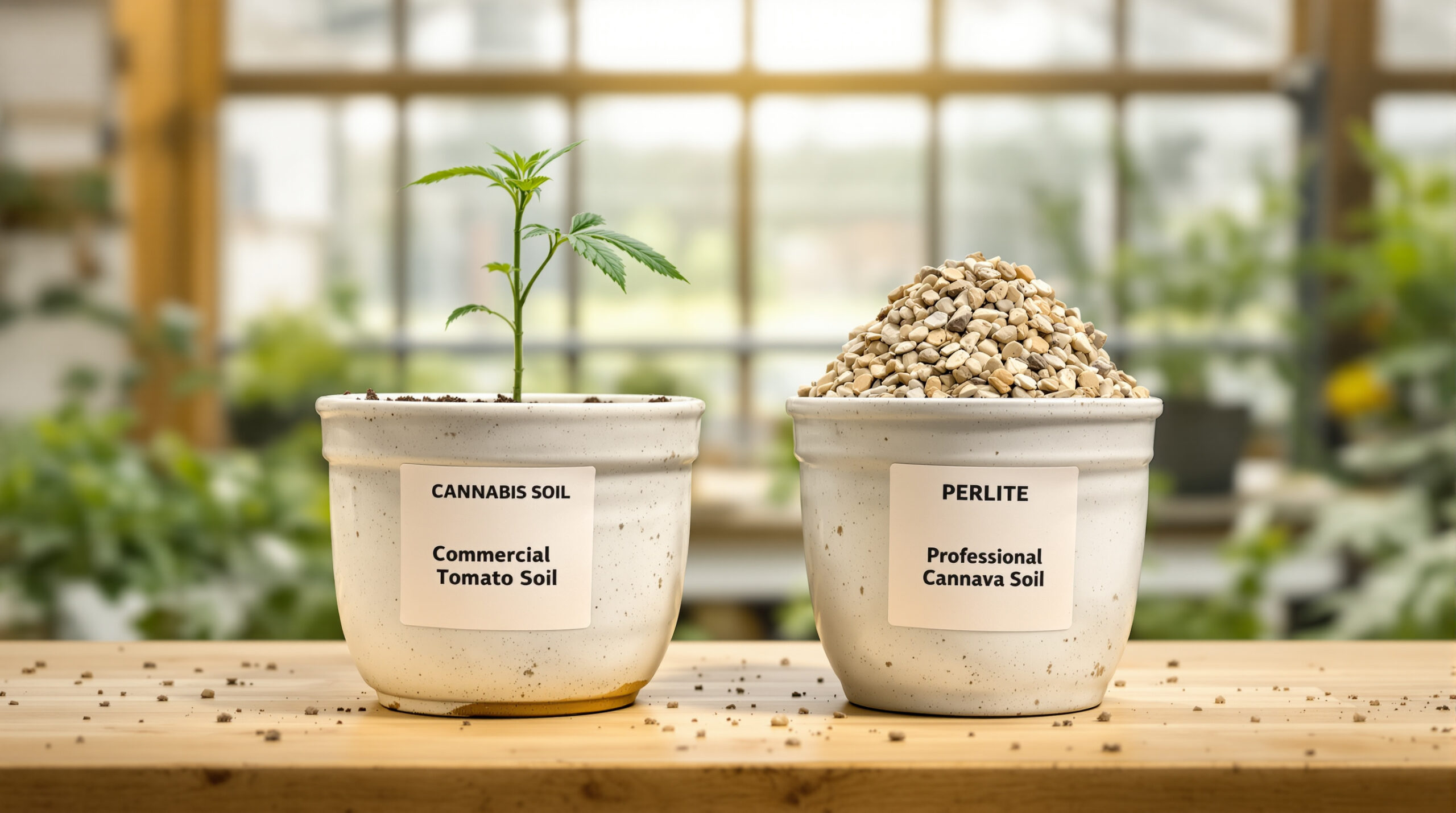
Few tips stick around in homegrow forums as stubbornly as this one: instead of expensive specialty cannabis soil from the grow shop, just grab a bag of tomato soil from the hardware store. Tomatoes and cannabis are similar, the reasoning goes—both are hungry feeders, both need warm conditions. The idea sounds tempting because a 40-liter bag of tomato soil often costs a fraction of what branded cannabis soil demands. But how much of this home remedy is actually grounded in science, and where does the myth begin? We’ve tested this tip against the agronomic facts.
📑 Inhaltsverzeichnis
- Why Tomato Soil for Cannabis Gets So Much Attention
- The Biological Logic Behind the Comparison
- The NPK Comparison: Where Tomato Soil Falls Short
- The Real Risk: Pre-Fertilized Soil and Sensitive Seedlings
- Don’t Overlook Structure, pH, and Drainage
- Conclusion and Practical Alternatives
- Frequently Asked Questions
- 💬 Fragen? Frag den Hanf-Buddy!
The short answer upfront: tomato soil isn’t nonsense, but it’s not foolproof either. It works well within a narrow window and becomes a problem in another. Anyone who understands why can actually work with the hardware store bag instead of blindly hoping for luck.
The Biological Logic Behind the Comparison
The comparison isn’t arbitrary. Tomatoes and cannabis are both nutrient-hungry fruiting plants that build massive biomass over a season and develop high phosphorus and potassium demands during the fruiting phase. Good tomato soil is therefore designed to offer a loose structure, decent water retention, and organic base fertilization. These are exactly the three properties a cannabis plant needs as well. So the initial logic of this home remedy isn’t biologically far-fetched.


The catch lies in the details. Tomato soil is optimized for a single crop plant with a specific growth rhythm, and that rhythm only partially aligns with cannabis. Growers who understand the differences can compensate for them. Those who ignore them harvest less at best and burnt seedlings at worst. For a more detailed overview of substrate requirements for cannabis, our guide on what soil cannabis needs covers this more thoroughly.
The NPK Comparison: Where Tomato Soil Falls Short
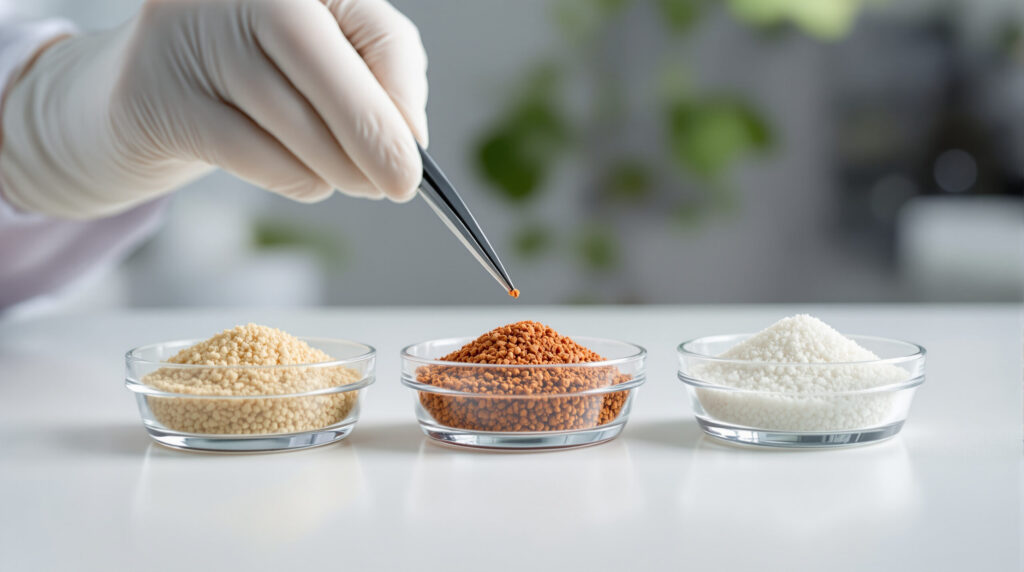
The critical factor is the nutrient ratio—the NPK value of nitrogen, phosphorus, and potassium. Standard tomato soil typically runs around 1–2% nitrogen, 0.5–1% phosphorus, and 1–2% potassium, supplemented with calcium and magnesium. Cannabis specialty soils tend to be more heavily formulated, with more nitrogen during the vegetative phase and more phosphorus and potassium during fruiting.
For the vegetative phase, this gap is usually manageable because plants are only moderately hungry in the first weeks anyway and draw from the organic base fertilization. It becomes critical in flowering. Cannabis then shifts its demand sharply toward phosphorus and potassium, while tomato soil often remains nitrogen-heavy. An excess of nitrogen during flowering promotes further leaf growth, but can slow flower development and flatten out aroma. At this point, you need targeted additional feeding or repotting, otherwise the substrate works against your actual goal.
The Real Risk: Pre-Fertilized Soil and Sensitive Seedlings
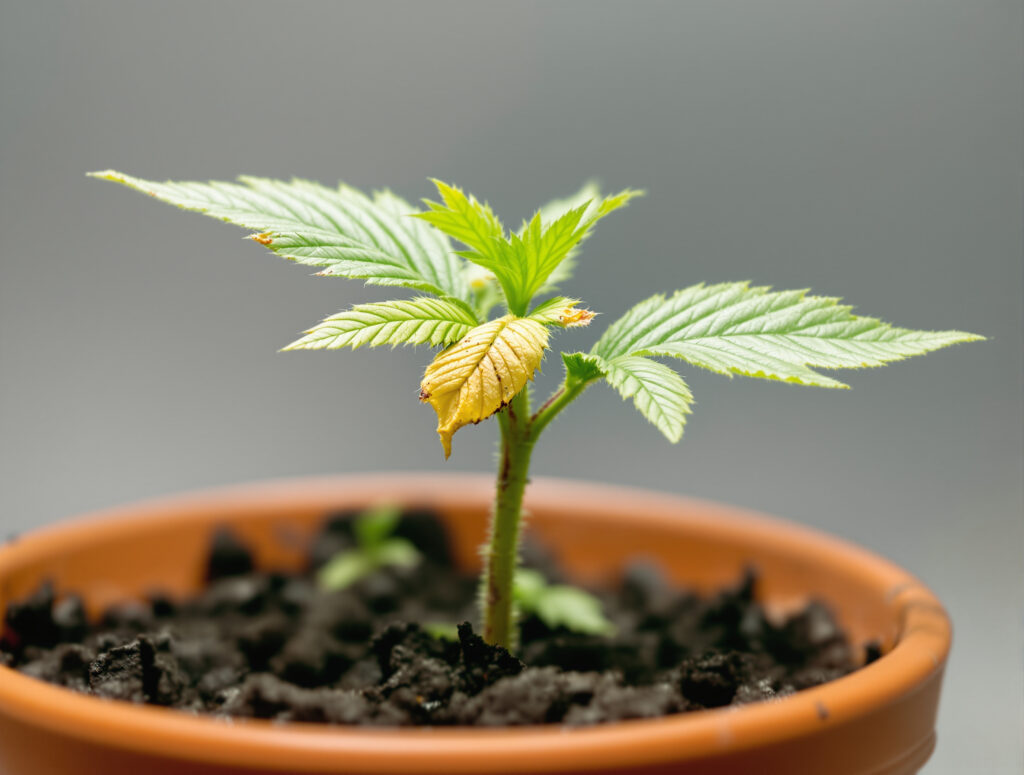
The biggest practical problem isn’t flowering—it’s the start. Tomato soil is pre-fertilized, often generously, because it’s meant for robust nursery-bought young plants, not freshly germinated seedlings. Cannabis seedlings are extremely sensitive in their first two weeks. Their young roots can barely tolerate salt load, and that’s exactly what a heavily pre-fertilized soil delivers right out of the bag.
The result is classic nutrient burn: leaf tips turn yellow to brown, curl up, and die off before the plant even gets going properly. This happens because of excessive salt content in the root zone—a high EC value. During germination, a seedling doesn’t need additional fertilization at all because the seed itself still supplies reserves. Hot soil is no advantage in this window—it’s a burden. If you want to use tomato soil, germinate in a low-nutrient seed-starting substrate first, then move seedlings to the richer soil after two to three weeks.
Don’t Overlook Structure, pH, and Drainage
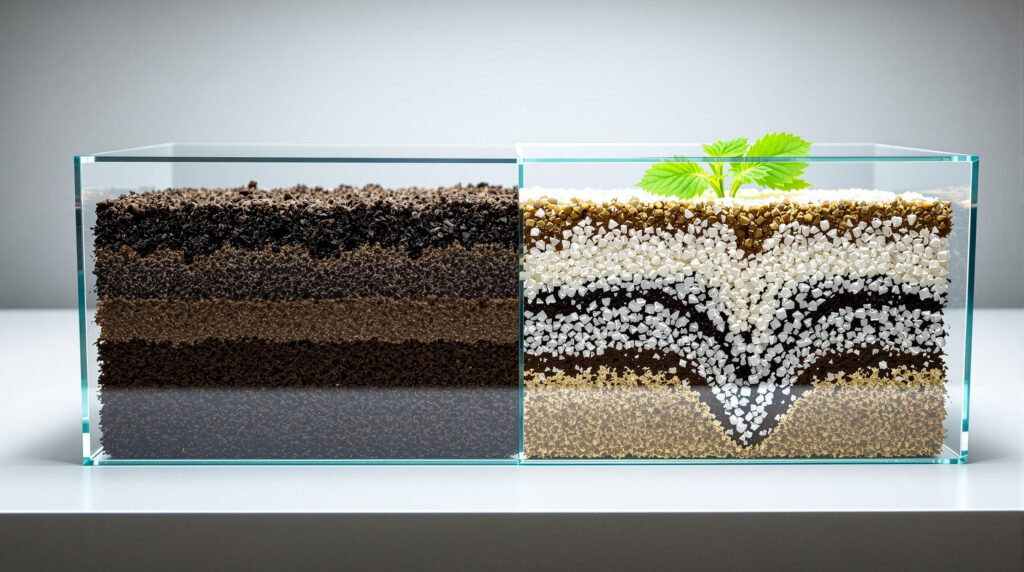
Beyond nutrients, physical composition determines success or failure. Cannabis likes an airy, well-aerated root zone with reliable drainage. Some tomato soils, however, tend to compact over time and water-log, which worsens root oxygen availability and promotes root rot. A simple trick helps here: mixing in around 20–30% perlite loosens the substrate permanently and noticeably improves water drainage.
pH deserves attention too. Cannabis takes up nutrients most efficiently in soil within roughly 6.0–7.0, with an ideal window around 6.3–6.7. In this range, most nutrients are available as plant-usable ions. If soil is significantly below this—say, because it’s heavily peat-based—it blocks the uptake of phosphorus, calcium, and magnesium. An affordable pH meter costs little and spares weeks of guessing over supposed deficiencies that are really lockout problems. Our article on which light spectrum suits cannabis in indoor growing shows how much lighting also influences yield and quality alongside substrate.
Conclusion and Practical Alternatives
So tomato soil for cannabis is neither a secret tip nor a complete washout—it’s a compromise with clear rules. Whoever germinates in low-nutrient substrate, later loosens it with perlite, keeps an eye on pH, and steers with phosphorus and potassium-focused feeding during flowering can get decent results from the hardware store bag. For experienced growers, it’s a legitimate money-saving route.
Beginners usually ride easier with a lightly pre-fertilized Light-Mix soil because it’s more forgiving and keeps fertilizer control in your hands. If you don’t want to constantly feed all season, grab a more heavily pre-fertilized All-Mix variant instead. Brands like BioBizz, Plagron, or Canna Terra have such substrates ready-made. Tomato soil remains the cheap wildcard for anyone who knows what they’re doing and is willing to make some adjustments.
Frequently Asked Questions
Can I grow cannabis entirely in tomato soil?
Basically yes, but not without adjustments. The soil carries a young plant well through the vegetative phase. In flowering, you must add extra feeding because of higher phosphorus and potassium demand, since tomato soil tends to remain too nitrogen-heavy.
Why do my seedlings burn in tomato soil?
Tomato soil is usually heavily pre-fertilized, and a seedling’s young roots tolerate that salt load poorly. The result is nutrient burn with yellow, curled leaf tips. Germinate better in low-nutrient seed-starting substrate and repot only after two to three weeks.
Do I need to mix tomato soil with perlite?
It’s highly recommended. Some tomato soils compact over time and water-log, which can damage roots. Around 20–30% perlite improves drainage and creates an airy root zone.
What pH is right for cannabis in tomato soil?
The root zone should stay between roughly 6.0–7.0 in soil, with 6.3–6.7 being ideal. In this range, plants can take up most nutrients. An affordable meter helps distinguish actual deficiencies from lockout issues.
Is tomato soil cheaper than cannabis specialty soil?
Welche Erde verwendest du für deine Cannabispflanzen?
Usually yes—the hardware store bag typically costs much less. But the price advantage shrinks when you factor in perlite, a pH meter, and flowering-stage fertilizer. For beginners, the more forgiving Light-Mix soil often makes better sense.






Branchen-Update
News, Analysen und Reportagen — mehrmals im Monat direkt in dein Postfach.
Folge uns