In Berlin, several people have fallen seriously ill since mid-September after eating sweets sold as THC gummies. A 42-year-old man died on 22 September in Neukölln. The Senate Department for Health has warned the districts, hospitals and counselling centres. One thing stands out above all: the symptoms do not match cannabis, but opioid poisoning.
📑 Inhaltsverzeichnis
What Happened in Friedrichshain and Neukölln
The first severe cases occurred on September 18 in Friedrichshain. A 30-year-old woman experienced a serious loss of consciousness, according to Berlin’s drug checking service. Shortly afterward, a 40-year-old man showed identical symptoms. Both were hospitalized and survived. Four days later, a 42-year-old man died in Neukölln. However, police have not yet confirmed whether consumption of the gummies actually caused his death. Autopsy and toxicological testing are still pending.
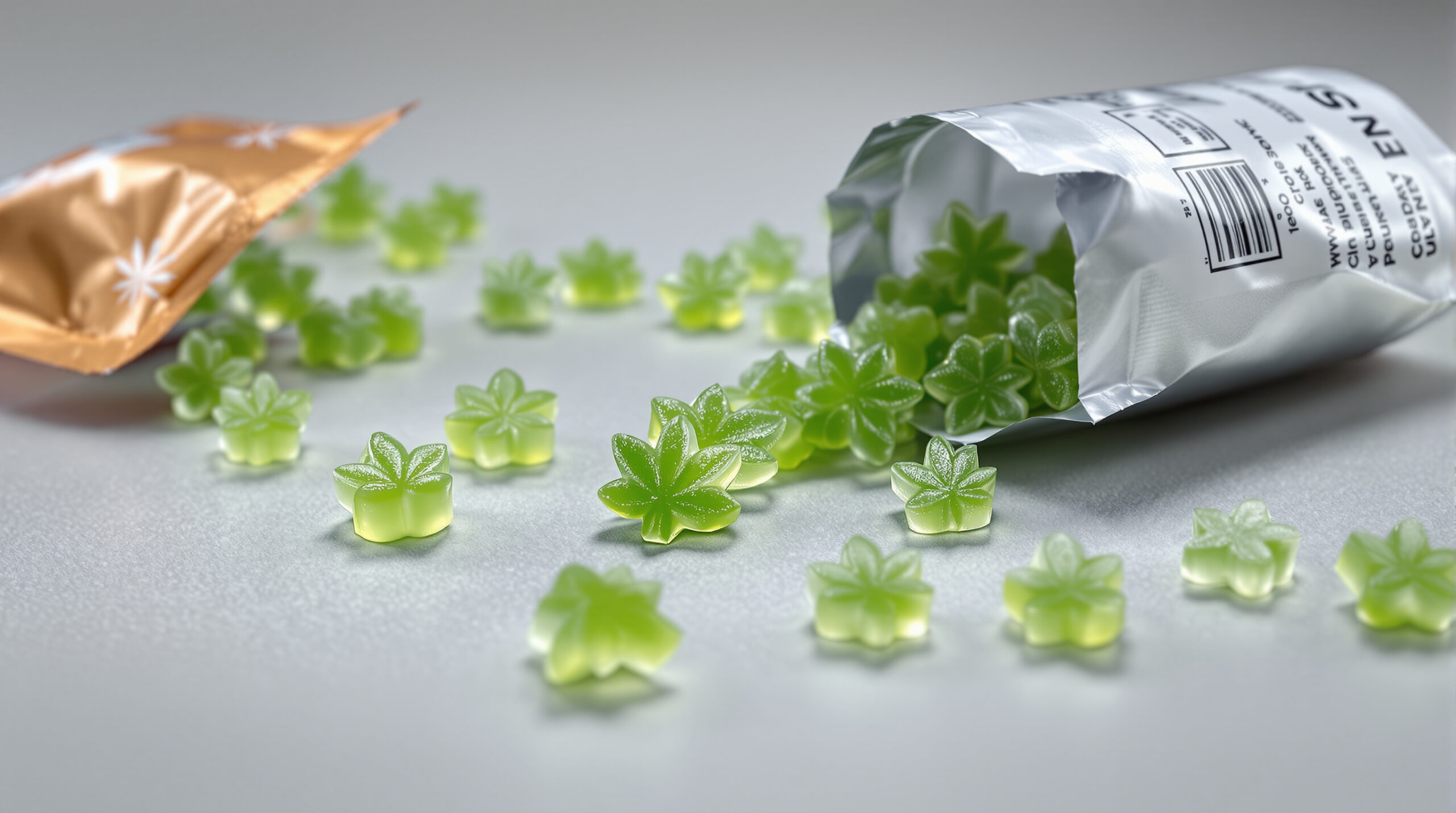
The products in question are described as green, hemp leaf-shaped fruit gummies marketed as cannabis products. Some were found in counterfeit packaging of well-known candy brands. Distribution apparently occurred through social networks and messenger groups—channels that completely lack quality control. The source and manufacturer remain unknown.


Why Opioid Contamination Is Suspected
The critical clue comes from emergency medicine. The affected individuals displayed an opioid toxidrome—the classic pattern of opioid poisoning. This includes extreme drowsiness, unusually slow or absent breathing, bluish lips, and pinpoint pupils. Naloxone, the standard opioid antidote, proved effective in both survivors. This is strong clinical evidence, though not a confirmed laboratory finding.
Caution is warranted here. The active substance in the products has not yet been analytically confirmed. Whether the contamination involved fentanyl, a fentanyl derivative, or another opioid cannot currently be determined. THC overdose, by contrast, does not cause respiratory depression. While it can be extremely unpleasant—causing rapid heartbeat, nausea, and anxiety—it is not inherently life-threatening in this manner. Those familiar with the pharmacological profiles recognize the difference immediately. Our overview of health risks from synthetic cannabinoids illustrates the wide range of dangers from unknown additives.
The Supply Gap the Black Market Fills
This case highlights a critical gap in German cannabis regulation. The Cannabis Consumption Act permits cultivation associations to distribute flower and hashish to their members. Edible preparations are not covered. For cannabis consumers who prefer eating to smoking, Germany offers no legal, tested supply channel. The result is inevitable: a market without labeling, dosing information, or analytical testing.
Adding to this is the slow pace of regulatory approvals. We documented the sluggish development of legal structures in our coverage of Green Party questions about delays in cultivation association licensing. The April 2026 interim report on the Cannabis Act shows how functioning legal distribution impacts illegal markets. Both findings point in the same direction: the slower legal access grows, the longer uncontrolled markets remain the only option.
Other countries take the opposite approach. Uruguay is even opening legal cannabis access to tourists, as covered in our article on how Uruguay is allowing tourists to legally purchase cannabis. Our analysis of the evolution of European CBD culture describes the quality standards that emerge when markets operate legally. The Berlin case is thus not purely a criminal matter, but also a consequence of missing regulatory structure.
What Consumers Should Know Now
The clear recommendation from Berlin authorities is unambiguous: avoid these products until analytical results are available. Anyone observing slow breathing, bluish lips, or hard-to-wake drowsiness in themselves or others after consuming suspected cannabis products should call emergency services (112) immediately. Naloxone can be life-saving in such situations and is accessible through addiction support services in Berlin.
The rapid circulation of this warning is no accident. Low-threshold drug checking is the only mechanism that can identify contaminated batches before they claim more victims. For those uncertain about edible dosing, our guide to cannabis edibles dosing covers the fundamentals.
Frequently Asked Questions
Can you die from a THC overdose?
A death caused solely by THC is not documented. Cannabis does not affect the brain regions controlling respiratory drive. This is precisely why the Berlin case is so striking. Respiratory depression that responds to naloxone points to opioids, not cannabis.
Are edibles legally available in Germany?
No. Under the Cannabis Consumption Act, cultivation associations may distribute flower and hashish to members, but not edible preparations. Anyone seeking to purchase edibles in Germany inevitably enters uncontrolled markets. Self-prepared edibles from legally possessed flower are a different matter.
How do I recognize opioid poisoning?
Typical signs include very slow or absent breathing, blue-tinged lips and skin, pinpoint pupils, and unconsciousness from which the person cannot easily be roused. In this situation, every minute counts. Emergency services (112) take absolute priority.
Has the connection between the gummies and the death been proven?
Not yet. Police have explicitly left open whether consumption caused the 42-year-old’s death. The active substance in the products has also not been analytically confirmed. The health administration’s warning is based on the clinical pattern seen in multiple cases over a short timeframe.
What is naloxone and who can access it?
Naloxone reverses opioid effects at the receptor level and can break respiratory depression within minutes. In several German states, addiction support services distribute naloxone nasal sprays to affected individuals and their contacts. Emergency services carry it as standard equipment.
Sollten essbare Cannabisprodukte in Deutschland legal erhältlich sein?
Sources: Berlin Department of Health (warning to districts, hospitals, and counseling services, September 25, 2026), Berlin Drug Checking, Berlin Police via dpa, Hanfjournal (September 26, 2026), Berliner Kurier and t-online (September 25, 2026).





Branchen-Update
News, Analysen und Reportagen — mehrmals im Monat direkt in dein Postfach.
Folge uns