One year after Thailand’s cannabis market re-regulation, it’s now possible to draw serious conclusions about the political shift’s impact on the industry. Around 7,000 dispensaries closed their doors in 2025, with industry insiders projecting only approximately 2,000 remaining shops by 2028. The market isn’t disappearing entirely—it’s restructuring itself with stricter standards and significantly clearer requirements for individual operators.
📑 Inhaltsverzeichnis
From Cannabis Boom to Consolidation Market
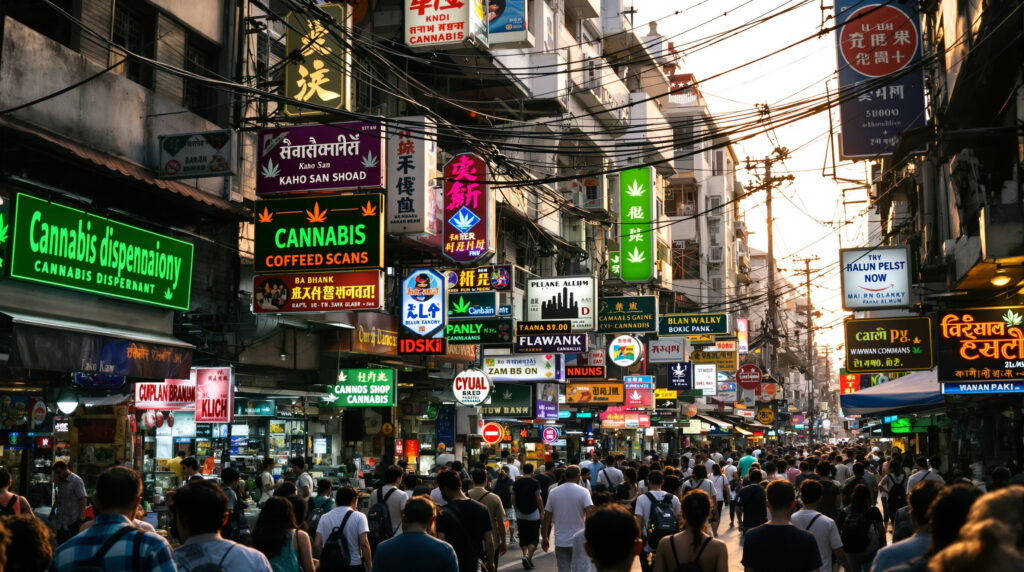
Thailand decriminalized cannabis in 2022, becoming Southeast Asia’s first country to do so. Within two years, a largely unregulated recreational market emerged, driven by tourists and low market-entry barriers. By 2024, streets like Bangkok’s Khao San Road were lined with dozens of shops just meters apart. The political correction in summer 2025 abruptly ended this phase. Since then, cannabis flowers may only be dispensed in medical contexts, and recreational use is officially prohibited again.
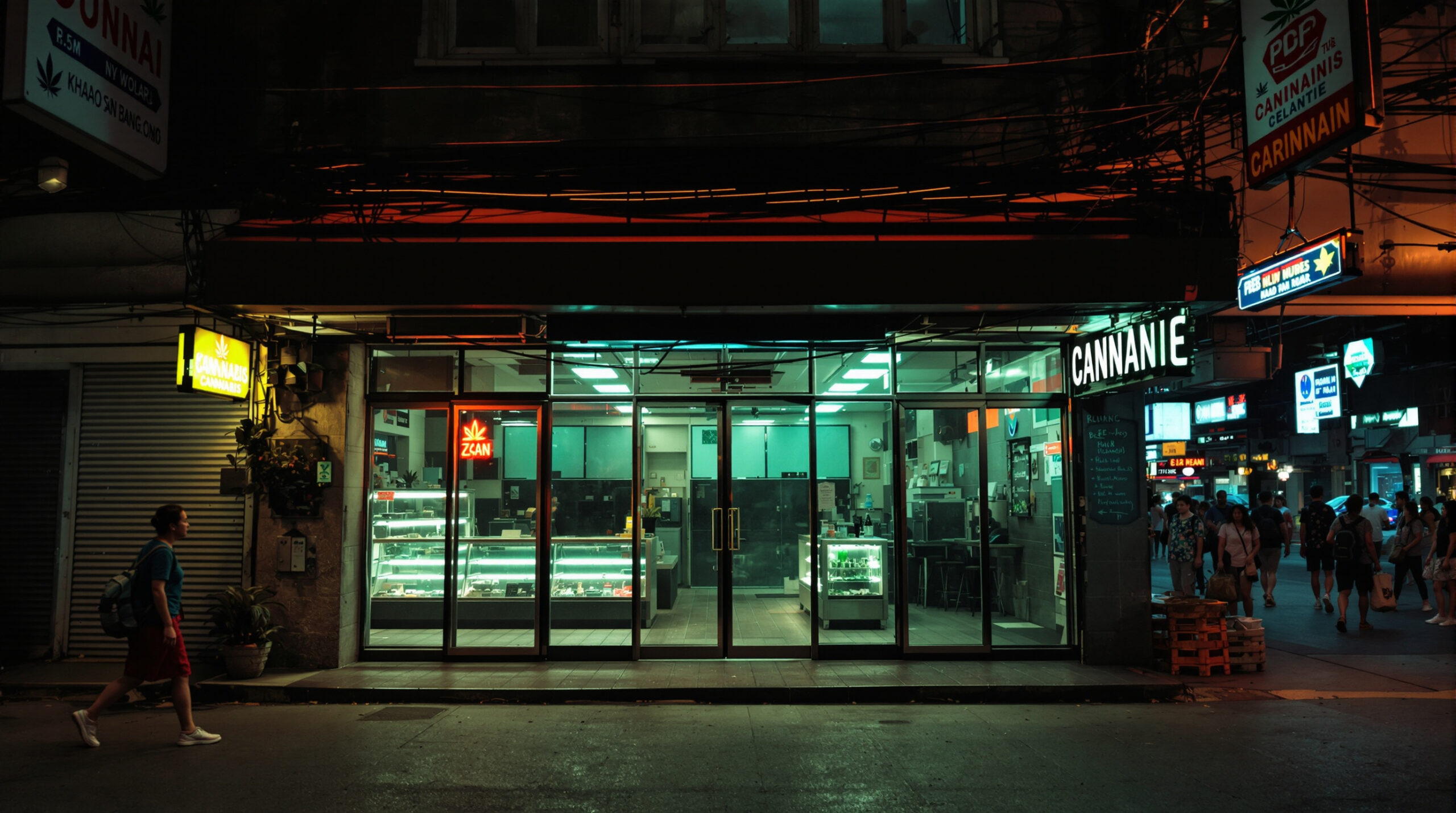
The recently published closure figures mark the consequences of this reversal. Retailers who relied exclusively on foot traffic, rock-bottom prices, and uniform product ranges couldn’t survive the new regulatory environment. GACP-certified cannabis now costs around 45 Baht per gram in the budget segment. In tourist-heavy areas, prices exceed 300 Baht per gram. This price gap is insufficient to cover the operational costs of an undifferentiated shop. High Times research documented multiple cases where monthly losses prior to restructuring amounted to approximately 4,600 US dollars.


Who Survives the Shift: Branded Retailers Over Interchangeable Sales Points
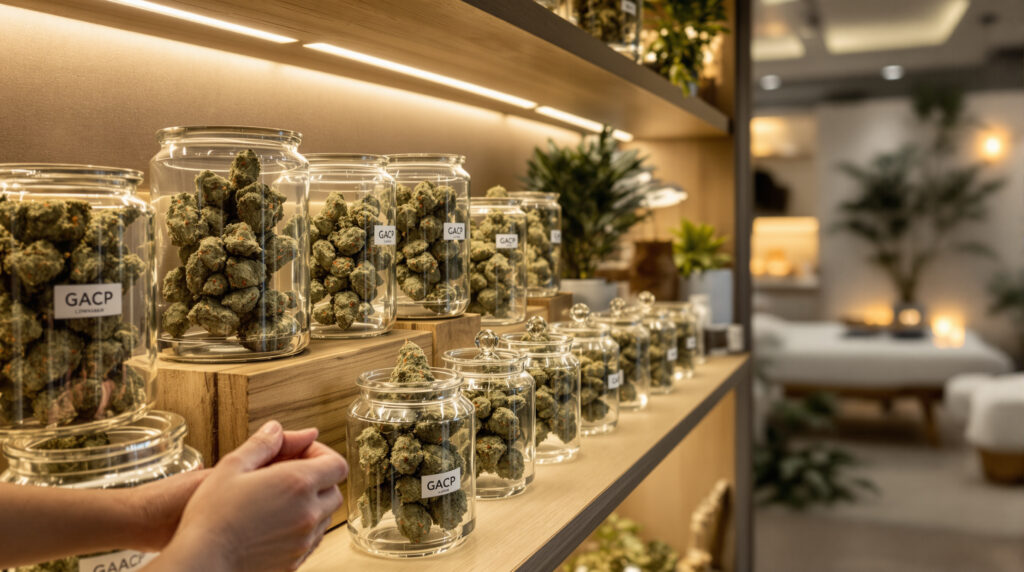
Notably, consolidation isn’t driven purely by prohibitions. It follows market logic familiar from mature cannabis markets in North America. To survive, retailers need a clear identity. Izumo Green in Bangkok’s Asok district combines cannabis dispensing with a wellness lounge, massage services, and a distinct competitive strategy. The brand has won the Phuket Cannabis Cup twice consecutively and positions itself consistently through strain quality.
Other concepts focus on price leadership with genuine selection. Choo Choo Hemp carries approximately 100 strains simultaneously while combining affordability with curated quality. Vape Mania and Samurai Weed pursued the opposite approach: they publicly documented losses and structural adjustments on social media, transforming their own failure into a community asset. Peach Panties in the Khao San area articulates the principle even more radically. This women-oriented label works toward a point where it no longer actively sells cannabis but offers it as an extension of its community engagement.
What Thailand’s Consolidation Market Means for Europe
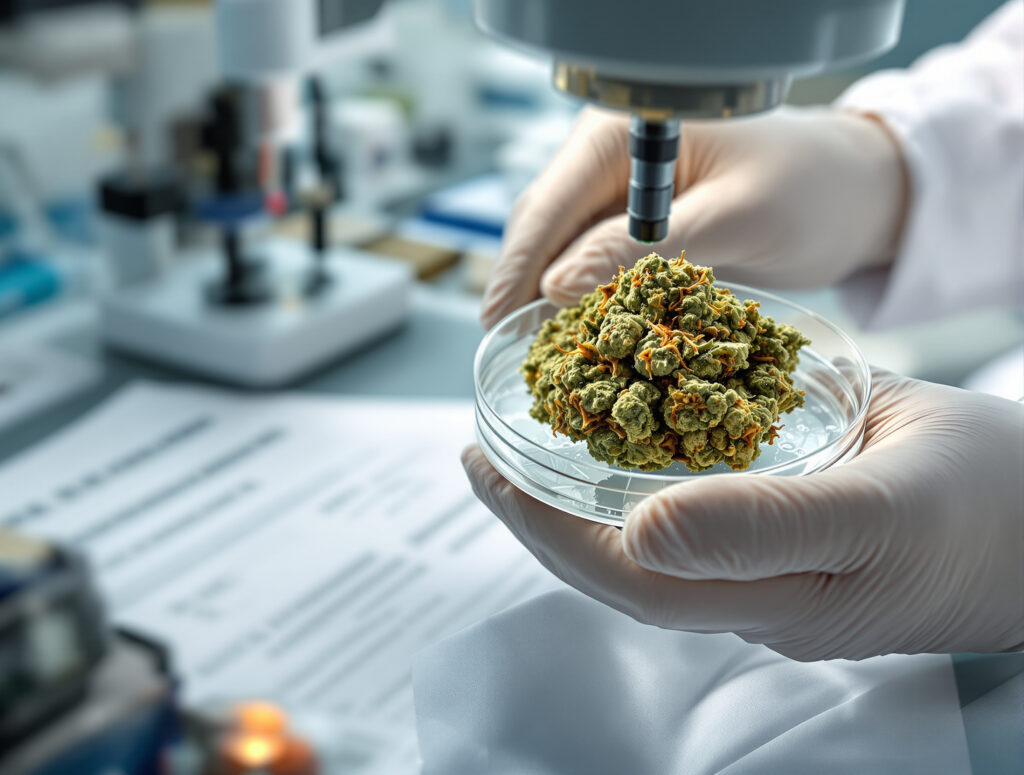
Thai market data interests German and European operators for two reasons. First, consolidation illustrates what happens when a previously unregulated recreational market model is retroactively medicalized. Germany’s development follows the opposite trajectory—from medical anchor toward regulated Pillar 2. Nevertheless, Thailand demonstrates how thin profit margins are in undifferentiated mass offerings. Second, the comparison underscores certification’s importance. GACP and eventually EU-GMP-compliant supply chains represent the selection criterion distinguishing Thai survivors from the 7,000 failed shops.
Those examining the Asian market from a European wholesaler perspective also gain a more realistic picture from the closure wave. Thailand’s medical market remains a growth segment. However, comparison with other opening markets like Brazil, where patient numbers already reach 873,000, or Canada, which reports record revenues, shows Thailand falling behind. Thailand is transforming from a tourism-driven leisure market into a supply market with reduced shop density. The strategic implications are substantial, particularly for providers who invested in recent years anticipating an unregulated mass market.
Stricter Regulation Expected 2026–2028
Industry insiders expect Thailand’s government to introduce comprehensive medical regulation with clear license classes by 2028. This includes mandatory physician-issued indications for dispensing, strict THC limits for non-medical hemp products, and consolidation of distribution rights among certified pharmacies and select specialty retailers. The estimated 2,000 remaining shops are likely to survive primarily in this second category. The tourism-driven mass business that made Thailand headline news globally in 2023 and 2024 is effectively over. Comparison with the international cannabis market picture 2026 reveals a clear trend toward professionalization.
Frequently Asked Questions
Why did Thailand restrict cannabis again?
Thailand’s government responded to uncontrolled growth—more than 11,000 shops nationwide—and rising public concerns. The correction passed in summer 2025 restores the medical character as central. Complete recriminalization hasn’t occurred, but recreational use no longer has legal protection.
How many cannabis shops remain open in Thailand?
According to current industry data, approximately 7,000 dispensaries closed in 2025. Industry experts anticipate the market will consolidate to around 2,000 remaining shops by 2028. These will predominantly be certified, differentiated providers.
What does medical cannabis cost in Thailand?
GACP-certified cannabis starts around 45 Baht per gram in the budget segment—approximately 1.20 euros. In tourist-heavy areas, prices reach 300 Baht and beyond, roughly 8 euros per gram. The price range is considerably wider than on mature European markets.
Which business models survive Thailand’s consolidation market?
Success goes to shops with clear identities: cannabis-wellness concepts like Izumo Green, assortment leaders like Choo Choo Hemp carrying around 100 strains, transparent community brands like Vape Mania, and niche-specific concepts like the women-oriented Peach Panties. Interchangeable tourism shops without differentiation disappear.
Does Thai market development matter for Germany?
Indirectly, yes. Thailand demonstrates how narrow profitability is in undifferentiated mass offerings and how quickly a previously soft market can consolidate through political correction. For German and European providers, this underscores certification’s importance, clear positioning, and sustainable supply chains.
Sollte Deutschland aus der thailändischen Cannabis-Marktbereinigung lernen?
Sources: High Times research dated May 21, 2026 on Thai cannabis consolidation; proprietary industry research; background reports on 2025 re-regulation.





Branchen-Update
News, Analysen und Reportagen — mehrmals im Monat direkt in dein Postfach.
Folge uns