Anyone engaging with cannabis seeds can hardly overlook Royal Queen Seeds. The brand is among the most visible suppliers in the European seed market and regularly appears in grow forums, strain lists, and at cannabis trade shows. Behind this prominent presence lies a company history closely tied to the industry’s shift from Amsterdam to Southern Europe. This profile categorizes the company’s genetics, strain lines, and market position editorially, without following the manufacturers‘ advertising claims.
📑 Inhaltsverzeichnis
- From Amsterdam’s Environment to a European Seed Bank
- The Product Range: Feminized, Autoflowering, and Regular
- F1 Hybrids: Breaking with Classical Breeding Logic
- Well-Known Strain Lines and Their Market Role
- Market Position and Editorial Classification
- Frequently Asked Questions
- 💬 Fragen? Frag den Hanf-Buddy!
From Amsterdam’s Environment to a European Seed Bank
Royal Queen Seeds was founded in 2007 in Amsterdam. The starting point was modest: a group of breeders who distributed their own strains among acquaintances and growers, gradually forming a business. In 2010, the first dedicated shop opened on Damstraat in central Amsterdam. A year later came the online shop, which extended reach beyond the Netherlands. This sequence is typical for the industry of that era, when physical retail still dominated and the internet gradually became the primary distribution channel.
The company took its most important step for market positioning in 2016 by establishing a location in the Barcelona region. The company headquarters is now located in Montornès del Vallès in Catalonia. With this move, Royal Queen Seeds followed a trajectory shared by many market players at the time: away from the more strictly regulated Dutch environment toward Spain, with its mild climate, established Cannabis Social Clubs, and favorable production conditions for outdoor and greenhouse cultivation. Leadership has been in the hands of Shai Ramsahai since June 2022, who took over the presidency from his father. This generational transition coincided with a phase in which the brand significantly expanded its international distribution network.


The Product Range: Feminized, Autoflowering, and Regular
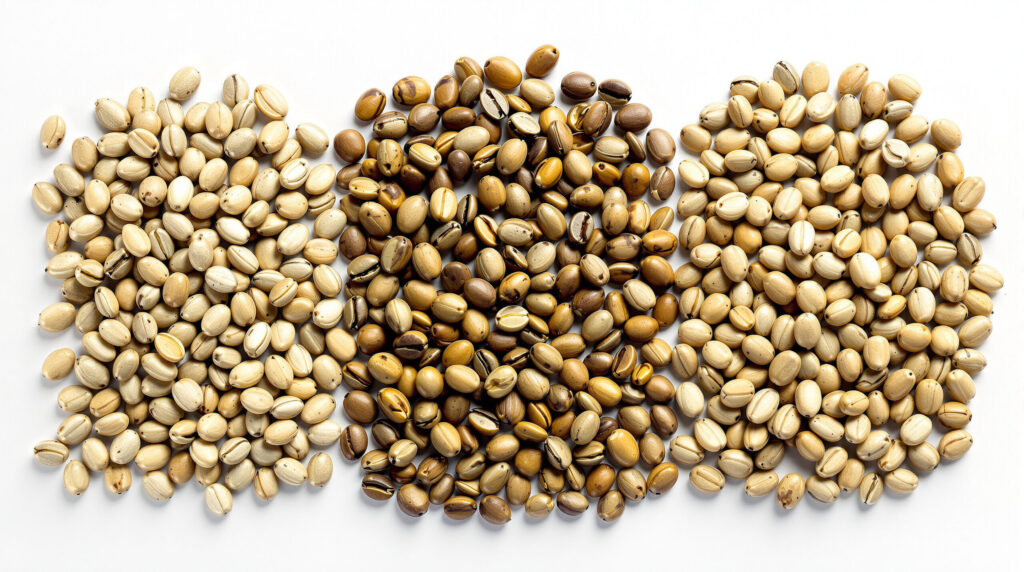
Royal Queen Seeds‘ catalog follows the classic three-part division of the seed market. Regular seeds produce both male and female plants and are primarily aimed at breeders who want to cross their own lines. Feminized seeds yield almost exclusively female plants and are thus designed for pure flower production. Those wanting to understand the differences more thoroughly will find the technical background in our article on feminized cannabis seeds.
The third pillar consists of autoflowering strains. They transition into flowering independent of the light cycle after a fixed period, significantly shortening the cultivation cycle. Royal Queen Seeds occupied this segment early and actively promotes it for beginners. Whether self-flowering strains are actually the best choice for novices depends on the specific cultivation goal. Our article on why autoflowering strains are considered beginner-friendly provides a more nuanced assessment. Notably, the company structures its range not only by breeding method but also through recognizable brand names. Many strains carry the Royal prefix, presenting the product line as a closed brand universe.
F1 Hybrids: Breaking with Classical Breeding Logic

The company’s most remarkable breeding achievement is the introduction of genuine F1 hybrids in 2023. Royal Queen Seeds became the first seed bank to commercially offer genuine F1 cannabis seeds. The term is frequently used imprecisely in cannabis advertising, so clarification is necessary. A true F1 hybrid results from crossing two pure parental lines that have been inbred over many generations. Only under this condition does the so-called heterosis effect occur—the vigor resulting from combining stable parental lines.
The practical advantage lies in uniformity. While ordinary hybrids result from nearly arbitrary crosses and vary accordingly, genuine F1 offspring display a uniform appearance. For commercial cultivation, this uniformity is a concrete advantage because harvest timing and plant height can be planned. The corresponding strains operate under their own line with names such as Titan F1, Orion F1, or Milky Way F1. According to manufacturers, the latter resulted from parent genetics Blue Mammoth, Blue Dream, and Sin Tra Bajo Auto and completes its cycle in around 70 days at a compact growth height between 55 and 75 centimeters. Whether the promised vigor can be reproduced in home cultivation remains to be demonstrated through independent practice. However, the theoretical foundation of F1 breeding is established and originally stems from classical agricultural crop cultivation.
Well-Known Strain Lines and Their Market Role
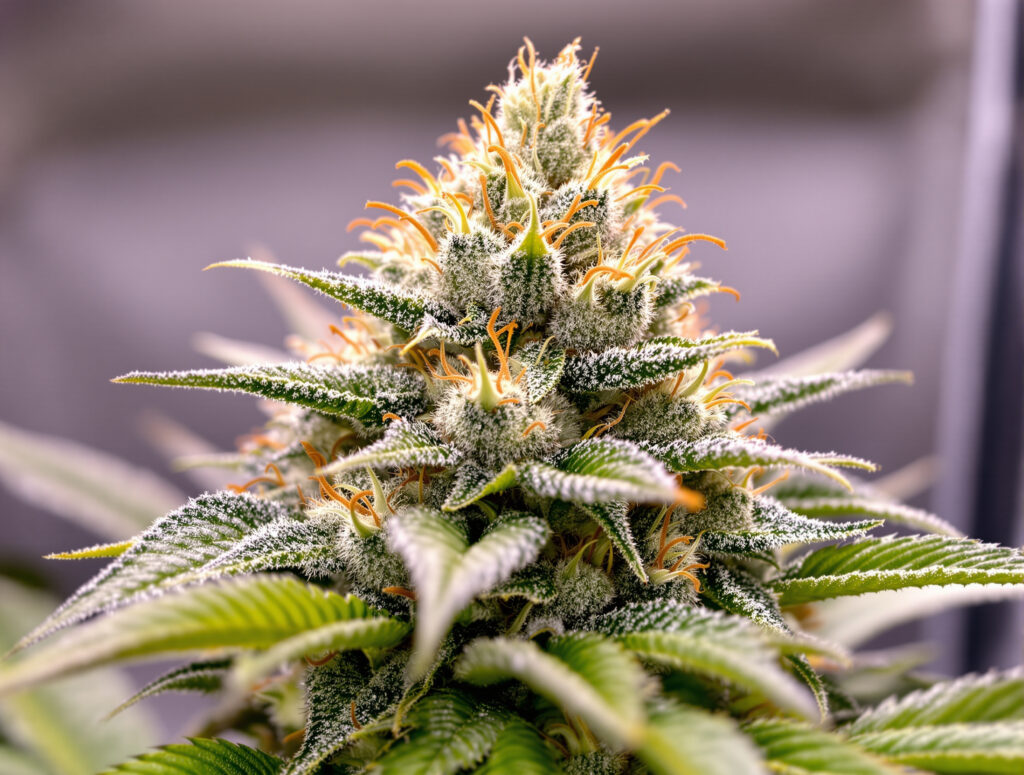
Independent of the F1 push, the brand’s recognition rests on a range of established strains. Royal Gorilla is considered one of the company’s most award-winning genetics and is advertised with THC values of up to 27 percent. Together with Royal Cookies, the strain has won awards at events including the Highlife Awards 2018. In the beginner-friendly segment, classics such as Northern Light Automatic, Royal Dwarf, and Royal Cheese Automatic stand out through compact growth and short cycles of approximately ten to eleven weeks from seed.
Part of the strain strategy involves re-releasing popular genetics from the international scene under their own label. Royal Runtz exemplifies how a regionally sought-after strain is integrated into the catalog and given the Royal prefix. We have documented how such a strain performs in actual cultivation in a dedicated grow report on Royal Runtz. Overall, the portfolio comprises more than 40 award-winning strains according to company information. This figure should be read with caution, as awards in the cannabis industry are given by numerous organizers and their significance varies considerably. It does serve as an indicator of the breadth of the product range, however.
Market Position and Editorial Classification
Royal Queen Seeds is today among Europe’s largest seed banks and covers the entire value chain, from breeding through retail to international distribution. This vertical structure distinguishes the company from smaller breeders focused on individual genetics. The price of this scale is a certain standardization: those seeking unusual landraces or niche genetics will find better options with specialized suppliers. The brand’s strength lies in availability, distribution density, and consistent brand presence.
For the German-speaking region, the brand has become additionally relevant since the partial legalization of home cultivation in 2024, as legal home growers seek access to quality-assured seeds. Campaigns accompanying private cultivation in Germany demonstrate that the company actively addresses this market. Editorially, Royal Queen Seeds remains an important, though by no means the only, player. Those evaluating the brand should distinguish between documented company history, comprehensible breeding innovations, and marketing-driven superlatives. This very distinction is the value of independent assessment.
Frequently Asked Questions
When and where was Royal Queen Seeds founded?
The company was founded in 2007 in Amsterdam. The first dedicated shop opened in 2010 on Damstraat, followed by the online shop in 2011. Since 2016, the brand has maintained a location in the Barcelona region, with the company headquarters now located in Montornès del Vallès in Catalonia.
What are Royal Queen Seeds‘ F1 hybrids?
These are genuine F1 hybrids resulting from crossing two pure, inbred parental lines. Royal Queen Seeds became the first seed bank to commercially introduce such genuine F1 cannabis seeds in 2023. Strains such as Titan F1 or Milky Way F1 belong to this line and promote particularly uniform growth.
Which Royal Queen Seeds strains are particularly well-known?
Among the most renowned genetics are Royal Gorilla with THC values of up to 27 percent and Royal Cookies. In the beginner-friendly range, Northern Light Automatic, Royal Dwarf, and Royal Cheese Automatic are widely available. The strain Royal Runtz, adopted from the wider scene, is also in demand.
Does Royal Queen Seeds also offer feminized and autoflowering seeds?
Yes, the catalog includes regular, feminized, and autoflowering strains. Feminized seeds yield almost exclusively female plants, while autoflowering strains bloom independent of the light cycle, thus shortening the cultivation cycle. This three-part division serves both beginners and experienced breeders.
How is Royal Queen Seeds positioned in the European market?
Welche Samenart bevorzugst du beim Anbau?
Royal Queen Seeds is regarded as one of Europe’s largest seed banks and covers breeding, retail, and international distribution. Its strength lies in availability and brand consistency. For rare landraces or niche genetics, however, specialized breeders are often the better choice.






Branchen-Update
News, Analysen und Reportagen — mehrmals im Monat direkt in dein Postfach.
Folge uns