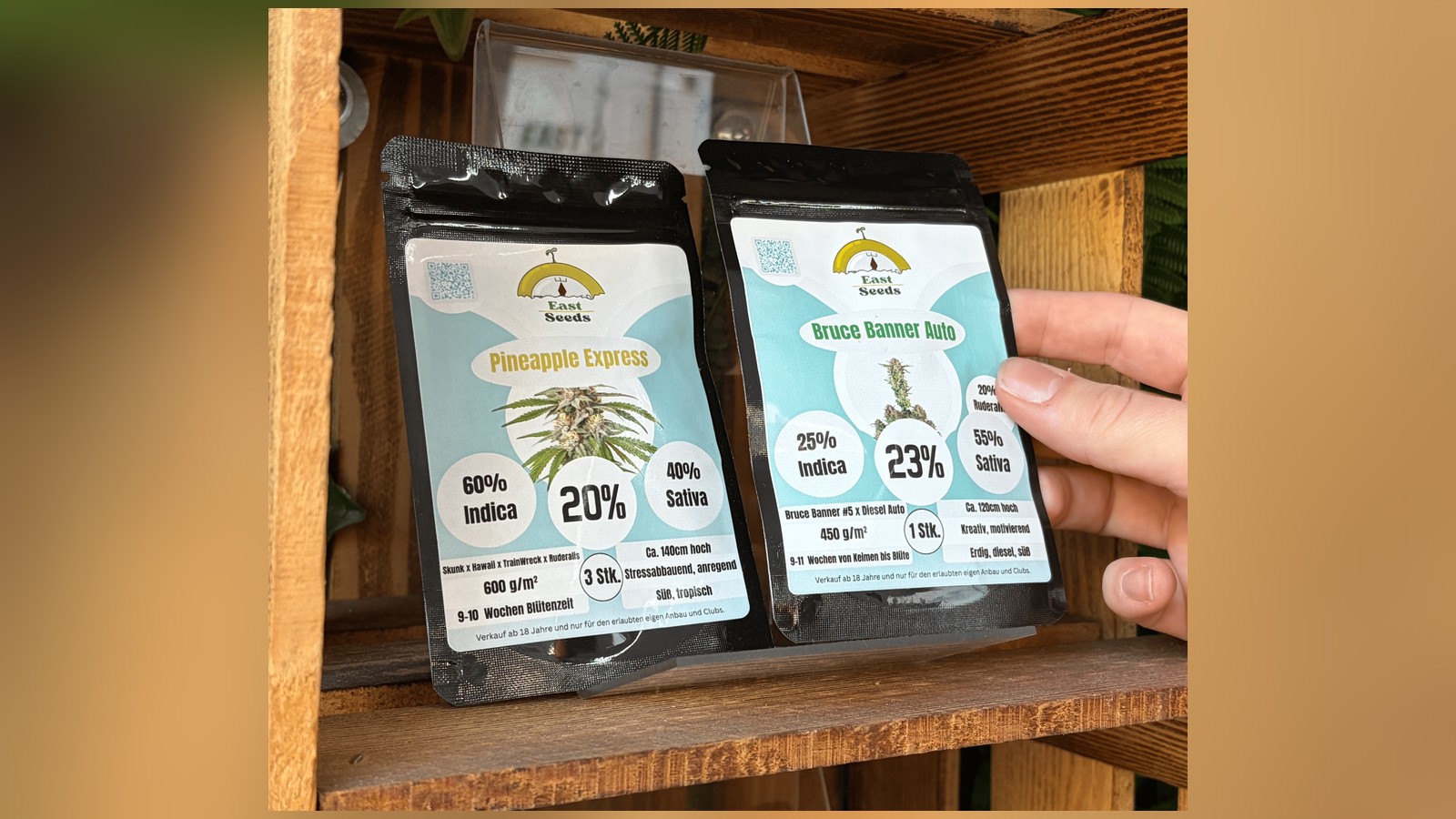
Sponsored Content · This article is produced in paid cooperation with East Smoke. Content selection, research, and editorial assessment remain with Hemp Magazine.
Cannabis seeds are living material, and poor storage conditions take their toll. Leave a packet in a drawer for a year, and you’ll often see a noticeably lower germination rate than on the day you bought it. Here’s what matters for storage and seed age, and what a germination guarantee can actually do for you.
When buying cannabis seeds, most comparisons focus on genetics, price, and shipping. What rarely gets attention is what happens afterward. Between ordering and planting, months or even years often pass—and during this time, the fate of your germination rate is sealed. We’ve covered the criteria for choosing a reliable seedbank in our article How to Identify a Quality Seedbank. Here, we focus on what happens after you bring those seeds home.
Seeds Age, Even When Nothing Else Happens
A seed isn’t a preserved product—it’s a dormant embryo with limited energy reserves. This metabolic process continues even in darkness, just very slowly, and storage conditions can either accelerate or slow it down. That’s why germination viability isn’t a fixed property of a strain, but rather a value that declines over time.
As a rough guideline, well-stored cannabis seeds lose very little viability in the first year and still deliver usable germination rates after two to three years. By contrast, seeds stored in a warm room with fluctuating humidity or exposed to light can lose most of their viability in the same timeframe. There are no binding numbers because initial quality, seed maturity, and residual moisture vary from batch to batch.
Three Factors That Matter Most
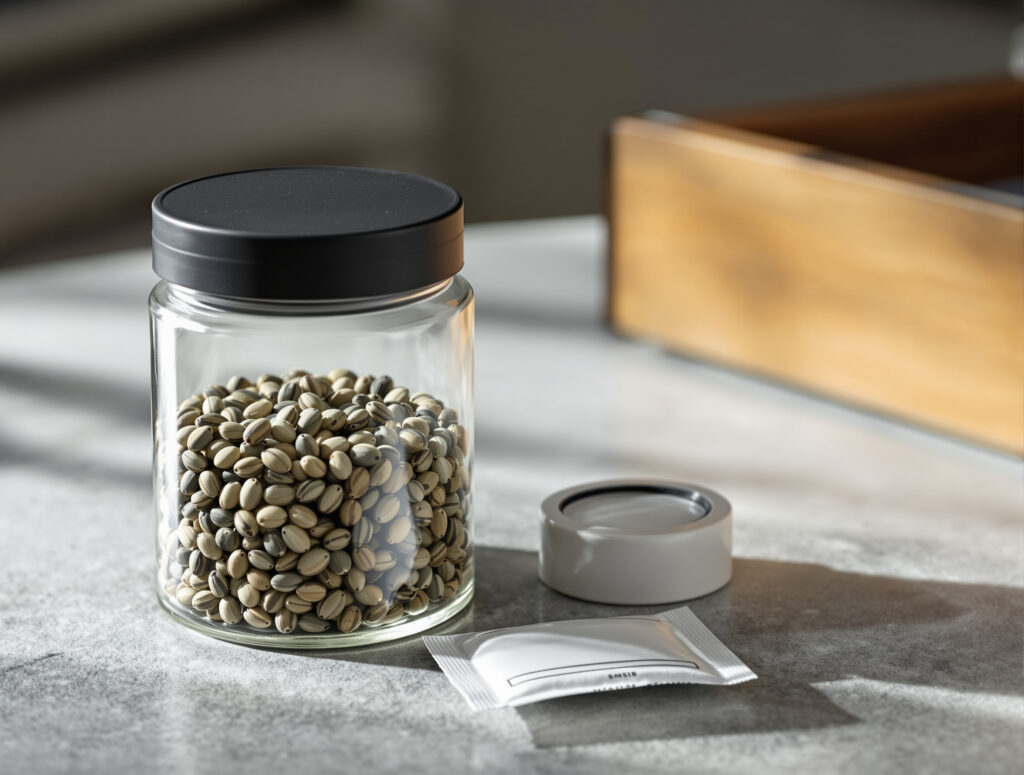
- Moisture. By far the most critical factor. Seeds absorb ambient humidity, and as residual moisture increases, aging accelerates significantly. An airtight container with a desiccant keeps conditions stable.
- Temperature. Cool is better than warm; consistent is better than fluctuating. A refrigerator works well as long as the container is truly airtight and not opened daily. Condensation from removing the container causes more damage than a few degrees of warmth.
- Light. Store in darkness, because light combined with heat stimulates metabolism. An opaque container accomplishes this as a side benefit.
Most growers advise against deep freezing unless residual moisture is precisely controlled. When water inside the seed freezes, it damages cellular structures, and the damage only becomes apparent during germination attempts. Without professional drying equipment, cool, dark, and dry storage beats subfreezing temperatures.
What Reveals an Old Seed—and What Doesn’t
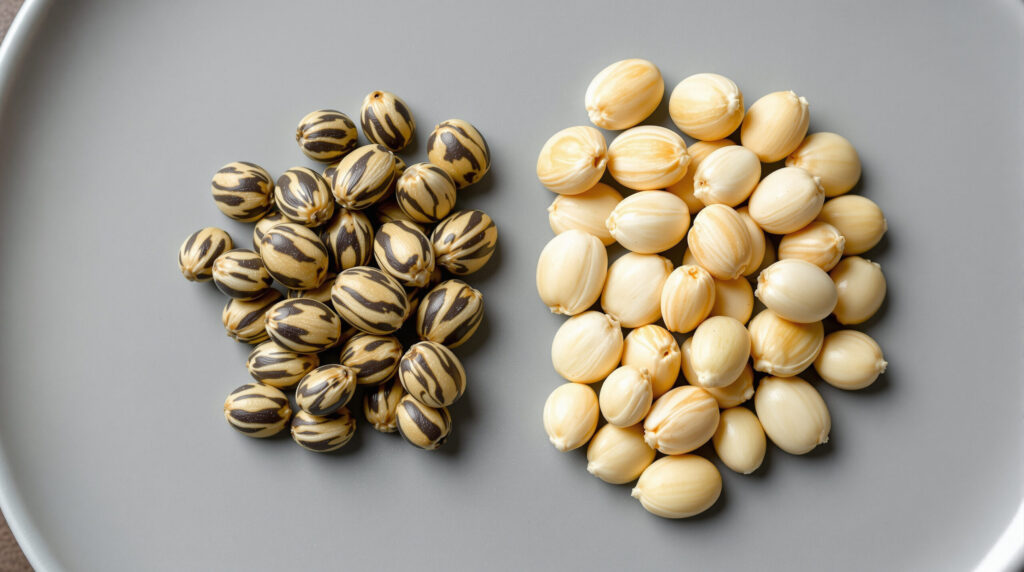
A well-matured seed is firm, has a hard shell, and often displays a marbled pattern. Pale, soft, or easily indented seeds often come from immature harvests and germinate poorly, regardless of age. However, these visual traits say little about how long a seed has actually been stored or under what conditions. Appearance doesn’t replace a germination test.
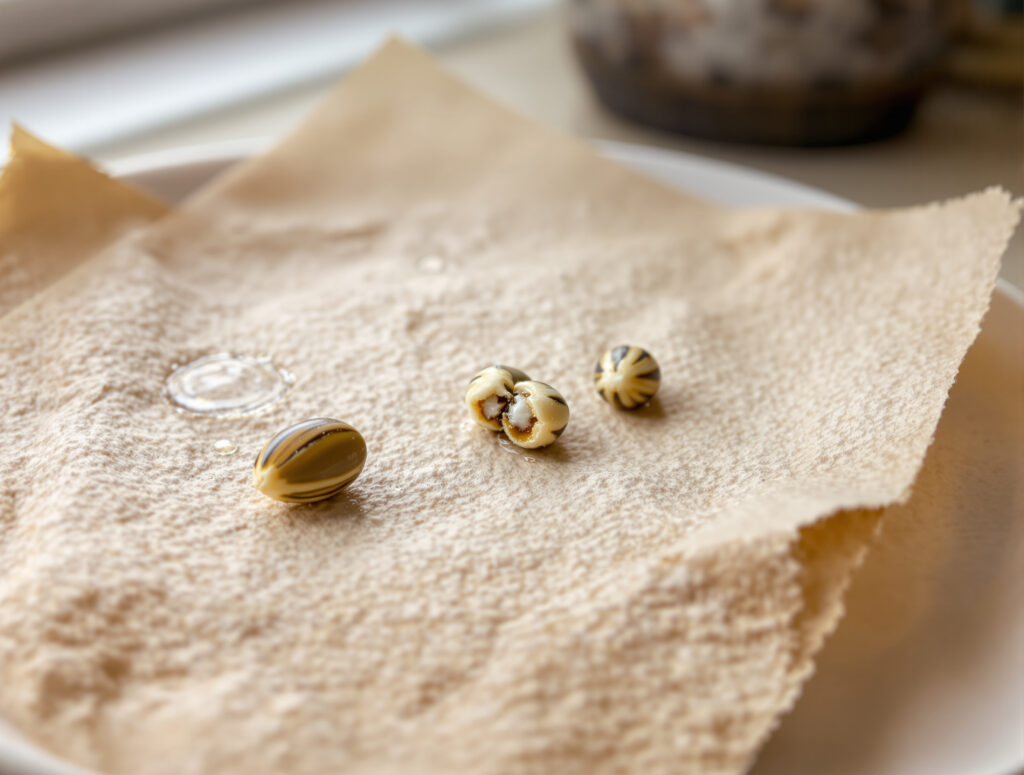
To be certain, germinate a small sample before planting your entire supply. We’ve compared effective methods in Pre-Germinating Cannabis, and the biology behind germination is explained in Germinated Hemp Seeds.
How Stable Genetics Affect Germination Rates
Stable genetics mean that offspring from a line resemble each other closely rather than varying widely. While this is primarily a matter of breeding work, it directly impacts what happens in your seedling bed. Seeds from a stable line germinate within a narrower timeframe and develop more uniformly, which noticeably simplifies care. An inconsistent batch produces some early, some late, and some not at all.
When selecting seeds, pay special attention to information about parent lines and generation. We’ve broken down what designations like F1 or BX mean in Cannabis Genetics Explained, and how to use this information to find the right strain for your homegrow is covered in Understanding Cannabis Genetics. For this topic, the key takeaway is: clean genetics provide the foundation, and proper storage preserves it.
What a Germination Guarantee Covers—and What It Requires
A germination guarantee is a merchant’s promise to provide replacement seeds if germination fails. It’s primarily a statement about confidence in their own supply chain—sourcing, warehouse storage conditions, and inventory turnover speed. For customers, it’s a useful signal, but not a law of nature.
What matters is the fine print. Typical terms include a deadline after delivery, a limitation to the germination method supplied, and an exclusion for cases where seeds were obviously stored or handled incorrectly. This is understandable because no merchant can guarantee what happens to seeds on your shelf after delivery. In practice: a germination guarantee protects against poor merchandise, not poor storage.
Among providers offering such guarantees is East Smoke. According to their claims, the shop offers cannabis seeds with germination guarantees and stable genetics, ships discreetly, and emphasizes fast delivery and accessible customer service. Inventory turnover speed is more relevant to this topic than it might seem, because the less time seeds spend in the warehouse, the less storage time is already consumed at purchase. You can’t verify this from outside, but you can ask about it.
There are also reputable seedbanks that deliberately don’t offer blanket germination guarantees, arguing that fixed rates can’t be promised with living biological material. Both approaches are defensible. A shop without a germination guarantee isn’t automatically worse, and one with a guarantee isn’t automatically better. The picture becomes clearer when combined with lab test certificates, transparency about genetics, and what customers report about their claims handling.
A Note on Legal Status
In Germany, adults may legally cultivate up to three plants for personal consumption under the Consumption Cannabis Act and obtain seeds for this purpose. Anyone acquiring seeds should still understand the regulations in their own location, as the legal situation varies considerably across Europe. In Austria, for example, selling seeds is legal, but it becomes punishable once THC-containing plant material exists. The law that applies is always that of the cultivation location, not the country of origin.
Note: This article reflects the status as of October 2, 2026, and is not legal advice. Storage timeframes mentioned are based on experience and are not guaranteed properties. Information about East Smoke’s product range and services comes from the provider and was not independently verified by us. Cannabis cultivation and possession are restricted to adults and subject to applicable regulations.
Wie lagerst du deine Cannabis Samen normalerweise?
Sources: Consumption Cannabis Act (KCanG); Austrian Narcotic Substances Act; East Smoke provider information, October 2026; own reporting and research on seed storage.








Branchen-Update
News, Analysen und Reportagen — mehrmals im Monat direkt in dein Postfach.
Folge uns