In the world of cannabis cultivation, there are numbers that turn heads – and then there are numbers that could fundamentally reshape the entire industry.
📑 Inhaltsverzeichnis
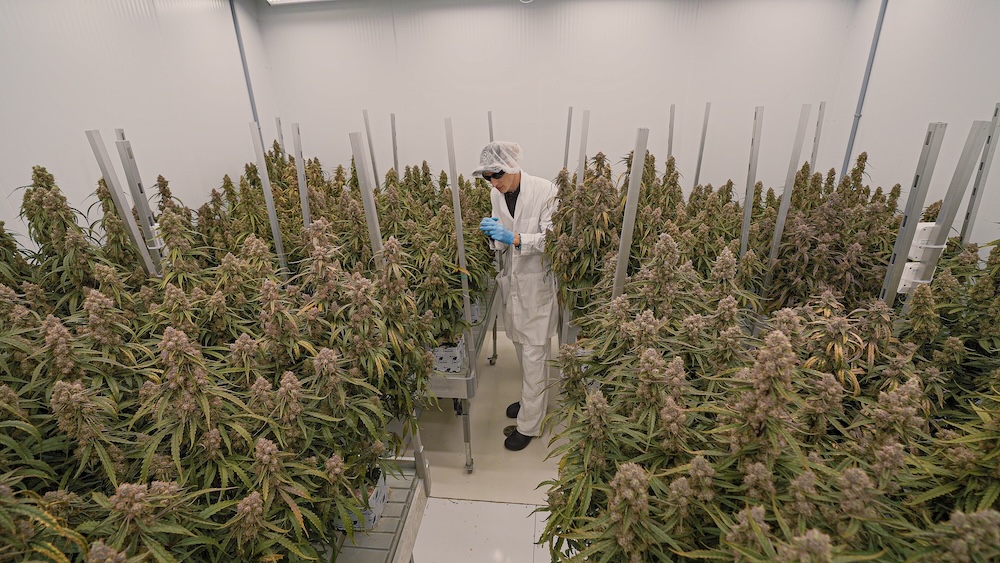
Exactly such a moment occurred recently in Montreal. A study by CRIC Labs in collaboration with Royal Queen Seeds (RQS) documented what many considered impossible: a yield of 1.8 kg of cannabis per square meter in an indoor setting. The remarkable part? This record was achieved in just 69 days from seed.
The Study: Data-Driven Performance Over Grower Speculation
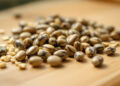
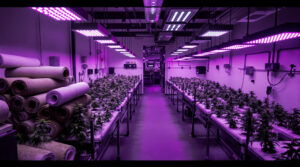
For a long time, yield claims were often vague estimates or ideal values achieved under laboratory conditions. The cooperation between CRIC Labs and Royal Queen Seeds puts this reputation to rest. In a strictly controlled indoor experiment, researchers examined how genuine F1 hybrid cannabis seeds perform under professional yet reproducible conditions.


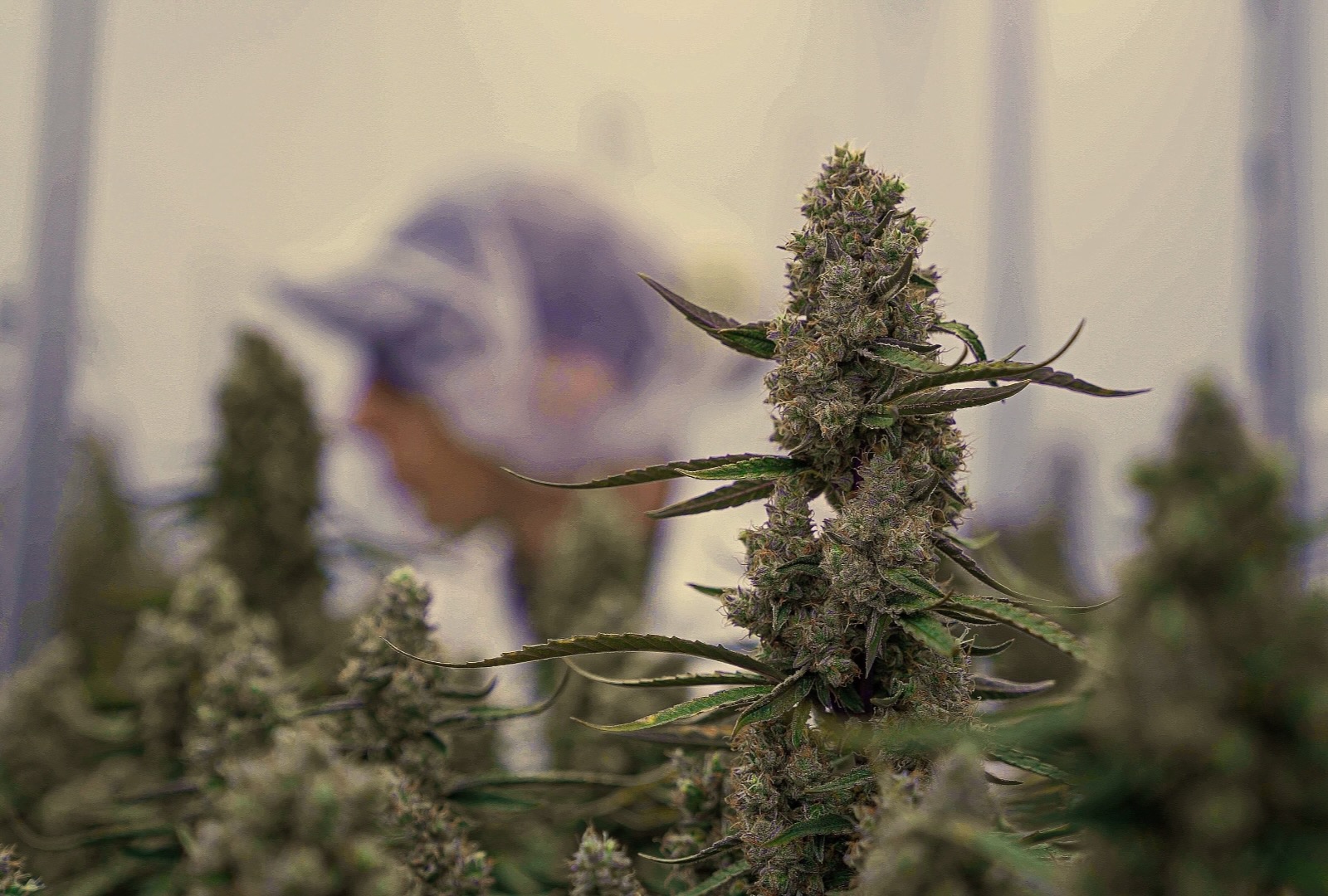
The focus was on the varieties Orion F1 and Medusa F1. Researchers employed a plant density of 5.4 plants per square meter. What happened next impressed even the experts: the entire plant lifecycle took only 69 days. During this period, the F1 hybrids went through a shortened vegetative phase, followed by an extremely rapid and, most importantly, synchronized flowering period. The result of approximately 1,800 grams per square meter sets an entirely new benchmark for the efficiency of modern cannabis genetics.
The Secret to Uniformity: A Canopy Straight from the Textbook
It’s not just the sheer amount of biomass that makes this study so significant. A crucial factor for commercial growers and home cultivators alike is the homogeneity of the crop. Anyone cultivating cannabis indoors knows the problem of uneven plant growth: some shoot up toward the light and nearly burn, while others wither in the shadows.
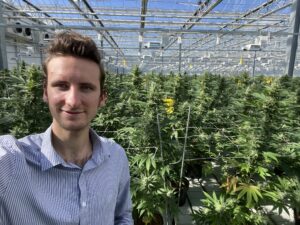
However, the F1 hybrids in the CRIC Labs study demonstrated remarkable reliability. The crop displayed an absolutely uniform structure across the entire growing area. For the researchers, this was the key to success: because the plants had tightly aligned heights, there was no need to adjust light and watering individually for each plant. Input parameters could be optimized uniformly across the entire canopy, massively increasing the efficiency of photosynthesis and nutrient uptake.
True F1 Hybrids: Speed Meets Robustness
RQS views these results as clear evidence of why „true“ F1 hybrids represent the future of cannabis cultivation. Unlike conventional varieties, which often exhibit certain genetic variance, true F1 hybrids offer a combination of speed, consistency, and resilience.
When a grow room behaves uniformly across its entire area, maintaining consistent results from harvest to harvest becomes far easier. This repeatability is the holy grail of modern cultivation. Where every harvest once brought a degree of uncertainty, scientific planning now takes the stage.
Is This a Realistic Goal for Home Growers Too?
A frequently asked question about such record yields is whether they can only be achieved in million-dollar high-tech facilities. Simon Charette, who oversaw the project at CRIC Labs, sends a clear message of hope to the community. He directly ties the output level to implementable best practices: „Even on a small scale, with a grower who knows a bit about their plants and their environment, I believe this is absolutely achievable.“
This means: stable, uniform genetics make high performance accessible to anyone willing to carefully manage their environmental parameters. The genetics provide the potential – the grower simply needs to create the right framework.
The Next Level: Photoperiodic F1 Hybrid Generation
Interest in the CRIC study coincides with another exciting development. Based on these findings, RQS has released new photoperiodic F1 hybrid cannabis seeds. They follow the same rigorous „true F1“ approach but offer a decisive advantage for enthusiasts: they give the grower full control over the vegetative duration and enable advanced training techniques like SCROG or mainlining.
At the same time, the core advantage remains intact: uniform structure and far more predictable performance than classical photoperiodic varieties. The era of having to choose between yield, speed, and quality appears to be definitively over thanks to F1 technology.
The data from Montreal makes one thing clear: the future of cannabis cultivation is green, efficient, and above all – predictable.







Baust du bereits Cannabis selbst an oder planst du es?
Branchen-Update
News, Analysen und Reportagen — mehrmals im Monat direkt in dein Postfach.
Folge uns