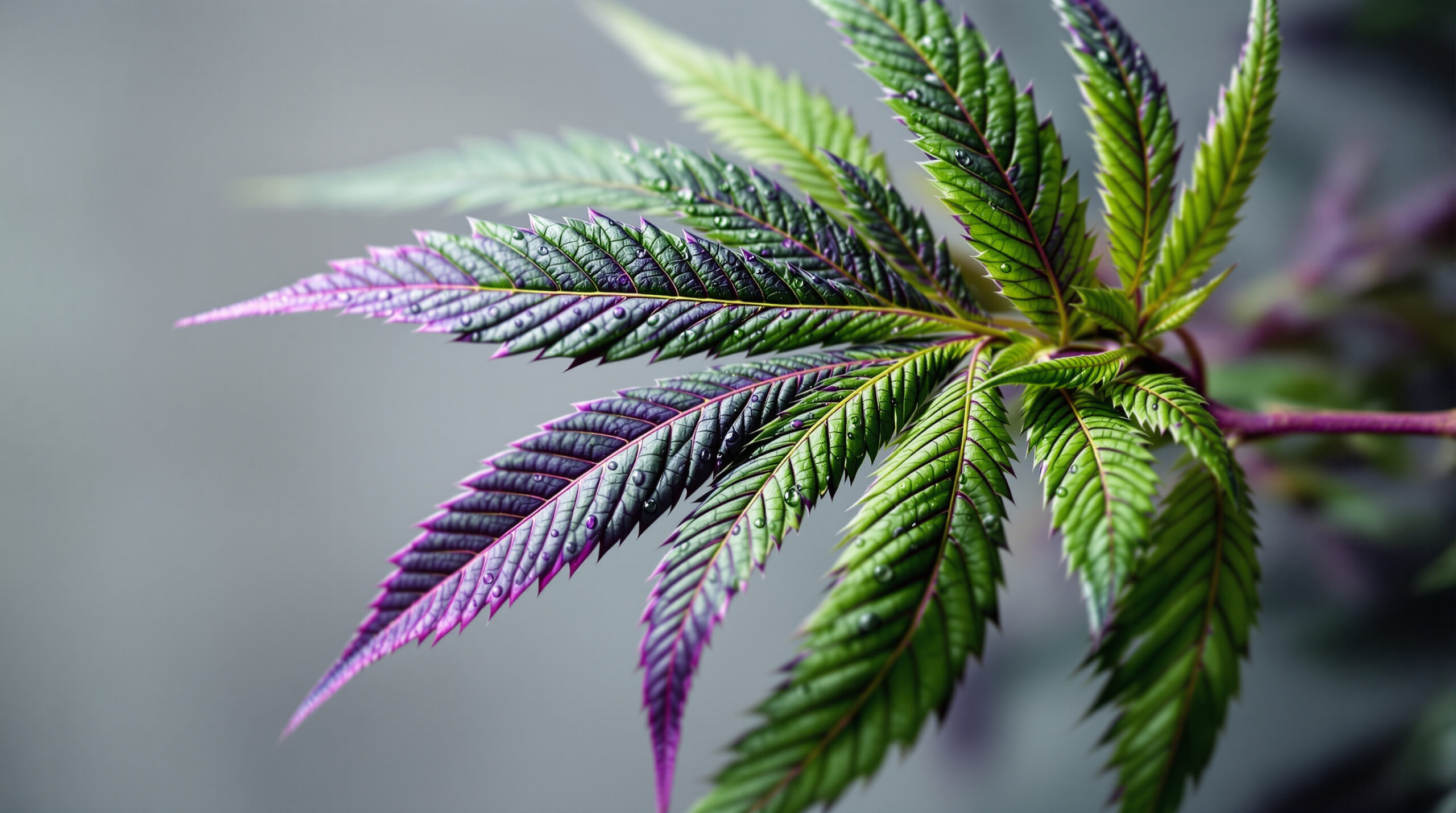
Wenn sich die Blätter einer Cannabispflanze plötzlich violett, blau oder dunkelrot verfärben, löst das bei vielen Growers erst einmal Sorge aus. Dabei ist die Färbung kein eindeutiges Signal: Sie kann ein bewusst gezüchtetes Schauspiel sein, eine harmlose Reaktion auf kühle Nächte oder das erste sichtbare Anzeichen eines Nährstoffproblems. Wer die lila Verfärbung richtig deuten will, muss verstehen, welcher Pflanzenstoff dahintersteckt und in welchem Kontext er auftritt. Dieser Artikel ordnet die Ursachen ein und zeigt, wann Sie gelassen bleiben können und wann Handlungsbedarf besteht.
📑 Inhaltsverzeichnis
- Anthocyans: the pigment behind purple cannabis leaves
- Cold stress as a trigger for coloration
- When purple coloration signals a problem
- Interpreting coloration correctly: genetics, cold, or deficiency?
- Practice: controlling coloration without harming the plant
- Frequently asked questions
- 💬 Fragen? Frag den Hanf-Buddy!
Anthocyans: the pigment behind purple cannabis leaves
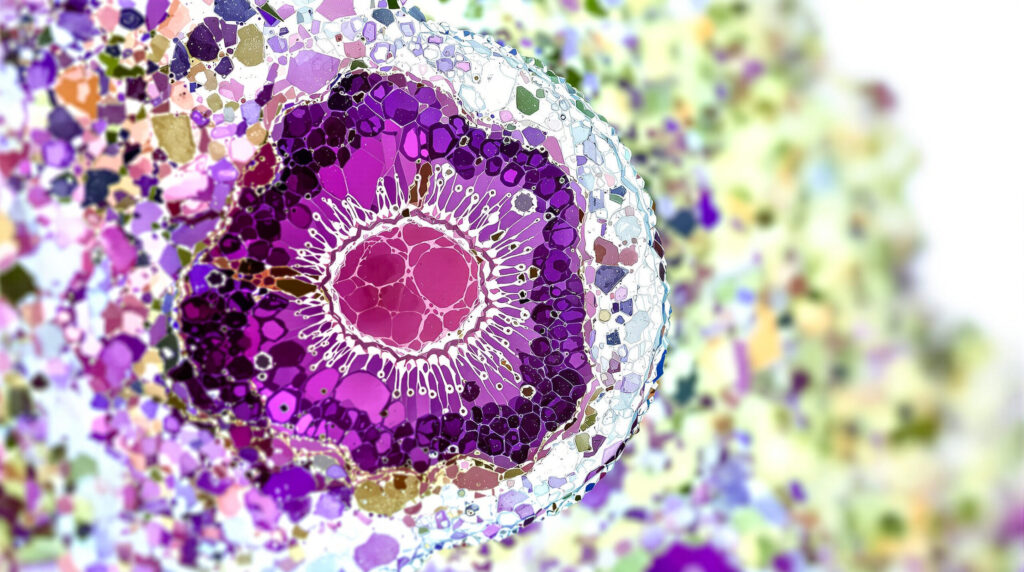
Anthocyans are responsible for the violet coloration. These water-soluble plant pigments belong to the large group of flavonoids and are widespread throughout the plant world. They color blueberries blue, red cabbage purple, and certain cannabis leaves lilac. In the plant, anthocyans serve multiple functions simultaneously. They act as a kind of sunscreen because they intercept part of the incoming UV radiation in the outer cell layer, protecting the sensitive genetic material in the cell nucleus. Additionally, they function as antioxidants and help the plant cope with stress.
Anthocyans become visible primarily when green chlorophyll decreases. As long as the leaves are full of chlorophyll, the vibrant green covers the underlying pigments. When chlorophyll content drops—for instance, toward the end of flowering or under certain stress conditions—the red and blue tones come to the fore. Whether a plant can produce significant amounts of anthocyans is first determined by genetics. Varieties like Purple Kush or Granddaddy Purple are genetically predisposed to this, while purely green strains show little to no color even under ideal conditions. For deeper insights into the genetic background, our article on why certain cannabis plants turn purple provides further information.


Cold stress as a trigger for coloration
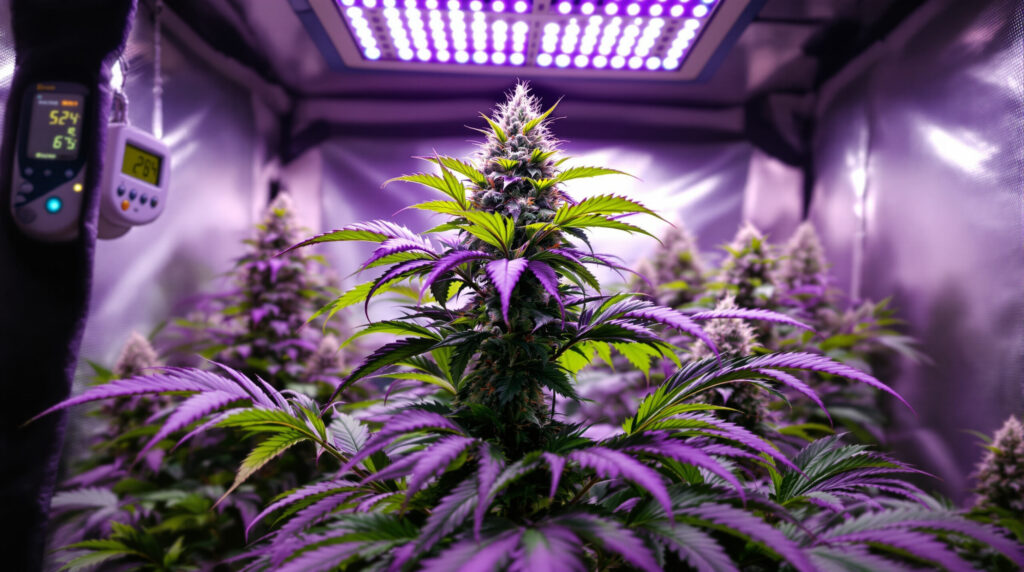
The most well-known environmental factor triggering coloration is cold. When nighttime temperatures drop significantly, the plant’s metabolism slows and chlorophyll production stalls. Simultaneously, cool conditions stimulate anthocyan formation. The result is the typical purple leaves and buds that many growers deliberately induce by lowering temperatures during the final weeks of flowering. From the plant’s perspective, this is a protective response: the pigments help mitigate the effects of cold stress.
A study published in 2025 in the Journal of Cannabis Research examined the relationship between temperature and coloration in a uniformly purple cannabis population. Researchers exposed the plants to constant temperatures between 0.5 and 22 degrees Celsius. Anthocyan formation peaked at around 8 and 15 degrees Celsius, while declining significantly at extreme cold around 0.5 degrees and at warmer 22 degrees. Meanwhile, bud weight and CBD content increased with temperature. This creates a tradeoff: those wanting the most vibrant coloration will cool aggressively but risk losses in yield and cannabinoid content. A moderate reduction to approximately 10 to 15 degrees at night represents the sensible compromise here.
The distinction between controlled cold exposure and genuine cold damage is crucial. When nighttime temperatures remain persistently below about 10 degrees or approach frost, the plant suffers. Leaves don’t just discolor; growth stalls, leaves curl, or tissue dies. An even, healthy purple coloration coupled with otherwise vigorous growth is entirely different from mottled discoloration accompanied by growth disturbances.
When purple coloration signals a problem
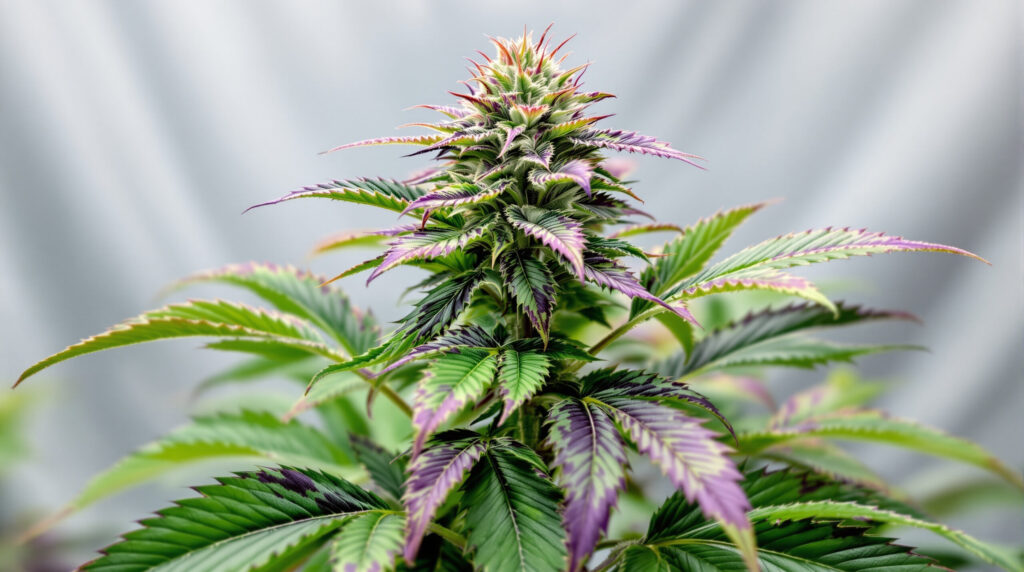
Not every discoloration is harmless. The most common problematic cause is phosphorus deficiency. Phosphorus is central to the plant’s energy metabolism, and when it’s lacking, anthocyans accumulate. Typical signs include purple or reddish petioles and stems, often accompanied by dark, almost bluish leaves, mottled discoloration, and stunted growth. The tricky part: phosphorus deficiency doesn’t necessarily mean too little phosphorus is present. Often the plant simply cannot absorb available phosphorus well, perhaps because the root zone is too cold, the pH is off, or overwatering has occurred.
Here the circle closes back to temperature. When the root zone cools below approximately 15 degrees, phosphorus uptake declines even when the fertilizer contains sufficient phosphorus. Purple discoloration in a raised bed or container at low soil temperatures is therefore often an indirect sign of nutrient uptake problems. The correct response isn’t necessarily more fertilizer, but rather a warmer root zone and a check of the pH. Our overview of fertilizer types for cannabis cultivation helps clarify which nutrients your plant needs at each stage. Magnesium or potassium deficiencies are rarer causes of reddish-purple tones.
Interpreting coloration correctly: genetics, cold, or deficiency?
To narrow down the cause, a systematic look at the distribution pattern and overall plant condition is worthwhile. Genetically determined coloration appears evenly, looks clean, and coincides with healthy, vigorous growth. It often intensifies during flowering or with cool nights without the plant suffering. If leaves or buds are the only parts turning uniformly purple and everything else looks right, you can treat the discoloration as what it usually is: a visual highlight. Many of the most sought-after varieties in our overview of the most popular cannabis strains are known precisely for this appearance.
Deficiency-related discoloration behaves differently. It appears suddenly, often first on new growth or stems, and is usually mottled rather than uniform. Accompanying symptoms like curled leaves, dark leaf spots, stunted growth, or dying tissue are clear warning signs. When purple stems occur alongside dark leaves and poor growth, a phosphorus problem is likely. In this case, first check the root zone temperature, pH, and watering habits before adding extra fertilizer. The combination of distribution pattern, growth appearance, temperature, and pH allows reliable diagnosis in the vast majority of cases.
Practice: controlling coloration without harming the plant
Those wanting to deliberately induce coloration should only attempt this with genetically predisposed varieties and only in the final two to three weeks of flowering. A moderate reduction of nighttime temperature to approximately 10 to 15 degrees is sufficient to make anthocyans visible without sacrificing yield. Harsher cold exposure brings more color but costs bud weight and cannabinoid content. Light levels and healthy metabolism remain more important than appearance.
If the goal is to eliminate unwanted discoloration, the sequence is: observe first, diagnose second, intervene last. Keep the root zone warm, maintain pH in the optimal range, and adjust watering so the plant can uptake available phosphorus again. Only when the pattern clearly points to genuine deficiency is targeted nutrient application warranted. This avoids the classic mistake of addressing a temperature problem with overfertilization.
Frequently asked questions
Are purple cannabis leaves harmful to the plant?
Not necessarily. Even purple coloration with otherwise healthy, vigorous growth is usually harmless and caused by genetics or cool nights. It becomes problematic only when discoloration appears mottled and is accompanied by growth disturbances, curled leaves, or dark spots.
At what temperature do cannabis leaves turn purple?
A 2025 study found the strongest anthocyan formation at constant temperatures around 8 to 15 degrees Celsius. In practice, a moderate reduction of nighttime temperature to approximately 10 to 15 degrees during the final weeks of flowering is sufficient to make coloration visible without severely affecting yield.
How do I tell if the coloration comes from phosphorus deficiency?
Phosphorus deficiency typically shows as purple or reddish petioles and stems, dark leaves, mottled discoloration, and stunted growth. If coloration appears suddenly and unevenly, deficiency is more likely than genetics. Then first check root zone temperature and pH, since cold blocks phosphorus uptake.
Does purple coloration change the effects or flavor?
Anthocyans are pure pigments and have no direct impact on THC or CBD content. The coloration is therefore primarily a visual characteristic. However, since strong cold exposure can dampen yield and cannabinoid production, intense color can occasionally come at the cost of slight reductions in cannabinoid content.
Can every cannabis strain turn purple?
Hast du schon einmal lila Verfärbungen bei deinen Cannabispflanzen beobachtet?
No. The capacity for anthocyan production is genetically determined. Strains like Purple Kush or Granddaddy Purple color intensely under cool conditions, while purely green-genetics strains show little color even at low temperatures. Cold and other stressors can only bring out what is genetically present.




Branchen-Update
News, Analysen und Reportagen — mehrmals im Monat direkt in dein Postfach.
Folge uns