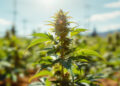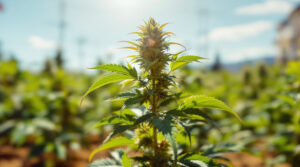
Wer im Freiland anbaut, übernimmt eine Technik aus der Growbox oft eins zu eins, und genau hier beginnt das Problem. Das Entlauben, in der Szene als Defoliation bekannt, folgt unter dem offenen Himmel anderen Regeln als unter der LED. Cannabis entlauben outdoor bedeutet weniger Ertragsoptimierung durch Lichtmanagement und mehr Schutz vor Schimmel und Fäulnis. Die Sonne steht 150 Millionen Kilometer entfernt, ein paar Zentimeter Pflanzenhöhe spielen für ihre Intensität keine Rolle. Eine LED dagegen verliert pro Fuß Abstand fünf- bis zehnfach an Stärke. Aus diesem einen physikalischen Unterschied folgt fast alles, was draußen anders läuft.
📑 Inhaltsverzeichnis
- Why Defoliating Cannabis Outdoors Works Differently
- Mold Prevention as the Real Goal Outdoors
- The Right Timing: Not a Calendar, But the Plant
- How Much Is Too Much? Measure and Technique Outdoors
- The Exception: Why Autoflowers Outdoors Should Barely Be Defoliated
- Frequently Asked Questions
- 💬 Fragen? Frag den Hanf-Buddy!
Dieser Artikel ordnet ein, warum die populären Indoor-Anleitungen im Garten in die Irre führen, wann ein Schnitt draußen wirklich Sinn ergibt und wo die Grenzen liegen. Wer die Grundtechnik noch nicht kennt, findet sie in unserem Grundlagenartikel zur Defoliation erklärt. Hier geht es ausschließlich um die Freiland-Perspektive.
Why Defoliating Cannabis Outdoors Works Differently
Indoors, defoliation is primarily a tool for light distribution. Because the lamp shines only from above and its intensity drops rapidly with distance, lower flower sites remain in shadow and develop into loose popcorn buds. Strategically removing fan leaves opens up the plant so light penetrates deeper. Outdoors, this lever largely disappears. The sun travels across the day from east to west and illuminates the plant from constantly changing angles. It penetrates even very bushy specimens because no artificial source limits its reach.


This shifts the purpose. In open fields, defoliation is barely about bringing more light to lower flowers, but rather about allowing air to flow through the plant. An open structure dries faster after a rain shower. Exactly this decides the quality of the harvest in a mid-European late summer. Whoever defoliates outdoors is thus primarily doing mold prevention, not yield maximization through the light axis. This shift in objectives explains why many recommendations from US indoor forums don’t work here.
There’s also the stress factor. A plant in a grow box lives in a controlled environment with stable temperature and humidity. Outside, it’s already fighting wind, heavy rain, heat spikes, temperature drops, and pest pressure. Every cut is an additional wound and costs regeneration energy. An outdoor plant has fewer reserves for this because it’s already using them to defend against environmental stress. That’s why outdoor cultivation generally calls for a more restrained hand.
Mold Prevention as the Real Goal Outdoors
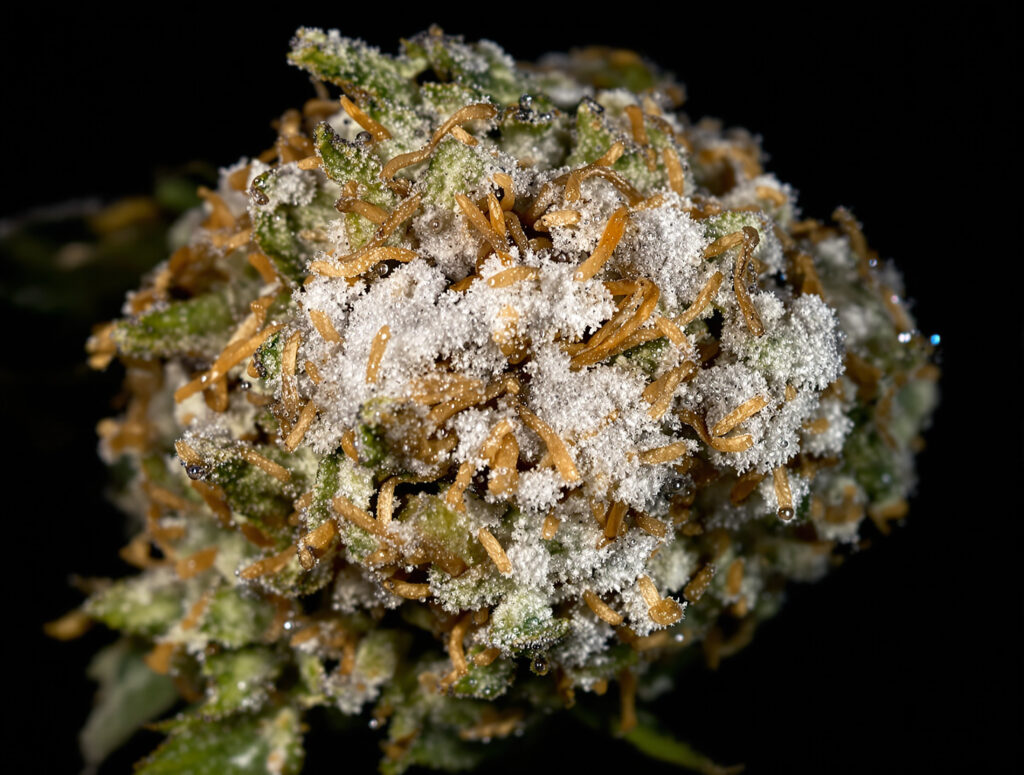
The main enemy of the outdoor harvest is called Botrytis cinerea, the causative agent of gray mold rot, colloquially budrot. It preferentially attacks dense, ripe flowers in cool, damp weather and can destroy a plant from the inside within days. The critical conditions are well known: air humidity persistently above 60 percent, mild temperatures between 18 and 25 degrees Celsius, and stagnant air inside the plant. Exactly this microclimate forms in a bushy shrub after a September rain.
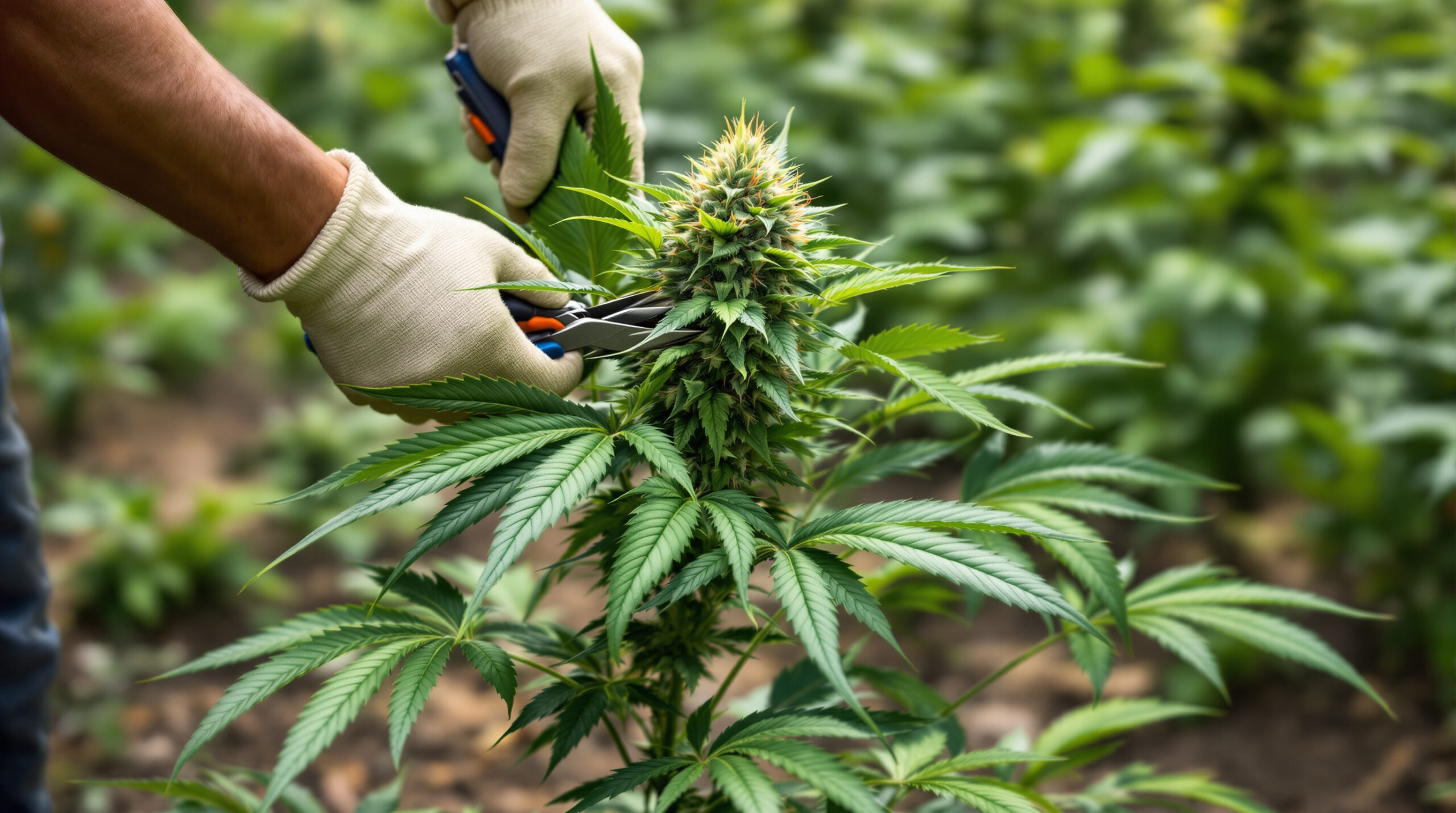
Targeted defoliation addresses this. When large fan leaves deep inside the plant are removed, wind can flow through and moisture dries faster after a shower. This noticeably lowers the risk but doesn’t replace thoughtful site selection and variety choice. For those wanting to know more about late-season strategy against rot, a detailed guide can be found in our article on preventing bud rot.
Particularly at risk are compact indica genetics with dense flowers in damp climates. For them, moderate defoliation can make the difference between a usable and a lost harvest. Pure sativa strains with airier flower structures often need barely any intervention. Genetics play a role in how much makes sense at all. There’s no blanket rule for all plants in outdoor cultivation.
The Right Timing: Not a Calendar, But the Plant
Indoors, flowering onset can be controlled exactly because the grower switches the light cycle to twelve hours. Outdoors, there’s no such clean switching day. The plant enters flowering once natural days become shorter, typically from late July into August in Central Europe. That’s why day-by-day counting from indoor guides doesn’t work outside. Instead, you read the plant.
Two visible signals mark the right window. First, the plant has visibly completed its growth stretch and no longer grows in height. Second, the flower sites on the upper level are clearly set. Only then is the moment for a targeted intervention, usually in the second to third week of flowering. Cutting earlier risks the plant still being in full buildup mode and the intervention setting it back. For those wanting better guidance on assessing flowering transition timing, our article on when to plant hemp outdoors provides orientation and how the season develops.
A late, deep cut in the middle of flowering is risky. In the mature phase, the plant channels its energy into resin production, not wound recovery. A major intervention at this point can disrupt the maturation process and trigger stress that results in lower potency. In late summer, limit yourself to removing individual large leaves lying directly on flowers and blocking airflow.
How Much Is Too Much? Measure and Technique Outdoors
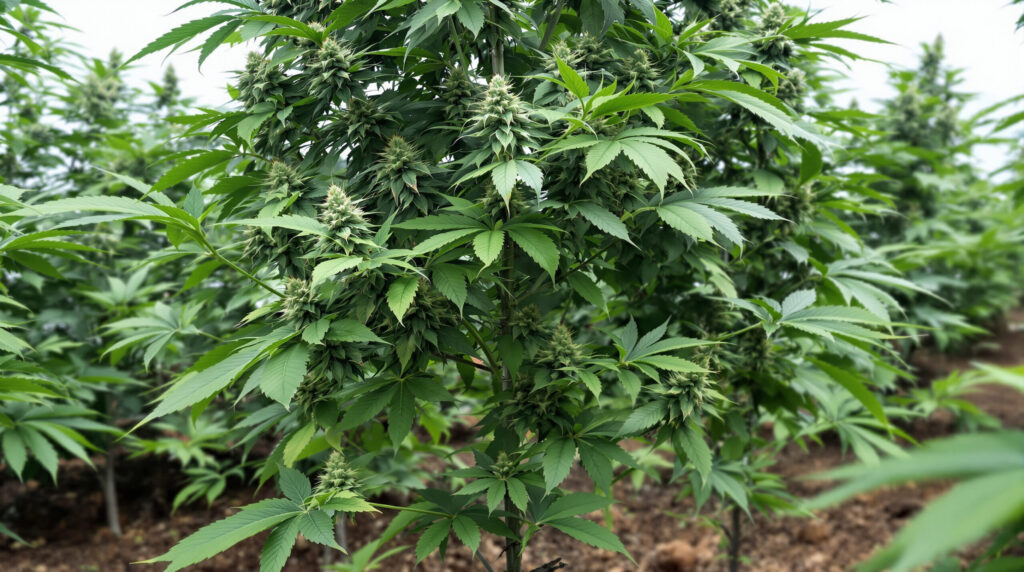
The most important number is: never remove more than 10 to 15 percent of a plant’s leaf mass at once. This ceiling is significantly lower than what some indoor guides recommend, and it’s rooted in increased outdoor stress. Between sessions, the plant should get seven to ten days of rest so cut wounds close and it can recover. During this time, avoid other stressful measures.
Focus lies on lower and inner areas. Weak shoots deep inside that receive no direct sunlight anyway only cost the plant energy and produce inferior popcorn buds at best. Removing them directs strength upward into well-lit main flowers. This technique, systematically clearing the lower level, is known as lollipopping. It works well outdoors because it simultaneously improves airflow in the critical lower area where moisture accumulates.
Clean tools are mandatory. A sharp, disinfected blade makes clean cuts that heal quickly, while crushed or torn spots become entry points for pathogens. After cutting, observe the plant. If it responds with wilting or discoloration, the intervention was too strong, and the next session is smaller or skipped. In the garden, observation replaces the calendar.
The Exception: Why Autoflowers Outdoors Should Barely Be Defoliated
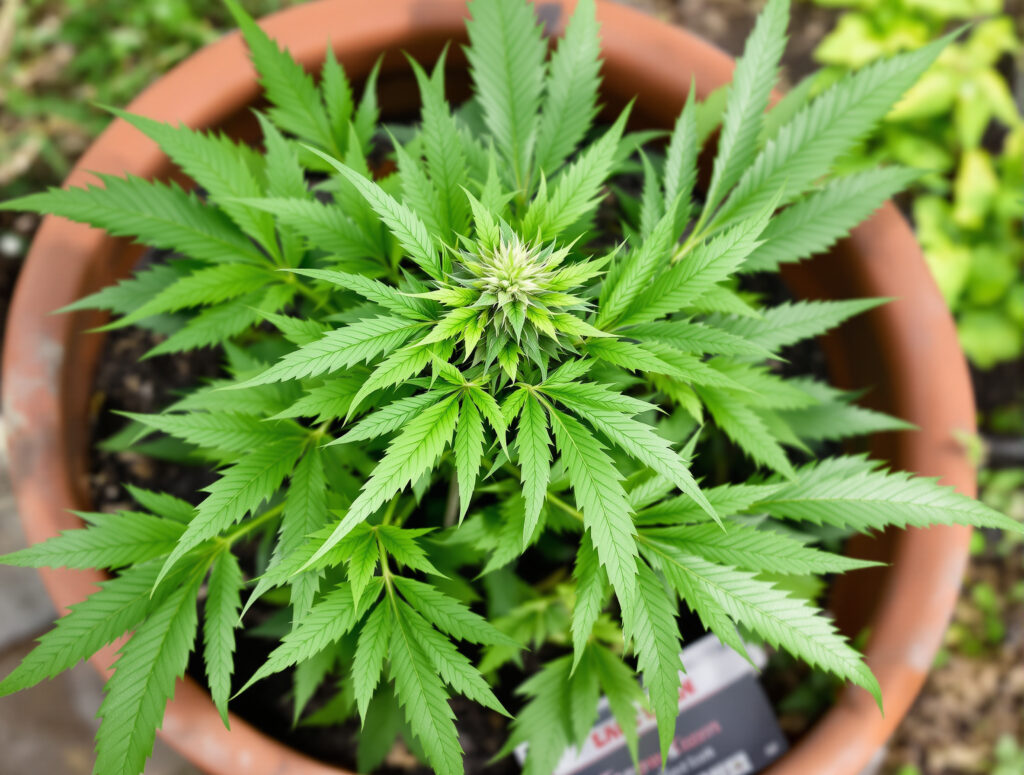
One genetics deserves special caution: self-flowering varieties, the autoflowers. They follow a fixed, genetically programmed schedule and flower regardless of light cycle after a certain lifespan. This robs them of the ability to compensate for stress through an extended growth phase. While a photoperiodic plant simply grows vegetatively a few days longer after hard pruning, the countdown for the autoflower marches relentlessly on.
That’s why defoliation on outdoor autoflowers is risky. Too aggressive an intervention can permanently brake the plant’s growth and reduce yield without it having time to recover. If at all, only remove individual large sun leaves lying directly on flowers, and in homeopathic doses. For beginners, the safest recommendation for autoflowers in outdoor cultivation is simply: don’t defoliate and instead rely on site selection and airflow.
Frequently Asked Questions
Should you defoliate cannabis outdoors at all?
Yes, but more restrained than indoors and with a different goal. Outside, defoliation mainly serves mold prevention through better air circulation, not light distribution. For bushy indica genetics in damp climates, moderate intervention makes sense; for airy sativas it’s often unnecessary.
When is the best time to defoliate outdoors?
Not by calendar, but by plant signal. The right moment arrives when the growth stretch is complete and upper flower sites are set, usually in the second to third week of flowering. Later interventions limit themselves to individual leaves directly above flowers.
How many leaves can I remove at once?
A maximum of 10 to 15 percent of leaf mass per session. Afterwards, the plant needs seven to ten days rest to regenerate. This ceiling is lower outdoors than indoors because the plant is already using its reserves to defend against wind, rain, and pests.
Why is defoliation tricky with autoflowers outdoors?
Self-flowering varieties follow a fixed schedule and cannot compensate for stress through an extended growth phase. Too strong a cut permanently brakes them. When in doubt, don’t defoliate outdoor autoflowers at all and only remove individual sun leaves directly on flowers.
Does defoliation really help against mold?
Entlaubst du deine Outdoor-Pflanzen während der Blüte?
It lowers the risk but doesn’t replace good site selection. By opening plant structure, wind flows through and wet flowers dry faster after rain. This deprives the gray mold pathogen Botrytis of the warm, damp microclimate it needs to spread.





Branchen-Update
News, Analysen und Reportagen — mehrmals im Monat direkt in dein Postfach.
Folge uns