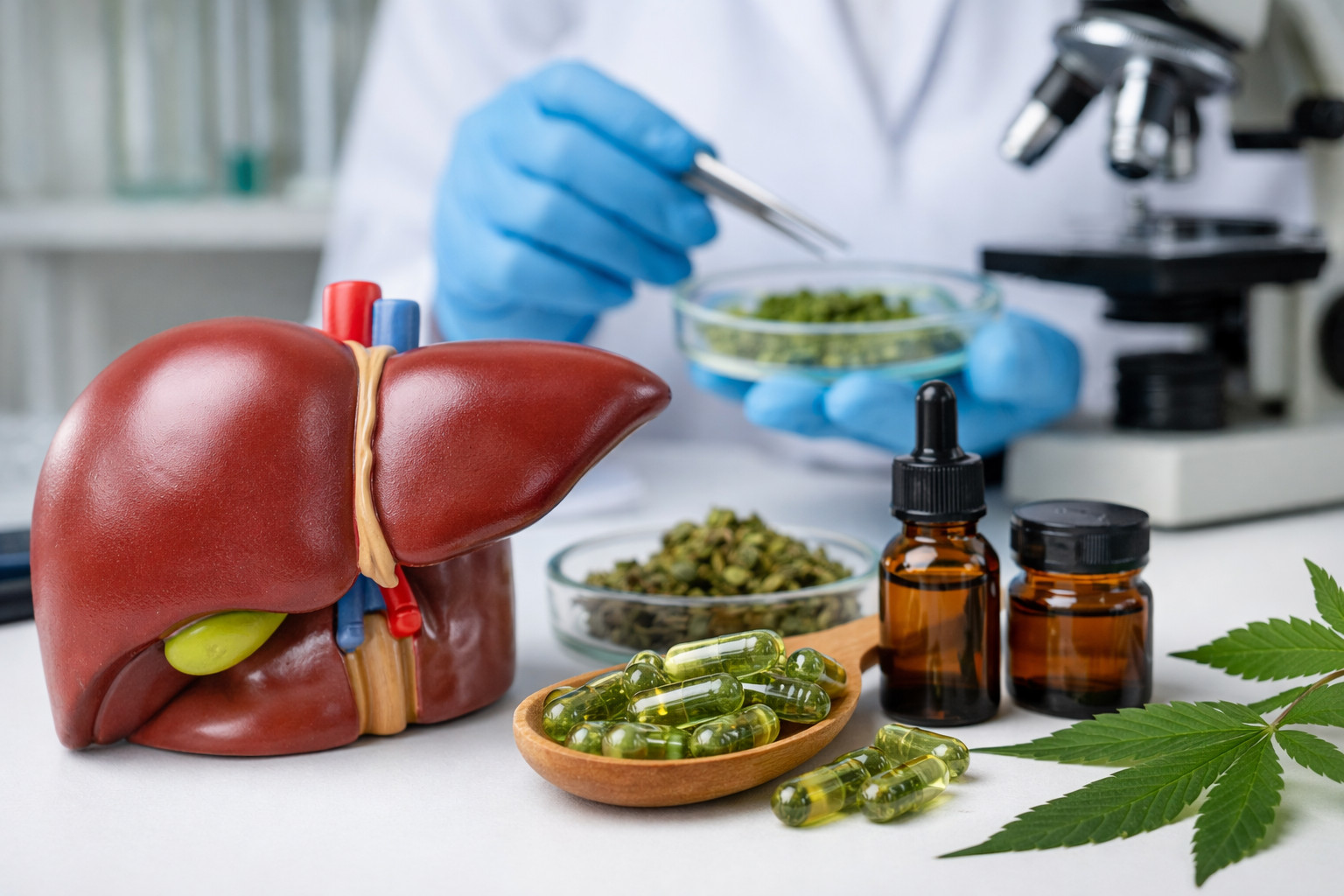
Previous studies have shown that cannabis represents an effective treatment option for certain liver diseases. Both alcohol-related liver damage and other liver conditions can be effectively alleviated. The significance of endocannabinoids in the liver is so substantial that researchers refer to a distinct cannabinoid system called the hepatic endocannabinoid system. Recently, additional studies have been published that further underscore the efficacy of hemp in treating liver diseases.
📑 Inhaltsverzeichnis
Cannabis Consumption Alleviates Liver Damage from Alcoholism
Alcohol-related liver damage remains one of the most prevalent liver diseases with potentially fatal consequences. Treatment options for advanced damage have been relatively limited until now. However, evidence has been mounting that hemp could mitigate the damage caused by alcohol, a widespread recreational drug.
A recently published US study examined whether concurrent cannabis consumption could reduce the risk of liver disease from heavy alcohol use. The study monitored 33,114 individuals diagnosed with alcohol dependence from 2010 to 2022. Participants were divided into two groups: those who consumed only alcohol and those who also consumed cannabis.


The effects on liver health were remarkable. Individuals who regularly consumed cannabis showed up to a 40 percent lower risk of developing typical alcohol-related liver damage. The risk of liver decompensation was 17 percent lower with concurrent cannabis use. Liver decompensation refers to liver damage so advanced that the liver can no longer perform its essential functions. Overall mortality was also reduced by 14 percent through cannabis use. Study authors emphasized that cannabinoid receptors in the liver should receive greater focus in developing new medications for liver diseases.
Symptom Relief in Palliative Care
A 2025 study from Thailand examined the effects of cannabis in hepatocellular cholangiocarcinoma—a specific form of liver cancer. Of 491 patients in the study, 404 received only standard pain treatment, while the remaining 87 additionally received medical cannabis.
Medical cannabis improved both quality of life and survival duration. Patients without medical cannabis had an average survival time after admission to palliative care of less than one month. Patients receiving medical cannabis had an average survival time of 5.6 months. This significantly extended survival time demonstrates the interaction between cannabinoids and cancer and could enable new therapeutic approaches in the future.
The Effectiveness of Beta-Caryophyllene
Beta-caryophyllene holds a special position among terpenes. Although it is chemically a terpene, it also exhibits activity at the CB2 receptor, making it functionally equivalent to a cannabinoid. Furthermore, beta-caryophyllene possesses several remarkable medicinal properties.
Three new studies independently reinforced evidence that beta-caryophyllene could be significant for treating severe liver diseases. A 2025 Chinese study demonstrated using animal models that beta-caryophyllene can significantly alleviate steatohepatitis. This is a liver inflammation triggered by fatty infiltration, which can be of either alcoholic or non-alcoholic origin. Researchers found that beta-caryophyllene inhibits the release of numerous pro-inflammatory cytokines directly linked to steatohepatitis. Additionally, a direct influence on lipid metabolism was observed. The terpene was able to inhibit certain processes in fat metabolism that contribute to liver steatosis.
An Indian research team also demonstrated that beta-caryophyllene inhibits the growth of certain liver tumors. Examinations in mice showed that the terpene reduces oxidative stress and inflammatory responses directly associated with tumor growth. Researchers proposed increased preventive use of beta-caryophyllene against liver diseases.
The anti-cancer effects of beta-caryophyllene were independently confirmed by a 2025 Arab study. Examinations of cell cultures showed that this terpene significantly enhances the effectiveness of multiple chemotherapy drugs. In scientific literature, this is called chemosensitization—an increased sensitivity of cancer cells to chemotherapy agents. This property could make beta-caryophyllene particularly interesting for treating chemotherapy-resistant cancer forms.
Sources
- Liver cancer study from Thailand:
PubMed: 41113085
- Beta-caryophyllene study:
PubMed: 40478217
- Beta-caryophyllene study:
PubMed: 39275950
- Beta-caryophyllene study:
PubMed: 40333803
Wusstest du, dass Cannabis Leberschäden durch Alkohol lindern kann?
FAQ: Cannabis and the Liver
Is Cannabis Bad for the Liver?
According to current research, cannabis is not inherently bad for the liver. Multiple studies show protective effects—the hepatic endocannabinoid system plays a central role in this.
Can Cannabis Reduce Alcohol-Related Liver Damage?
Yes. A US study involving over 33,000 individuals showed that concurrent cannabis use reduces the risk of alcohol-related liver damage by up to 40 percent. Overall mortality decreased by 14 percent compared to pure alcohol consumers.
Does THC Strain the Liver with Regular Consumption?
THC is metabolized in the liver but does not permanently strain it during moderate consumption according to current research. Those who consume CBD long-term and have pre-existing conditions should consult a physician.
What Does Beta-Caryophyllene Do in the Liver?
Beta-caryophyllene is a terpene in cannabis that also acts on the CB2 receptor. Studies show it inhibits liver inflammation, regulates fat metabolism, and can slow tumor growth. Cannabis consumers generally have a lower risk of liver cancer.
More Articles on This Topic
- CBD Against Methamphetamine Addiction: New Mechanism of Action Discovered
- CBD Reconsidered: Research Team Dramatically Increases Oral Bioavailability
- Cannabielsoxa: Researchers Discover New Cannabinoid
- Current Research on the Effects of Hemp Consumption on Genetics
- Cannabis Research: THC Helps with Thinking






Branchen-Update
News, Analysen und Reportagen — mehrmals im Monat direkt in dein Postfach.
Folge uns