
Advertisement · This article is created in paid cooperation with Privatrezept.net. Selection, research and evaluation of content are the responsibility of Hanf Magazin. The link to the provider is marked as an advertising link.
Since statutory health insurance stopped covering dried cannabis flowers, significantly more people are turning to private prescriptions. Many are unclear about how this process works, what it costs, and what it cannot deliver. To make matters more complex, there is a draft law that would fundamentally restructure this very pathway.
We have already described the basic pathway to cannabis therapy, from medical prerequisites through finding a doctor to filing for insurance coverage, in our overview Cannabis on Prescription: How You Can Get Cannabis as a Patient. This article goes a step further, focusing exclusively on the private prescription route: how it works in practice, where its limitations lie, and what legal changes are currently underway.
Why the Private Prescription Route is Currently Booming
With the GKV Contribution Rate Stabilization Act, the Bundestag decided on July 10, 2026 to exclude dried cannabis flowers from statutory health insurance coverage. Since the end of July, they are no longer prescribable at the expense of the insurance funds, and finished pharmaceutical products take priority. Those who wish to continue using flowers must pay for them themselves. We have compiled information on how this new regulation is being challenged legally here.
For many, the private prescription is no longer a matter of convenience but rather the only remaining option for a form of therapy they are already using. This changes expectations for this pathway: it doesn’t need to be fast, it needs to be reliable.
How the Private Prescription Works in Practice

Legally, the matter is clearly regulated. Under Section 3 of the Medical Cannabis Act, cannabis for medical purposes may be prescribed exclusively by physicians. Dentists and veterinarians are explicitly excluded. Dispensing occurs only in pharmacies and only upon presentation of the prescription. The law currently contains no special provision for remote treatment; general medical regulations apply.
In practice, this typically means four steps for digital providers:
- Medical History. The patient describes complaints, pre-existing conditions, previous treatments, and medications.
- Medical Evaluation. A physician decides whether a prescription is justified. This decision is made by the physician, not by the platform, and it can be negative.
- Prescription. The prescription is sent digitally to a pharmacy.
- Dispensing. The pharmacy reviews the medication according to pharmacy regulations and dispenses it.
An example of this process is the provider Privatrezept.net, through which you can request cannabis on prescription in exactly this way: providing medical history information, physician review of the request, and digital transmission of the prescription to the pharmacy. According to the provider’s own statements, they have guided over 100,000 treatments so far; on Trustpilot they achieve 4.9 out of 5 stars from approximately 1,260 reviews, which we verified on September 30, 2026. Such ratings say something about satisfaction with the process, nothing about medical suitability in individual cases.
What the Process Costs and What It Doesn’t Deliver

For a private prescription, two separate fees apply, which are often confused. One is the fee for the physician’s services and processing that the provider charges. The other is the price of the medication itself, which the pharmacy calculates according to pharmaceutical price regulations. The second cost is typically the much larger one, and it depends on the medication and the prescribed quantity, not on the provider.
The first fee varies depending on the provider. According to Privatrezept.net’s own statements, they charge 4.20 euros for an initial prescription. This is the fee for physician review and processing, not the price of the medication. For context: dried flowers cost between four and twenty euros per gram at the pharmacy depending on variety and availability, and a patient with average needs can expect personal costs in the range of 100 to 300 euros per month. The vast majority of costs therefore come from the medication itself, not from the prescription fee.
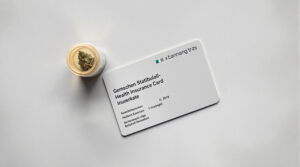
Patients also frequently ask about the cannabis patient ID card. It is not legally required, does not replace a prescription or order, and creates no special rights, but it can simplify a control situation. We have discussed it in a separate article between useful tool and false security. Several providers issue such a card; Privatrezept.net does so according to their own statements starting with the first order.
What the process does not deliver: there is no cost reimbursement. Those who receive a private prescription pay for everything themselves, and a subsequent insurance claim does not become easier because of it. The approval situation also remains unchanged. The fact that an old insurance approval does not protect against the flower ban was decided by the Leipzig Social Court. And the jurisdiction questions between physician prescription and insurance review were only clarified by the KBV and GKV umbrella association in August.
What the Draft Law Would Change

Here lies the actually relevant point for everyone who is just discovering the private prescription route. The Federal Cabinet decided on a change to the Medical Cannabis Act on October 8, 2025; the draft has been available as Bundestag document 21/3061 since December 3, 2025. It contains three main interventions:
- Personal doctor contact for initial prescription. Medical cannabis could only be prescribed after personal contact in the practice or during a house call, including medical history and physical examination.
- Quarterly rule for follow-up prescriptions. A personal consultation every four quarters; in the other three quarters, telemedical prescribing would remain permitted.
- Mail order ban for cannabis flowers. The mail route would be excluded, though pharmacy courier delivery would remain allowed.
The third point directly affects the business model of digital providers, including that of this article’s cooperation partner. We note this anyway because an article on the private prescription route would be incomplete without this information.
In the Health Committee hearing on January 14, 2026, assessments were mixed. The German Medical Association pointed to what it sees as lacking scientific evidence for the prescribability of cannabis flowers. Industry associations criticized the regulations as disproportionate and saw the principle of equal treatment violated. Several specialist associations supported the direction but saw need for improvements. The draft has not been passed to date, and no voting date is known. We have traced how political pressure on telemedicine arose in Cannabis Telemedicine Under Pressure.
What This Means for Patients
As long as the draft is not passed, the existing legal situation remains unchanged. However, those using the private prescription route should know that it is politically controversial and conditions could change, particularly regarding mail delivery. Those who are anyway facing a decision should factor this into their choice of route and, if in doubt, choose a provider that also functions without mail delivery.
Regardless, the medical question comes first. Whether cannabis therapy is appropriate in an individual case is decided by the treating physician, not by the platform and not by the distribution route.
Notice: This article reflects the status as of September 30, 2026 and is not legal or medical advice. Medical cannabis is a prescription medication; the article contains no therapeutic claims, efficacy statements, or product claims, and no therapy recommendations. Decisions about selection, initiation, continuation, and modification of therapy are made exclusively by the treating physician. Ongoing therapies should not be changed on your own initiative.
Nutzt du bereits ein Cannabis-Privatrezept als Selbstzahler?
Sources: Section 3 Medical Cannabis Act (MedCanG); Draft of the First Amendment to the Medical Cannabis Act, Bundestag document 21/3061 from December 3, 2025, Cabinet decision from October 8, 2025; public hearing of the Health Committee from January 14, 2026; GKV Contribution Rate Stabilization Act, Bundestag document 21/6130, passed on July 10, 2026; Pharmacy Operations Regulation; Pharmaceutical Price Regulation; statements from provider Privatrezept.net from September 30, 2026; Trustpilot profile privatrezept.net, accessed September 30, 2026; own reporting.






Branchen-Update
News, Analysen und Reportagen — mehrmals im Monat direkt in dein Postfach.
Folge uns